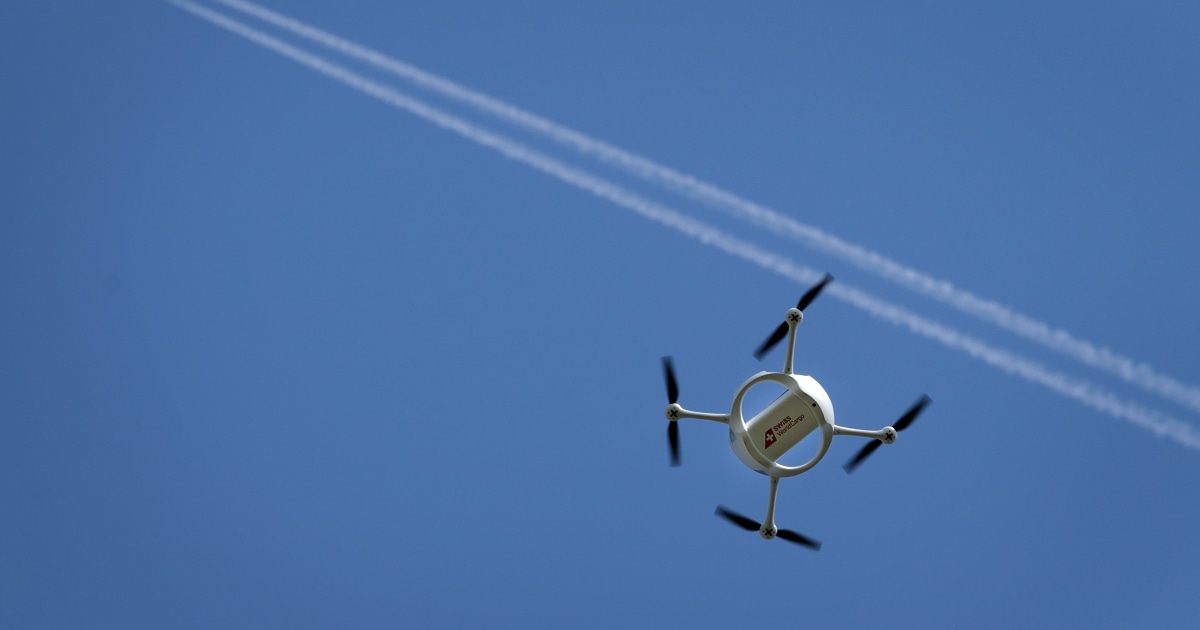
U.S. Will Require Drones to Be Registered
The federal government will require people buying unmanned aircraft systems to register with the DOT, after concerns over close calls with planes.
NBC News
171 points · by davidbarker · 11y ago · 151 comments
The FAA requires ADS-B trasponders to have high accuracy GPS, and that pushes the cost to over $2,000 per device. It would be logical for the FAA to relax the GPS requirement slightly, so a cheap GPS module is sufficient to alert nearby aircraft of RPV activity over a certain altitude (eg. 200ft AGL) These RPV-grade ADS-B transponders could use a limited signal output, to avoid nuisance pop-ups from longer distances. The transponder Mode-S ID uniquely identifies the RPV.
It would be possible for a transponder to use an alternate channel frequency, similar to how many General Aviation aircraft use 978Mhz ADS-B. Even with an alternate RPV channel, the RPV operators would still be alerted to regular aircraft operations.
Model aircraft have existed for a long time and there's been a good relationship with the FAA and few incidents. The challenge is that technology has advanced to the point that these modern "drones" are almost too easy to fly. Any idiot can watch some YouTube videos and then they think they're a pilot. Given that, to the extent possible the aviation regulations should be enforced at the device level to make these things as idiot proof in terms of busting airspace regs as they are idiot proof to fly.
Part of the issue is that Helicopters do fly quite low, well away from airports, and the DJI Phantom can be flown high enough to be a concern.
Another part of these new regulations is identifying the RPV so that appropriate enforcement or education can occur.
Some people have suggested that DJI Phantom and other RPVs are shipped in "idiot" mode with tight restrictions. Once an operator can show responsible operation, then switch to a less restrictive mode.
My main concern is that the definition of "restricted airspace" is likely to increase if this becomes a standard. E.g. the National Park Service would probably lobby to have all of their airspace included, even though it's a nuisance to some people in national parks instead of a safety concern.
It also doesn't solve the problem of drones being active near emergency situations.
Other short term updates (like firefighting flight restrictions) are reviewed by the pilots on official FAA endorsed websites or by calling a flight service center (like customer support for pilots) before each flight. One of the most basic elements of the required preflight planning for any flight of a "real" airplane is to do all the above to make sure you have the latest data and know about any temporary restrictions.
There's no reason why drone pilots couldn't or shouldn't be required to perform a simplified version of the above before flight (if you want to do anything other than flying the thing under the treeline in your own backyard).
A drone is one of the few things that can be smuggled by themselves. Both US-Mexico and US-Canada borders are wide.
Fixed that for you.
What drives up the cost is certification of the equipment.
Consumer GPS (eg. Phone/Tablet) is typically augmented GPS, whereas certified aviation GPS uses WAAS (Wide Area Augmentation System) to improve accuracy.
The key difference is that aviation GPS will warn the pilot if there is degraded performance below requirements, whereas consumer GPS doesn't.
From a practical point of view, knowing where the RPV is within a 100 meters would be more than enough.
The $2000+ GPS is certified to provide position under Instrument Flight Rules for an RNAV (Required NAVigation performance) approach and landing. Not required for a RPV flown under 400ft visually.
Sounds like a market that is ripe for disruption. $2,000 cannot be remotely close to the cost of production. This price is the result of having a small, wealthy customer base that is required by law to purchase it. If someone introduces one with pricing that reflects both the cost of production and a dramatically expanded customer base, that company will make a ton of money.
If used recreationally, they're R/C flying models, no matter how much the DJI marketing dept likes the term. So will the the hobby that has been fine for decades be hit too?
Will you have to register a Cheerson CX-Stars that weighs 8g?
What about the congressional Special Rule for Model Aircraft? "Technically it's not the FAA so we can regulate everything!" or what?
They're also not that hard to build yourself and the components are shared with other things (e.g. motors are shared with R/C cars and the first popular flight controller was an Arduino with the sensors from a Wii Motion Plus or Nunchuk) so you can't ban the part sales.
Model aircraft have to be flown within visual line of sight (FAA Modernization and Reform Act of 2012, Section 336), which restricts the height.
Commercial use is already FAA territory and you have to be registered (Section 333 Exemption).
/Edit: Section 336, not 366.
But then if you look at this page[1] on the FAAs web site, it says only that operators are "strongly encouraged" to follow certain restrictions like line-of-sight operation. It doesn't say they have to.
Mind you, I follow all those rules myself when flying rc planes, and prefer that other in the hobby also do. I think they're good rules. I'm just playing with interpretation.
You can buy a great drone and get amazing shots over and over for less than it would cost to hire a helicopter once.
However, they also pose a risk. I'd favor a simple registration process and clear cut rules that are not infringing on the use of drones. I'd like to see the registration used mostly to enforce the rules and track a drone back to its owner.
Ideally, drones should also broadcast its ID, so it's easy for other pilots to know they're in the area and also allow LEO to ticket/fine for offences. Without a broadcasting ID, most of these rules will be hard to enforce.
I actually think the U.S. Founding Fathers would have enumerated a "right to vehicular travel" if they had conceived of license-as-a-privilege restriction on horseless carriages.
I do. It feels so liberating not to have to do those things in countries with corrupt + ineffective policing.
So maybe not a public road -> airspace below a certain height?
Sometimes some dude drives around without plates or takes an off road vehicle on the road. The police ticket the operator and tow the vehicle in some cases.
That's actually illegal in Virginia: http://law.justia.com/codes/virginia/2006/toc1802000/18.2-42...
Edit: oh, and that it does include commercial airliners under autopilot, military aircraft under autopilot, NASA-scale rocket launches, and military guided missiles and cruise missiles.
Nobody cares about the definition of a drone. It is irrelevant whether it is manned/unmanned, large/small, heavy/light etc. They care that they are used safely and don't put innocent people at risk.
Aircraft pilots and government officials go through rigorous training to ensure that anything they do is safe. A 15 year old kid buying one off the internet does not. Hence the need for regulations.
And of course the Chinese love it. That's why they are desperate for Western products like baby milk formula, vitamins and services in the health and old age sectors.
But of course the US is totally scared of science. What with being the hub of almost all successful startups.
And regarding this meta commentary of thinking that China as merely the assemblers of american inventors, remember that this was thought of Japan and korea in the 70s and 80s, which now produce some good quality cars and TVs, respectively. I wonder if engineers at GM or Zenith (last great american TV brand) scoffed and thought the same in 1980.
You can build a bicycle much more easily than a drone and many counties and some countries require people to register their bicycles.
There are lots of hunting, firearms, and vehicular regulations that get enforced by cops (and other peace officers) who see things while on patrol.
HAM operators are proud of the strict licencing requirements and the test they need.
Many "drones" are build with super-tough carbon fiber frames. Additionally, LiPo batteries (very common in quad copters) can be quite hazardous.
Combine these together and toss one into a running jet engine - I don't believe the danger would be "about the same" as a bird.
DJI phantoms, last model I saw is built of plastic.
There hasn't been a recorded plane v drone crash that I've seen documented (the last one that hit the news ended up being birds).
Regardless the rules say under 400', not within 5 miles of an airport and some other locations.
I'm not opposed to a drone 'license plate', I'm all for fining or jailing people that are flying these things near the white house. I'm seeing a lot of hysteria right now triggered by some jackasses who can't be responsible with their toys.
So far drone strikes (excluding deliberate military stuff) have caused damages of $0 I think.
And I'd also love to see how they plan on getting around the very clearly required notice-and-comment period for new regulations, to say nothing of sweeping new regulatory frameworks (no way this happens legally by Christmas, which in this context probably means "day after thanksgiving").
This quote: "Under the plan, the government would work with the drone industry to set up a structure for registering the drones" makes me hope that they're planning on an ineffective and widely ignored warranty-card type system.
However, many people who read your articles might not be so well informed. Many people have an incorrect and confused understanding of them and to them the word "drone" carries that jumbled mess of an associations. It would be helpful to everyone involved to use more precise modern language. You may argue - as the ACLU has - that the word "drone" is the most direct way to talk about unmanned aerial vehicles to the broad public. It may be easy to use and direct, but it's far from accurate. As Edward Murrow famously said "We cannot make good news out of bad practice."
Do you actually know anyone who has made this mistake? I've heard scores of people online claim this, but I've never met anyone who has actually met someone with this confusion. Who reads this article and thinks that the US government is preparing to announce that large privately-owned unmanned airplanes armed with missiles are going to require registration? I find it incredibly hard to believe that anyone who isn't mentally ill would make this mistake.
In my experience, everyone in the US is quite capable of determining the meaning of "drone" from context. I've flown drones in parks and had dozens of people ask me about them. They may call them "drones," but there's no confusion. Not only that, but there's no fear or apprehension. People think they're cool, which they are.
Somewhat humorously, I think most of the FUD about public perception of consumer drones actually comes from the RC model aircraft community (of which I am a part, I suppose). I do not think it is based in reality.
When I describe that I make 1,200 pound unmanned helicopters, the first question is always, "Is that like a drone?". In their minds it is neither a quad-rotor, nor carrying missiles, so they're not sure what to call it.
If NBC wanted to clarify, they could add a line like "drone - anything with a wingspan over X feet - would have to be registered" and completely dispel any confusion.
We don't know what this is supposed to cover, especially with the news stories of people using your "drones in parks" types to observe neighboring teenagers sunbathing or to report on mass anti government protests.
Heck yeah there's confusion.
If it helps, I initially did. That was my initial reaction after reading the headline, that it had something to do with military UAV's. After a second of thought and on clicking the article, I found out it was about private UAV's.
Whenever the word "drone" is brought up, the first image that pops into my head is that "Drone Warrior" cover for the Atlantic. I should note that I am not too familiar with UAV's--other than a small handsized drone a colleague bought me as a present, I have little experience with them. This might be a "hunter's association with the word gun vs. a non-hunters'" sort of thing.
Can you clarify this? What is the RCMA community contrubuting to FUD?
http://www.bladehelis.com/Drones/
http://store.3drobotics.com/t/drones
I don't think you have much chance of getting the press to use a different term if the manufacturers aren't on board.
This article is a good summary:
http://www.wsj.com/articles/SB100014241278873241104045786258...
Historical argument: Model R/C aircraft have been around for longer (including a video downlink and limited autonomous flight like return-to-home) than the term drone has been applied to them, even if it existed before as you said. Since the capabilities of these R/C aircraft didn't change, it is logical that their name doesn't change either.
Usefulness of the definition: Aircraft which are the size of a van and shooting rockets at brown people in the middle east are also called drone. Since capabilities, dangers and use case differ so radically from a 600g aicraft crashing into trees because it's fun, it is logical that they have a different name.
Political argument: Because drone is associated with the aforementioned military aircraft, it makes it easier to call for more regulation of hobbyists by playing on the public's fears.
The battle about the meaning of hacker (vs. cracker) was lost in the 80ies, yet some communities continue to use it in the old sense of the word to set themselves apart.
Part of the reason for that is the hacker community made up a word that no self respecting person would use to describe themselves. The modern 'computer hacking' culture came out of the phreaker community and IMO is the proper description for this activity: https://en.wikipedia.org/wiki/Phreaking
The DoD nor USG has never officially associated "Drone" with any specific flying operations.
More likely they're saying "The term 'drone' is becoming too ordinary, how can we spice it up a bit? The drone menace? drone threat?"
I'm really not kidding.
Poor little thing crashed and now it's mine! :)
All UAVs are drones and all drones are UAVs. Not all drones are quadcopters but all quadcopters are drones. Even in the strictest definition, what we commonly call "R/C Planes/Helicopters" actually qualify as "drones."
Well, not all of them.
https://en.wikipedia.org/wiki/George_de_Bothezat
http://3.bp.blogspot.com/-9v0ADuoE1cY/VHsBwdH-YGI/AAAAAAAAAh...