2015: The year that Microsoft started getting the benefit of the doubt
But it's the hardware that has won people over, not the software.
Ars Technica
166 points · by ingve · 10y ago · 170 comments
* Pretty login screen photos, with a link at the top-right saying "Like what you see?". I click the link expecting to get the source for the image, instead I get "Cool, we'll show you more like that." So much for that nice new desktop background I was hoping for.
* Automatic updates leak RAM like a bloody sieve. I have 16GB of RAM, and every time it downloads an automatic update that RAM will inevitably fill to the brim. Eventually it'll also fill the page file, and the whole thing virtually grinds to a halt until I finally reboot and install the updates.
* Automatic update finishes and I see a friendly message saying "don't worry, all your files are right where you left them!" Two minutes later I see "Program X is not compatible with this version of Windows, so we uninstalled it for you."
* Frequently resets default programs to MS applications, usually as a result of a large automatic update. The inconsistency of this is the weirdest bit, it never resets the default browser, but every few weeks I have to re-set the default PDF reader and image browser.
* Managing screen resolutions/positions is not "advanced". Microsoft needs to sort out their configuration screens, this half-arsed hybrid Win10/Windows 9X system is just getting worse and worse.
You can also prevent the bug by disabling the Windows Network Data Usage Monitoring Driver by changing the registry key HKEY_LOCAL_MACHINE\SYSTEM\ControlSet001\Services\Ndu to "4" (disabling it).
I've searched, but have you found a list of those login screen pictures? I want them.
I haven't dug into the login screen pictures at all. After my first attempt to get the source, I just gave up on it. The funny thing is, if they hadn't put that "Like what you see?" link in at all, it wouldn't be as big a deal. It would still be a bit disappointing that I couldn't easily get to the source, but the fact that they got my hopes up and then disappointed me makes it that much worse.
Doesn't a default Android phone also do a lot of calling home? And Apple phones? Why is it so special when it's Windows?
Not true at all! It's impossible, without a hardware firewall. Their kernel network driver whitelists several microsoft domains and IP address ranges. What's worse Microsoft back-ported that phone-home crap and ships them as updates to Windows 7 and 8.x (of course the coincidentally stopped writting descriptions for their Windows updates). Not even mentioning how they force end users to upgrade to Windows 10 by displaying Windows 10 ads as popup dialogs and renaming Windows update buttons to click on the Upgrade button by accident, etc. It will hurt Microsoft's reputation a lot.
With Android and iOS an end user with a little bit of knowledge (power user) can deactivate the analytics, cloud sync and error reporting "features" by changing a handful of settings. Windows 10 resets the privacy settings every major update (Threshold 2), they go even as far as change the name of exe files and registry keys. It's not too late to fix Win10 and MS reputation though, do something in 2016.
See screenshot and guide at http://www.ghacks.net/2015/07/30/windows-10-and-privacy/
Alternatively, disable this service if concerned: http://www.ghacks.net/2015/11/19/microsoft-rena-and-telemetr...
If your threat model is that the OS provider is hostile, no amount of changing of settings will protect you from their actions...
I've tried Googling, but it's hard to find pages which discuss it without knowing the right terms to search by. Can you help provide a link so I can learn more?
I would take a crash dump over a poorly written (or nonexistent) bug report e-mail any time.
That's completely wrong and only the willfully ignorant would believe that.
http://arstechnica.com/information-technology/2015/08/even-w...
http://www.disclose.tv/news/a_terrifying_traffic_analysis_of...
Or from the horses mouth:
http://www.forbes.com/sites/gordonkelly/2015/11/02/microsoft...
On the other hand, Microsoft has a history of complying with government authorities.
Everything you type, in every application you run, all the time. You can't block this "telemetry" with Windows either. Microsoft has hard coded the DNS entries to bypass HOSTS file checking.
Also voice and camera records get sent to Microsoft.
None of this is contingent upon having or logging in to your Microsoft account. You don't even have to be using Microsoft features like Cortana or Bing. Microsoft has made the business decision that if you are running their OS, you are using their computer, not yours. They seem to be right that the majority are willing to hand over the keys for a "superior user experience".
The only way to prevent 10 from phoning home is either to disconnect it from the Internet, or connect through a dedicated firewall machine which blocks the collection endpoints. Win 10 will still be running that key logger in the background, though. It's built in.
And that's just one thing off the top of my head, I'm sure there are many others. Ultimately, if you REALLY care about privacy you probably shouldn't be using any mainstream operating systems for mobile, desktop, etc.
If you want to see this info and/or enable/disable it: https://www.google.com/maps/timeline
You don't get to point at some other examples of Bad Thing happening and hand-wave it all away like our concerns are not valid.
Some of Windows 10's features come from the convergence with the smartphone platform (Notifications, Cortana).
As well as being a mobile OS that runs lots of mobile apps, Windows 10 also has cloud integration (OneDrive, Windows Store etc).
This shouldn't be a shock. Nadella has been saying "mobile first, cloud first" since he got the CEO job.
> Most people don't have all their critical financial or business information on their phones
Why would you imagine Microsoft was incorporating such info in its anonymized telemetry? It's not like telemetry was exactly a new thing.
As a matter of fact, Windows Update has been scanning people's hard drives for years (with MRT, the Malware Removal Tool), and collecting crash data since XP.
in the UK at least most banks have mobile apps which run on android, people do e-mail (which controls most of their sensitive information) and other items on mobile devices, so their security would be every bit as important as a windows/OSX PC...
Hi, it's 2015 calling, how are things in 2010?
There is no button before this screen with "convenient" recommended defaults that rob you of privacy. You pretty much have to go through this screen, agree (or not) to each one and continue.
And later, as you use the device, there is no changing your preferences behind your backs.
So I don't think the data they send back is 'spyware' in the sense that they want to know more about you and then sell it or use it to sell other stuff to you. But I don't have proof. :)
Unfortunately, given that the other sting in Windows 10 is automatic, compulsory updates, even if your hypothesis is true today there is no guarantee it will remain true tomorrow.
I'm a little sad about the whole Windows 10 situation, really. From the more credible commentary I've read now that the dust has settled, it seems like a reasonable OS under the hood. It also seems like with enough effort you could mitigate or work around the worst of what is there, maybe even in some of the non-Enterprise versions.
However, those privacy and control issues are complete deal-breakers for me. Recent behaviour by Microsoft has abused the Windows update mechanism for earlier versions that I do use, and it has also included a disturbing number of outright broken updates. Unlike a surprising number of professional reviewers, I am therefore not willing to give them the benefit of the doubt any longer. If I can't turn things off reliably on my own computer if I don't want them to happen, and I can't trust that questionable things will be opt-in instead of opt-out, then unfortunately none of the rest matters very much for either my own personal or my businesses' professional purchasing decisions.
It seems to me MS is simply going to the "let us take care of your system, we know what's best for you" approach - which is not only insulting, but highly suspect.
When you make using an OS compulsory on several fronts (many of which I can't control), I really have to ask myself if I should try making a move to a more open, more secure OS.
No, the lack of opt-out is suspect, and in this context the claimed "need for telemetry" is plain intelligence-insulting! What really is sought in this sadistic game from their part is the option of having greater power/control over the devices installed with their product. Stop giving them the benefit of the doubt about that!
I don't see how small medical offices can use Windows anymore (big ones will use Enterprise Windows and shut all that stuff off). If the calendar and email are being sent to the cloud, then that sounds like a potential HIPAA violation.
I don't understand why consumers can't easily disable all data sharing with Microsoft. I don't think Apple is as bad and now I'm thinking about buying my first Mac in a long time and running a VM for the few Windows applications I absolutely need.
I'm not sure how is W10 different than Android/MacOS. Actually, on Windows you at least can skip the account registration. On mac you can't even get updates if you don't register. Android doesn't even let you use the OS properly without account.
I'm not sure what you mean by this, can you explain further?
I will say, that I've had a couple of Android phones for perhaps 4-5 years now and while I initially did use the bundled OS on my first one, I have never signed in with a Google account.. I use CyanogenMod now on a Nexus S with no Google apps and the phone doesn't seem to be without features that I might desire, indeed there are vast number of developer options that I don't use. Certainly there are third party apps that I know exist that I just can't get (F-Droid is limited sometimes) but that is not really OS functionality in my opinion.
http://betanews.com/2015/02/22/os-x-ios-and-linux-have-more-...
https://www.gfi.com/blog/most-vulnerable-operating-systems-a...
It's are incredibly misleading, as it:
- doesn't take into account the severity of the bugs; - doesn't take into account the time to fix the bugs, or if they are still open; - bundles some OSs, while separating Windows on several different categories; - compares OSs with incredibly different lifespans; - compares OSs with incredibly different amount of included software.
It's an article created to make Windows look artificially good, nothing more than that.
A product can be secure from malicous attack whilst still leaking information to the Operating System provider, unless of course you don't trust the provider of your OS, in which case you're completely stuffed anyway :)
Microsoft have made a lot of advances in the security field and have a generally good relationship with the security community. In contrast, I would perceive Apple as having a less good relationship with the security community (they're very secretative about what they do, they've taken actions like revoking Charlie Millers Dev creds for pointing out vulnerabilities). Linux is of course not uniform enough to e able to assign a single value to it but there are some potential concerns about their view of security bugs as just being like any other bug...
It's stipulated that 7 will be the new XP, and 2015 may be the first year to start XP-ization of 7.
No worries though, they're shipping all the invasive spyware in coming 7 and 8 updates anyways so we'll both be assimilated soon enough.
What about google now?
If all mainstream OS' are doing a specific thing (gathering information about users to fuel certain features), why should MS face particular approbrium for doing the same?
So what happened in 2015? Well, Apple validated (copied) Microsoft's work. Today you can tell someone about a tablet stylus or keyboard cover and they'll enthusiastically agree it's good, because did you hear? The iPad has it.
Sums it up fairly well.
Apple clearly acting as the bourgeoisie of the today's tech world where Microsoft is relegated to the proletarian rank and file and because of that Apple somewhat gets to dictate what are the accepted social and cultural norms in the tech world and we the proletariat have to just comply with their edicts or face some form of "tech ostracism".
It's easy to noticed in everyday life though. Most people don't have the time/energy/incentive/desire/background knowledge/etc to form independent opinions, so they pick up the opinions of people who speak to their identity. If you see yourself (and want to be seen as) a "creative type with good taste", you'll just read DaringFireball and repeat whatever Gruber says. If you want to be "principled, anti-establishment", you'll crib Stallman, etc, etc.
Herb Sutter (at MS) wrote his famous "Welcome to the jungle" article (http://herbsutter.com/welcome-to-the-jungle).
It seemed if anyone was adapting, their platform, development tools, and languages to match the revolution in hardware, it was MS.
(Given this revolution, on the language side MS changed focus from managed languages to the previously neglected native C++)
C#'s async/await certainly the most accessible way of doing asynchronous operations in any mainstream language. The same for PLINQ and (simple) parallelism.
Clojure, a language that supposedly has concurrency as a main focus, is awkward and arcane in comparison.
Edit: Ninja'd.
The thing is -- when Apple adds a feature, you know it will work well. If Apple can't make it work well, it won't be added.
So by now everyone knows that if Apple do something, it is good. The copies might be good -- but mostly a few years later, when they had time to do a carbon copy...
(That said, I'll probably go Android for my next phone/pad, so I can get music on them without iTunes. I only have Linux at home these days. But I'm still hoping for Jolla/Ubuntu.)
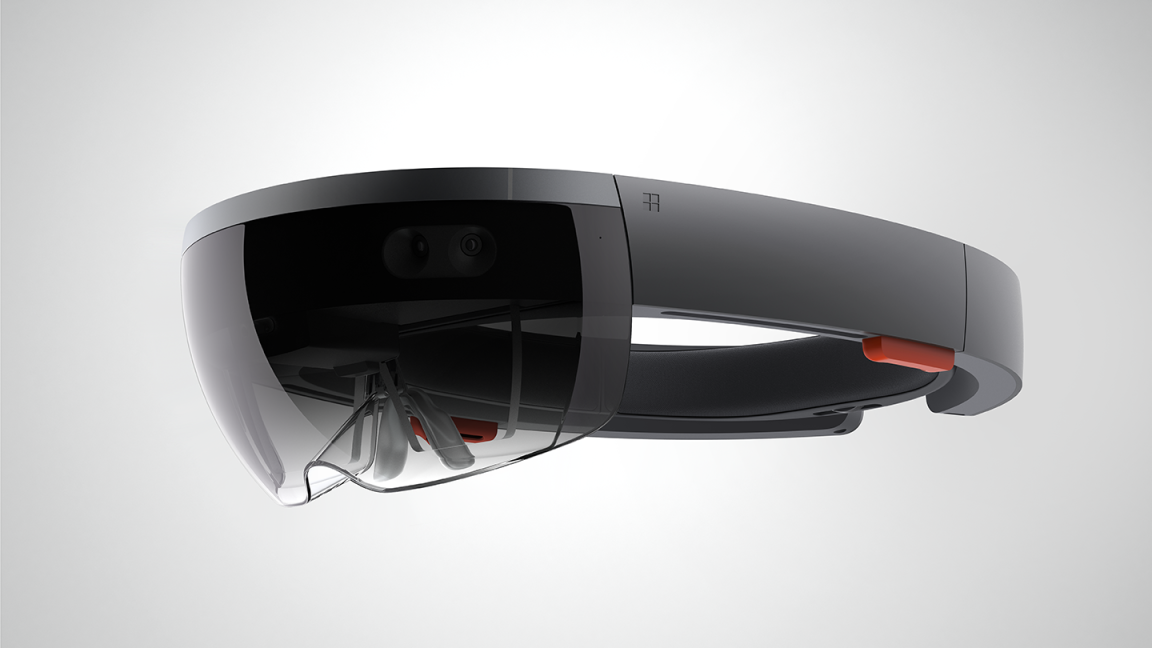
Microsoft is barely taking back its own declining market of non-phones -- while making a wild bet on augmented reality.
I feel like the media wants to paint a comeback story a la Apple a lot more than one actually exists.
In terms of an Apple come back story that's blatantly false. Microsoft was never in dire financial straights since practically the mid-80's.
The Benefit of the Doubt is more because of their attitude to the OSS community. For nearly its entire life Micro$oft has been seen as the prime enemy of the OSS community, a role which it willingly and almost happily embraced.
Today Microsoft has open sources it main .NET runtime. Opening up C#/F# 2 great languages. Its opening the JS Engine in Edge. Compared to Gates/Balmer area Microsoft it very much feels like a different company.
Companies don't have a DNA. Humans do. Companies change as employees come and go, as the environment changes, etc. Don't antropomorphize them.
Companies act in their financial interest. Very rarely not, but mostly yes. I don't know why is it so hard to accept that.
On the one side the open sourced quite a few code bases, though very strategic ones but non of the high profile old cash cows. Azure is doing well.
On the other site, XBoxOne and WinPhone10 had a lack luster sales far behind their competitors (half of PS4 sales; less than 3% of mobile market). Win10's inbuilt privacy issues aren't funny - a showstopper and it will hurts their reputation. Fix that in 2016! http://www.ibtimes.com/ps4-vs-xbox-one-sony-has-sold-302-mil... and http://www.idc.com/prodserv/smartphone-os-market-share.jsp
Operating systems and "phoning home" and the whole privacy thing is an interesting battlefield. I could never imagine Microsoft standing up to the Department of Justice like Tim Cook has. I also can't imagine Apple making iOS available on anyone's hardware but their own. So that leaves making the hardware available for someone else's OS.
I suspect there is a small market for a phone tether solution which suppresses all of the privacy leaking information from the network stream. Perhaps the Silent Circle folks will consider that a feature in a future release. But for now its really hard to plug that leak. So many apps on iOS, Windows, or Android leak stuff left and right. Whether its maps, or Waze, or location based games, or the Uber client to tell Uber where you are to get picked up. No to mention IMSI catchers and just general phone company douchebaggery like injecting an ID on every http request. I don't think that battle is lost, only that the depth of it is immense and any one player is probably not going to swing it one way or another.
From a company perspective though I think Microsoft has made some very positive steps and I hope the market rewards them for that.
Google, Apple, Microsoft -- they all make money based on closed-source software. What they open-source is only the stuff that does not give them competitive edge. You can't download the source Google Search, iOS or Windows.
(I'm not arguing with you, btw.)
Microsoft promotes stuff like Visual Studio Code and Chakra not to sell Windows - their stand at Node Interactive earlier this month had a 50 inch TV running Ubuntu. Instead, they realise you don't necessarily want Windows, and are happy to sell you Azure (which runs Linux VMs and is a pretty good product).
Most devs beside enterprise IT departments use open source languages for web deveopment. NodeJS/Java/PHP/Ruby/Python/Go are very popular and only a tiny fraction (11%) runs on Windows servers with dotNet or Mono. http://news.netcraft.com/archives/2015/11/16/november-2015-w...
I know if you nmap our website which uses iis it returns as something else because of our load balancer.
Samsung has the ability to create amazing hardware. What could Samsung do to make itself interesting to a technically sophisticated audience?
Only half of Apple's genius is their design, the other half is their incredible execution machine, in large part thanks to the work that Tim Cook did. Microsoft used to have an incredible execution machine, with mediocre design. Now they are struggling with both.
Microsoft has gotten a lot better in design, particularly in the hardware space, but the questions is:
Does Microsoft have the needed DNA to align their incredible resources/brain power around a small set of products that will really make a difference for them?
Despite hololens and the surface products, this remains very unproven for me.
I also think the success of their desktop monopoly in the 1990s and early 2000s caused Microsoft make the classic mistake of forgetting what business they were really in. They stopped thinking they were in the technology business, and started thinking they were in the PC business. Other devices and products like smartphones and tablets were OK, but only so long as they respected the PC's place as the centre of the computing universe. The idea that a new type of device and OS might eventually supplant the PC and Windows as the dominant consumer computing platform was heresy.
Their advantage we're in the combination of innovation, design and marketing, and their unique market power/position which give them unique powers over collaborators and suppliers which they knew how to smartly use to build new ecosystems.
MS might be making cool products, but it sure as hell isn't keen on making them easy to buy.
http://www.windowscentral.com/surface-pro-4-slated-launch-in...
I personally don't know anyone who has committed their future to the Windows Universal App platform. If developers aren't all in on a platform then that platform will never see the applications that propel it to a leadership position.
https://theintercept.com/2015/12/28/recently-bought-a-window...
You can use the most encrypted and anonymous apps you want, but if Microsoft can silently send you updates to your OS, can see what you're typing and send it to its servers (to "improve your experience", of course), and gives the US government access to its discovered zero-days months before it starts fixing them, then it's all kind of pointless.
The same will happen here. The technology and society are simply not ready yet - someone will lead us there, but it won't be Microsoft. They never were inovators, they were always just businessmen. And no, you can't change the company any more than you can change a person. Has IBM changed? (well, I hear the ties are optional now ;) Apple? Sony? Google? Facebook? Yahoo? The shades change, but the color remains the same.
(full disclosure: yes, I am biased - I had to live under torture that is known as Internet Explorer for too many years... may it rest in peace, along with all its reincarnations)
</rant>
I don't see why anyone would give Microsoft the "benefit of the doubt" since they are probably the most consumer-hostile of the big tech companies (even Google is merely indifferent, not actually hostile.) The Win10 spyware, the always-on Xbone camera, the (later reversed) decision to ban used games on XBone, the list goes on...
On the other hand, I trust that HoloLens will be around for a while since it is a vanity project for them and they have literally billions of dollars to burn on it. Similar to Google Glass and Facebook's virtual reality thing that they acquired.
Calculate Linux KDE and Linux Mint Debian Edition are the installs of choice, btw. :)
It's not a new idea at all. Rolling release linux distros have been doing that for a long time.
Microsoft can't monetise in multiple ways from singular products the way other companies can nowdays. I think most general users use mocrosofts core products as a platform to connect with other companies to monetise. The push with win10 to connect with the Microsoft store was a good move IMO.