44 points · by Roritharr · 10y ago · 45 comments
Edit: Rift also includes an Xbox controller in the $599 bundle and Oculus will be selling their own hand controllers (called Touch) in H2 2016.
The Rift uses a camera pointing at the headset to track it, which means you have to be in the field of view of the camera. It's designed primarily for seated experiences.
The Vive uses two laser "lighthouses" and phototransistors on the headset to triangulate its position. It's actually really clever and allows room-scale VR.
I somewhat suspect that the Rift will be more successful - not many people have an entire room to dedicate to VR, it's cheaper, easier to set up, the dangling cable problem isn't so severe when seated.
I'm going to predict that Vive-style VR will be most popular in dedicated VR venues - i.e. instead of going to laserquest or paintballing, you go to a VR place. There are actually already some in the UK in shopping centres. I think they're called VR Zone or something like that. They're seated though, and I haven't tried them.
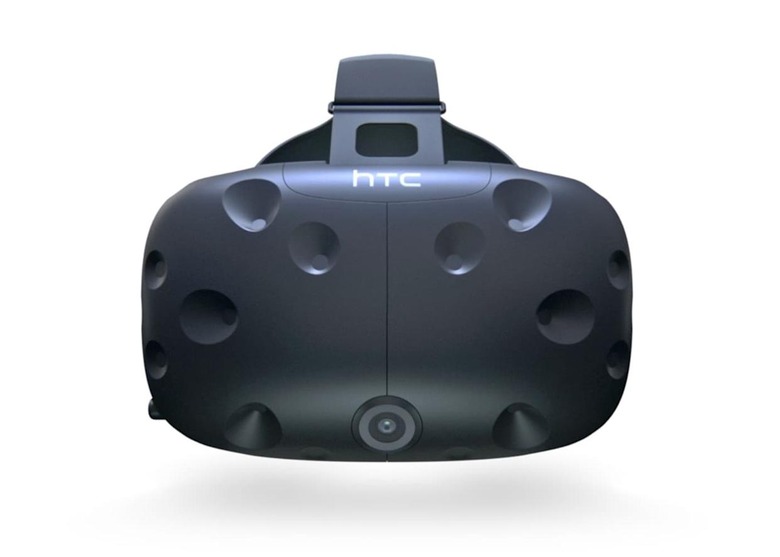
Beyond that, I really do think that the front camera (supporting AR to a degree, and being able to grab a drink or use a keyboard) and bluetooth/phone integration (immersion, collaboration) are the biggest technological advantages the Vive has. Recently game devs have been gushing over it, but when it comes to gamers typically the price really is the deciding factor regarding hardware adoption.
That is exactly why I don't get how people say the room scale thing makes the Vive the winner in this VR race.
As long as there are cords involved, being able to move around is not a game changer. Especially the way the Vive does things. Didn't HTC say they adressed the issue of being caught in the cords by making them visible in VR? Talk about immersion break. There you are, in the VR world and you look around and see the cords that actually bind you to a very narrow sector in real life.
This whole room scale VR can only become a thing once the tech is wireless and by there own statements, that is still a looong way from being a reality. Especially seeing as these are the 1st generation devices, I say you save yourself some money and get the rift seeing as you will not get much out of that feature that only the vive offers currently.
If you have tried VR, you will realize that one of the first thing people do, is try to look at their hands, only to be disappointed as they can't be seen. The Vive makes this possible on day 1. (Obviously not a 1:1 mapping of your hands, you'd need something like the Leap Motion Orion[0] for that.)
Most everyone who has tried the Vive have not found the wires to be a problem. Also what you say about seeing the cord in VR is not true, there is however something Valve calls the Chaperone[1] system which activates the camera when you are too close to the edges of your play area. The picture has a bluish tint, because the resolution of the camera is sub-par, so this is a cool workaround. It also prevents you from going around "worrying" that you will break something outside of VR, because as long as the system doesn't warn you about anything: You are good to do whatever you want in VR.
Dont get me wrong, I'd love to check a place like that out. But if this is the era of mainstream VR, you'll never have to leave the house to jack in.
Having tried experiences like The Void I'm confident these out of home experiences will be able to offer significantly more features to warrant leaving the house. Features that may never be possible in a house.
http://gizmodo.com/this-is-how-valve-s-amazing-lighthouse-tr...
- Vive: headset, 2 tracking cameras, 2 one-hand controllers, bundled games $800
[1] http://metaversing.com/2015/03/23/examining-the-valvehtc-viv...
I'd guess that Rift is less expensive to the end consumer thanks to Facebook subsidizing, and HTC/Valve waited to price their VR device higher so they could position their device as the 'expensive high end' gaming VR device. Both Rift and Vive are probably going to be sold at a loss for at least few years just so they can get the market segment to boom, so they can manufacture at a large enough scale to profit.
The good news is that the Vive has a lot of unique content just by virtue of its (presently) superior tracking.
Long story short: right now, there's a wealth of content for each system that the other will not be able to play.
It stands to reason that Oculus exclusives will eventually "time out" and get ported, but it is not known whether the Rift + Touch will ever really support room-scale tracking or not.
- Oculus Home works with the Rift.
- SteamVR works with the Rift and Vive.
It gets a little trickier with which games support which types of controllers though.
What are you referring to?
The approach that Oculus took on virtually every aspect is better than what HTC/Valve went with.
It will launch at 600$ which is 200$ and while it comes with a traditional controller (more on what it's a good thing below) it doesn't matter as much as the pricing does getting more stuff only works when the prices are equal when they aren't the cheaper device wins.
It launches with a traditional controller which is the most important aspect of this as it comes with a control scheme that both gamers and developers are familiar with which will help to bridge the gap while developers work on good motion / acceleration control scheme for their games.
If we take the Wii for example then allot of the early games came out with traditional controls and through out it's life span even 1st party games from Nintendo continued ship with traditional controls only for titles that motion controls didn't made much sense for e.g. Smash Bro's.
The OR Xbox 360 style game pad is something that everyone is used to and knows how it works, it means that developers can focus on utilizing the VR aspects of OR instead of trying to work extra hard on making a more complicated control scheme work. Traditional gamepads are also considerably more easy to implement for seated gameplay which is how most consumers will end up using it any how. Sure a whole AR/VR room size experience might be cool for 15-30min ala Lazer Tag but no one will have that at home.
On a side note playing with both Vive's and OR's touch controllers OR wins here too, the Vive one isn't as comfortable especially for mixed control schemes which is what even the best motion controlled games eventually opt for.
Now tracking, people say that the Vive tracking is superior it's not really, you can stack multiple (upto 50 in the SDK iirc) OR cameras to track multiple players across a large room, from talking to people that were interested in large scale installations (5+ players in a single room) OR is pretty much the only way to currently go because the camera setup can correctly directly track multiple players without any interference.
And it's not like room scale VR is going to be viable both are still tethered headsets in all of the demo's I've been through there was a guy behind each player which was pretty much holding the tether ensuring that it won't tangle or snap off and that the player wont end up on the ground or with the tether around their neck. The installation of a single frontal camera is easier than installing the lighthouses as far as a home setting go, people are used to the Kinect and the Sony Eye cam, the OR camera could also be used for additional full body tracking and object recognition.
Overall as far as build quality and comfort goes the OR is more comfortable (subjective) the rift is considerably lighter and the weight is much better distributed meaning it sticks in it's place better I had issues with the Vive wobbling which can cause major issues for people who suffer from borderline VR/Motion sickness, the OR also comes with great built-in headphones which are definitely of high quality the sound quality from the demos I've experienced as well as the overall noise isolation is about the same level as my Shure premium earphones, the Vive took the bring your own headphones approach which doesn't work well as it puts limit on the size, shape and strap of the headphones and even in the demos it didn't seem like they've managed to find a perfect fit.
On the software side Oculus also has a big advantage they were first and they've scored most developer deals atm, since Oculus is also what drives Samsung VR (which I actually own and even it is superior to Vive as far as comfort and many other things go) and they also plan to licence their software and hardware IP to other companies it looks like Oculus will have the better support out there.
Sorry Valve but Vive atm seems more like a me-too product than a true innovator and industry leader, their bet to go with HTC is also problematic for the long term aspects of the Vive since HTC is in quite a bit of financial trouble.
How can you reasonably claim that OR is "pretty much the only way to go currently" when the Vive has done perfectly well with lighthouse tracking? You mention tracking multiple players at the same time, but not a single developer is even trying to do this. Maybe Oculus will tackle this at some point in the future, but they certainly aren't right now.
And while it's true that the Vive headset is still tethered, many folks have tried it out and almost none have reported any real issues with the cable.
Some of your points are correct and legitimate, but I think in these two areas you're showing some real bias.
Regardless, I don't think there's any reason to really be worried here. These are two very expensive devices geared towards affluent early adopters. The VR space is going to evolve a lot in the next few years. If room-scale takes off, Oculus will possibly have to redesign their tracking system, but they have the money and the manpower to do so. So if you're a big fan of Oculus, I don't think you need to worry about the company going bankrupt over this.