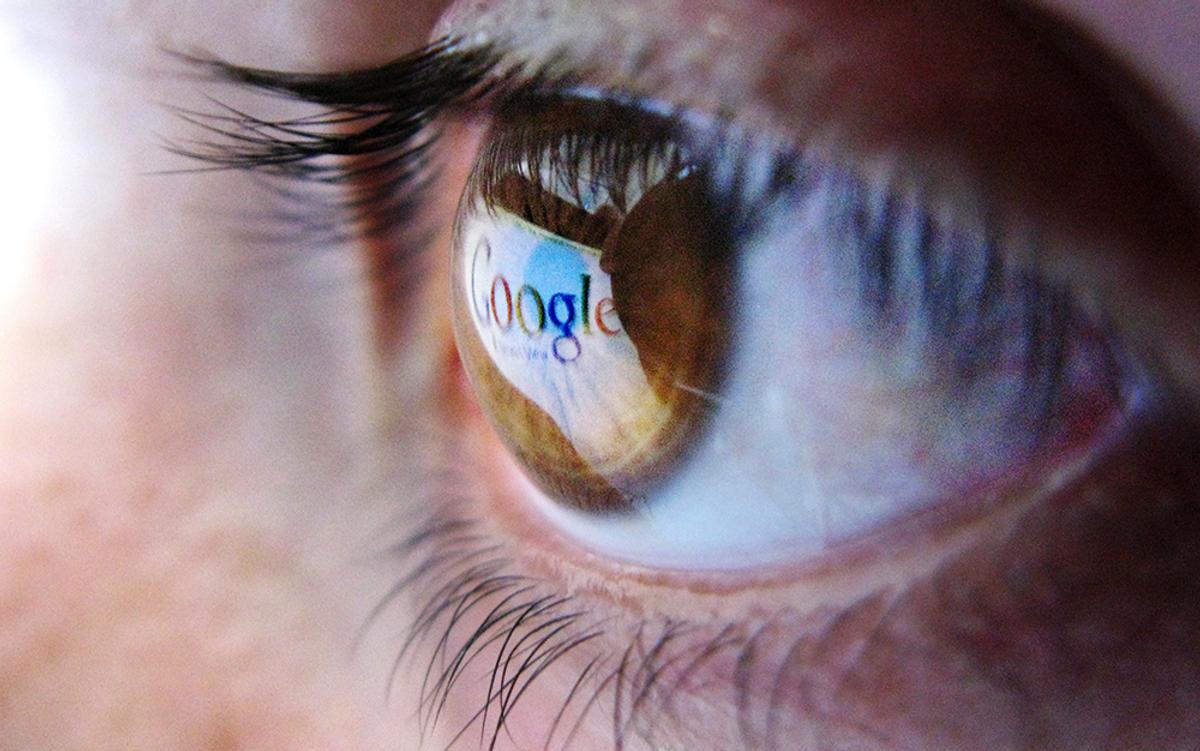
How the internet flips elections and alters our thoughts | Aeon Essays
The internet has spawned subtle forms of influence that can flip elections and manipulate everything we say, think and do
aeon.co
259 points · by mark_l_watson · 10y ago · 203 comments
The Internet is the largest information system in the world, and Google is the primary portal into that information system. Google's "organic" results are accompanied by AdWords results, which are based on a mixture of bid price and relevance. These ads are marked with a small "Ad" label that many people miss, and even those who know they're ads can't really "unsee" those results.
So, searching the world's largest information system provides results which have been biased by money. How does anyone consider this ethical? Why are we letting money influence the salience of information?
What if your local library (you know, those old things) had a card catalog with "sponsored" results? If this already exists, then maybe we're already lost. But it seems to me that as a basic rule of information ethics, the salience of information in a given information system should not be biased by monetary influence. Full stop, the end, no exceptions. If anyone has a counterargument, I would honestly love to hear it, because this has nagged at me for a long time. I simply can't understand how AdWords is ethical.
Google is no different. The organic search results are largely from commercial, or at a minimum, self-interested sources.
That doesn't make it wrong. There's huge value there. Just the same, money is not evil. It's a mechanism for storing value. It's imperfect, and abused, and certainly not the only measurement of value. Keeping those value systems in balance is the key.
The Internet should not be a place where those with more money get to cut the line in front of those with less. Let PageRank sort it out.
Also, what's this about my example not holding weight because "information purity" doesn't exist? It's not about the information itself being pure, it's about purity of ranking. Let's just spell this out:
money !== relevance, therefore any influence of money on search engine rankings is, by definition, noise.
Using money to purchase a magazine, newspaper, television, radio, or online advertisement is just another way that money helps people express their views.
In any case, I wouldn't be too worried about money changing people's minds, as it rarely does that.[1] Advertisements and the like usually serve to give voice to the views people already hold, and inform them of things they were not aware of. An advertisement will never convince people to buy things they don't want and don't need; if you disagree, please go and try to sell a bad product, and we will see how well your 'mind control' works.
How is this not implicitly the case with "only organic" search results? PageRank was built off of the idea that a website's value was based off of inbound links. Back in the day, high school kids could get $50/hour (in 1990s dollars) to build and upload a simple webpage for a local business. Money has always been a factor in influence, before and after search engines.
> It's not about the information itself being pure, it's about purity of ranking
Again, this purity is an illusion -- the things that can be objectively ranked are things in which the metric is simple, i.e. alphabetical order. Stray from that and rankings are no longer "pure" by any stretch of the imagination. Not even early PageRank -- the many easy ways to game it, and the many ways that PageRank has evolved to avoid such gaming, should make that assertion self-evident.
Someone (advertiser) is paying money because they believe they have information relevant to you. How is that categorically different than the blogger/webmaster who's paying money (time/hosting) because they believe they have information relevant to you?
All information has a cost associated with it. And that cost bears some significance on the value of the information. Measuring and weighing that significance relative to other inputs is the beauty of an effective system.
We live in a society where advertising exists. I'm not saying I like advertising, but it is a basic skill to be able to differentiate advertising from content. If some people can't tell the difference, I don't think that's a very strong argument for saying the practice should be banned.
Having some cruft around my search results is a small price to pay for a free service that basically powers modern society.
How would you feel about a government-sponsored search engine? I think China has one of those.
That's not what he asked though. Generally libraries don't have special "sponsored" books, and don't control and push certain books to people more than others.
Those libraries that do, fall into 2 categories:
1) Promoting widely recognized cultural works (e.g. with events like "Mark Twain Year", etc).
2) Promoting some ideological agenda (e.g. a creationist library in a religious school).
The latter are dangerous.
Google, besides the opportunities for pushing its own corporate/political agenda, has also financial motives for pushing ads/brands.
Besides there's another key difference: there are thousands upon thousands of libraries (and people don't care much about them anyway). There's only one Google (and the majority of web users use it everyday).
>That doesn't make it wrong.
I wonder what some people DO find wrong. Apart from things like cannibalism and hurting kittens, which we all probably agree on.
A system that incorporates bias is vastly more useful than one that ignores it.
[L]ess blatant bias are likely to be tolerated by the market. For example, a search engine could add a small factor to search results from "friendly" companies, and subtract a factor from results from competitors. This type of bias is very difficult to detect but could still have a significant effect on the market. Furthermore, advertising income often provides an incentive to provide poor quality search results. For example, we noticed a major search engine would not return a large airline’s homepage when the airline’s name was given as a query. It so happened that the airline had placed an expensive ad, linked to the query that was its name. A better search engine would not have required this ad, and possibly resulted in the loss of the revenue from the airline to the search engine. In general, it could be argued from the consumer point of view that the better the search engine is, the fewer advertisements will be needed for the consumer to find what they want. This of course erodes the advertising supported business model of the existing search engines. However, there will always be money from advertisers who want a customer to switch products, or have something that is genuinely new. But we believe the issue of advertising causes enough mixed incentives that it is crucial to have a competitive search engine that is transparent and in the academic realm.
Google absolutely does this - for example, to a site that I own.
So it's not just theory: Google has put it into practice.
It was ridiculous that you would type in "Delta Airlines tickets" and the results would go: United Airlines, TWA, Fly By Night Corp, Rickety Rickshaw Airlines, We Barely Stay in the Air, and DuctTape & Flights.
The results were so bad that when Google came along and used the PageRank feature to deliver information, it was a godsend (Thanks God). Try searching for something on Google today and there is a high likelihood that you find or at least get close to it.
Just remembering how bad it was back in the day until the web search engines got their act together and became Bing and Google.
Why are we letting money influence the salience of information?
This isn't a comment on the ethical nature - just that I don't believe there was any point where you could choose between commercial drivers to the growth of the "information system", and any other approach that would have resulted in similar growth. If the commercial explosion on the web hadn't happened, we wouldn't have anything like the same scope as we do now. For good or ill.
https://en.wikipedia.org/wiki/The_Ones_Who_Walk_Away_from_Om...
It sucks that the idea of funding Google via taxes is anathema to so many because people fear government influence. So basically we're stuck between government influence and monetary influence. I wish there was a third way that we could crowdfund a platform without making it beholden to any specific set of donors.
That wouldn't fix the problem. Ultimately, somebody has to decide & implement what goes into the ranking algorithm that determines the search results that people see. That person has significant power, and will be both decried by intellectuals who feel like they're on the losing edge of the power dynamic, and courted by donors/lobbyists/etc. who wish to gain some of that power. If it were funded by taxation, you would see the same distrust that the FBI and NSA face today (both of which are funded by taxation). If it were crowdfunding, it'd be exactly the same problem that Google faces today - Google's AdWords auction essentially is crowdfunding, and if you give Google money, you get to influence the ads shown on some subset of queries. (Try it - you can get started in 10 minutes for a few bucks.)
What would fix the problem is if people didn't blindly trust Google, and instead researched in-depth on a number of competing search engines. The article alludes to this - Google's power comes from monopoly, and competition is the way to negate that power. But this only fixes the specific case of Google - if you broke up Google into many competing search engines, then Facebook would simply become the 800 lb. gorilla of how people get their information. Break up Facebook, and it becomes Reddit. Last century, it was ABC/NBC/CBS, and before then, Pulitzer and Hearst (who were a lot more unethical than Google was...Hearst started a war so he could sell more papers).
You can't avoid power, you can only understand it, and perhaps manipulate it so it serves yourself better.
The essential point I want to make is that just because you have a right to something, does not mean you have a right to the material implementation of that right. (Because that would mean you had a right to the labour and property of others, i.e. a right to violate their rights).
You have a right to free speech. You do not have the right to publish your opinions in any outlet of your choice (because that would violate the publishers' rights). Even if you lived in a small town with only one newspaper, and they wouldn't print your letters to the editor, it still wouldn't be right for you to compel them to print your letters by legal means. They built the audience, its their right to communicate with them as they see fit. (This isn't censorship, because you're still free to hand out flyers in the street, start your own newspaper, sue the existing newspaper if they commit libel, etc).
Your argument is essentially that because Google is "the world's largest information system", we shouldn't be "letting" them put whatever content they want on their pages, for whatever reason they want. The implication is that if someone builds something really useful, that thing should become public property. (People are saying the same thing about Twitter).
AdWords is absolutely moral because a privately-run service needs a source of funding. (I should note that I do think many PPC ad networks are exploitative and immoral, but that's not the case for Google).
Unless someone sets up a nonprofit search engine run by donations, the only alternative is a public, state-funded search engine -- that's the only way to get an "information system not biased by money". On the unlikely possibility that the state could build and maintain such a system, it would be the most powerful tool for potential censorship imaginable.
Of course, one can always suggest that I am just better attuned to Google (I have Google Fu from long experience with Google and wrongfully expect DuckDuckGo Fu to be the same skill and have not developed DuckDuckGo Fu).
Another trick I use with Google, especially when I'm searching things that are outside of my usual interests, is clearing my cookies. Best I can tell, this makes it skip the statistical model of me that, say, suggests 'logging' is more about daemon output than about killing trees.
Now if only all the engines didn't have such a bias towards "new" material. My major search-related frustration over the last while has been how buried things become over time, especially if they share identifying lexemes with things in the news.
What's an example of a search that fails to find what you need?
Search for programmers?
At the risk of sounding melodramatic, the internet is a great idea but the implementation sucks and there's no easy way to fix it.
I also used to fantasize about the democratization of speech via the internet. No longer would money determine what information reached you.
Adwords is no less ethical than search rankings, newspapers, TV, radio, literature, bus stops, music - reality, ultimately. Reality is for sale.
Good news: I agree that this is a problem. Bad news: It's incredibly more prevalent than you realize.
If communication of information isn't democratized, you can't have a democracy. It shouldn't be a surprise then that we don't have a democracy, but an oligarchy [1].
Mind you, this is just one of many factors that makes a true democracy impossible as they currently exist. [2]
Then we find this, and wonder why it bothers us.
You are ultimately responsible for your own perceptions.
Would you consider a Muslim born and raised in the Maldives, where the state and populous are all Muslim and questioning the status quo can result in severe injury and incarceration, personally responsible for their views even though they are denied alternative perspectives?
But it is biased! The card catalog might be an unbiased representation of what the library has- but have you considered that what the library has is biased by monetary influence? What the book costs. Whether the book is demanded (advertising). Jacket design (you grab the most interesting-looking book).
The flaw to libraries is their naturally limited capacity.
Luckily, the world does not have to conform to your standards. What you are arguing for is authoritarianism, that your opinion be forced upon actors. This kind of thinking is exactly what erodes the basis for innovation and liberty. Google is the top search engine because their results are just unmatched in quality. If you don't like the results of google, then visit another search engine - or better, create a better one that conforms to your puritan principles. But please don't tell others what to do, and for goodness' sake, please don't involve the state and more legislation in this.
I just have little patience for complaints about free products like Facebook, Google, Twitter etc. They cost you nothing but time and attention - both of which you have complete control over.
Lets also assume that people buying the ads are willing to increase their ad bid until the cost per acquisition approaches equilibrium with the expected lifetime value. Over time, this should result in only the most profitable ads being displayed. This implies that only the most valuable/relevant ads are being displayed, given the point previously posited.
Thus, over the long term, assuming a fairly efficient market and some restriction on deceptive advertising, the ads can be thought of as an alternate form of result, with a very direct, user-centric ranking metric.
Would it be more palatable if the SERPs were divided into two columns, one being "web search results" and the other being clearly labeled "product/service search results"?
He states that some things that are charities in intent may need to be businesses.
Money itself is just a tool, it cant be (un)ethical. Best to focus on the human agents and incentives.
> should not be biased by monetary influence.
Influence will exist because it's part of human nature. Take away monetary incentives and you 'll have political influence, religious influence etc. We 've learned that from history.
I also used to fantasize about the democratization of speech via the internet. No longer would money determine what information reached you.
Adwords is no less ethical than search rankings, newspapers, TV, radio, literature, bus stops, music - reality, ultimately.
Good news: I agree that this is a problem. Bad news: It's incredibly more prevalent than you realize.
If communication of information isn't democratized, you can't have a democracy. It shouldn't be a surprise then that we don't have a democracy, but an oligarchy [1].
Mind you, this is just one of many factors that makes a true democracy impossible as they currently exist. [2]
In short they believe that the most reliable way to drive search relevancy / quality EVEN in paid categories is to make sure the guy on the other end of the table is willing to pay for that user's attention.
QPS is designed to penalize the advertiser if they don't hit "relevancy" metrics which makes it more expensive for that advertiser to reach you - as a percentage it can make clicks literally 600% more expensive (worst case).
The relevancy metrics they'll use include page speed (good for user), time user spends on site (relevancy), actions taken - tracked by Google Analytics (relevancy), and content quality / uniqueness (relevancy).
If you've got a guy willing to pay with high relevancy it's a compelling reason to show nothing but ads.
Now is that REALLY good for the user across the board? No way.
But there's at least a superficial effort to arbitrage the $$$ bias.
(1) Google's PQS documentation https://storage.googleapis.com/support-kms-prod/8E4C3B33697E...
(2) http://searchengineland.com/minimum-quality-score-can-save-m...
(3) Google's PQS update broken down https://www.convirza.com/resources/the-impact-of-googles-rec...
I don't see that you've got no choice but Google. The easy workaround is to switch to another search engine like DuckDuckGo.
Wikipedia is said to be exploring a search engine project so that may become another option: http://www.theregister.co.uk/2016/02/12/wikipedia_grant_buil...
-Marshall McLuhan
Also recommended to read Bernays' works themselves, particularly "Crystallizing Public Opinion" and "Propaganda."
Its like reading an engineer's manual for social control.
Do journalists, corporate communication professionals or others who end up in PR know him? That is up for debate.
EDIT: Clarity
[1] http://research.calvin.edu/german-propaganda-archive/goeb27....
We will be able to discuss, collaborate, create. We would be able to watch any film, listen to any song.
Some people called us "geeks", we liked to call ourselves "hackers".
We are not just hacking code, we're hacking a new world.
--
A quarter of a century later and most of those things are now reality. But somehow these great things have brought with them some hidden things. Things which we ignored or brushed off easily back in the day..
Like the fact that the Internet is now populated by the same demographic as the real world, not just hackers and dreamers. Now everyone is online.
We thought it would free us from oppression, but it is becoming the ultimate tool for oppression.
We thought it would give us true democracy, but it is becoming the ultimate moderation system for "foreign" though suppression and group think generator.
We though it will serve our needs, but it is becoming the thing that is telling us what to need. We thought it will satisfy our tastes, but our tastes are now being programed into us by it.
Of course we're still high from all the positive aspects and it's not in our nature to be scared of things, but that will soon wear off .. And when we wake up what will we find there ?
Either way, it is unstoppable and nobody can turn it off. So we only have to wait and see what it will ultimately turn into.
What will it be 25 years from now ? Will we still be able to discuss about this freely ?
I agree that in many ways the internet looks sad compared to what it was, but I don't think hope is lost.
Of course the old internet still exists, at least as far as the old sites go - as long as someone is still paying to keep the servers up. What doesn't exist anymore is the exclusivity of online culture. But if the web is a platform for expression, and I don't think anyone can argue it isn't, then is it really the case that the old "culture" of the web, biased as it was towards hackers and university students merely by happenstance, was really more "true" than the culture of the web today?
The inventor of television thought it would end war once people could see directly into other countries. I guess he thought it would make people more like himself. And you're right that the population of the internet has changed drastically. In the past 6 years, more Indian people have come online than the number of people in the United States. The mass migration into Europe has not been triggered because the Middle East is suddenly violent, but because now anyone, even without family abroad, can see how they can be paid far more in Europe for doing nothing than they can for doing anything accesible to them in their current location. They can read and share intricate details on how to make the trip, how unlikely it is to be deported, what benefits they can get where and by taking what steps, how to and why to destroy their passports and acquire Syrian passports, etc. Sure television let them see 90210 and all sorts of Western things, and that was influential, but the Western channels that could be retrieved by satelites never ran infomercials on one weird trick to raise your income by twenty times. And all of the extra information accessed through the internet has made living in the "worst" countries ever more embarassing and painful because the relative and absolute differences are harder to ignore. And this obviously effects the experience of lifestyle differences in the richest countries, too.
"Homer was wrong when he said 'Would that Conflict might vanish from among Gods and men!'... One must realize that war is shared and Conflict is Justice, and that all things come to pass in accordance with conflict." - Kahn translating Heraclitus
If we want something to be different, we'll have to fight to change it, and we can be sure someone will want to change something further still.
Re: "What do we call the state of the world that leaves us with only 2 pre-selected choices who happen to agree on 90%+ of all policies?"
Well, and supposedly over 90% of my DNA is shared with chimpanzees. If anything, there is plenty of competition in both primaries this year even if superdelegates mean that Bernie's chances are fake. Bernie was down over 30% in the polls and won Michigan so I'm not sure how pre-selected these choices are. I know there is rampant voter fraud in the United States, but new ID requirements instituted to give a possibility of detecting it seem to be deterring fraud quite well this cycle. Democratic party turnout is a whopping 285 percent (!!!) worse in states with new voter ID laws. Even as turnout overall is much higher! Voter fraud investigations ending in convictions have shown that it has been trivial for less than ten people to successfully conspire to get hundreds of thousands of ballots counted as valid, so I'd say choices are becoming less pre-selected. The only person who pre-selected Trump was Trump.
Re: "None of this is any kind of pre-planned conspiracy, just brain chemisty"
But it is a pre-planned conspiracy. These are exactly the Alinsky-ite tactics Hillary studied for her senior thesis. Yes, the average foot soldier doesn't know the origins of why they treat people with different politics the way that they do, but they are modeling behavior that was originally meticulously designed. The Twitter Trust and Safety council's biased banning is driven by Habermas's arguments for a need for censorship in favor of the good. Philosophers / theorists / prophets / thinkers drive behavior. Even if Google is diverting people to pages, someone has to come up with the ideas on those pages, even the idea that people should buy a graphic t-shirt. The ideas are then presented using techniques of rhetoric / advertising / proganda / presuasion / captology / seuduction to propel themselves through brains and their chemistry but reduction to chemisty here is unfair to the lucidity of the most far-seeing, far-planning, and far-influencing of our species.
Re: "replace voting with polling!"
And have laws fly back and forth with vacillating of polls? You haven't even acknowledged any of the historical problems of direct democracy or any of these reasons such polling was opposed by both Federalists and Anti-Federalists. Even if this polling was legitimate (its scientifically debatable whether it could be and, I feel, psychologically / sociologically impossible) its contravention to the Constitution and the sense of illegitimacy it will be saturated with to those who lose on important issues would guarantee that 10%+ of U.S. citizens would begin an armed revolution. 45% of Americans believe in ghosts and enough Americans disbelieve polls (I don't know how to Google for a poll about polls!) even when they more indirectly influence policy that I believe your policy would be a grave danger to the general peace. Hillary was favored in EVERY Michigan poll, most by 20-30 points! And she lost! Polling is less accurate than ever and it would be far more difficult to actually vet a poll where you had to make sure that the pollee was legitimate. I've been polled twice in my life and never selected for jury duty. I've heard lots of older people complain that they've never been polled. Do you understand that if people went years without being polled by your system that the mind trick by which democracy gives people the illusion of control would suddenly fail? You underestimate the ritual function of elections.
EXECUTIVE SUMMARY: Bias is inevitable, what kind should we want, and why? Our answer to that will be decided by who best seduces us into an answer. See: Baudrillard
I'm also confused as to what -285% could possibly mean - voters stopped turning out so hard that they ended up voting for the other party twice over?
I can't see how this is valid at all. We know that polls give biased results unless you are very careful with the sampling. Here people are self-selecting for a poll (eg via mechanical turk). Then you apply a highly contrived scenario that they are googling about a candidate. Then you ask them a bunch of questions, immediately, and proceed to draw wide ranging conclusions designed to increase your self-importance as much as possible. I mean, seriously, it's worse than useless.
This article is also written as if these findings are earth shattering. After conducting a small, biased, invalid study (Asking people in San Diego about an Australian election? How does that generalize to anything?) and finding a large effect Epstein says 'We did not immediately uncork the Champagne bottle'. Is that how psychology research is conducted? Researchers toasting large implausible effects in small biased samples that have no external validity?
Flagged.
"We predicted that the opinions and voting preferences of 2 or 3 per cent of the people in the two bias groups ... would shift toward that candidate. What we actually found was astonishing. The proportion of people favouring the search engine’s top-ranked candidate increased by 48.4 per cent"
The basic argument is search engine rank determines trustworthiness of a source. This influences people's opinions on politics, what they buy, what they think, etc.
This is absolutely true, and the core of their research (it seems).
But then it goes into FUD territory when talking about Google backing Hillary. Hillary and Trump have received the lion's share of attention in media, social media, and such. Google searches SHOULD show them prominently.
Worse, the article basically finishes up with a "be afraid, be very afraid" approach that rankles me. "The new hidden persuaders are bigger, bolder and badder than anything Vance Packard ever envisioned. If we choose to ignore this, we do so at our peril."
No solutions or deeper analysis. No discussions on how a search engine should rank relevancy to search terms.
I personally have no doubt that mass-media, marketing, and the internet are shapers of opinions. Bias in the media, search engines, and such is a complex topic. Not something that should boil down to "Google could make it so Hillary wins" therefore you should be afraid.
I agree; the Hillary portion of it seemed like a bit of a silly conspiracy theory to me. They'd still need to provide evidence rather than innuendo, but it'd be more believable (albeit attract fewer HN upvotes) if the article had claimed Google has a pro-Bernie bias, since he's the candidate who likely has the most support amongst Google employees and especially engineers.
I don't think the (potential) issue is so much Google actively putting its thumb on the scale for one candidate, as the influence outside activists can have on how they create their algorithm.
Suppose that the (Hillary-endorsing) New York Times runs a front-page story saying that a study found Google search results systematically are more negative towards female candidates than they are to male candidates. The subtext of such a story would be that the NYT is pressuring Google to alter its algorithm to be more favorable to Hillary. I think there'd be a pretty decent chance Google would in fact alter its algorithm in response to such a story. I doubt they would alter their algorithm in response to a similar criticism from a conservative source.
Similarly, if one of the top results for Hillary Clinton or Bernie Sanders were a scatological reference, as with Rick Santorum, I think that Google would very quickly remove that page from its results.
Now, there's nothing wrong with getting rid of bias in search results directed at left-of-center politicians. But if Google (hypothetically, of course) is much more aggressive with eliminating bias towards left-of-center politicians than it is with eliminating bias towards right-of-center politicians, the net effect will be a general left-of-center bias in Google search results.
None of this is any kind of pre-planned conspiracy, just brain chemistry. We're wired to easily perceive bias, incivility and lying when directed at those we agree with, but justify, rationalize or ignore it when directed at those we disagree with.
The relevant engineers themselves would have more opportunity to change the search algorithm without generating public complaints from their coworkers. I really doubt they would, though, so conspiracy theorizing about it is still silly.
Like I said, I think the potential for political bias doesn't come from Google executive conspiracies or Google engineer conspiracies to alter the search algorithm, but rather from how the execs and/or engineers might react differently to outside demands that they change the algorithm, depending on the degree to which they sympathize with the source of the demands.
http://bits.blogs.nytimes.com/2012/01/05/one-mans-fight-with...
It also provides evidence that Google as a company likely supports Hillary to at least some degree. Of this I also have no doubt.
But it uses FUD to say you should connect the dots and state that Google is actively manipulating rankings to assist a particular candidate. Of this, they provide no evidence other than "they could".
It's that last bit I take issue with. There's no analysis to support this notion.
If they did such an analysis I'd be very impressed as it would very much help discuss the deeper issues of Google's power over opinion. Essentially, Google is the portal to information for most people. They are a private company operating for profit that uses an algorithm that must be secret for it to work. I understand the unease with that situation and enjoy reading discussions about it.
However, their choice to essentially accuse Google of altering their algorithm to support Hillary is unsupported at this time. By adding it in it hurts their broader argument that gatekeepers of information should be subject to increased scrutiny and potentially to new regulations to ensure their neutrality.
I'm also really surprised that the political leanings of corporate leaders is of such importance these days.
It's like holding every single employee of Enron culpable for the actions of Ken Lay et al.
I'm not sure I agree with this.
An alternative is easy to conceive, that all candidates that meet some external criteria (such as being on a ballot) are randomized to be favored equally in results.
I'm not convinced that it's inherently better to favor candidates with a lot of media coverage over just equally favoring them all. Sure, that's how it works now, but that doesn't mean it should be that way. There is a choice to make.
It'd be interesting to see if Google could come up with a way to use machine learning to do fact finding and remove the web's biases. I strongly suspect such an effort would be seen as more dangerous than just reporting on the web.
I dug into his CV and found the following related works:
- recent publications: http://aibrt.org/index.php/internet-studies
- The search engine manipulation effect (SEME) and its possible impact on the outcomes of elections [http://aibrt.org/downloads/EPSTEIN_&_ROBERTSON_2015-The_Sear...]
A talk that he gave at Stanford about SEME: https://www.youtube.com/watch?v=TSN6LE06J54&feature=youtu.be
- Democracy At Risk Manipulating Search Rankings Can Shift Voters’ Preferences Substantially Without Their Awareness:[http://aibrt.org/downloads/EPSTEIN_and_Robertson_2013-Democr...]
I would go even farther: I'm not particularly worried about individual interests at all, on any subject. The Internet is very good at exposing them.
I am much more concerned with bad classes of actors than bad actors. We see many ways in which competition breaks down because entire classes of people benefit from working in synchrony. The classic example is politicians: crooked elections mean longer terms which benefits basically all of them.
The other classic example is the capital class. If everyone in the capital class plays by he rules of property then they can exploit the labor class. Once you're in the capital class there are few reasons to compete with private property. Social pressure mostly neuters whatever capital class activists might try to keep working.
It's these class barriers that we should be worried about. But new weapons (like search engines) and new villains (like Islam) make much better news stories.
McDonalds also gives people what they want, but only in a very narrow sense of 'want'.
McDonalds isn't really uniquely bad. Burger King, Jack in the Box, et al are basically the same. They are a perfect example of what I described: a class of actors to whom there is benefit to acting in concert against the best interests of consumers.
4Chan's 'meme makers' have an uncanny ability to distill an idea to its simplest form. Ideas that emerge on 4Chan end up on Reddit, from where they are picked up by Buzzfeed and HuffPo. Before you know it, what was a dumb little idea spawned by some anon on /b has become a part of 'internet culture'
I've seen firsthand how 4Chan has been able to influence Trump's presidential run. If it weren't for /pol's constant shilling for him, I doubt Trump would've had so much support. 4Chan's memes have changed perceptions of Trump, whether you like it or not
I do hope you are kidding, because to say that a fringe Internet forum holds more sway on the masses than TV, newspapers, Super PACs, corporate lobbies, etc, then I think you are seeing things very very wrong.
>I've seen firsthand how 4Chan has been able to influence Trump's presidential run. If it weren't for /pol's constant shilling for him, I doubt Trump would've had so much support. 4Chan's memes have changed perceptions of Trump, whether you like it or not
Trump is winning states left right and center. Millions of Americans are voting for him. After everything that can be said about Trump, I wonder what makes you think this is attributed to, of all things, 4chan? Isn't this a little too megalomaniac?
Any trump content is heavily downvoted on reddit. Just click on controversial posts on reddit, filter for today or the whole week, one subreddit will be most prominent.
If you are inclined to speak in metaphors, that is.
Google Now currently displays cards to remind people to vote on voting day. Maybe it just happens to be more likely to show up for people that have been profiled as likely to vote for Google's favored candidate.
This assumes the platform's wishes aligns with their users, but this may be self-fulfilling.
[0] http://www.pewinternet.org/fact-sheets/politics-fact-sheet/
The upshot is that "subtle influence" is not going to work on those who are crudely entrenching themselves into some camp or other. For instance, you're not going to "subtly influence" some denier into accepting human-caused global warming. Not as long as he can find plenty of others and keep believing that his social circle is an unbiased sample of the population.
I'd hate to think Twitter decided it was for the public good that everyone read what Romney had to say about Trump.
Oh, wait, you're spreading your subtle forms of influence.
What a quaint boogey man this "Search Engine Manipulation Effect" is. It even has it's own obscure little acronym, SEME, to appear more relevant.
I learned about the subtle effects of advertising by the time I was in fourth grade, and certainly understood how to ignore them by middle school.
Back when special holographic foil comic book covers and trading cards were new, I had already figured out that all of these "collectibles" were mass-produced, and would never wind up as valuable as, say Action Comics Issue#1, despite so many claims otherwise. This was something you could kind of figure out on your own. If your were easily amused by shiny objects though, you might not arrive at the same conclusion.
Meanwhile anyone could figure out that the influence of single frame inserts in movies was as potent and realistic as the subliminal messaging in John Carpenter's Sci-fi movie, THEY LIVE.
So too, with Search Engines.
Figure if a fourth grader can figure out the shenanigans of opinion and belief influence in advertising, and unravel the bullshit of religion before high school ends, then this other newer form of bullshit is similarly debunked by comparable intellects. If you're so stupid that you buy into bullshit, without multiple channels of factual verification, you're your own worst enemy.
Okay, okay, maybe this is good reading material for an elementary school classroom assignment, focused on current events. Sure, why not?
I was hoping this would be about technological manifestations of psychic telepathy through malicious use of functional MRI systems.
Bah!
Did I read that correctly? Assuming you have this ability, how does this tell us anything about society at large?
https://en.wikipedia.org/wiki/Philosophy_of_Ghost_in_the_She...
I think in any system, there will be emergent behavior exhibited by agents. We see this in toy examples like Conway's game of life, but it could easily be applied to societies and pop culture too.
Hence we have this concept of "memes".
I'll give an example. The establishment corporate media is already biased. That much has been clear this election (although it's been happening for many years or even decades).
The Internet is "pretty free" right now, and people can Google, or go on Twitter and see "news" that doesn't necessarily come from that establishment media. However, that is already starting to change.
Google, Facebook, and Twitter can all change that by giving "brand name" media much better ranking results through their algorithms. In some cases, such as with the recent "AMP" project, these companies won't even have to rely on good search ranking. They just benefit from having partnerships with Google and being shown at the top of the page automatically. What this means is that the corporate media's brainwashing continues almost unfettered going into the future.
The upside is that people can still look for other sources and views on the Internet, while they can't really do that on TV. So in that way the Internet is still better (as long as it doesn't start implementing "ISIS & others filters" with a new US president. But the portals through which most people get their information are getting tighter and tighter relationships with establishment corporate media, and voter education will suffer for that.
Ideally, what I'd like Google to do, unless it actually wants that kind of "bias" on its search pages (whether it comes from the results or otherwise), is for them to use their increasingly more advanced AI to figure out which elections stories are "biased" and fact-free, and which are the closest to the facts and use the least biased language in them.
"Journalism" is supposed to be about the facts, and Google search should be promote that kind of stories over the biased hit-jobs. And Google should also verify those facts itself with its AI, so it shouldn't just promote stories with false "facts".
It's not going to be easy to do something like that well enough, but I think Google could do it, and I think AI has reached a point where that may be within its grasp within a few years.
In the first case, you run the risk of having a journalist using a public resource to advance his own point of view. In the second case you just end up being an echo chamber for what the politicians (who each represent a share of public opinion) want to say. Moreover, if you adopt the second approach, how much space do you give to each opinion, to avoid over or under-representing some? Proportional to the share of votes of the politician expressing it?
I'm not saying there is a solution. But the idea that the value of opinions can be established objectively- or even determined by an algorithm- is a bit naive.
On the other hand, our susceptibility to having our political system be disproportionately affected by a company or two with a top-down chain of command is a reflection that our system of representative democracy has weak links and can be easily subverted.
I wrote about the solution to this a while back: replace voting with polling! Have people cast their voice for POLICIES not REPRESENTATIVES. It is much more costly to fool all the people all the time, than to fool them at election time, and then go on to lobby the representatives they chose.
Voting depends on turnout, which skews the results and is susceptible to sybil attacks (remember facebook's vote about the newsfeed that got 3% turnout?)
Polling doesn't. It can be refined using better and better statisical techniques. We can gradually replace costly and stupid elections where candidates talk about their penis, with polling of the population on issues like gun control etc. Replace the bickering lawmakers and filibusters with polling and threshholds.
That is an implementation detail which might lead to a more fair system. Nevertheless it is not a solution to the real problem, which is creating the incentive to move away from the current status quo.
(side: you may be interested in the link in my profile)
I've seen a number of newer HN account flooding the site with articles... presumably for eyeballs + ad revenue but hey, maybe they just want another link to lose attention..
Does this "search engine manipulation effect" have an impact on top of the ballot votes? We still don't know. Does it have an impact on everyone else on your ballot? Nope.
Disclosure... I am the founder of a company that builds a tool for organizations to blatantly tell people who to vote for...
Reminds me of http://slatestarcodex.com/2014/09/24/streetlight-psychology/
>And in 2015, a team of researchers from the University of Maryland and elsewhere showed that Google’s search results routinely favoured Democratic candidates. Are Google’s search rankings really biased?
A greater portion of liberals use social media than conservatives (source: http://www.pewinternet.org/2012/03/12/main-findings-10/) Maybe they organically generate more links?
I would argue that the influence of media has always been this powerful. And media has always been biased.
Another angle to look at would be to apply the work of Stanley Milgram re: obedience to authority figures. Our ability to think for ourselves has some evolving to do...
In it, the author explains that there are two types of surveillance cities that will emerge in the future: one where every park bench is rigged with a mic, every street corner has a camera aimed at it, and where all the data collected is funneled to law enforcement agencies; if you were mugged on some street corner, they'd be able to react to the crime swiftly and with high accuracy.
The other city is exactly the same, but all the data is made available to all citizens through an open API; so if you wanted to meet with someone on some street corner, you could decide for yourself if it was safe enough to visit, likely preventing the crime from happening at all.
Does anyone know what article I'm talking about?
I also doubt the results of their research. Nobody is going to vote for Donald Trump because he happens to appear first in a google search; that's just retarded. I think the fact that outsider candidates are locked out of legacy media megaphones and party power structures seems more harmful to democracy, and this has been accepted as "just how it is" for decades.
[2] http://www.neurosciencemarketing.com/blog/articles/low-atten...
I swear, sometimes I think the world is inhabited by p-zombies, who don't actually think things through, but just mindlessly recombine previously consumed memes into (slightly) novel variants.
Was this written by a second grader?
http://fair.org/home/washington-post-ran-16-negative-stories...
http://www.thenation.com/article/the-discourse-suffers-when-...
Use DuckDuckGo.