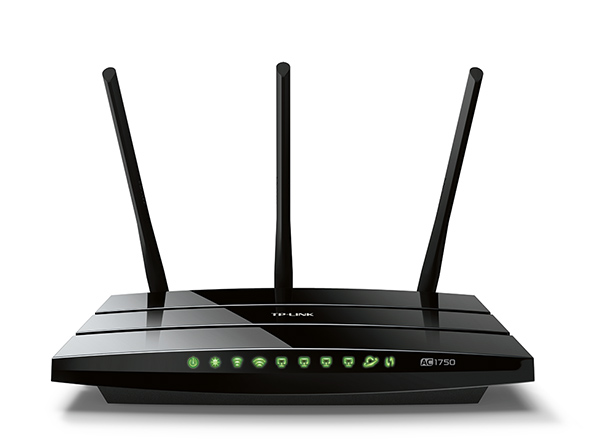
TP-Link blocks open source router firmware to comply with new FCC rule
Rules for limiting interference could prevent use of DD-WRT and OpenWRT.
Ars Technica
166 points · by jhack · 10y ago · 99 comments
>Cisco argues that open source software could be consistent with the FCC's goals. "There is nothing in the Commission's existing or proposed rules that would limit or eliminate the ability of a developer to use Open Source software, including software that controls radio emissions," Cisco said in an FCC filing in November.
>But this would require a more locked-down approach than one in which users can modify the firmware, Cisco said. "The ability to review source code is not inherently incompatible with the notion of locking the integrity of a product against modification or tampering," Cisco wrote. "It is perfectly possible for a product to have source code that is capable of review by the public while that same code is secured inside the device against change by the end-users."
That misses many of the important goals of open source (and points back to the "open source" vs "free software" debate). It's not just about being able to view the existing software, it's about being able to control the systems that process your data.
For example, what if the manufacturer stops supporting the hardware? Today, you can just keep updating openwrt and avoid any security issues. After 2016, that won't be possible.
Might get away with it but maybe need alternatives. If not "open source" or "shared source," what's a generic phrase for software that includes the source but not necessarily OSS principles.
A free software (often copyleft) core with addons, which usually means that contributions to the core are riddled with CLAs or other hurdles, if possible at all.
See mysql, openoffice (pre-Apache), ...
"Published source"?
Something tells me that cases demonstrating the need for such a ruling are hard to come by.
This will probably evolve into the baseband firmware being closed, and the higher abstractions being open (with an API to interface to the baseband). Just like cellphones. Which is acceptable unless you're unrealistic about necessary regulations.
EDIT: If you don't believe regulation is required, think about tens or hundreds of thousands of wireless devices in the wild that can cause RF interference with no ability to get them recalled.
That time Netgear negligently hardcoded the address of University of Wisconsin's NTP server comes to mind: http://pages.cs.wisc.edu/~plonka/netgear-sntp/
Right. So they should go after people who actually misuse the spectrum, and not people who install their own firmware without doing that.
Or go after the people who are distributing firmware that misuses the spectrum.
> This will probably evolve into the baseband firmware being closed, and the higher abstractions being open (with an API to interface to the baseband). Just like cellphones
The problem is including separate hardware to lock only the baseband is more expensive than locking the entire device. Smart phones cost several times what consumer-level routers do, and that's after the phone is subsidized by advertising and app store revenue.
I don't want the FCC trying to obtain the resources to patrol the RF spectrum across millions of US square miles. Cheaper to simply regulate control over the RF hardware.
Ham radio operators have to take tests to operate in certain areas of spectrum. I'd be willing to allow experimentation with RF hardware if RF hackers want to go through the same licensing requirements that already exist.
> The problem is including separate hardware to lock only the baseband is more expensive than locking the entire device. Smart phones cost several times what consumer-level routers do, and that's after the phone is subsidized by advertising and app store revenue.
The baseband is proprietary in all phones, even those in the $10-30 range. Cost is not the issue.
Full Disclosure: I have a technical ham radio license, and own a HackRF device for experimenting with RF (I only receive though when hacking; AIS, ADS-B, and other such traffic)
I'd be in favor of requiring a significant technical burden to enable access to the wireless hardware. Maybe make people open the case and solder a jumper. But there should always be a path forward for experimentation.
That's not how regulation of consumer hardware works. Experimentation allowed in spectrum? Sure. Require consumer hardware be able to do so? No.
I know YardStick can't do WiFi frequencies and even if it did the throughput is 500 kbps max. Is HackRF actually beefy enough to act as a WiFi radio? Do you know about the state of doing WiFi in SDR in general? I was under the impression that it's not practical with any remotely affordable hardware, but I'd be interested to hear if I'm wrong as I'm not that well informed on the subject.
Regulators gonna regulate!
  [1] https://omnia.turris.cz/en/

  [2] https://github.com/CZ-NIC/turris-os

[3] https://www.indiegogo.com/projects/turris-omnia-hi-performance-open-source-router#/Time to go give some money to bradley :)
The market will likely sort this out for itself.
I expect all other vendors to do the same, at least for now. Market can't sort this out.
The average person doesn't care.
We thought the same thing about privacy and user data mining, but look where we are.
When tp-link plug these holes there will still exist many exploits possible to get root access and if not we will have to flash it through SPI.
Edit: here is one of the first exploits available: https://forum.openwrt.org/viewtopic.php?id=63123
It all really depends on how much the FCC will be willing to bother hardware vendors whose products end up as popular hack platforms.
Will be interesting to watch the arms race between OpenWRT and the reluctant ODMs.
The FCC has commented that the minimum is significantly less than what TP-Link actually implemented. See https://ifixit.org/blog/7571/fcc-routers/ (and the linked FCC amendment) for more information.
The article you linked shows that people saw it coming:
> Open source projects might not be fully out of the woods yet, though. A few commenters on the FCC’s post have pointed out that some manufacturers might choose to lock down the whole router—as opposed to just the radio—as a cost-saving measure, even if that’s not what the FCC intended.
It does not matter that I replaced Ubuntu on my Galago with Arch or the DDWRT on my wzr-n600 with OpenWRT, becauase I'm on the books at these companies buying hardware running open source software.
I see this as sign of coming total control, followed by lack of initiative and stagnation of humanity.
TP-Link's response is hopeful in my opinion, compared to what router's were 10 years ago. We are fighting for improvement, and the FCC ruling is simply a speedbump. The current mentality is openness, as I see it.
Reverse engineering things can be a fun challenge - but not if your purpose is not to have fun analyzing it, but to do something else, like actually use the device you bought. If RE is not something you want to do but you have to - it's more like frustrating than interesting.