218 points · by outworlder · 10y ago · 206 comments
I find the ongoing case of someone being jailed indefinitely for refusing to supply a passphrase far more concerning than someone being compelled to supply a fingerprint.
Even if you /know/ you don't have anything illegal on any of my encrypted devices, it's better to take a contempt of court charge than give up a password...because of what they might /find/ or possible things unrelated to an investigation that they can link to a crime (or what they can then plant).
I thought being compelled to reveal a passphrase was no longer required.
EDIT: I know that complaints about downvotes are not welcome, and it's quite possible that I'm wrong in what I say, but I'd like to be told how rather than just downvoted! My comment was meant to be a constructive contribution.
EDIT 2: Wow, these many replies help a lot! Thanks!
There is a trend to use biometrics in place of passwords, which is a convenience feature which compromises security, even though it is often misrepresented as a security feature. (Using biometrics as a second factor helps security, but there is a big difference between "and" and "or" security measures.)
It's hacking to bypass even a trivial password, so similarly it should be unreasonable to compel disclosure of even a trivial password...
They don't need your usename - your phone assumes it's you and only asks for the password... The fingerprint that they're seeking is not a username, it's a crappy password.
Fingerprints and other things like them are 100% non-testimonial. The fifth amendment does not cover non-testimonial evidence (because it only covers being a witness against yourself).
This has been law since the amendment was enacted, was the purpose of it, etc.
So I suspect if you want the law to be something else, your problem isn't even with the courts or judges, it's with the founders :)
It just so happens that, today, the government can compel you to perform a physical gesture that, by proxy, happens to be used as a key on a device that normally accepts a combination. If it's been 48 hours since your finger was last applied to the Touch ID sensor on an iPhone, that "key" doesn't work any more. So, until the fingerprint is accepted by the courts as a "combination" (effectively, that's how the "common man" sees it, and which the courts treat as testimony-by-proxy) rather than a physical gesture (not testimony at all, and currently easily compelled), the only defense one has (if using Touch ID) is to stall for 48 hours.
It's probably in the tone of your comment, which (though it isn't the case) implies that there's something wrong with the laws.
I'd edit and rephrase in your position, especially since your criticism isn't of the law but is rather of the education of users. To your point: if users of devices could be educated in-device about the security of different identification and authentication schemes, the user could take better ownership of the security of said user's device.
> It's probably in the tone of your comment, which (though it isn't the case) implies that there's something wrong with the laws.
Rather than endorsing or decrying the law, I meant only to suggest that a simple, factual description of the state of the law, while non-controversial, also doesn't address the question of whether the law is appropriate. I am not at all sure that it is; but I am also a naïf in these matters, which is why I appreciate the many users who responded to my request for clarification.
> I'd edit and rephrase in your position, especially since your criticism isn't of the law but is rather of the education of users. To your point: if users of devices could be educated in-device about the security of different identification and authentication schemes, the user could take better ownership of the security of said user's device.
Indeed, I think that the point you make (and generously attribute to me) is a good one orthogonal to any questions of the law; whether the law is good or bad in any particular sense, it is as it is, and will be so enforced, and users should be educated as far as possible about this when choosing whether and how to secure their devices.
I agree, but then neither are we the courts; and it is precisely the role of the commons to discuss the law as it should be, so that the legislative branch can, hopefully, enshrine that communal wisdom in the law as it is.
That was my reasoning.
I thought that fingerprints were to be provided to:
1) establish biometric proof of identity
2) establish the presence of a person in a particular place
3) establish a person handled a particular object
Or does the law establish that the authorities can use fingerprints for evidence in any fashion? Could they use a scan of a fingerprint to etch a fake-fingerprint latex sheet to open your locked device?In my opinion, there is no reason to see imprinting your finger on a sensor used to unlock your phone as anything other than an equivalent form of "testimony", and it should enjoy fifth amendment protection. I don't think it will be long before this exact definition finds its way to the U.S. Supreme Court.
That's not true. They've been interpreted to be testimonial because they are a part of a chain of events that results in the production of incriminating evidence that the prosecution isn't otherwise independently aware of. If the prosecution can't say "he has plans for the bomb on his laptop, I saw a photo of a detonator before he closed the lid", they can't force you to disclose the password to go looking for it.
I can't think of a case involving a fingerprint where there's a similar risk since the fingerprint is arbitrary data.
[1] https://en.wikipedia.org/wiki/United_States_v._Hubbell#Summa...
However, when the prosecution has no specific knowledge that the evidence they seek exists, US courts have ruled that the defendant cannot be compelled to decrypt the storage device, since doing so would be forcing the defendant to reveal that incriminating evidence actually exists.
Applying your fingerprint to an iPhone is an act that, without argument, decrypts data on an encrypted storage media, as the act of applying your finger to the sensor instructs the device to retrieve the actual cryptographic information necessary (your passcode/passphrase, plus other hardware-specific data) to access the cleartext of the data.
The more and more I think about this, the more confidant I am that a fingerprint, while "something you have", forces you to disclose, by proxy, "something you know" to your phone.
I guess the question then is twofold: If you have a combination safe that may contain incriminatory evidence, and a safety deposit box that contains only the combination to your safe, can the courts compel you to give them the key to the safety deposit box? And if so, should they be able to?
5th amendment.
http://pilotonline.com/news/local/crime/police-can-require-c...
5th amendment appears to be restricted to what you know based on all available rulings thus far. A password would fall under "what you know."
> The court's ruling noted that FBI forensic examiners were unable to get past TrueCrypt's encryption (and therefore were unable to access the data) unless Doe either decrypted the drives or gave the FBI the password, and the court then ruled that Doe's Fifth Amendment right to remain silent legally prevented the Government from making him or her do so.
So it seems like the law is a bit ambiguous on this front.
These things are very poor candidates for access control because you need fuzzy statistical/ML/AI/CV recognition techniques (which means you have to worry about false positives and false negatives), and it's basically impossible to re-issue credentials in case of a compromise (changing someone's fingerprints or facial characteristics would require performing plastic surgery on the user!)
But because of movies and TV, everyone "knows" that in the future we're supposed to have our technology unlocked by our fingerprints, so that's what drives people to buy and vendors to implement, regardless of how absurdly impractical it is if you actually stop to think about it for five seconds.
I, for one, would love fingerprint unlock on my phone. And it's not for any crazy sci-fi expectation -- I just don't see any other method of unlocking my phone which could be as quick and convenient as that. Facial unlock is another possibility, but what concerns me about that is how easily someone could produce a picture of my face.
If you had access to my phone you could learn a great many things about me (most of them banal) but there are many many many thoughts in my head that don't exist on my phone in any form.
Continued nerd insistence of your point is little more than fetishization of technology. There's a reason Obama used that word at sxsw. It connotes a level of obsession and overfocus that is, quite frankly, pretty creepy.
While law enforcement gets the most press, this is and growing threat from non-state actors as well as mobile devices become ever larger gateways to the public's private lives and finances. Apple would do everyone a service by blazing the trail here and sooner (iOS 10) rather then later.
That said, even if they guess that you're most likely to use your thumb, there is still a chance you can't unlock the device, especially on pre-6S devices, since the sensor is a lot more finnicky.
Even using a PIN over a fingerprint is enough to piss off the FBI by making it more difficult to get in. If you're unlocking your iDevice with Touch ID only, you should consider your device insecure against even undetermined law enforcement.
It is obstruction in the same way that requesting a warrant before handing over evidence is obstruction.
Indeed, trying it now, if I lick my finger and then use it to try and unlock my iPhone a few times, it disables Touch ID and requires a passcode!
Maybe you should also have the option of setting up a "coercion fingerprint(s)", which if used to authenticate would put the phone into require-passcode mode. Then, if the court compels you to unlock your phone with your fingerprint, you can put yourself back into 5th amendment territory.
Actually, in that last case, you might already be protected. If 9 if your fingers will force your phone to require a passcode, and only one will unlock it. Could the courts/police force you to disclose which finger is the one that unlocks? I'd imagine you could put them in a situation where they have to chose which finger you use (or manipulate your hand themselves) to perform the unlock action, and in that case they'd only have a 1/10 chance of actually getting what they want.
In short, this doesn't mean this is a settled issue - none of this has been tested in court.
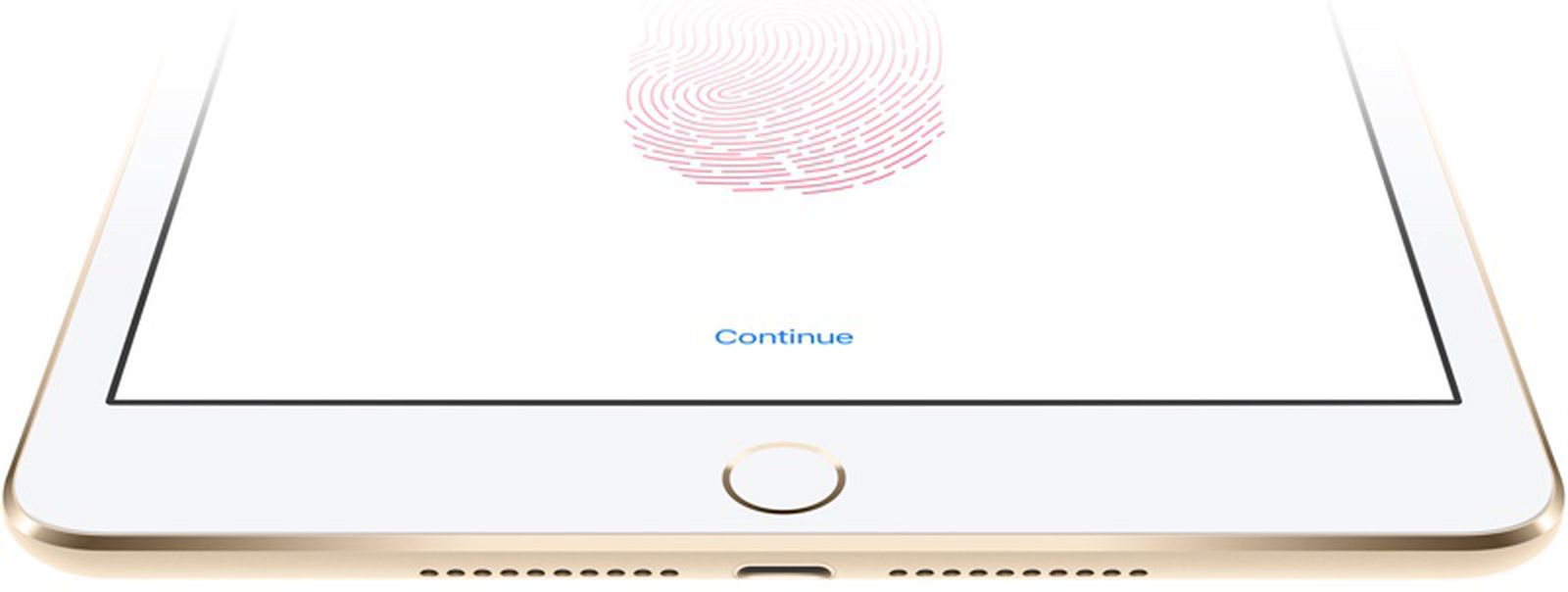
Touch ID is not really different.
In general, one of the only reasons you won't be forced to type in your password is if the act of proving you have the password is somehow incriminating (IE there is a dispute over ownership, etc).
The answer to your question though is that, at least on the phone's side, it would require your passcode to login
IANAL: but I would imagine a sour faced judge could call it contempt or maybe destruction of evidence depending on the circumstances?
How does this not apply here?
The use of your blood or DNA in the case should dictate if it's applicable or not, not the nature of the evidence itself.
Do passwords really need to be simplified? Do we invariably have to envision the future as a place where we wave our arms around beams of light and gently touch secret symbols to make things work? Isn't that just a juvenile fantasy of being a magician? Was Excalibur the first touch ID?
Edit: the question is a legal trap to kept from being held in contempt. After 2 or 3 scans, the device demands a password. By asking which finger, they have a 20% chance of getting right finger.
Furthermore, most people use at least their thumb. So if the judge said use your left and right thumb, the chance of succeeding would be a lot higher (statistically speaking). If you use, let's say, your pinky finger, the chance of a judge guessing the right fingerprint is even lower because he will try out the most obvious choices before that.
If she ate a bunch of salt and swelled up a bit, it might have the same affect. Providing the finger scan isn't the same as promising it unlocks.
When compelled, try your other fingers first than the one you registered. Do not register your thumb. After 5 tries, your password is required.
I tell my phone, either directly or indirectly, all sorts of things that I would not otherwise document. Locations I've visited, for example. That's something that, unless I've been surveilled, only I know. By unlocking the phone, have I allowed access to documentary evidence, or have I allowed access to an extension of my mind?
Is a smartphone a privileged companion? Like an attorney, or a doctor, or a partner? The spousal communications privilege in the US protects the personal conversations I have with my wife from being disclosed via compelled testimony. If she tells me that she committed a crime, or vice-versa, the recipient of that communication cannot be compelled to testify against the utterer.
Further, spousal testimonial privilege means that she could not be compelled to describe her observations if they may incriminate me.
We have similar affordances in the US for communications with legal counsel, or with medical personnel.
I'm going to go one step further and say that 95% of you, dear readers, tell or otherwise provide secrets to your phone that, if you somehow had to communicate to an actual person, you'd only be willing to tell your spouse, your doctor or your lawyer. To me, that makes my smartphone a privileged confidant. And because it routinely collects information that I do not directly provide it, even though I'm capable of observing and remembering it myself, it acts like (and I treat it like) an extension of my mind. An augmentation that increases the capacity of my own brain's memory.
I'm not in the habit of committing crimes, though I (like most of you) have committed some infractions in the past (speeding, "TP-ing" a house, a bounced check - ahh, the indiscretions of youth). But the knowledge in my head and the communications I have with privileged recipients may, if taken out of context, be used as documentary evidence supporting any number of charges against me.
For example, the fact that I went to Home Depot four times in one week over a year ago could support the charge that I had assembled some device that was later used in a violent crime. That's a scary place to be, isn't it? To know that you did nothing wrong, and yet the vague memories you have of visiting Home Depot last year have potentially been documented more thoroughly by your phone. Is the common man supposed to assume that a smartphone they bought just so their kids can FaceTime with their grandmother 1,500 miles away is silently surveilling them, and can be forced to disclose all manner of information about them?
It's a new world, and the laws of the land are old. Legislation moves at a snails pace already, but compared to the rapidity of technological advancement, the law moves like the pitch drop experiment.
A long time ago it used to be common to torture people until the admitted to committing a crime that they did not commit just to stop getting tortured. By making this sort of testimony inadmissible it removes the incentive to torture.
The various restrictions against law enforcement whether it be the 5th amendment or anything else all exist for specific reasons. They aren't just there to make law enforcement's job harder and as a general privacy protections. Extending these rules beyond the justification for their existence (as you attempt to do in your comment) isn't supported by legal precedent.
From a legislative perspective, that's the outcome I'd most want: people's private smartphones are privileged, full stop. Otherwise, it becomes yet another thing we have to worry about.