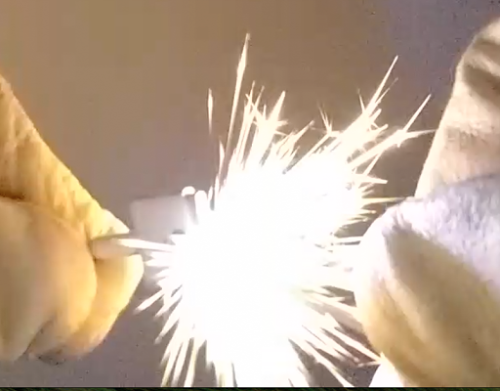
Lacking safety features, cheap MacBook chargers create big sparks
You might wonder if it's worth spending $79 for a genuine MacBook charger when you can get a charger on eBay for under $15. You shouldn't ...
righto.com
64 points · by dwaxe · 10y ago · 71 comments
There are no good options here, not even official ones.
Somewhat amusingly, I bought a cheap knockoff MacBook charger off Amazon and it's been super-reliable other than running about 10ºC hotter than a standard Apple one.
I'm an Apple fanboy most of the time, but damn is this getting old.
Sugru works wonders though, if you catch it early enough.
I usually wrap my Apple charger loosely and throw it in a backpack. You can optionally attach a cheap piece of Velcro to keep it all together.
Edit: Here's another good cable wrapping demo: https://www.youtube.com/watch?v=-74OEVUOKOw
A long time ago, before the MagSafe cables, name brand third-party Mac laptop chargers were available that you could use however you want without fraying. I had one from Macallay. The reason why it never had any issues when using it the same way Apple chargers failed was obvious: the cable where it connected to the computer was a lot thicker.
As far as I know, there's no legal third party MagSafe cables, and the knock off ones copy Apple's design anyway and have no advantages. I've learned to just use it on a desk most of the time when plugged in, since it's a nuisance to deal with failing power cables. But for me, that's a pretty big trade off in order to gain a more aesthetically pleasing cord thickness.
I suppose it's debatable what sort of usage counts as 'abuse' or not, but you can be assured that the Apple chargers will fail in the exact same circumstances that other chargers will not. It's probably my single biggest issue with their hardware, especially since they prevent any alternatives from being available.
The other frustrating thing is that they aren't worth repairing. The overly clever coaxial cable design makes repairing a fray more hassle than it's worth.
The feeling in the cords is quite different; while mine is quite flexible, hers feels really stiff. I believe whatever change that was made, possibly BPA-free, it has reduced the wearability of their cables.
I have just had to order 3 more chargers.
I am not saying that people weren't rough with them (quite likely at least 1 of the users were), but the Side mount Magsafe 1 chargers seemed to fare better.
What I found was that when she used a plugged-in device, she paid little attention to the angle the cable went out at. I guess it's from my time dealing with fiber, but I always make sure that if the cable has to turn a corner, I give it as gentle a curve as possible. This makes a huge difference in resisting fraying.
See this video for more details: https://www.youtube.com/watch?v=pEd7ru24Vx0
Not if you know how to coil it properly - yet the sheath on the cable of my MBP PSU has split, despite not using the fold-up cable storage arms that would encourage bending the cable at an awkward angle.
Yelling at the persons who do that, followed by applying unsightly amounts of tape to make it impossible to do, will delay the inevitable.
(Third step, acceptance: order more cables from sources according to the tightness of your fist.)
(Or Apple might not care, as it's pretty obvious that the power cord is less sturdy than on every competitor's products. Presumably a cable grommet would ruin the look...)
Edit to add: you can buy a cable grommet for an Apple charger from various retailers, for example http://www.thefrayfix.com/ or https://www.thriftcat.org/upc/100001018599/85w-magsafe2-prot... )
I think Ken did a great job but missed an interesting point, if you have one of these cheap chargers and leave it plugged in with the end laying about on your desk waiting for you to bring your Macbook and plug it in, then anything on your desk can short it. Pen clips, paper clips, metalized trinkets from the last trade show you visited. If you aren't the clean spartan desk type (and I'm not) you may find burn marks on your desk where things have hit the end of the connector, or worse.
Interestingly I went back and looked at it again, and my eyes see the big pictures of the complexity, the warning is under that those pictures but not part of the conclusion. So my reading went right past it. I'd suggest that you move that paragraph under the Conclusion header (I think it can be justifiably considered part of the conclusion, do you?) then it pulls the attention right to it.
I recently experienced this while travelling to India. Turns out the house I was staying at had a grounding issue and I couldn't do anything. This is less likely for most people and it's just better to use the cable with the grounding pin.
Both chargers where connected without ground using the 2-prong round adaptor.
They also take the laptop with them then pulled by a kid or fell over on.
If there's a problem with the MagSafe, it's that the cable itself breaks after 12-18 months due to lack of stress relief, requiring an expensive replacement and inspiring people to buy $15 euro fire starters.
Complain about Apple being too cheap to hire some proper engineers to build the cable, not the brilliantly designed connector.
It is a nice peace of mind when my brain is not on edge that it might be plugged in when I see it laying around. I could not say the same thing for my cheaper USB phone charger.
I don't think I'm interested in signing up to do the experiment personally...
Specifically, buying from Amazon is basically a crapshoot with Apple gear of getting genuine stuff or cheap off-brand knockoffs and there really isn't any easy way to figure out what you're getting before you order.
It's my hope that future Macbooks and Macbook Pros will all go with USB-C charging. Meaning there can be a middle ground between unsafe bargain basement chargers, and fray-prone Apple chargers.
Take lightning cables: I can buy the Apple lightning cable for $25, or I can buy a perfectly good Monoprice, MFi-certified lightning cable for $7, or I can buy a no name, non-certified cable (that will likely have issues) for a buck or two on ebay.
In some cases, it's the original manufacturer also producing the knockoff. It's a way of selling to a market segment that would otherwise utterly ignore them.
The only difference here is that Apple does a handshake prior to switching the power supply outputs on. The cheapie saved on the extra logic. Of course this is only necessary in the first place because the connector isn't very safe with the exposed pins.