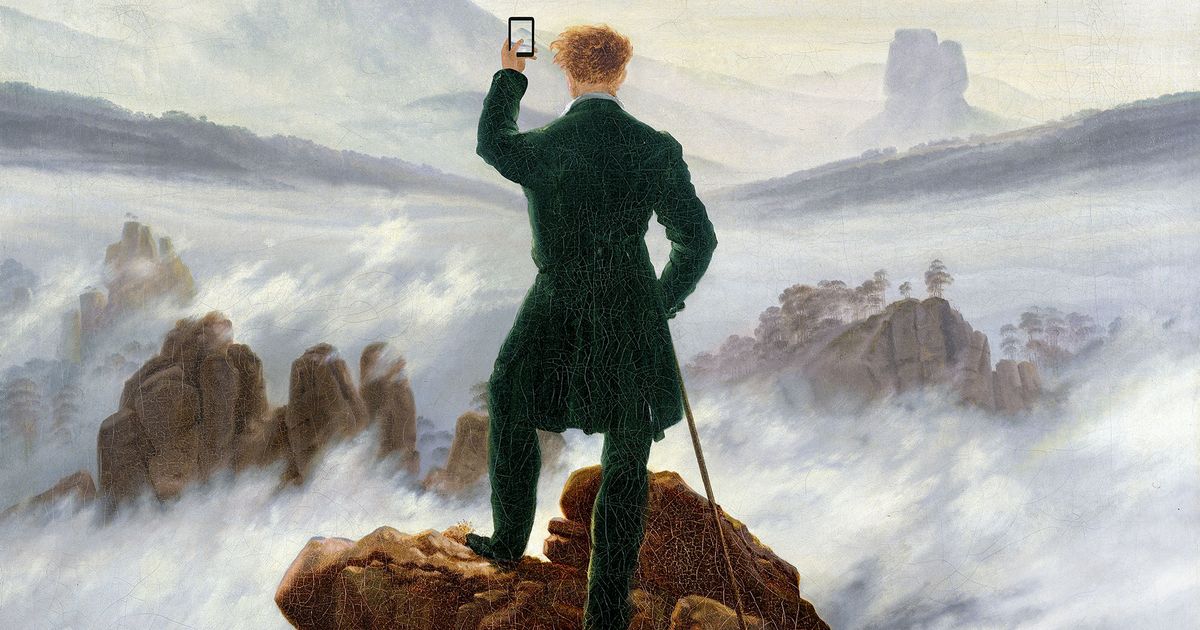
Andrew Sullivan: My Distraction Sickness — and Yours
An endless bombardment of news and gossip and images has rendered us manic information addicts. It broke me. It might break you, too.
Intelligencer
344 points · by oscarwao · 10y ago · 220 comments
First, I don't use any devices directly after waking up. I meditate for about 20 minutes upon waking and then try to read fiction for 40 minutes. So, all in, somewhere around an hour of no device distractions before starting my day.
Slack is one of the biggest interrupting factors while coding these days, more so than IRC ever was for me, so I try to have chunks of time during the day with it closed. This is something I've struggled with recently as co-workers always expect to be able to get in touch, but often I really need 30-60 minutes of uninterrupted focus for real tasks.
For personal things, I deleted Facebook and feel quite a bit better. I still scroll Instagram too much. I deleted the Twitter app from my phone and will only check it from time to time on the web. I try to turn on Do Not Disturb mode in the evenings, but it's hard when you have systems that potentially could go down and things could get escalated to you.
On top of that I try to take psychedelics a few times per year, not in any type of party settings, but with people that are close to me. Screens tend to turn up this feeling of disgust when I look at them in that state, so I automatically disengage with them. I find that for at least a short while after the trip my usage of distracting Internet things goes down a lot as well.
Interested to hear other strategies!
1. Spend five minutes looking out a window, not doing anything, not talking, not looking at your phone, not thinking about work or errands, but just trying to be present. I focus on breathing evenly and relaxing my muscles wherever I feel tense, and I find that my brain appreciates the break from its usual stressors.
2. If I'm experiencing negative emotions, I take 5-10 minutes to think about why I am feeling those emotions, and what I'm going to do about it. No communication, no phone, no computer. Like the author of the article said, the goal is to let myself feel bad and move on rather than to avoid it. This is sometimes harder than other times. For example, after a breakup "5-10 minutes" might actually be a 30 minute walk through the park to sort out my feelings before going back to work.
I find that both of those exercises help me reduce my emotional dependence on technology so that while I do still feel the impulse to reach for my phone, I don't find it hard to resist because I have no emotional investment in the phone, apps, etc.
Also helps that all of my friends know that I am often slow to respond to texts. When there are no expectations of immediate responses, it's much easier not to feel pressured into eternal communicative vigilance.
I have a smartphone, but don't use it except for texting and making calls. Since I have maybe 10-20 calls or texts a week, I usually don't take my phone to work. For me, email at work and a phone at home is enough for setting up appointments and leading a satisfactory social life. It's a great relief not carrying this nagging tracking device around with me all day.
I don't understand what's the great thing about smartphones. They are much less convenient to use than a desktop or laptop for most of the things I do (emailing, web surfing, software development). (what things are so important that need the mobility or the special devices not typically found in desktops such as touch, GPS, camera? Maybe if I played Pokemon Go or had selfie-taking or QR scanning addiction...).
I also totally hate when I have to share others' attention with their smartphones. Personally I've learned to embrace or even enjoy boredom, or watching out the window, or sitting in a bar drinking beer, thinking of nothing at all. I feel my head is working underneath, and I need the balance I get from doing nothing conscious. A quote from Pulp Fiction that I like: “That's when you know you've found somebody really special. When you can just shut the fuck up for a minute and comfortably share silence.”
However my big problem is dealing with computers at work, and sitting in front of them 8-10 hours a day, at work and at home. When I don't feel productive (most of the time -- I try to make good decisions in my software designs, and thoughts need time to settle), my time is spent randomly clicking links on news sites, HN and twitter (barely sending, mostly consuming).
I would really like to be more productive and consume less unimportant news. However knowing I'm not a genious I doubt that more isolation will improve my productivity.
My phone goes into Do Not Disturb about an hour before bed, and I place it face down on the nightstand.
I read daily before bed to wind down.
I've considered revisiting psychedelics, but it's been a long time since college!
I exercise daily, mostly high intensity aerobic, pushups, pullups, situps, indoor rowing, or hiking.
The phone stuff is really getting out of control, and I'm not sure what the solution is for less disciplined people. Dating sucks, going out socially sucks, going to concerts sucks, all because of the pervasiveness of the modern phone.
When I deleted my Facebook, I lost friends. But if my friendship with someone relies on my having a Facebook then, well, fuck them. I text people or call. I also don't need to know what everyone is up to, either. They can tell me when we talk or hang out.
Coincidentally, the friends I lost where the type of people who are on their phones the entire time we hung out, so I don't consider it much of a loss.
I consider Facebook -- for me -- wasted time, though, and I didn't enjoy it. If you do like it and you're comfortable with the platform (because, tbh, I'm one of those tin-hat security nuts, too, and Facebook skeeves me out on principle), then keep it. Or, if you're curious, disable it for a week and see what happens. There's no one-size-fits-all solution for everyone.
It really cuts down on the crap.
[EDIT] remove (mild) snark
At the end of the day I'm offering these people direct access to me multiple times daily. If I don't get a positive outcome from these interactions, why keep them around?
The privacy/notification tools on each site update over time and so do our interests in people and topics, so it makes sense to go in and jig things around every once in a while.
For me, it's all about latency: I try to introduce a barrier for being able to access typical time-wasting sites. If there was a way on OS X to reduce browsing certain websites to pre-broadband speeds, I'd be all on that.
> For personal things, I deleted Facebook and feel quite a bit better.
I did this too. So glad, don't miss it at all, and actually feel like I talk to my friends more now as a result.
I'm still on the fence about contributing to a community like HN (anyone looking at my profile will see a big gap of about a year). It's a nice community with useful discussions, but I'm not sure it positives outweigh the negatives for me (distraction).
I also try to get my news via newsletter now, e.g. I get the top HN articles emailed to me rather than checking the website manually. That way I get to stay up-to-date without that 'slot machine' effect of just refreshing the front page when I'm taking a break.
Overall, I strongly believe the Internet is addictive. I'm glad it exists. It's enriched my life in many ways. But the addictiveness is certainly real, and it's something I'm trying to actively address in myself.
It's kind of like having a dedicated block of time to reply to all your emails vs. replying to them as they arrive in your inbox. I find that it reduces multitasking and increases focus.
- Close any social media account not used for your job.
- Stop using GPS unless in dire emergencies, even in foreign cities. Buy a map, ask directions.
- Read physical newspapers and books.
- Text people only for coordinating where to physically meet up, no conversations.
- Take up a sport and interact with your friends face to face more.
- Use your phone literally as little as possible. Start with a cold turkey period, and then re-introduce slowly.
Among people who can afford a smartphone, which is a wide swath from the working poor on up, it seems like _everyone_ is swiping at their phones all day. I like to imagine them in as many variations as possible: judges, programmers, hells angels, movie stars, school children, cops, window washers hanging from a rope...[1]
It then becomes fun to try to think of people you don't see using phones as much: construction workers (too busy with hands), surfers (in water and heavy surf), astronauts maybe ?...
[1] http://www.boredpanda.com/portraits-holding-devices-removed-...
There is no innate problem with facebook, slack, or computers or screens or any other similar thing. The problem is that you are getting distracted. You are not fully present with what you are doing. Thinking that facebook is a problem is just grossly misleading.
When you have fixed your internal issues, you will not care how many websites or LCD screens are around you. You will do what you want, when you want it.
Telling this to an average person is next to pointless, because they are so unconsciouss that they will not understand it. They have lost touch with the notion that they actually have a choice of whether to be distracted or not, they have a choice in how to feel in every single moment. Since you already experiment with the stuff you wrote about, you just might though.
For someone who is in deep unconscioussness, who lacks knowledge about themselves, who is constantly distracted and who eats junk food that does not provide their brains with enough nutrition, etc. - trying to do simple dumb things like "I'll only look at facebook 10 minutes a day" - sure it might give some results. But once you've gained some basic groundedness - it just becomes ineffective to look at specific distractors, and much more effective to look at deeper issues within you that cause distraction in the first place.
Your careers are social obligations are all things you do by choice. I'm not saying you can drop all your careers and live without money, but you have the power to make career related decisions that will give you more time for yourself. Can you temporarily pause one of your careers to give you more time with yourself? Are your social obligations all meaningful to you? If not, it's okay to say no when invited to events that aren't meaningful to you in some way. You end up with obligations because you choose to take them on. You have the power to choose yourself instead, at least some of the time.
At you end of the day, if you don't make time for introspection and relaxation, you might find yourself burned out and failing to meet your obligations no matter how hard you try to work.
I just meant that all those things also do take time and, more importantly energy. Like the mental energy to keep yourself from looking at facebook, or the energy to keep an excercise schedule, etc.
And so after a certain point, you should switch more of that energy from "dumb" solutions to more intelligent, deep and wise solutions like introspection, meditation, specific work with your fears/feelings ("shadow work" as some call it), going through important memories, talking about this with your loved ones, etc. etc.
> the point where my mind often cries out for it if I go without for a while.
Especially when you notice that some part of you cries out for something like this - is usually a very good time to find time and energy to do this. Your system actually tells you what you need. And even if nothing superbad happens if you ignore such signals every once in a while, if you repeatedly ignore them - the signals will stop coming and you'll become even less conscious about this part of your life. Until this behavior will cause some actual crisis (life, social, health, mental health, you name it) that will actually force you to return to listening to your signals.
But it will be much more comfortable and better in the long run if you don't let it come to this and listen to them already, especially if you are even at this point already sensitive enough to recognize them. (Many people don't even recognize such internal signals, so it's actually pretty great that you have this.)
> How does one find the time to oneself when the world demands ones time? If I try to put it simply, it's by recognizing that you are actually a more important and close being to you, than the world around you, or your obligations, your practical goals, work, or sometimes even people who try get something from you. Recognizing that giving yourself the needed energy and attention is actually the best way to achieve the life you actually want, even if it would mean giving up on some external things.
If you have a hard time squeezing even this out, then you might try "pay yourself first". The same tactic that's helpful for saving dollars, is helpful for creating the space for introspection. Doesn't matter if your work deadline is looming, or writing needs doing, as long as there's no physical emergency, the 30 minutes of planned sitting is priority.
"Generally, if it's not a major part of your life, 15 minutes every day would be most appropriate to gain positive benefits from the practice. However, if you're extremely busy while balancing many obligations and absolutely don't have the time to take 10-15 minutes every day, then you should take an hour. Possibly two. That is a sign that you need it far more than others."
Others may generally get similar other "recharging" introspective activities during their less frantic day. It's like asking how much water you should drink - drink a glass. But if you're so dehydrated that you can't lift the glass to your mouth, then you need far more than that. Feeling intense stress at inability to commune with yourself is just as severe symptom as dehydration; in the first world far more people die from that than from thirst.
Having many obligations doesn't necessarily mean that the best way to fulfill them is to spend all your time directly on them and no time on yourself to be able to do them effectively - especially in intellectual creative work. As in the classic parable of "sharpening the saw" (e.g. https://betterlifecoachingblog.com/2010/10/11/sharpening-the... lists it). If you have 8 hours to write an article or a software feature, then spending 3 hours to catch up on sleep debt, 1 on exercise and medidation and 4 hours on actual writing can easily mean more and better results than just working through that. I certainly have my share of late night work that was extremely unproductive due to tiredness and ultimately had negative value due to the unreasonable rate of introduced bugs - with hindsight, doing that work was a mistake, and simply sleeping to recharge for the next day would be more productive.
Also, if you say that you're suffering, that indicates that a change is needed. Much of our obligations are ultimately self-imposed and can be adjusted in long term. When the world demands something that you cannot sustainably give, saying 'no' is not a possibility, but a necessity.
I used a client which enables me to mute most of the notifications, which is pretty nice.
> For personal things, I deleted Facebook and feel quite a bit better.
I like it, but I only check it once in the morning and once in the evening, from my desktop.
I don't have any social apps on my phone, except G+ — and it's hardly brimming with notifications!
But somehow, G+ has never been in the way for me. It almost feels like a grown up version of Facebook.
Yup, I really like it, although recently (as it's emptied out) the public communities have gotten significantly worse.
'Facebook for adults' sounds like a wonderful thing. My hope now is that maybe we can build it as a community, rather than as a product.
We're working on a minimalist phone to help you disconnect and be more focused, through an intentionally limited feature set and smarter notification management. All the utilitarian tools you need to navigate 2016, none of the slot machines.
PM if you are interested in our beta test. We're also looking for a tech lead ;)
It's really easy to get caught up in optimizing the process you have, rather than choosing which processes best fill your needs.
2) Meditate.
3) Configure your phone to be in airplane mode or do not disturb as much as you can get away with it. Definitely when you sleep, but also for other times in the day.
4) Don't read news on weekdays. Save articles people send to you on Pocket, and subscribe to no more than 5 newsletters that you read only on the weekends. At the end of the weekend delete what you haven't read at https://getpocket.com/privacy_clear
When to multitask:
When commuting, read or listen to an audiobook.
I started a business that requires me to binge on everything I'm interested in online.
Doesn't work for everyone, but works for me.
And also I save $50 a month.
I put it away most of the day, and don't have any email reminders.
Get away with the least you can.
After a while, notifications etc. become bothersome and you'll actively find ways to get away from the noise.
Because of this I turn off all notifications apart from phone calls and text messages. I don't have app badge counters or notifications for email either, if it is that important the person would ring me.
https://medium.com/swlh/how-technology-hijacks-peoples-minds...
"How Technology Hijacks Minds"
I think you'll find a philosophical basis in Jaques Ellul among others (Foucalt is also mentioned).
From Postman:
[E]very technology has an inherent bias. It has within its physical form a predisposition toward being used in certain ways and not others. Only those who know nothing of the history of technology believe that a technology is entirely neutral.
French philosopher Jacques Ellul, who...
...cautions that technology brings with it a great number of unforeseen effects [4]. This is because “technology leads a double life, one which conforms to the intentions of designers and interests of power and another which contradicts them—proceeding behind the backs of their architects to yield unintended consequences and unintended possibilities” [5]. It is difficult then for us to control what we cannot always see.
http://www.helwyssocietyforum.com/?p=1360
There's a related concept of Technological Determinism, originating with Thorstein Veblen:
https://en.m.wikipedia.org/wiki/Technological_determinism
More reading:
http://www.worldcat.org/title/techno-fix-why-technology-wont...
http://www.worldcat.org/title/four-arguments-for-the-elimina...
http://www.worldcat.org/title/technopoly-the-surrender-of-cu...
http://www.worldcat.org/title/this-is-marshall-mcluhan-the-m...
The abstract concept of "Technology" is neutral, along with the majority of embodiments of such concept.
It is the particular technologies the OP is talking about, - smartphones, social media, etc - which are not neutral. Those have been specifically engineered by their creators to further the creator's goals indetriment of the consumers they supposedly server.
It is one thing to say "guns don't kill people, people do". But if a manufacturer started making guns that fired themselves at random so the gun owner had to purchase extra ammo, the NRA would be the first ones to go all ballistic over it. But somehow our customers think that's normal business practice.
"smart people have essentially become random gratification engines in the same way as slot machines."
Somehow, that seems strangely appropriate.
If you're making interesting posts on social networks like Facebook (or HN, for that matter), you're providing that instant gratification you're talking about.
Similar things could be said about those building social networks and the technology that enables them, that are then used for instant gratification.
I also turn off notifications, too. That's a must for all but a critical communication channel.
None of these things are good.
I ask these questions because you could set some rules on email. I check my personal email once per day. My masters are facebook and text.
Related - you may have read it here.
If I do anything at all that interferes with the quality of my sleep, I'm screwed, and The Stream will suck me in. Conversely, things that increase the quality of my sleep -- exercise, diet, not using gadgets after a certain hour -- all increase my ability to fight off Stream-induced distraction.
So that's my recommendation. YMMV.
My knees are shot now, so running isn't an option. But if you're able I highly recommend swimming.
Personally, it's not at all a problem. I'm not a technophobe—I have an iPhone, use Facebook, etc.—but it's done nothing but positively improve my life. I can keep in touch with friends around the world and work remotely from anywhere, all thanks to the beauty of these "distracting" technologies.
However, even though my life is heavily entangled with technology I certainly don't feel "addicted" to it. I have no problem going out into the wilderness for a week and having 0 contact with the world. I certainly don't interrupt conversations to check my phone.
If technology is hurting your life, the problem could just as easily be with you as it is with technology.
Technology in and of itself is not bad. But when technology is run by technology companies whose motive is profit, it can be bad.
I think what we're seeing is new externalities caused by technology. I think junk food + soda + obesity is a more apt analogy than alcoholism. It's easy to say "don't get addicted to junk food or soda" but you have to remember that these companies specifically formulate their products to hack your body and make you crave more. Then they bombard you with ads. All so they can sell you more.
In the same way, technology companies make more money the more you use their products. So they specifically architect their products to hack your brain so you will use it more. It's easy to say "don't get addicted to Facebook" or "the problem is you" but, frankly, I don't think its that simple.
Do you have children? I have 4. A lot of this is easier to understand by watching them. Yes, I know it's my job to teach them how to make good choices. But why do devices suck them in so easily if I don't direct or enforce their behavior?
Of course there are alternatives to junk food. But am I completely, 100% in control of my decisions without any influence from external sources?
There is an entire industry whose sole purpose is to influence your decision making. People in this industry spend about half a trillion dollars a year globally. It's called "advertising" and it wouldn't keep growing if it didn't work.
In large part, that's what the author is saying: "And I realize that this is, in some ways, just another tale in the vast book of human frailty."
Humans are weak in the face of what we've built, some (the author) more than others (you). That doesn't mean it's a problem for everyone, but it's definitely a problem for some.
And to use your comparison to alcohol: humanity has millenia of experience with the consumption and overconsumption of alcohol. We basically know the risks. "The Stream" has only existed for something like a decade and it's only getting stronger every day. IMO there's nothing wrong with being very cautious about it and quickly reacting to ill effects.
I wouldn't say I'm addicted and I have nothing close to this author's problem, but I do find "The Stream" lowering my quality of life, so I'm working on moving away from it.
Also, another quote from the author since you seem to be very upset with him over a bit of a strawman that you set up:
"...it reveals, perhaps, that we are not completely helpless in this newly distracted era."
Sounds like you're just saying "deal with it" because you don't personally struggle with it.
Sorry if it came off that way. Like I said, I don't doubt that some people might be addicted to it.
I absolutely think they should pursue the remedies they need for themselves, whether that's quitting social media or pursuing a meditation practice. I have friends who quit Facebook and I don't hold it against them (though I do recognize it makes keeping in touch a lot harder).
My problem is that he can't seem to recognize that this addiction might not be universal, just like alcoholics shouldn't force prohibition on the rest of us. (In fact, he literally calls for "restaurants where smartphones must be surrendered upon entering.")
Just like there are some restaurants that don't serve alcohol, note. Or restaurants that don't serve meat.
However, the rate of adoption described in the article[0] is worrisome.
0: Actually, you might just look out a window to get the same data.
alcoholic ranting [...] hyperbolic luddites.
That's something I think a lot about. For me, the evidence that technology is not having that effect on my life:
1. At least once a year, I go on a hike of at least 1 week (without a phone). I'm consistently able to do this without feeling any sort of withdrawal.
2. I try to read a book on my Kindle for an hour every day. [0]
3. Whenever I fly, I never purchase wifi. If I'm able to consistently go 9-12 hours without any internet access, just reading or napping, it hardly seems like I'm addicted.
4. When I'm around other people, focus on them. If I go out to dinner with someone, I sit and talk to them instead of playing on my phone. It honestly boggles my mind that people think it's acceptable to stare at your phone while talking to someone.
[0] The fixation on "printed" books really is ludicrous. Reading on the Kindle is no more or less distracting than reading a printed book. It's essentially an offline experience.
It didn't start til I stopped looking things up in books. That kicked off 9 months of vivid dreams that evolved as I managed to identify & slowly remove other innocuous compulsive behaviors from my daily life.
I want to be clear about this: I'm not saying you sound like an addict. Everything in the world is potentially addictive if it can help escape from or numb emotions. And it doesn't matter much what the source of the addiction is, but the behaviors involved in interacting with that source. That's why it didn't actually matter that I went offline for months on end.
My view of addiction is this:
Addicts are genetically (and likely epigenetically) predisposed to developing a learning disorder we call addiction in response to psychological trauma. The first step to solving the problem of addiction in society isn't to lock up all the addictive things. It's to recognize technology has made it easy as hell for anyone to partake in activities that provide immediate gratification and that means the world has become a much more dangerous place for people predisposed to addiction.
Information addiction is frightening as hell to think about, even when I'm happily moving along in my recovery. I live in a world where the spread of technology is always on the rise & any job that pays well will require me to, in one way or another, dive into my addictive behaviors.
If the author's (likely fearfully) suggesting what you see as extreme solutions, I can absolutely understand where he's coming from.
It happens around any time of great change. We happen to be living through a period of some of the fastest changes in human history, so it's not surprising a lot of people are confused and feel like they've lost something.
Couldn't this have been said accurately at just about every point in human history? I'm not asking to try and refute what you said - I think that supports the first point you made. The world is always changing at an exponential rate and we are always on the curve, so people will continue to lament loss of the past until the end of time.
With the internet, we've been able to confirm that everyone is, more or less, just like us. You can see this especially in up and coming new media stars. They use self deprecation as a crutch and irony is really funny. The internet released a hall of mirrors on society and now the illusion of authenticity is broken
Why is that that 'Hipsters' reach out for things that they hope are real? Facial hair is real. Single-Speed Bikes are real. I'm talking about a stereotype here, obviously, but I think that a hipster is something who reaches for external authenticity
I hope I don't sound like a cynical person, because I really don't think I am. I don't think this is a terrible thing, but it certainly makes navigating people much harder because the illusion of becoming one of 'The Greats' with a Capital G is something that doesn't seem very possible anymore
I'm not arguing against what you're saying, just trying to think about it. When did we lose the authentic? And are we trying to restore it online? If so, is it working at all?
It was something like all the great themes are taken. We've taken all the great themes and adventures and created theme parks where you can go to experience a fantasy yet know this isn't real. You know it's not authentic.
I'm butchering the meaning of it, wish I could figure out where I read it
Edit: I found it! apparently, it's from a 1990 movie I've never seen nor heard of, which doesn't sound right. I'm like 80% sure I read it in Brief Interviews with Hideous Men
"You see, there's nothing to do anymore. Everything decent's been done. All the great themes have been used up. Turned into theme parks. So I don't really find it exactly cheerful to be living in the middle of a totally, like, exhausted decade where there's nothing to look forward to and no one to look up to."
I know a lot of people who go out in the wilderness any chance they get but if that's not your thing, there are plenty of ways to get right to the basics even in day to day life.
And if novelty is what you're seeking, anything new to you is novel. You're not the first person to climb a mountain but if it's your first time, it's a novel experience. New is overrated. The supply of novelty is unlimited right now.
If I'm going to be derivative then this serves: "I've got 99 problems and 'there's nothing to do anymore' ain't one of them."
If you think this is boring, you probably don't remember life before the Internet... :-)
We evolved to be hunter-gatherers in small social groups. As such, being on high alert for a faint sound, a movement in your peripheral vision, or some sign from your friends, comes naturally to us because these are traits that were naturally selected and could mean the difference between having a meal and going hungry, or between life and death. "Distraction" wasn't an issue either, because the distraction was usually the more important/urgent thing to be paying attention to, and because there weren't as many of them. We didn't have the situation we have today, where these entire natural cycles of stimulus/response/reward have been studied, and where people have figured out through years of trial-and-error, how to replicate the stimuli, and replace the rewards, in order to substitute a different response that just so happens to make them money. To the degree that you are susceptible to these stimuli you are actually being an authentic human being. It's the environment you're in that is completely inauthentic. We're all swimming in an ocean of bullshit. Being born into a world already mostly built and made for us, it's easy to forget that somebody (humans) had to come along and construct it all. Once you realize humans built it all, you then realize they had to have a reason, an incentive, maybe even an agenda. Being authentic requires reclaiming your own agenda and rejecting others' agendas where they differ from yours.
Your "virtual" life is also real. The news that you read, happen in real world. The people whom you talk to are real people. There's no "real life" and "non-real life". Everything that happens to you is "real life" by definition. That includes social networks etc.
The only thing that matters is whether it is a life that you're comfortable with, or not. And there is certainly a point that many people are not actually comfortable, but forced into comforming.
Being uncomfortable about it because it's "not real" is a fallacy, though.
The author instead seems to be taking his personal opinions about technology and trying to apply them to everyone. It's not enough that he doesn't like these things. We should not like them either and here's why. Time with my kid is invalid because I also have the TV on? GPS leads me to stop remembering things? Emojis are unsuitable replacements for voicemail? The author imagines restaurants where smartphones must be surrendered upon entering. Cool, you've described a place I'll actively avoid. Where's that "stop liking things I don't like" GIF when you need it?
"Our enslavement to dopamine?" -- how about YOUR enslavement to dopamine? Leave me out of it.
Writing is 1 to many, the author was most certainly not writing just for you. No need to be so incensed.
1. We're living in the Information Age.
2. Information can be addictive?! Holy shit!
3. And we barely have a clue as to how to deal with people addicted to anything else, let alone addicted to that thing we're defining this entire age of humanity on?!
It doesn't have to be a problem you suffer from to see that information being addictive implies significant potential for collective harm.
At least I hope that's what he meant as collective solutions aren't called for here. Thoughtful thinking and discussion are called for online, please. I like online.
Again, you're not the audience.
"Living technology-free" is a strawman. The author is saying we should be more conscious of how we use technology, not abandon it all together.
P.S. You also seem to be taking it rather personally...
That's very nice, but if you want to live as a technology-free non-hermit you naturally would try encourage other people to join you.
You don't have to read their 7000+ word essays, either, if you have so aggressive reactions to their claims.
People would spot me outside the library in town, resisting the urge to go inside... To return the edible plant id guide and maybe I don't know surf the web just a little.
Silly as it will sound I'd never thought of it that way. Cunning , brilliant and cunning again.
Messaging apps have a nice solution to this: they allow your friends to summon you to the app by sending you a message.
But from a human perspective, I'd argue it's completely unethical. As a business, your goal isn't merely to encourage potential customers to choose your brand over another. It's also to get them to buy it even if they don't want it. And it's to get them hooked so they come back and buy more.
Now, what if your product is vodka? Your job suddenly became to make as many high-functioning alcoholics out of customers as possible (high-functioning so that they can continue to buy).
This may be a stretch from a mobile game or social media platform, but not much. They both have negative effects with real impacts on the health and happiness and sometimes even safety of the consumers.
Never been happier.
Right now I am back with an internet subscription and I'm miserable. I am an internet addict and having internet at home is very bad for me. I strongly consider cancelling my internet suscription again.
What I would love is to go back to dial-up times. I mean, paying by the minute/hour, or a limited plan + by the minute/hour after the limit, or a fixed limit in hours or Go per month. Something like this. That would help me a lot.
People might tell me to implement it on my side, but I know it is not going to work for me: there's no way I pay full price to have a 24/24 connection and then limit myself. And as operators are not going to propose such schemes that would lower their income, I am screwed. Only satellite operators still have such systems.
----
I had an ADSL failure that lasted 8 days a few months ago. The first 2 or 3 days were tough (launching compulsorily the web or mail browser, wondering how the hell I am doing to do X or Y, having to remember that there is no point in doing X and to remember the 'old' way of doing Y), but then it was a relief. A breath of fresh air. We (the family) began to talk to each other. We even did things together!
Then the ADSL was fixed and the Internet addicted behaviours started again, same as before..
I'm taking a vacation soon, 9 days with no computer will be a much needed reset.
It's an open source project either:
https://github.com/SelfControlApp/selfcontrol/
What I do is, essentially, the following: every day at around 0-1 am (before I go to sleep) I set a timer so that it would fire at 7-8 pm (that's when I would get home). This allows me to force myself from browsing unnecessary sites (facebook, twitter, HN, reddit etc.) that would otherwise distract me from doing meaningful work.
As for the other devices, not long ago I would have twitter, facebook, VK, and a few others social media apps on my iPhone. I deleted everything except twitter which I check rarely (<= 10m a day). Deleting the facebook app contributed greatly to my smartphone's battery life either.
More speculatively you have the points made by Louis C.K in the article, that "Underneath in your life there’s that thing … that forever empty … that knowledge that it’s all for nothing and you’re alone …" "you just feel … kinda satisfied with your products. And then you die." As an engineering type I think a lot of that can be fixed by technology, that as computers equal and pass human brain capacities a lot of cool stuff will be possible maybe including fixing the alone and dying stuff and it's interesting to see things progress.
After that my mind is clear. And I do not want to reach for a smartphone.
One great feature on this phone is the ultra energy saving feature. Basically turning it into a black and white display reminiscent of a Nokia 3310.
Notifications are turned down for everything.
My life is better. Walking the dog and looking at the scenery is feeling good.
I like to have my life back from the social internet blackhole.
There's also the ethical question around people not being aware of their obsessions/addictions (especially in the mobile gaming space)
Try to practice "memory walk meditation" - I made up the word to combine two things I have learnt about, essentially to combat distraction. (And I have been generally successful - but I also don't need it a whole lot)
Next time you read a book, or just anything you feel would be good to remember - take the key points and associate them with objects in the room that you spend the most time in, or where you usually sit/stand when you interact on the social network. If you are completely unfamiliar with the field of memory training, I recommend picking up some old copy of any book written by Harry Lorayne to learn how people usually commit things to memory when doing memory training. (For example, creating outrageous and vivid images is key to retrieval. Learning the major system will help memorize arbitrary numbers)
The actual memory walk meditation consists of traversing those objects first physically, then eventually mentally in a certain order - as you approach the object, use the image to retrieve the concept/idea associated with it. Hopefully you can identify at least 10 or so objects in your room.
After a while, it becomes a bit (too) easy. Read another book, do it for something else you wish to learn.
The point is, it is easier to move away from a bad habit like too much FB by building something else that you look forward to than using denial.
A very nice advantage of this technique is that you can decide, for example, that you will at least go around the room (mentally) once before logging in to the social network, and increase it to two, three etc. So you can slowly build up your resistance, so to speak. A second advantage is that since the objects are usually right in front of your eyes, it gives you triggers all over the environment to help you build the habit.
* Quantified content utilisation. I've been looking at measures of just how much content people can engage with in a day, and it's much smaller than you might think. Stephen Wolfram and Walt Mossberg both hit about 150 - 300 emails. The NY Times comment moderation crew tackle about 800 comments each per day. That latter means 36 seconds per comment, assuming an 8-hour day. At some point, your brain simply becomes full. I suspect a much smaller number of detailed items, and a small number (10-30) medium, and perhaps 100 or so trivial items, is about the sane limit.
* A quality metric for content, based on some finite, depletable, periodically renewed resource. "Time" might be one such metric (you've only got 86,400 seconds today, but you'll have more tomorrow!). I have a 5-6 point ranking of content, from '0' (actually makes you stupid for having read it) to 5/6 (defines a field, 6 == extends it). Most news articles fall in the 1-2 range, a good news article perhaps 3, a solid technical paper a 3-4. Key is to not assign everything a top-of-the-scale range.
* Assignment of reputations to sources based on those ratings. Both authors and publishers.
Increasingly, I'm simply adding clickbait sites to my firewall's blocklist.
https://ello.co/dredmorbius/post/wgtaltzorrurzat3wf-lwa
Iwould very much prrefer to have that capacity on my tablet itself (Google and Samsung say I cannot, fuck 'em, fuck 'em hard), or in some brwoser-like tool (really a next-gen browser).
>The world is too much with us; late and soon,
Getting and spending, we lay waste our powers;—
Little we see in Nature that is ours;
We have given our hearts away, a sordid boon!
This Sea that bares her bosom to the moon;
The winds that will be howling at all hours,
And are up-gathered now like sleeping flowers;
For this, for everything, we are out of tune;
It moves us not. Great God! I’d rather be
A Pagan suckled in a creed outworn;
So might I, standing on this pleasant lea,
Have glimpses that would make me less forlorn;
Have sight of Proteus rising from the sea;
Or hear old Triton blow his wreathèd horn.
I'm not saying I have a life but I'm hoping to get one real soon now.
I'd like to believe it's possible, but I think he had to accept the fact that, he didn't know how. Maybe he'll figure it out, now that he has some more free time?
> ... trying to describe what I was feeling. The two words “extreme suffering” won the naming contest in my head...