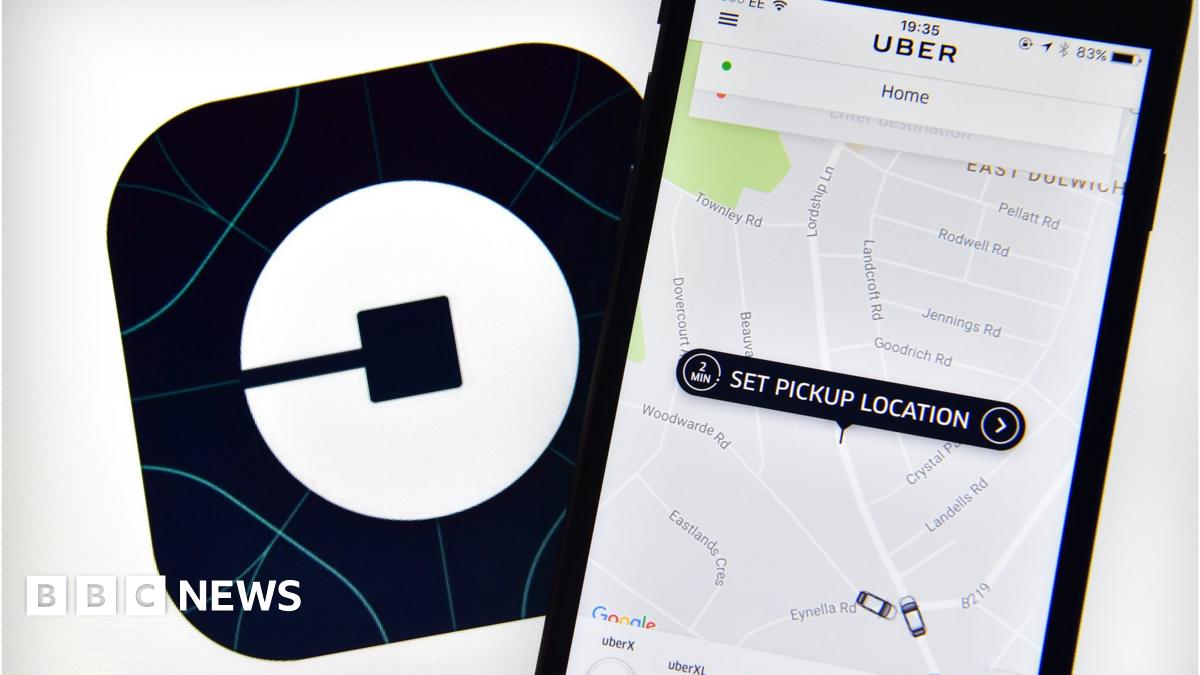
Uber drivers win key employment case
UK employment tribunal rules that Uber drivers are workers rather than self-employed contractors.
BBC News
182 points · by johneth · 10y ago · 213 comments
    The contradiction in the Rider Terms between the fact that ULL purports to
    be the drivers' agent and its assertion of "sole and absolute discretion" to
    accept or decline bookings.

    The fact that Uber interviews and recruits drivers.

    The fact that Uber controls the key information (in particular the passenger's
    surname contact details and intended destination) and excludes the driver
    from it

    The fact that Uber requires drivers to accept trips and/or not to cancel trips,
    and enforces the requirement by logging off drivers who breach those
    requirements.

    The fact that Uber sets the (default) route and the driver departs from it at
    his peril.

    The fact that UBV fixes the fare and the driver cannot agree a higher sum
    with the passenger. (The supposed freedom to agree a lower fare is
    obviously nugatory.)

    The fact that Uber imposes numerous conditions on drivers (such as the
    limited choice of acceptable vehicles), instructs drivers as to how to do their
    work and, in numerous ways, controls them in the performance of their
    duties.

    The fact that Uber subjects drivers through the rating system to what
    amounts to a performance management/disciplinary procedure.

    The fact that Uber determines issues about rebates, sometimes without
    even involving the driver whose remuneration is liable to be affected.

    The guaranteed earnings schemes (albeit now discontinued).

    The fact that Uber accepts the risk of loss which, if the drivers were
    genuinely in business on their own account, would fall upon them.

    The fact that Uber handles complaints by passengers, including complaints
    about the driver.

    The fact that Uber reserves the power to amend the drivers' terms
    unilaterally.
That means pretty much any added-value marketplace is now considered employer in UK, thus the whole model becomes infeasible.
> That means pretty much any added-value marketplace is now considered employer in UK, thus the whole model becomes infeasible.
No, only ones that have a large degree of control over how the work is done and over the interaction with the customer, including all pricing. Fiverr, for example, really doesn't meet these and nor would etsy.
And really, the requirements on employing workers isn't much. Paid holiday (pro-rata, there are already easy ways of calculating the amount owed to irregular workers), rest breaks, minimum wage and possibly a contribution to a pension scheme. These are all requirements of small employers at the moment so it's not a huge thing.
The client controls how and when the work is done. Uber can't just send a driver to drive somebody - somebody has to actually ask to be driven.
Most collaboration platforms - like TaskRabbit for example - don't allow subcontracting. And for a reason - if I asked for John, 5*, proficient in electrical work and general handyman work, many positive reviews, and Anthony shows up instead, I don't want him - I don't know him and don't trust him.
> is in full control of the price
Many such platforms have pre-set hourly or per-task rates. Such us Fiverr.
> Fiverr, for example, really doesn't meet these
Fiverr is literally named after a fixed $5 rate.
> And really, the requirements on employing workers isn't much.
Especially if you're not the one paying them.
Uber works differently. The driver chooses when and how many hours he wants to work and when to pick a ride. If what was decided above applies for every uber employee its not gonna go down pretty well cause :
Uber is going to become one more minicab agency, where it employees people with a schedule and its price is going to go up by a lot.
Customers won't benefit and drivers won't either.
Most of the drivers I've spoken to and I use Uber a lot have told me that the job is not as great or the pay depending on the amount of time they work and if they are actually renting a car or having a car on lease or own it, the thing that everyone told me is that they get to work whenever they want and thats awesome about it.
Apply rules to the Uber is gonna force rules to be applied to drivers as well and thats not gonna go well.
Not sure where you got that impression.
For me, in the UK, the selling points are that it's easy to use the app, you don't have to muck around with cash and the cars, at the moment, are new.
Oh, and that I can abuse the fact that I'm relatively rich compared to the plebs to jump the queue with surge pricing. Very un-british of me.
You can be a worker, turn down work whenever you want and work for multiple companies. That's all fine.
If anything this protects the established taxi services more than benefiting any worker. Effectively they had probably pushed some people out of the ability to work for Uber
For example, in times of high unemployment, I could tell my workers that if they want to keep their jobs, they will work unpaid overtime, or take a pay cut, or give me a blow job, or work without adequate safety gear. These kind of Hobson's choices are real things that really happen.
I frequently see a less explicit exploitation of voluntary workers in companies; when a company encourages a culture of long hours and not taking holidays, they're getting extra hours for free from their voluntary employees (take your holidays, people).
If Uber wanted to stay in the UK market, what would be the minimum they would have to do so that the Uber drivers are considered "contractors"? Is it just letting the drivers set their own fares?
In other words, if sellers on ebay are not employees of ebay and programmers submitting apps to Apple iTunes Store are not employees of Apple, what does Uber need to do so they are considered a platform instead of an employer?
[1]https://www.gov.uk/government/publications/vat-notice-70025-...
The full judgment is here: https://www.judiciary.gov.uk/wp-content/uploads/2016/10/asla...
Page 29 gives a good summary of the reasons that point towards the drivers being workers.
IR-35 is employment duck-typing. If it walks, talks, and quacks like an employee, then it's an employee and should be taxed as such, even if it claims it's an independent contractor.
The actual criteria are pretty complicated - see the guidance manual at https://www.gov.uk/hmrc-internal-manuals/employment-status-m... - but the essence of it is control ("does the boss have the right to tell the worker what, where, when and how to work?"), personal service/substitutability ("can the worker send someone else to do the job, instead of doing it himself?"), risk ("who is on the hook if something goes wrong?") and some other factors. Very fact-specific.
Incidentally, one of the standard features of traditional taxi drivers in the UK is that they don't set their fares, that being the responsibility of the local government. Uber drivers are licensed in the separate category of 'private hire', which has less stringent licensing (and the right for a firm to set its own fares) but a prohibition on picking up passengers by being hailed, and some other restrictions.
Very similar here in Germany, I guess. There is the term "Scheinselbstständig", which roughly translates to "fake self-employed". If you are formally self-employed but meet certain criteria, your "customer" (who is then considered to be more your employer than a customer) has certain obligations to you, and you have certain rights, which you can't easily trade away.
I got some letters about that and they asked me to prove that I was indeed self-employed. They didn't like the argument and concluded that I wasn't. The only thing that actually happened after a while is that I had to pay into the public retirement fund against my will. The "Deutsche Rentenversicherung" are seemingly the only people that care. From what I can tell there were no other obligations/rights that appeared after.
Sure, I understand that. USA law is fuzzy in the same way. (The IRS 20 rules[1] are guidelines and not binary true false criteria usable for perfect machine learning classification.)
But for the sake of discussion purposes on HN, I'd like for you or anyone to play the role of general counsel for Uber and say exactly and concretely what they would need to do.
As I understand it, if the Uber driver were allowed to have someone else drive their car for Uber when they felt like it, and had the freedom (actual, not nominal) to decide which clients they'd like to take on, and had control of their pricing, then there would be no question it was actual self-employment.
* Give them basic rest breaks
* Give them basic holiday
* Pay them the minimum wage
Remember, they're not employees, they're workers.
[edit - I'd be very interested to know why this is downvoted, these are the things afaik that they are required to do for workers (who are distinct from employees)]
The positive I see in the so-called gig economy is far more flexibility in employing underutilised labour. If government increases the transaction costs of employing underutilised labour, then it will probably stop employing underutilised labour. It could easily be a net negative.
If there's an efficient way of working it out - i.e. keeping the transaction costs low - I'm not against regulating Uber as an employer. But it is a different form of working, and it's the kind of working that connected communication technology is best positioned to enable. It would be best if we didn't crush it under an assumption of regular employment.
It means that once you've been working for a given period of time you get a short period of (paid) time-off. A few lines of code in the scheduler to not assign work for 15 minutes to people in this position, and a corresponding credit in the billing system, would do.
The point applies more generally. I had a zero-hours contract with my university to teach very irregular hours on some IT training courses. I was entitled to holiday pay like every other worker. It accrued at a rate of something like one hour for every ten hours I worked, and was added to my pay.
This form of working isn't in any way new; piecework, home working, day labour and similar things have existed for as long as employment law has, and there are low friction solutions already in place to make meal breaks, holidays and minimum wage calculations work. The tribunal judges here specifically ruled on when Uber drivers are working (in licensed area with app switched on) so everything else is pretty straightforward from an implementation point of view.
That flexibility is nothing more than shifting risk from the employer, who is most able to handle it, to the employee, who is least able to handle it.
Simple, it's scaled for how long you work. 2 hours per.month would mean they also have to pay you for 2 hours 53 minutes per year of holiday.
Really, uber are not the only company that hires people for irregular work. This stuff has all been worked out a long time ago.
> That doesn't sound like sane business model -
It's just paying people to work for you, hardly a crazy business model.
Yup. The tribunal judge ruled that, as having drivers waiting around with the app turned on was an essential part of Uber's operations, their workers were doing work for Uber while waiting and in a position to take calls.
This is analogous to call centres: the operator can't just tell its workers that they're 'not at work' and not pay them when they're logged in and waiting for inbound calls.
Of course, mostly this matters for minimum wage calculations. As long as Uber have sent the driver a handful of trips in these two hours they'll have to pay no extra.
Good for the short term. Because within the next few years expect Uber to move to self-driving cars. Automating truckers will be a watershed.
There will come a time when basic income of some sort will need to be considered by advanced economies, or else expect unemployment, unrest and the rise of populist demagogues who will be much better (worse) candidates than Trump.
I still don't understand why that scenario requires an Uber. Once self-driving cars are a thing, why does Uber need to exist? Their competitors in that case would be actual car manufacturers, and rental car companies that already have a distributed system for deploying cars (and partnerships with manufacturers). What edge does Uber have? Certainly they have mindshare, but that can evaporate as quickly as it was built.
Of course in the long run (or even the medium run) that seems basically moot. There will be a zillion different ways to get essentially the same thing anyone else, I don't see any way for Uber to maintain a long-term advantage.
It takes literally a few seconds to do.
There's going to be some platform that connects riders with self-driving transportation, the only questions are whose, how many, and how much value they extract out of being the platform.
They have a service that already exists in the market so there's very little pivoting to be done, a brand that's recognized as a transportation network, a user-base, and I'd argue "getting an Uber" is becoming a neologism much like "Googling" is. I think those points give them a pretty strong advantage over the possible competitors.
It will be easier for Uber to buy a fleet of self driving cars and replace their drivers than it will be for a car rental company to develop a platform for a new business model.
How much money and how long would it really take to build out a basic uber type system?
Uber does have an advantage in that they are already around and have that market share. Plus they have the system built and can start focusing on adding nice to have features and really polishing the experience.
Hard to imagine that basic income will be politically possible in the near or medium term. Our culture is so wrapped up in the idea of the necessity of jobs that I predict we will see government programs to pay 1/2 of the people to dig holes and the other 1/2 to fill them in, before we see basic income.
The US will be an altogether different challenge; for basic income to be feasible in the US, there needs to be proper health care reform. I see that very difficult to happen anytime soon, even making non-competes unenforceable is gonna be hard let alone introducing a national health service.
We could also shave work weeks back to 20 hours and subsidize the rest.
I believe that even truckers will be safe well into the next decade. They don't add all that much cost to the overall costs of shipping goods (when compared to fuel, maintenance, and insurance).
http://www.findatruckingjob.com/trucking-info/trucking-artic...
That's pretty substantial. If you have 2x the utilization on a cheaper to operate vehicle, that's where new investment is going to go. Or take a retrofit kit. It can cost ~$80,000 and be a pretty obvious investment to make.
Even at your 36¢ per mile, that only amounts to a savings of $150 on a $1,000 bill to move a truck of goods 400 miles. Given that the value of a truck full of bananas is around $50,000, that $150 savings is a rounding error (especially since the AI won't be free).
And I note that the biggest cost is diesel. I wonder if self driving trucks would be more fuel efficient?
> I believe that even truckers will be safe well into the next decade. They don't add all that much cost to the overall costs of shipping goods
I do not know about the US, but in Europe labour costs are high and there are laws on number of hours that truckers can work. Self-driving trucks can be on the road 24 hours a day all year round, with no unions or human resources to manage.
Fewer human resources, certainly.
But humans are very flexible. In the containerised shipping world that doesn't add huge value, but for a taxi some flexibility is a value-add, be it changing your mind about your destination or falling ill suddenly (when you probably can't just log in and change your destination) are examples of when people are well served by human operators.
Self automation has to become cheap enough that the premium of having people drive is worth losing compared to the price difference. It isn't enough to just have tje technology at a level it can serve.
That's the crux of the issue. People need to stop acting like we have self-driving cars. We don't. Once we do (a few years out, at least), THEN our governments will start figuring out how to deal with it.
And by "governments," the plural is important. Remember that every single jurisdiction that a driverless car goes through must approve of them. And for long haul truckers? That's hundreds of jurisdictions for any given route.
Plus, why would insurance companies actively work to lower their profits? ;)
The cost of drivers in relation to the value of the cargo being moved is usually a rounding error.
you do realize that it's the "democrats" who are promising free stuff to the masses by "taking moar moneys from the evuhl 1%". Doesn't get much more divisive and populist then that.
So now on the "republican" side there is also some level of exploiting of the archetypal beliefs that can be considered "populism", such as the ubiquitous "wall on the border" but that carries very little targeted appeal to the unemployed or poor segment of the populace per se.
I assume their strategy for profitability now, in the UK at least, is just take VC money until driverless cars are legalised.
Really? I find them at least a third cheaper than taxis in London for any trip over about five minutes.
I still feel guilty for taking an Uber (and note the difference in ability and knowledge immediately compared to black cabs). I'll be more inclined to take them, even with less of a saving, knowing that they are not allowed to treat their drivers quite so poorly.
The cab drivers sat in traffic, the Uber drivers were alerted and rerouted. I arrived on time and with a smaller bill. Sure a black cab driver could have done that with smartphone alerts but none of them seem to make use of them - perhaps it's due to professional pride derived from passing the famously difficult "Knowledge" exams.
Finally, black cabs are horrible if you're a cyclist, whereas Uber drivers are by-and-large no different from any other driver.
I'm glad the Uber drivers have better employment status now but aside from the horrible misfortune of having bought a hackney license, I don't really have too much sympathy for Black Cab drivers.
They're much cheaper than black cabs in Manchester too, but still about equivalent to private hire companies, surge pricing aside.
It would be cool if, as a rider, I could set a maximum fare I'm willing to pay, the drivers can bid on the fare, and I'm matched with some combination of nearestDriver * lowestFare.
I imagine Uber has thought of this already, so there must be some reason they're not doing it. Why?
Classic economics suggests this would result in a more efficient market. Perhaps Uber has modeled it and found it would also result in lower fares.
You can e.g. ask the same question about "why not auction every shift?", "why not auction every internal work product transfer?" (extreme example: why not auction every fetch-coffee task?)
The answer is that having to re-auction every subcomponent introduces transaction costs that may eclipse the efficiency gains of selling at the optimal, market price.
In the case of Uber's drivers, that "transaction cost" includes the additional lag in taking bids before you get matched, and higher unpredictability of fares.
Of course, it actually gets kinda complicated here: Sidecar did more what you're describing, and (IIUIC) eliminated that lag by letter drivers submit a kind of formula that calculated and submitted their bid based on those factors (e.g distance to pickup), so it's not necessarily some kind of huge dealbreaker to do auctions; drivers don't have to sit down and scratch their heads about how much they'd need to do every request.[2]
Sidecar didn't succeed though -- they went out of business on this model (and keep in mind they had a much more solid defense of workers' contractor status for exactly this reason). But this might not have been the cause of their failure.
I'm guessing it comes down to there being a big premium on being able to (for lack of a better term) "commoditize" the ride hailing services so that eliminating such bidding was a net positive.
[1] https://en.wikipedia.org/wiki/The_Nature_of_the_Firm
[2] though note that in Sidecar's case, driver's got a list of bids and consciously chose the one they liked based on their implicit criteria rather than being auto-matched
A bid/ask model may lead to more efficient pricing, but could increase transaction costs and lead to a less efficient overall market. I do not know whether this is the case, and it would be difficult to test, though Uber and Lyft are in a very good position to test.
Uber forces price instability with "Surge Pricing".
The beauty of the independent contractor model is that it gives the contractor freedom. If I have to pay you a minimum wage when you have your app on then you better believe I won't allow you to have two apps running at the same time. This is a net loss for people who were just trying to make some money being a driver.
> The beauty of the independent contractor model is that it gives the contractor freedom.
Which is fine, if they actually have the freedom. The problem is that uber want freedom on their side, but then heavily control the workers, that's why the ruling came through like this.
The other day I grabbed an Uber from Pleasanton to Oakland. $33 for 30 miles. Not much in it for the driver, if you consider all the costs, but he works in Pleasanton and lives in San Leandro. As they say, a win/win. Uber lets you set a destination for your pickup twice a day, which allows commuters to be drivers. I like this use case and hope these types of lawsuits against Uber doesn't eliminate it.
This isn't market competition, it's an attempt at regulatory circumvention - getting tight control over your drivers while claiming them to be autonomous and self-employed to avoid minimum wages and the payment of National Insurance contributions and sick pay - which seems to have failed.
In some areas they're quite valuable and sell for £30k+ (without the car to attach it to).
30K people times a few years that really adds up.
On site like Upwork it is common practice to have people work 10h/week to start so that work product can be evaluated before spending a tonne with a given contractor, or just to be able to keep up and interact at a reasonable pace.
That's not really a legal argument, but it is some precedent that controlling the amount of hours worked is not the same as controlling exactly when they are worked.
If governments (city, state, federal, etc.) really want to see part-time versus full-time employees treated more similarly, the way to do that is to reduce the differences between them. Of course this goes straight to the heart of many of our difficulties around all these things: the legacy-of-WW2-wage-controls connection between full-time employment and expensive (health insurance mostly) benefits. If that ever got fixed it would also fix many other things.
Rulings like this (regardless of if they're good or bad for Uber) are good for us simply because they give us a bit more signal on where things are going and how to prepare for it.
Some of regulation of ride-sharing seems to be done out of a spirit of bitterness that they aren't "following the rules", and it doesn't seem to be in benefit of anyone.
Some rules are in place for a reason. The US is sadly awful when it comes to workers rights. It's why Uber can get away with this garbage. It's why "right to work" and "at will employment" laws exist. It's why IT workers are overtime exempt. It's why "union" is a dirty word in many circles.
Skirting employment law isn't being DISRUPTIVE! It's just being a scummy business.
And this ruling won't affect the flexibility at all, and they'll be guaranteed minimum wage (which if the pay really is great won't make a difference at all).
If they ultimately lose then Uber will be liable for backpay for the employees, backtax and possibly a fine.
And hey, if they're only losing (not spending, losing) $600,000,000 per month, they've got what, at least another couple years of VC money to burn? I'm sure everything will be figured out by then.
It will be a long time before you see such cars on London streets, or anywhere without specifically designed lanes in fact.
All that cash they have accumulated is either going towards building a true driving AI that can mimic human decisions and not kill. Or it's being used to lobby/bribe governments to make their business model work while having to give compensation to drivers.
Considering Uber is pretty useful for people like to work flexbility, there would a few of them.
As your second part notes, corporations do indeed often change laws. Laws and reality go hand-in-hand, both ways. Many laws change because they're not working well, to include offending a politician's bigger donors. Companies are a major part of politics, regardless of our preferences.
The bottom line that the UK drivers wanted to have a cake and eat it, bit the hand that feeds them, etc. If Uber lets this slide, it creates a bad precedent for them.
There's been a trend in our society the last 30 years or so that paints a picture of everyone who does manual labor for a living as being a lesser person, and it's damaging us. Yes, automation will save us from a lot of our current burdens but we're not there yet, and until we are we still need people to unclog our drains, pave our streets and maintain the sewers. It's not glamorous and not skilled but it is desperately needed, and we can't just say "well low wages come with shitty jobs" and walk away like not having garbagemen is an option.
Outside of London Uber doesn't have that much of a presence. And, where it does, the drivers are often regular private hire drivers using Uber as an extra form of revenue.
So exiting the UK isn't going to hurt them so much.
"You want to make a case that you're employees? Joke's on you- now you have nothing. Peace."
The Wal-Mart analogy is actually pretty good- they've effectively deterred workers from unionizing by simply shutting stores where workers try to form a union. They've made it clear that if workers form a union, they'll shortly be out of jobs.
One can argue about the morality of this approach, but not really its effectiveness.
Pay minimum wage, give/pay holidays, give rest breaks. Pay national insurance.
Of course, the reason the law already had a suitable category is because the 'gig economy' looks an awful lot like a bunch of existing labour models (temporary, piecework-based, flexible and insecure) plus apps.
They simply disputed their status in open court and the judge seems to agree with them, whether or not Uber self-driving cars will come has no bearing on this case, and if and when they become un-employed it still will not be because of this case or any others.
Of course employers the world over would love to get rid of their #1 cost, but that's no reason to break the law by pretending you don't have any employees when actually you do.
The reality is that you have to meet a couple of criteria to avoid the "fake self-employment" laws, and the drivers don't.
You can work for a single client as a freelancer for extended periods of time, but you have to demonstrate that the project requires significant creative input and you're not just following orders (or a dispatch system in this case).