How a Fake British Accent Took Old Hollywood By Storm
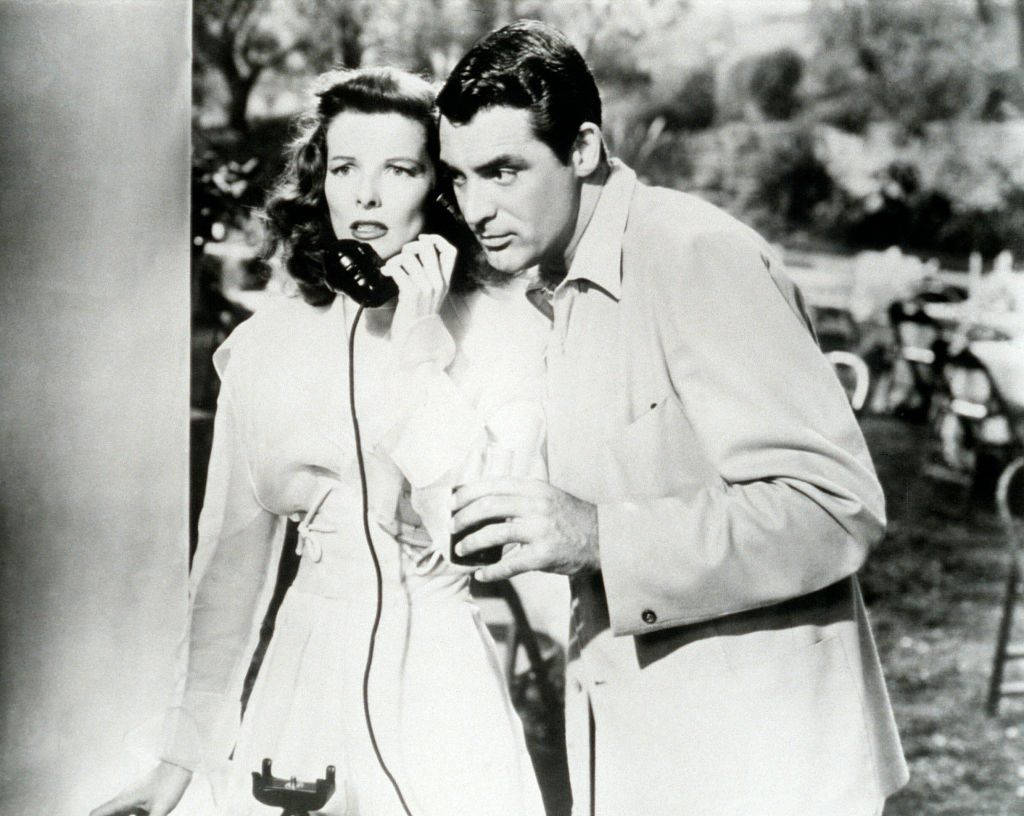
The story behind the strange way Katharine Hepburn (and others) spoke.
Atlas Obscura
78 points · by tintinnabula · 10y ago · 108 comments
Fraser's lines and Grammer's interpretation probably deserve a place in the canons of American English accents and linguistics.
So I could imagine a single Hollywood director could possibly start a trend (if everybody'a speech center were as spineless as mine).
Nit-pick, but everyone speaks with an accent :)
(I'm not sure if you meant it that way, but I have met people who genuinely think that they don't have an accent and are 'unaccented', and it's just other people who do...)
This is in stark contrast to the UK, or just England, where you have an incredible amount of linguistic diversity in a very small geographical area. RP is theoretically "standard", but in reality it's a niche upper class thing.
So this was actually the kind of thing I was hoping to address with my comment. The idea that there's a "neutral" accent is, linguistically speaking, nonsense. That said, there probably isn't too much harm in it, in that if you're an American talking to other Americans there's probably not much ambiguity.
The problem is more that it could create the mistaken idea that, say, "General American" is somehow "normal" and therefore anybody speaking with a different accent becomes "the other", for whatever that may mean. It becomes a reference point to judge other accents against, when that's not necessarily helpful.
And there's a lot of accent prejudice out there... ask anyone who's gone for a job interview, for example, who's been very well-qualified but has an accent that the interviewer didn't expect (this can be due to regional or social backgrounds, or even gender – e.g. so-called "valley girl speak"/high rising terminal). Just something worth thinking about, that's all. I know I've dismissed someone before off-hand based on how they sound, which is not a good thing, and something I'd like to be more aware of myself.
Personally, though I tend to think of it as the "American Chameleon" accent as I, like the poster above, find that it trends to adapting to regional variances (often without a conscious intent to do so). I have a hunch that this is a feature of the "accent" rather than a weakness in the speaker, but this is merely lay speculation. It's weird to think of a defining characteristic of an accent being its flexibility rather than rigidity to preferred forms, but I think that helps account for why this "General American" accent is so common in America at this point, because it seems to be sort of an American "Borg" accent: your regional distinctions will be assimilated.
Not sure if Cleese had a point, but it's an interesting take on his fellow actor and that he finds "having one's own voice" important, to some extent.
"CLEESE: Yes, I do. And it just showed why he was such a wonderful impersonator. But it showed that in a very strange way because he'd overslept. And his chauffer Bert said, sorry, boys, Peter's overslept. I'll make you coffee. He'll be out in a bit. And we just sat there sipping coffee. And when Peter came out, he was still in his dressing gown or his robe. And he was apologizing for having overslept, but apologizing in a voice that was not his own. And suddenly, he switched into a rather sort of plumy upper-class voice and was talking to us like this as he walked towards us. And at a moment, he was talking a bit like that. And then he went into another voice, sat on the sofa and 10 seconds later, he was talking to us in his own voice. And see, we were the first persons that he'd spoken to that morning. He'd only just been up a few minutes. And we realized when Graham and I - Graham Chapman and I - sort of compared notes afterwards, we realized that Peter Sellers in the morning had to find his own voice.
DAVIES: So he wasn't trying to impress you. It's like somebody tuning in...
CLEESE: No, no...
DAVIES: ...A radio dial and finding the station.
CLEESE: There was a lack of real personality at his core. And the people who were very good impressionists are often rather like that. Similarly, people who write very good parodies but don't write such great original comedy, those people often lack a certain emotional life. They're very clever, their observation is good, but emotion doesn't inform their work in any way. So their work tends to be brilliantly observed, but not very - what's the word? - not very powerful. They don't tend to be terribly funny. They tend to be terribly clever. So this kind of personality type - a person who has a weak sense of their own identity - they're frightfully good at copying other people, whether it's other writers or other performers.
But we realized that Peter literally had to find his own voice in the morning. And to that extent, he was a sort of personality that he'd had to manufacture himself from different parts. And I - one of the Pythons was ever so slightly like that. And we could always tell when he had been spending time with one of his Beatles friends because he would have a slight Liverpool accent for the next 24 hours."
" . . . elocution class is wildly offensive to most of the modern linguists . . . "
What is it with this childish writing, being "deeply, wildly" offended at, instead of disagreeing with? Its the wrinting caliber of a young teen, and it seems to be popular.
This is simply poor writing.
That is exactly why "mid-atlantic accent" is called that[0]. It's halfway between American and British, and it's the native accent of somewhere indistinct where nobody is actually from.
----
[0] Also, since apparently this needs to be explicitly stated in this ridiculous, Gell-Mann-Effect-in-full-force HN thread: "mid-atlantic accent" and "trans-atlantic accent" are synonyms. They are different words for the same thing. BOTH ARE RIGHT.
Speak to any acting coach: it's more frequently called a Trans-Atlantic accent.
Edit: be less absolute.
Even the Wikipedia article is titled "Mid-atlantic accent": https://en.wikipedia.org/wiki/Mid-Atlantic_accent
What is it about this article that seems to so efficiently be bringing the armchair prescriptivists out of the woodwork?
So I enjoyed the article but (for myself) didn't necessarily judge the historical account to be accurate. Just read it with a grain of salt.
But, regarding your second quote... if you bring up the idea of a way of speaking being "better" or "worse" to a modern linguist, trust, me: you will understand why the author uses "wildly offended" instead of just "offended".
If the author had just kept it at "The entire concept of an elocution class is offensive to most of the modern linguists I know", that would not at all be sufficiently conveying the degree to which the idea of a prescribed elocution class is violently at odds with everything most modern linguists believe in.
Not all modern linguists are descriptivists; some are in fact prescriptivists. It is a pretty fundamental personality divide: some people take the world as it is, others as it could be (or ought to be).
Even just a single modern prescriptive linguist, without any of those other qualifiers. I would genuinely love to see it.
That's also how I took the author's use of offensive i.e. it offended his sensibility that mid-Atlantic has two meanings (or whatever it was that he was offended by).
I'll also not point out the elementary writing mistakes in your own comment.
I have a lot of southern and mid western speech habits, and learning a rigorous framework for analyzing speech helped me get control over them.
His accent was his native Bristol at base, with Americanisms heaped on top, a Mid-Atlantic destination arrived at from the opposite direction of contemporary American actors. But with his short American a's and clipped cadence, to my ear his delivery often seems closer to that of his American co-stars than to that of his English ones. For example, take a listen to the trailer of The Grass is Greener (1961) [0], in which Grant plays alongside a cast from both sides of the Atlantic. Hear it?
(I'm American and have lived in England, by the way.)
I find this funny, as the monophthongal /e/ and /o/ sound utterly alien to American ears. So much so that switching from diphthong to monophthong pronunciations for those sounds is a quick-and-dirty way to fake a Scottish accent (yes, very quick and very dirty; nobody will believe your accent is real though they'll think you're trying to sound Scottish).
Edit: Forgot to include gemination marks here. Should be /e:/ and /o:/ above.
Actors like Richard Burton and Anthony Hopkins were instructed to drop their Welsh accents if they wanted to progress in their acting careers, as RP was the "right" way for an actor to speak.
Even in other professions, regional accents were replaced by RP. My father was told to drop his Welsh accent if he wanted to become a lawyer.
RP was only really dropped in the 1980s.
On a side note, is Clara Bow's story the basis for "Singing in the Rain"?
With further advances in audio capture, recording, processing, and playback equipment, vernacular accents were possible without risking nonintelligibility to the audience. James Dean's drunken ramble at the conclusion of Giant being a notable exception.
Yes, early films were shot square-on into the set, as one would film a stage production. That changed with The Great Train Robbery, which introduced a very large number of the set of camera techniques used in film since: long shots, close-ups, tracking, panning, dolly, cross-cutting, and other methods. All in 1903, by Edwin S. Porter.
All that was well established by the time talkies started becoming widespread, particularly with sound-on-film in the 1930s.
https://en.m.wikipedia.org/wiki/The_Great_Train_Robbery_(190...
I have yet to find a dictionary that advises the intervocalic "t" be pronounced as a "d", despite the hordes of individuals who wax tumescently indignant when one doesn't. All I really want is consistency, but I do not insist. And I am aware that the Gods of linguistics profess that language is living and ever mutating and therefore never harmonious or consistent. I doubt, however, that this is an eternal intrinsic attribute. I'm sure I push too far, but such a view seems to me an appeal to authority, while the authority-figures are us unbeknownst.
1. http://www.huffingtonpost.com/2014/06/12/saying-like-study-f...
My family of heavy readers enjoys finding them, and the memories of arguing with teachers about the 'proper' pronunciations.
And sometimes realizing that teachers had their own regional pronunciations they wanted to impose (days of the week as Sundee Mondee...)
A common phrase used in Croatia to describe how to write something is to write it "by the Wolf" (since vuk = wolf), indicating that it is supposed to be read as written. This leads to transliterating foreign words in a phonetic manner where one doesn't need to know a particular foreign language to pronounce the word correctly. From your example, to write water "by the Wolf" we would write "votr." :-)
I'm not sure why something has to be intrinsic and eternal in order to be true, or at least useful.
One of the most notable exceptions, of course, being Red Leader, a British actor doing a fantastic rendition of a midwestern american cowboy
A) The Imperial Navy is a euphimism for the British Navy / Empire.
B) It was filmed in the UK with almost all UK actors.
The new Star Wars - none of the accents are posh really.
Just English accents, again actors, filming etc. - although - I think there was some attempt by JJ to keep it UK-ish in that manner, though I'm not sure.
So it's not so much a "villain accent" as it is a "Republic leadership accent", where the Empire is just a corrupted Republic.
Do we Scots get an exemption from the "evil Brit" trope - (OK apart from Begby or Fred the Shred, but there aren't really people like that in Scotland, honest).
;-)
Oh, nonsense. Sociolinguistic prejudices are still with us and it's only those of us speaking the prestige varieties of English who have the luxury of pretending we all speak naturally now. If you don't think so, ask some people their opinions of AAVE or "Ebonics." Or even a Southern drawl.
And in fact I don't think they do, since linguists are among the specialists who contribute to "accent reduction" courses, which seems like a modern name for the same thing.
You'd have to ask a modern linguist, not just anybody. Class signifiers in speech still exist, but modern linguists are not likely to endorse one way of speaking as better than others.
I guess I agree with your objection though, this statement is pointless. Its comparing modern linguists to '60s rich folks from the east coast. They don't agree, what a surprise. I think you are right, in that a better comparison would be '60s rich folks from the east coast to 2010s rich folks from the east coast. And I agree that you would find things have not changed as much.
I think the whole statement was a way to introduce that the author has been talking to linguists, and start with a really crude overview of their opinion of the whole thing before we get to the details.
Emphasis mine.
Are you a linguist?
https://en.wikipedia.org/wiki/Latin_declension#First_and_sec... gives the declension for adjectives such as obscurus.
I think the web site gets it wrong because of "camera obscura" (Latin for "dark room"). Camera (modern French: "la chambre") is feminine so takes the feminine form of the adjective.