68 points · by NeutronBoy · 10y ago · 116 comments
In any case, the argument Hunt makes here is valid; the ad that is being blocked on his site is pretty unobtrusive, is simple, and I would guess does not track the user like so many other ads/ad companies do. However, the title of the article, "Ad blockers are part of the problem," doesn't reflect reality. Yes, in this case, whoever is updating the block list is specifically targeting an okay ad, but in general ads are nasty, track users, and are generally terrible.
The reality is that the author really can't be mad at ad blockers without really, really being mad at the ad companies that cause people to use ad blockers in the first place. Sure, in this case, it sucks that the ad is being targeted and is due to a bad actor. And yes, Hunt has every right to be mad at this bad actor and Adblock Plus for, through inaction, being okay with it. But the issue is not with ad blockers, it's with most ad companies being horrible and consumers rejecting the horrible ad companies. I think if the ads were less obtrusive and didn't track you (I have heard on multiple occasions across various cities that people are either joking about or freaked out about looking up some product and now seeing all of their ads target some variation of that product) the amount of casual people using ad blockers would go down.
That's my policy. You can't spit and shit into a well and then complain that me drinking bottled water is bad for the well-owners' source of revenue and environmentally unfriendly.
I know HN takes a pretty critical view of "mainstream media", but I believe a world in which NYT/Wired/WSJ and similar have been successfully run out of business will be a very different one. They are among the last to have the resources to devote teams to investigate issues. There's nobody capable of replacing them.
I with there were an Adblocker that takes this responsibility serious, blocking maybe video and ads over content, but not static images and text ads.
For the commentator saying that "most consumers don't care how carefully ads have been selected. It still is an ad and we don't like any ads :)" I can only answer that problem started when you called yourself a "consumer". We need more citizen, less consumers.
I find it hard to believe that a personal blog by a MS MVP, who does a lot of traveling and presenting, drives so much traffic that he can't afford a mid-tier Wordpress instance out of his lunch money, so using his example as one where "the little guy" needs advertising to stay alive is dubious.
I've been saying for a long time now that the kind of clickbait-y, listicle-y, content-free "content" that is supported purely by advertising needs to go away anyhow. The entire "industry" of hiring "writers" to research trending words, and then write 100-word articles to post to aggregator sites so that they move up the search rankings -- purely to drive ad revenue -- needs to die a quick, agonizing death.
Are you judging him on his money capacity so you can justify blocking ads on his page ? I might be mistaken but it looks like it.
People seem to find themselves with moral superiority to block content on webpages for reasons they seem fit.
The thing is, if you're using an ad blocker on all the time, how can you argue that your blocking something for a reason, if you haven't seen any ads yet ?
If someone writes click bait, or you don't like the content or whatever, just close your web browser and in the future don't visit that website.
If everyone did that, we forced people to write better content because it would be quality that would drive visits. Since most people just visit the websites, they can read the articles or content but block the ads.
It seems that what is wrong is not the content but the ads, so advertisers and ad platforms make changes so they can circumvent these issues and ad blockers do the same.
It's a war and it will get us nowhere.
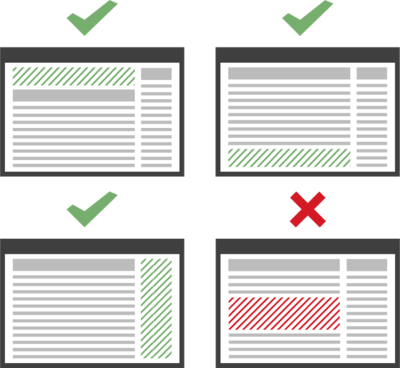
A few weeks ago, I was reading a long-form Guardian article (pretty sure it was linked from here) and it struck me that the page layout was super clean and readable. I wondered what it would look in its full ad-laden glory, so I disabled uBlock and refreshed the page. I was immediately redirected to a "Firefox needs an urgent security update!!" page that would have installed malware if I had run the script it was pushing. I hope they got paid handsomely for that first impression, because it was also the last.
If a site wants to advertise to me, they can embed a static image, hosted on their own server, and I may or may not click the link. "Ad networks" can go sit on a sharp stick. Maybe it can be leveraged to pry their head out.
No, that's to point out that good content doesn't NECESSARILY need an ad-revenue stream to exist. I'm old, and I still aggregate a lot of blogs via RSS. To me, that's still the best content on the internet. Reading those posts in an aggregator removes almost all of the advertising anyway, and certainly all the "bad" adverts.
That reminds me... it was a good article. I should add him to my roll, and see what else he has to say...
Ads are not a public service. Ads are for consumers. Advertisers pay for them to be placed in the hopes that consumers will give them money as a result.
Advertisers are wasting money if they're trying to show adverts to people who are sufficiently disinterested in seeing them that they've installed an ad blocker.
Any website which knowingly wastes an advertiser's money on aggressive attempts to display adverts to those who have clearly indicated they don't want to see them is essentially engaging in fraud.
Eh. It's not fraud, it's just bad business practice.
One paper (DOI 10.3386/w20171), relating to search ads, concluded that they saw a strong correlation between people who click on ads and people who already regularly purchase from the advertising vendor. i.e. When a vendor pays for clicks on search ads, most of the time they're paying for people who would have bought from them anyway. In that study, for campaigns where naive analysis implies there was a 4000% ROI, an analysis which takes the correlation into account indicated a negative ROI.
I know from experience that another confounding factor is that marketing departments and agencies often have perverse incentives. Campaigns are often judged by the net revenue from customers who interacted with that campaign, which incentivizes campaigning towards the people already most likely to buy whatever is being advertised.
Additionally, even if Internet ads do influence their viewers, the most likely influence it has on people who see it despite having installed an ad blocker is to make them dislike the host website and the advertiser.
Ultimately, ad-blockers aren't about blocking ads. They're about filtering out visual noise. Stop putting crap on my screen and FFS stop being-self righteous when I block said crap. In what world is blaming your users the right move?
The customer is always right. troyhunt.com is part of the problem.
No they're not. Often they're absolutely wrong.
> if you want me to consume ads, give me ads I want to consume.
The sponsorhip message on Troy's site is unobtrusive (it appears once at the top of the page, text only), and doesn't track you. It's relevant to the audience of his site (sponsors are curated by Troy). They're the best case for good ads on the web. If all sites did ads like this, I'd uninstall my adblocker immediately.
You misunderstand the expression, I think. The expression means "do you really want to get into a moral argument over trivial matters with your clientelle... really? Because that's not good for you."
>The sponsorhip message on Troy's site is unobtrusive
Indeed. However, it's still an ad. It still decreases the signal-to-noise ratio on his site, and that's why I use an ad-blocker. Ranting against this behavior is not in Troy Hunt's interest because guess what: the web is big. He's replaceable.
Again: the missing bit here is that the adverts do not add value to the site. They degrade it (if only a little). This is why his ads are being blocked. Full stop. The market has spoken.
I'm not sure that's what people actually want though.
> Ranting against this behavior is not in Troy Hunt's interest because guess what: the web is big. He's replaceable.
So he should just suck it up? Why?
> This is why his ads are being blocked. Full stop. The market has spoken.
If this is the market speaking, it's going to eat itself. On that trajectory, it's only a matter of time before everything of value is behind a paywall of some description.
> It still decreases the signal-to-noise ratio on his site
It decreases the signal-to-noise ratio a hell of a lot less than the picture at the top of the page does.Customer support 101: The customer is always right. Right they (we) are!
Going by your argument, a one-line black-on-beige text message saying "Sponsored by: $COMPANY_NAMES" is "crap".
But even scientific papers often have lines saying "Sponsored by NSF grant #1234." PBS children's TV has a voice that says, "Sesame Street was sponsored by $COMPANY." And I have at least one or two GitHub repos containing a note in the README that says, "This work was sponsored by $CLIENT_NAME". To me, saying who's paying for work is as much a matter of giving proper credit and fully disclosing where the money is coming from.
Personally, as an EasyList user, I'm a bit surprised that EasyList has a site-specific rule to block this particular "Sponsored by" message.
Yes. At best it's tolerable crap.
>To me, saying who's paying for work is as much a matter of giving proper credit and fully disclosing where the money is coming from.
There's a difference between disclosure and advertisement. The latter has the notion that the information should literally be advertised, that is, thrust upon the viewer. I don't care that a paper cites collaborators or donors, I just don't want it to be done in such a way that pollutes my experience of the content. That's a crucial distinction.
>Personally, as an EasyList user, I'm a bit surprised that EasyList has a site-specific rule to block this particular "Sponsored by" message.
As an EasyList user, I'm considering making a donation precisely because they do this. Again: ad-blockers are about improving the signal-to-noise ratio on a site and preserving my attentional resources. Ad-blockers aren't about blocking ads, per se.
Yeah, this brings a whole new slant onto the argument. It may be that there is some text attached to a document that must legally accompany that document. For instance, would it ever be alright for an ad-blocker to remove something like "Copyright 2018 ACME corporation"?
In what way is "This work was supported by a grant from ACME corporation" different?
ACME's logo on public research has little or nothing to do with ACME's logo on a private, commercial website. In the former case, it's a certification and proof-of-work (on behalf of the NSF). In the latter case, it's literally commercial advertising. I think comparing advertising to public research is a big fat red herring.
Here troyhunt.com has a business problem: environmental forces make "simple" sponsorship an unreliable source of revenue. It takes few users to get the sponsorship link blacklisted on EasyList as intrusive (read: unpalatable) advertising. Clearly, you cannot make money doing things this way.
There are no easy solutions, but native advertising seems to work.
I'm an happy adblock user, but this makes me wonder how blocking lists are built. Did I just give power to some people to filter out any content they don't like from my browser?
I personally tell people who deliver bug reports to me "First turn off your ad blocker then try again." It's a losing battle as a web developer or website administrator to keep up with the myriad ways these tools can manipulate the DOM in a non-standards-compliant fashion.
For displaying a small sponsorship message?
It's not a scandalous example or anything, but it is representative of the fact that webmasters can't wrap their heads around "people will block things that degrade their experience, and if you can't make money in such an environment then it's your problem".
He's part of the problem, although granted, the problem is minor on a cosmic scale.
In what sense of the word are you a "customer" of Troy Hunt?
Or did you think bloggers blogged out of kindness?
So I consume. And pay what I am aware of (attention) and what I am not (tracking and ads).
Hunt is not blaming his users, he is blaming the specific ad blocker (and more specifically, a bad actor and the inaction of the ad blocker) for blocking a truly unobtrusive ad, and so in this case the title is warranted, maybe a little bit click bait.
>Ads aren't meant for you, they are meant to help the producer of the content.
Sadly for the producer of the content, I (or others) have to consume the god-damn ads. Complaining that one's users are blocking one's ads amounts to complaining that one's marketing strategy is bad.
So yes, I do have trouble taking "boo hoo people are blocking my ads" seriously.
I'd rather see irrelevant ads - or ads targeted at the average visitor - than be tracked and shown things an algorithm thinks I personally want to see.
I wish one of those "pay $X/month into a bucket, distribute that bucket among all the content you consume proportionally" schemes would actually take off and work.
That said, his sponsorship notice is really good, in just about every possible way it could be. Just a text link with the name and motto of the business, overlaid on the hero image in muted colors. It reminds me of NPR sponsorship messages. Given a reasonable way of recognizing this kind of sponsorship message, I'd unblock them generally.
Locally hosted, tracking free, messages of sponsorship or static images of some relevant tool or service should be reserved for an Easylist "hard line" optional file that I opt into. The default lists should be removing, with extreme prejudice, items that carry cross site tracking and attention grabbing overlays, sound and animations. There'll always be some who go into options and tick everything.
I don't much like adblock's approach to taking money for letting acceptable ads through either.
We might be able to achieve some level of sanity if sites like stackoverflow, troyhunt or the ad network that was trying to do it right got some benefit for trying to be ethical about it.
This is entirely disingenuous. Add-blockers aren't modifying sites like yours, they are allowing users to control what content their machines access and display.
While it's silly for your single-line sponsored banner to be blocked, your complaint should be about easy-list, furthermore users are free to modify their lists to block the content that they want to block.
If you will, uMatrix without configuration breaks plenty of reasonable sites and it takes some work to get everything working. And I'm definitely not going to stop using it while bloggers like you feel the need to serve me third-party Javascript assets which send my IP / usage information to a tracker.
Edit: Would one of the at least three people that down-voted care to offer a comment?
> This is entirely disingenuous. Add-blockers aren't modifying sites like yours, they are allowing users to control what content their machines access and display.
When this blocker trend started it was because the ads in use were obstructive to the user experience, damaging to our machines and later on, using up our data plans for things we didn't intend to download. Trey's solution here is to provide a sponsor message that is tailored visually to the content it surrounds, is not intrusive to the UX, and is extremely lightweight (just a few bytes of text). If the blocking community insists this is fair game to block, then the publishers have no reason to even attempt working with us.
There are a lot of scummy advertisers out there and very good reason to be paranoid, but we cannot use that as justification to throw someone else under the bus who is clearly trying to meet us in the middle.
I'm not throwing Troy under the bus, as a matter of fact uBlock has 'toggle cosmetic filtering for the site' and I've turned it off to allow this sponsor message to be shown.
But I will note that Troy is still serving tracking code from his site and I have no intention to stop using an Add-blocker for his livelihood or anyone else's.
Could the curated lists be improved? Yes, I conceded that position in my above post as well. But the whole-scale attack on 'Add-Blockers' by someone serving tracking code is, as I have said totally disingenuous. It's not about 'the level of intrusiveness' it's about 'my right to control what code/content is executed/displayed on my machine'.
> Dustin Moris Gorski
> Yeah I understand your frustration. I think there are two separate issues. Your issue is that you follow all rules of EasyList and still get blocked, which is wrong. The second issue is the general issue that most consumers don't care how carefully ads have been selected. It still is an ad and we don't like any ads :)
Unfortunately the same can be said about the ads and their javascript, and with much higher frequency. I got sick of pages that randomly scroll back to the top after you've started to scroll down, or when you go back a page to follow a different link part way down the page. Using an ad blocker on iOS fixed the problem.
Recently I did wonder whether the passage of time might have caused the ad networks to fix their code. I lasted about 10 minutes before I could confirm that nothing had changed and the blocker was reinstated.
The size of the non-broken rest of the internet still is "infinite" for all practical purposes.
It's a sad day when you can't site-to-store a case of Cheez-wiz without being tracked.
The only argument you need is that you don't want to see things you don't want to see. I have control over what is shown on my browser by my computer, as I choose what software I run. So no, the usual arguments don't go out of the window. I'm not happy with any advertisements and it's strange that people assume I would be if they are "non-intrusive" or whatever. I simply do not care for them.
Troy uses Google Analytics on his site and has no privacy policy which means his site does not comply with the Google Analytics' Terms of Service.[0]
When I queried this on social media, he dismissed it as 'legal arse covering'[1] and indicates to me that while he's undoubtedly a bright and talented guy, he still doesn't 'get it' when it comes to privacy. Not at all.
Not everyone is wearing a tinfoil hat and worried that the big bad NSA is coming to drone them. Many of us are far more more concerned about corporate surveillance and data brokers tracking our online activity.
[0]https://www.google.com/analytics/terms/us.html
[1]https://twitter.com/troyhunt/status/651723191144976384
(Note I have a cronjob deleting most Tweets 30+ days old so my replies in that thread are gone. Old tweets are worthless and I see no need to preserve them...)
No one would have objected to his sponsorship message by itself, but in a world where advertisers and blockers are involved in no-holds-barred arms race this kind of thing is inevitable.
Additionally it's sensible to run an ad blocker by default because of all the crap that's out there so the "good guys" suffer from the bad practices of all the "bad guys".
> the sponsor message is loaded by a request that returns a 242 byte response so we're talking 0.03% of the overall page size.
It can't be that important, I don't see it in the troyhunt.com rss feed.
The secondary effect is that streams that need sponsorship dollars to exist will begin modifying the content of their stream itself. This seems worse to me, but it's clearly the direction the market is pushing ad-supported content: into the "bad old days" of advertisers getting editorial privilege.
I'm willing to pay for interesting content, but really don't want to see any adverts (1. they steal attention, 2. you pay for the advert when/if you buy a product).
I'd love to some more more innovation in (mirco)payment options, all I see instead is "innovation" in ads.
As an EasyList user, I personally feel that EasyList is being a bit obnoxious here.
Granted, it's an unobtrusive ad (at best), but it has every reason to be filtered out by a gosh-darn ad-blocker.
Ad blockers are here to stay and that's good in general.
If you're going to go full minimalist message anyway... just make it part of the content. adblock can't block part of the content without blocking all the content, can they?
Honestly, the ball is in their court. Its the ad industries problem to fix, not ours.
If he really wanted to run this ad, he should make a random CSS class name for it that changes with every page render and try to fight the ad blockers like Forbes does. At least then I wouldn't have to read this whiny complaint about programs actually working like they're supposed to.
Third party (Javascript-based) ads should be blocked for security concerns if nothing else.
As for the sponsorship banner that Troy is talking about - it's still an ad. A rather minimal, tasteful ad - but an ad at the end of the day.
[0] https://en.wikipedia.org/wiki/Malvertising
[1] http://arstechnica.com/security/2016/03/big-name-sites-hit-b...
E:
So jsnell's post does not seem insane, after finishing my full read of Troy's post I figured out why the parent post had been downvoted: almost nothing to do with the article. I then removed my line questioning why from my post.
If someone really is only interested in blocking malware rather than in blocking ads, they should be furious that his ad blocker is over-reaching like this and blocking something totally harmless. While if they actually don't want to see ads, at least be honest about it.