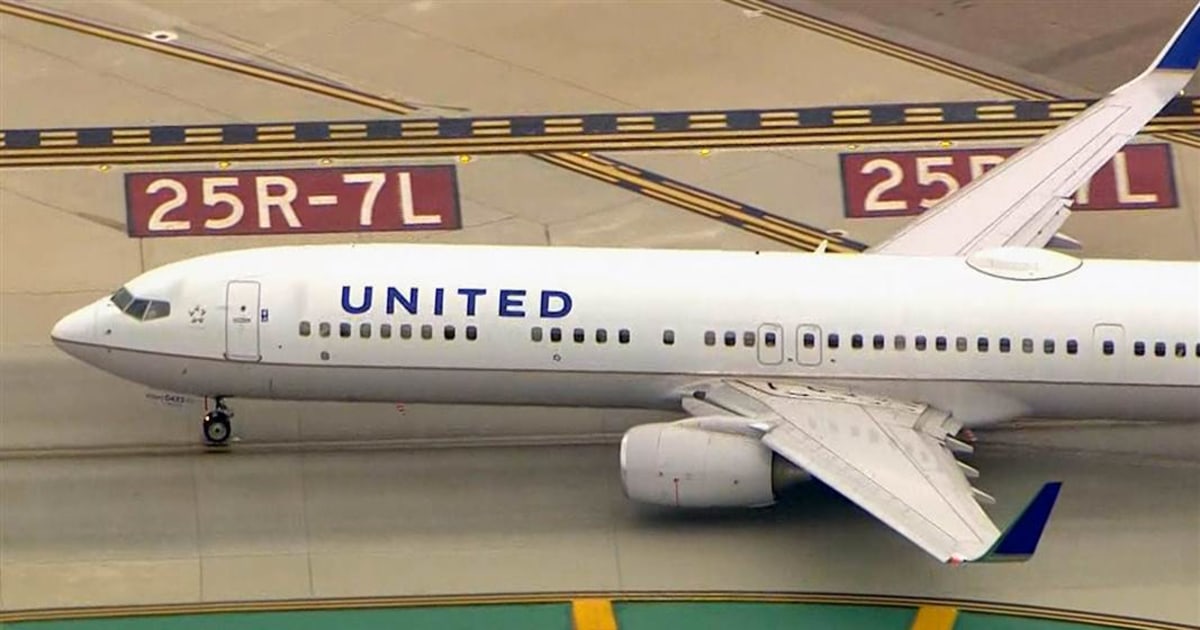
United Airlines domestic ground stop lifted after computer outage
International flights weren't affected by the ground stop, which the FAA said was issued at United Airlines' request.
NBC News
163 points · by perseusprime11 · 9y ago · 83 comments
This article goes into some detail of why it happens: http://money.cnn.com/2016/08/08/technology/delta-airline-com.... It seems like human error and fragile computer systems are the biggest issues.
I don't think that would help much. It's not really the core hardware or operating systems that tend to cause these types of outages.
More typically, it's the dependency chain between locations, applications, and services. And, there's more than one system that can cause a ground halt. The check-in service, the no-fly list functionality (which the govt runs), weight/balance, crew scheduling, dispatch functions, and so on.
Check-in is a good example. You can lose that either through a failure in the complex WAN, failures in the check-in backend service, failures with the no-fly service (run by the govt) or connectivity to it, failures in the CRS/GDS, failures in various services around check-in kiosks, failures in the online checkin, and so forth.
Once they go down, you also face an unusually high spike in request volume when you're trying to get them back up. It creates a wave than can overwhelm different parts of the system.
For the more recent failures (across different airlines) listed above, I know one was a routing storm on the IP network, one was the checkin service, and one was the central reservations system...I think a botched version upgrade. Similar effects, different root causes.
Not to say it's okay, or shouldn't be addressed, but just noting that there's not really one smoking gun.
Not even. They're still on mainframes.
The question is if moving to _anything_ more modern is less trivial/costly than keeping the current systems which appear to have many single points of failure/
http://www.newsobserver.com/news/local/counties/wake-county/...
I also think that incidents like this might become more common as the state of cyber warfare progresses. As engineers, we should take care to build secure software, especially when that software underlies important systems. We should impress upon non-technical management the importance of doing so, even if it may take a little more time or money in the short term.
They were prioritizing getting planes to gates based on if the plane was picking up passengers and heading out again. Mine was the last flight of the day for my plane, so we were at the back of the line.
After 30 minutes, we finally had an opening and were moving... until another flight crew reminded the tower that they were reaching their FAA allowed hours and needed to be parked immediately. They took our spot, and then more planes came in that had to leave. Of course I know all of this because our pilot was pissed and would relay all of the info to us with a very sarcastic voice. He was supposed to be home by now too.
We ended up getting into our gate almost two hours after we landed. I normally live 30 minutes from the airport, and it took me another hour and a half to get home with the weather. The only reason we got in when we did is because the weather forced a shutdown of the airport, so we were literally the last flight to get parked at a gate, and only because there were no new flights coming in.
It's fun (after the fact) to think about these edge cases, how to keep the entire airspace running smoothly when one airport only has a single ground crew working, how to maximize efficiency to make sure the fewest number of people are delayed. Sucks to live through it though.
Like I said, this was an edge case. I've flown once a month for almost three years now and this was the first time I've experienced this.
That's a good observation. Often, the original issue, if it's not fixed in an hour or two...starts creating cascading problems.
Say just the boarding pass / checkin function is down. If you don't fix it quickly...
- Crews (pilots and/or fa's) become illegal to fly due to various rules around crew work, hours, rest periods, etc.
- They can't be replaced by other crews that need to be flown in, because the gates are occupied by the planes that can't leave
- Downstream flight connections no longer match up, so a massive process to change the current tail numbers <--> flight numbers plan has to happen, followed by matching crews and passengers to the new plan. Especially fun if you have a mixed fleet where only certain crews can fly certain models, and the models have different passenger capacities.
Basically, once you go past an hour or so, a giant shitshow starts...and gets worse as time goes on.
EDIT: We're now about to take off.
Sometimes the language outlives the hardware.
10:1, Linux fail.
Yeah, that's part of the problem.
And it's happened twice in my recent memory to our air fleets...
The planes themselves could fly - it's the other things that failed.
Theoretically the cars would be mechanically sound to drive, but couldn't due to problems with the software.
What happens if that infrastructure crashes (or a natural disaster disables part of it)? What happens if the clocks drift? What happens if a bug (or an intentional virus) suddenly deauthorizes all Teslas on the network? It's the same problem - management of the remote systems is centrally located, and centrally located management systems can fail.
There is no remote management of planes. Nobody at ATC or on the ground can prevent a plane from doing anything the pilot wants to make the plane do.