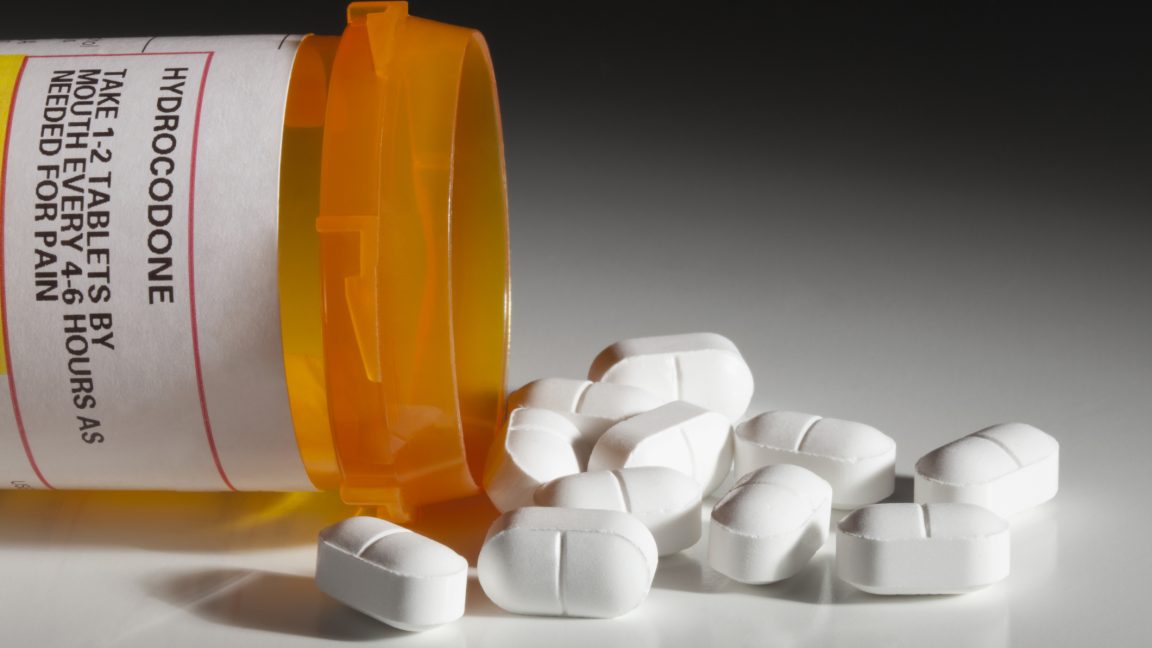
With a 10-day supply of opioids, 1 in 5 become long-term users
The longer you use opioids, the greater the risks—and the risks rise fast.
Ars Technica
153 points · by kolbe · 9y ago · 130 comments
As a disabled veteran with nerve damage I am rationing pain medication daily. I cannot afford to have a manageable pain day due to the fact I might have a week of excruciating pain.
As you may or may not know, little can be done for functional nerve damage. Some experimental procedures are available but in general, only the symptoms can be treated. For me this means a lot of different muscle relaxers and an opiod for when things are beyond control.
But, the opioids have become increasingly more difficult to get prescribed because of recent DEA rule changes and legislation affecting these medications.
This basically means, for me at least, I will take my own life at some point as the pain will be too unbearable and I won't be able to acquire the medications necessary to control it.
In January of 2014 I broke my hand. Not just a fracture. I completely shattered my second metacarpal in my right hand (my dominant hand) and did extensive damage to the surrounding tendons, ligaments, and skin. The surgeon who put my hand back together said it looked like a gunshot exit wound without a corresponding entrance wound. The entire top of my hand had been flayed open. After the surgery I was given hydrocodone, enough for a week. The only reason I didn't just kill myself that week was because I had pain killers. When the dose would wear off the pain was unreal, blinding, and totally consuming. The only worse pain I've ever been in was the night I broke my hand.
Needless to say I had the prescription refilled weekly until my second surgery three months later to take out all of the pins. And again for three months after that until my third surgery to release the tendons so I could use my hand again. And for three months after that while I did thrice weekly physical therapy. I cannot emphasize enough how much I needed the pain killers just to get through life for those nine months. Even with them there were some nights I couldn't sleep because the pain in my hand was so severe. Of course, by the end of the nine months I was pretty well physically addicted, but, knowing my time was up I tapered off and haven't needed them since. For another six months I still needed frequent acetaminophen and ibuprofen to take the edge off of the throbbing in my hand.
I'm not saying at all that there isn't a problem big with opiod addiction. But recent conversations I've seen about opiods leave me with the impression that most people just don't get it. They think that either people just need to deal with pain or that some sort of non-medicine alternative is what's needed for most people on opiods. And that may be true for some. But unless you've been in the kind of pain that makes you seriously consider killing yourself I don't really think you can appreciate just how important opiod pain killers are to some people. I'm afraid we're going to lose something that helps a great deal of people all because we have this idea that addiction is somehow a moral failing and we've structured drug policies around that belief.
About six months after moving into my house I was fed up with the janky garage door opener that came with it so I went to Home Depot and bought a new one. I managed to assemble the new one myself with only a few hiccups. It then came time to remove the old garage door opener. I first took down the actual motor unit that was attached to the ceiling and got it set on the ground with the rail still attached. The end of the rail was attached to a metal bracket that formed a right angle with lots of holes for bolts to go through[0] which was then attached to the drywall above the garage door. I got up on a ladder and set to removing the bolts. The last bolt, unbeknownst to me, was attached to a piece of metal through which the garage door spring went [1].
What happened next all tool place within maybe 1/4 a second. As soon as I turned the socket wrench enough to loosen the bolt I heard a loud pop and felt something hit my hand. HARD. I looked down at my hand and saw blood. "No big deal, I cut myself on things all the time. We've got lots of bandages." Then I noticed the subcutaneous tissue (your hand doesn't have much, but there's still enough that deep cuts look different). "Okay this is gonna need stitches, I better get down and take care of this." And then I saw the bone. "ohfuckohfuckohfuck."
I hopped down off the ladder and ran inside and started screaming "CALL 911!!!" to my girlfriend who was upstairs. I made it to the kitchen where I got a dish towel, put my hand on the counter, and clamped down as hard as I could. The paramedics arrived about 5 minutes later (we live very close to a fire station). By then I'd calmed down but was so full of adrenaline I could barely hear or see anything. At one point I blanked out for maybe 30 seconds? I'm not entirely sure. The EMT said it was an adrenaline dump and that it was fairly normal. Of course when I got to the ER every single nurse who heard the story said I was lucky to be alive. If it had hit my head it would have caved in my skull (and I was on a ladder...). Apparently that happens more than you'd think.
They eventually hooked me up with a drip of hydromorphone. "This is the good stuff." one nurse said. Bullshit. I was in so much pain it barely did anything. It brought it from 10/10 to 9.5/10. That's using my new 10 point scale. I thought I'd experienced a 10 before when one time my dentist started drilling before the lidocaine had fully kicked in. I'd put that at about a 6 now. I really cannot describe in words how bad the pain that night and the following months was.
My hand is a lot better now though. The third surgery gave me back my mobility and the physical therapy got me back up to about 60% of the strength I had before. I'll never be able to point straight with my right index finger, but I can make a fist and type. As a programmer both are very important.
[0]: Exactly like this https://mobileimages.lowes.com/product/converted/040395/0403...
[1]: Basically this, except mine is shaped slightly different http://www.truetex.com/gar913.jpg
I think what's missed is that there's no evidence that long term high dose opioid use does anything to treat pain.
We have lots of evidence of harm caused by long term use of opioid medication.
The problem with the current US crackdown on opioids is not reduced use of opioids, but with the lack of anything else being offered.
People with long term pain need a package of care, probably provided by specialists in pain management. That package should include exercise (where indicated), psychological help, alternative prescribing, and if needed some opioid prescribing.
It only increases diversion to the black market by directly increasing demand. My own grandparents have had to buy pain pills in the past.
Doctors are terrified to prescribe painkillers to those in need lest they be prosecuted by laymen who think they know better. Pain is being under-treated now more than ever.
My ER has a massive info-poster in the lobby explaining why I won't be receiving dilaudid, fentanyl, or oxycodone.
Opiates are in the news every other day, either prescription abuse or fentanyl-laced heroin stories in local and national paper as well as cable news.
What good has it done? There will always be abusers.
Like DRM only hurting paying customers, stricter regulations and lawsuits against doctors ironically only end up hurting non-abusers.
Dependent folks, like my grandparents, who get a massive quality of life increase thanks to these drugs, especially considering the lifetime of abuse they've put their bodies through, and been through.
That's who ends up getting the shit end of the stick.
Not the junkie. Someone's Grandma. A vet.
Yes. I know people with chronic illnesses (of many types) who've had to resort to various black markets for opioids, all this stupid "diversion control" and trying to shit-test patients in the ED to see if they're "drug-seekers" actually has a deep and nasty cost.
Of course someone who presents to the ED with a physical condition that causes immense pain is, inherently, going to be a "drug seeker". So now people need to be all "tsundere" about that (i-it's not like i WANTED you to prescribe me opioids, or anything, BAKA!), and pretend that they don't know what drug/dosage works for them (apparently, it's only opium-seeky people who know anything technical about opioids) even if they're well-versed about what works for them and their medical condition. It's a very nasty and adversarial state of affairs, that screws over everyone.
The DEA (and other flavours of doorkickers) targeting doctors and deputising them as law-enforcement agents who have to decide between the evil undeserving addicts and the deserving patients in pain is what has created this affair. Blame the prohibitionists, as this is a problem of their own making -- the crackdowns on "pill mills" and "overprescribing doctors" is what denies people a safe and legal source of pharmaceutical-grade opioids and forces them onto the black market of illegal, overpriced, and fentanyl-contaminated opioids (which leads, of course, to the deaths that are used to justify even more crackdowns).
Crackdowns on "over-prescribing" invariably lead to people who experience chronic pain being denied medical access (or being subjected to extremely invasive and degrading treatment to weed out "drug seekers"). The DEA cracking skulls over opioids and investigating doctors is literally the only reason illicit fentanyl (and its even more dangerous analogues like carfentanil) even is a thing. I am so very doubtful that more door-kicking and prosecutions will miraculously work after decades of it making shit worse.
The doctor looked at me for a moment and said that as you are using that term, benzo, you are aware of its abusive use. In no circumstances can we prescribe the drug same drug for you, since that would include doctor supervision before, during and after its consumption. After that the GP wrote something with the keyboard and proceeded to ask me how exactly was I able to get these drugs. I told the scenario after which I has been prescribed the drugs. The doctor responded that it sounds maltreatment to prescribe the said drug in such circumstances and that my story sounds odd. He said that he cannot prescribe me any drugs at this time.
I'm now concerned what the doctor wrote to the state wide system and whether that might affect my treatments in the future. Either way, this whole paranormality over "drug seekers" is insane -- the GP did not even suggest seeing a specialist or offer alternative drug. He just declined and became anxious which I read as he wanted me out of his office as soon as possible. He was young, I give you that, but it makes me wonder what kind of horror stories do they tell about my kind of "drug seekers" in the med school.
If I understand pain theory correctly, there isn't really a good way for a doctor to do a test and say "you are really in insane pain" vs "2 advils will cure you".
Then the choice is either:
a) Be generous with pain meds. Some abusers that don't need it will get them to either use or resell. Some will lead to deaths, due to addiction or increased supply on the black market. But all people in real pain are treated.
b) Be stingy with pain meds. Some legit people in pain could end up taking their own life due to not being able to live with the pain. But there will be less deaths and addiction outside of people in pain.
As a society, it seems a hard choice. Either way some very vulnerable people are going to be hurt. Ideally we would come up with better pain meds with no abuse potential, but that doesn't help things right now.
Removing access to medication doesn't remove the primary cause driving people to seek drugs, be it pain or psychological issues. I suspect people with high abuse potential will just resort to alternatives: street drugs or alcohol.
It seems fairly common that professional working people get on an opioid for something (say a fall), and then become addicted. These people can live for years on the Opioid, perhaps working a professional job. Now sure, if you ban opioid they could go and buy some black tar heroine and meth... but I am doubtful 100% of people would make that jump.
Alcohol is a different beast. Obviously some people become addicted, let's call it 10%. But 10% addiction rate is a lot lower than a 99% addiction rate that long term opioid use has.
So the net benefit of less opioids is almost certainty going to be less people addicted to drugs.
In the transition, you drive the usage of illegal drugs through the roof and spike the number of deaths. It's possible that these behaviors, once prevalent, take generations to switch out of, by which time, it's entirely possible that our formulation of drugs will be better.
So even if B would be better now, it's possible that our transition from A to B is pointless (the problem would have solved itself in the same time) and leads to a worse outcome than just remaining with plan A.
This kind of secondary analysis is usually totally missing from these debates, but is what is actually driving the harm of the opioid crisis.
One view is to say that you may need to have short term struggles to get to a long term better place. Which may be true, but it also depends if the new long term place is actually a better place - or did you do a lot of short term struggles for nothing?
c) Develop that missing test
This is an almost offensively simplistic depiction of long term pain.
Those people with the bad backs are not all faking it; it's not all in their heads; they have real pain and it's debilitating. They need something to help them live.
And your A / B choices are wrong too. You give people with long term pain access to pain management clinics which include psychological support; explanation that pain treatment will usually not be able to prevent pain; access to physiotheray and exercise (although these don't do much for some types of long term pain) and access to medication - and this will sometimes be opioid meds.
> As a society
Why is the US getting it so wrong though? Why is the US prescribing such vast quantities of opioids?
I am not sure if we agree or disagree. There ARE legit people with bad backs that need and should get pain meds. There are also millions of people with a prescription to an Opiod that have no actual pain.
For example, see
https://www.theatlantic.com/health/archive/2017/02/kentucky-...
Are you telling me almost 1 in every 2 people in that town have debilitating pain, and NEED Opiods to survive day to day? I cannot believe that is true.
> Why is the US getting it so wrong though? Why is the US prescribing such vast quantities of opioids?
Many reasons.
a) Doctors get paid to do stuff. If you refuse to give medicine, no one will come to you, and you won't get money. So in the doctors financial interest to prescribe.
b) Some people really DO need medicine. Do you risk screwing those that DO need it to spite the rest of the people?
c) Culture. American lifestyle loves pop a pill to fix a problem. If you can equally fix something with physical therapy or a pill, 9/10 people will pop a pill.
No, it's exactly right. There are two classes of people seeking pain medication: those who need it, and those who do not need it. Now, we can argue over who exactly needs the medication, but it is not right to suggest the second category does not exist.
And thank you for your service.
I realize you would end up "high" but I, too, am curious whether you've ever tried it. Given your description and the fact that you almost certainly wouldn't get in trouble.
I realize you work in IT and maybe don't want to get high, so I don't mean to imply that this is a good alternative - just curious, like the other poster. Thank you.
I work in the IT and being high is out of question, sadly it is difficult in the black market to obtain variety that would work for pain without such side effects. It was helpful in the evening to go through the night without waking up from pain. Other medication like for example Amitriptyline, would make you feel tired the next day which is not the case with cannabis.
But I don't want to be a criminal.
Kratom when used sparingly is a good tool, but don't abuse it.
Generally its doesn't "feel" addictive but don't assume that it is without side effects and use it lightly.
I use it about 3 times a week and I limit my dosage to one teaspoon a day. This seems to give me the benefits without the side effects. I don't feel addicted to it and have no desire to consume more than this.
Just a heads up :)
I'd give it a 1/10 on my addiction scale (with 1 - THC to 10 - A Year of Liquid Opium Poppy Daily Dose), and a 5/10 on my analgesic scale (1-Aspirin to 10-Opium Poppy).
I don't think the mechanisms are well understood. It definitely wipes out opiate withdrawal symptoms within hours of taking a small dose. And I've never had any physical symptoms from even month long cessation. I like to say 'my' scale, because efficacy and addictive properties of opiates and opiate analogs like Tramadol and Kratom vary pretty wildly. Tramadol is known to have and Kratom also seems to havem some strong SSRI actions also, not found in the other opiate analogs, Oxycodone, Hydrocodone, or nartural opiates.
I don't know if this applies to nerve damage pain, but cannabis has a quite a history of being effective with pain.
https://www.rcoa.ac.uk/faculty-of-pain-medicine/opioids-awar...
Self poisoning is a common method of suicide (second most common in the US) and opioid medication are the most common meds used.
Your single study is going to have to be remarkable to persuade me over that.
Looking at the study, they didn't adjust for this at all. Also, keep in mind: 1 in 5 are continued on prescriptions, which are given by doctors who assessed the situation and thought it was OK to continue it. It's NOT saying that 20% of people who try opiates for 10 days become hopelessly addicted, which the clickbaity headline implies.
The deaths figure - 91 per day or about 33K per year - seems to be the deaths of all opioids (including heroin abuse, etc.) and not the prescription opioids, which are half that:
https://www.drugabuse.gov/related-topics/trends-statistics/o...
Moreover, prescription deaths are relatively stable for last 6 years (though lower before that) while heroin deaths are raising quickly.
I spend a lot of time listening to podcasts where addiction medicine doctors talk about the state of their industry. Their views and their guests views, are almost in complete alignment and those views are the exact opposite of the comments in this thread. I find that alarming.
If you listen to addiction medicine doctors, they will tell you:
1) There is a massive epidemic of opioid addiction. Opioids are wildly addictive and are negligently / over prescribed.
2) There is little evidence that opioids provide benefit for long term chronic pain and evidence that long-term use of opioids actually causes many problems. Getting off the opioids tends to reduce the chronic pain.
3) Patient surveys rule supreme and patients want pain-killers even if the doctor does not believe they are the solution.
Anecdotally, if you watch the A&E show "Intervention", the number of opioid and heroin cases has shot through the roof since the series started two decades ago. There has been a titanic shift in addiction. It's painful to watch some of these addicts lie to their doctor to get opioids, turn around and sell them, then use the money to get heroin because the opioids aren't strong enough anymore.
This comment thread really saddens me.
[1] http://abcnews.go.com/US/prescription-painkillers-record-num...
The fact that I'm a software developer (making a living legally) and not taking and/or selling heroin is an anomaly.
I honestly don't get what most of the other commenters are going on about. The stats are pretty widely reported on the massive increase in opioid abuse.
They must live on the coasts or otherwise have avoided what has been plaguing many states in recent years
http://www.economist.com/blogs/graphicdetail/2017/03/daily-c...
Here's a long but very informative article outlining a few important issues plaguing the US, drug abuse playing a significant part:
https://www.commentarymagazine.com/articles/our-miserable-21...
As far as I could tell, the morphine did nothing. I remained in significant pain for a few hours while I awaited treatment.
It's impossible for me to say why. Is morphine just ineffective for that sort of pain? Or was I underdosed to prevent negative interactions with the drugs they gave me later? Or was I underdosed as a precautionary measure for opiates due to addiction?
All I know is that I'm afraid of ending up in pain in the future and being denied effective treatment out of misguided concern that I will become an addict.
I do not fear addiction. I fear pain.
This seems to illustrate the US mentality towards opioids: I had a similar accident and the fracture itself didn't really hurt but the muscle tension was indeed very painful and all I got in a Belgian hospital was some Brufen (Advil in the US if I'm not mistaken) - and that did work. In Belgium opioids are generally looked at 'only if it's really necessary'. Belgium does have a severe problem with prescription antibiotics though.
A broken arm is not long term pain. Most doctors are not worried about opioid use for short term pain.
My personal struggles in this area, in hindsight, were not primarily fed by a desire to satiate a craving or desire or need, but rather much more by a fear of future pain.
Ideally, this comment shouldn't lessen the struggle of those who have to deal with pain, but it should increase our empathy with those who struggle with addiction, because I'm willing to bet that in many if not most cases, there's a crippling, intense fear of pain underlying it. How rational that fear is doesn't really matter.
I've seen people with a legitimate need to alleviate pain succumb to addiction. I've also seen people who 'should' be fine succumb to addiction because of less-visible, mental anguish. It seems to me both cases, and the usual murky area in between, deserve study, empathy, and solutions.
Here's what it says about adjusting for pain intensity:
> Third, information on pain intensity or duration were not available, and the etiology of pain, which might influence the duration of opioid use, was not considered in the analysis.
For instance, a recent study in Nature Medicine[1] showed that you could decouple the positive analgesic (pain relief) effects of opioids from the negative effects of increased tolerance to opioids and increased sensitivity to pain. This is critical because tolerance to the effect of opioids and increased sensitivity of pain to opioids is part of what drives increased use and eventually abuse of opioids.
The practical upshot of this study (if validated) is that you could potentially take a smaller amount of opioids and not have to increase your dose over time to get the same level of benefit. This could severely limit the mortality associated with opioids.
I am hopeful that we will get through the opioid crisis in this country if we invest money in fixing the underlying physiological problems associated with these drugs.
[1]http://www.nature.com/nm/journal/v23/n2/full/nm.4262.html
These should be treated as treatments of last, not first resort. In both cases, marijuana would have been a more appropriate for pain relief anyway (though I did not use any).
A hypothetical prospective study, obviously impractical on multiple grounds -- one that chooses study subjects from the population at random -- might produce a completely different result.
Or the outcome might be the same -- for ethical reasons that deserve to exist, we may never know.
For anyone needing opiates as pain medication, I would suggest taking them only in response to acute pain, not as a regular dose, although this may not be possible for chronic sufferers. It's a difficult situation, the best painkillers are horribly addictive and socially stigmatized.
Opiates however... they really work. They really make the pain go away. Which is why I stay the hell away from them. :-(
I've never taken opiates for pain, only occasionally for cough (tussin + codeine during a bout of pnuemonia and again when I had bronchitis, and low dose vicodin once for about a week one winter when my asthma was extremely bad and I couldn't sleep because of the coughing).
I had no idea how addicting this is for people. Personally, I didn't like how it made me feel, so I can only wonder about different people getting different types of "buzz" from it? I think I was irritable for a day after I stopped.
I wasn't even close to become addicted. But it is a nice painkiller.
for acute pain, discipline.
For example, any time two people have sex if they drank first (are drunk) then no matter how much they consent and really, really want to have sex it's "technically rape" (I am serious). That doesn't make them criminals. And rape is serious.
You have to look at the ACTUAL enforcement practices where you're located. What do people (police) ACTUALLY do?
Also, remember: the reason it is not completely legal might have nothing to do with your consumption of it. For example, would like advertisements for it? Totally legit companies doing things that are "legal" today like shilling on Reddit, trying to get people to use their (legal) drugs?
So I would encourage you not to have such a black and white view of what is "criminal." It's a scale. Just as you're not raping a girl if you two have great drunk sex some night and both wanted it, you're not a criminal if you light up a joint.
I can see it bothering her. For her information if you want to share this thread, in my research marijuana is less addictive than soda: if you drink 3 liters of soda every day then suddenly stop and don't get caffeine from somewhere else like coffee, then due to the caffeine withdrawal you would have a headache for a day. (That's it.) it would be uncomfortable.
Have her read the comments disagreeing with this article:
https://teens.drugabuse.gov/blog/post/marijuana-withdrawal-r...
You will not be "addicted.". (Waaay less than caffeine or tobacco.)
You can read people's own reports there, including peoplr in a similar situation as you who lead happy lives.
That said, the smoke itself could be uncomfortable, and you don't want to get high, so I am not saying this is a solution or anything.
Also the enforcement practices in your area are a different matter, and if people you actually know served jail time, then perhaps the enforcement is not lax enough.
In that case I can see what you mean.
(Btw pot now figures in TV shows, like Silicon Valley, too. It's "normal".)
My choice is to leave her and self medicate, but that will be viewed as "marijuana changed him" and I am pretty sure she will call police on me (she did this once).