387 points · by SwellJoe · 9y ago · 334 comments
I actually think this isn't progressive enough. I would expect my washing machine computer, smartphone, oven etc to last longer than two years. 5 years minimum.
It would be based on the following...
* The manufacturer making full schematics and service manuals available on the day a product is launched.
* Making all parts and specialised servicing tools available to anyone who wants to buy them.
* Not using unusual fixtures, fastenings or glues.
* Allowing people to downgrade any software if the feel a newer version slows down their otherwise perfectly serviceable device.
The more repairable a product is the less this tax would be, potentially dropping to zero. Crucially, the actual price of the products would play no part in the calculation. Cheap disposable Android tablets would attract the same rate that a high end smartphone would if they were equally as repairable.
I'd also levy a reduced, or even zero, rate of VAT on repair services to encourage repair over replacement.
I don't see a problem with letting people buy non-repairable devices, so long as they pay a levy for the waste it will produce.
Reasonable on the surface, but what about trade secrets?
* Making all parts and specialised servicing tools available to anyone who wants to buy them.
That’s reasonable.
* Not using unusual fixtures, fastenings or glues.
What about when those special glues ARE needed? For example: water resistance (IP67).
* Allowing people to downgrade any software if the feel a newer version slows down their otherwise perfectly serviceable device.
The problem is that users are stupid. If you allow people to downgrade, you open them up to security holes. There’s a reason Apple doesn’t let you downgrade iOS, and it’s not money (what money do they make from preventing downgrades?), it’s security. People are gullible and could easily be tricked by some scam site to downgrade their device in order to “win”.
> I don't see a problem with letting people buy non-repairable devices, so long as they pay a levy for the waste it will produce.
What about Apple? If you recycle your device through Apple, they attempt to recycle as much as they can.
Speaking of stupid, what hard with beefing up the code while "allowing" backward compatibility and familiar UIs?
Planned obsolescence made people sad they couldn't have 20 yo appliances .. but 60. When that thing left the store my mother was a few months old.
I doubt keeping a 60 year old fridge running is the cheapest option.
1. modern fridges are more complicated, thus more things can break
2. The manufacturer wants it to break after about 5 years so you buy a new one (planned obsolescence)
3. Old fridges did indeed break as much as the ones today... and the ones we see now are just the survivors (Survivor bias)
And this is not a mere frugality argument. The economics more or less reflects environmental impact as well. There is a point where discarding a perfectly functioning but inefficient appliance for a newer is the environmental choice.
This is not only about electrical stuff, but also, say, simple mechanical kitchen tools: they break easily today. Like a cheese grater. The one my mom has is 50 years old and almost as good as new. Stained a bit, maybe, but works perfectly. She got it from her mom as a present. It's sheet metal, relatively cheap stuff, but still decent enough quality made to last long. They tried to make it simple, durable, and affordable.
Today, you can choose between cheap things from plastic, which will break soon, or fancy polished shiny stainless solid steel with bells and whistles, which are really expensive and which may last a wee bit longer than their plastic siblings, but these things are still made to look good, not to last long. You can bet there are small plastic pins hidden somewhere that break off soon, probably due to some unnecessary bell or whistle. This is the pain of today's products.
[edit: language]
My grandma fridge was 30 years old.
So yeah 60 years is an exception, but one that could just not happen today.
The fridge I had before that was my parents' old stand-alone fridge which was 20 years old when I got it, and was still working perfectly fine 8 years later when we replaced it because we bought a new kitchen with built-in fridge. It never had any problems.
I recently came across a recommendation to replace old fridges because they were energy inefficient, but I have my doubts. I do think stand-alone fridges are probably always going to be better than built-in ones. Easier access, easier to repair, and no issues with somebody installing it incorrectly.
How these built in fridge done ? how many ? (I guess a standalone is made in more numbers so they have more know-how and mileage)
Also brands are deceitful after some time. At once they meant skills (say 60-90s SONY) but after a while, on mainstream product it's mostly a tag. For instance I found an AEG beard trimmer and was thrilled because AEG means gold in my eyes, when opened, it was a generic chinese PCB / assembly with a cute and sexy AEG case (you pay for the rubber).
There are a ton of Asahi Pentax cameras that come with a classic 55mm Takumar lens for $20-30 on Yahoo Auctions (Japan) right now.
Actually, 1980s consumer microwaves weren't much better than today's microwave ovens as far a quality is concerned. They were roughly comparable.
If you want a microwave that will last - then or now - get a commercial unit. Not only will it last longer, it will be much easier to use (most have a single knob, and a single temperature - high), and much easier to clean (stainless steel, wipe down interior and exterior with few places for gunk and crumbs to hide, no turntable with gaps and parts that can break, etc).
The two main brands in this arena are the Amana Radar Range, and the various models Sharp makes.
The best way to figure out what to buy is to talk to restaurant managers about what they use, and ask them how theirs have worked out. You'll want to look for the regular sized microwaves (they do make commercial units that scale upwards of 10 kilowatts with multiple magnetrons for large-scale cooking/reheating - these are not what you are interested in for a home).
Another option to look into (if you have the counterspace and don't mind the commercial look) is to get a TurboChef; I don't know how to explain these machines, other than that they are something of a combination broiler, convection oven, and microwave system designed to cook food in record time, but without the downsides of the individual units. For instance, you can have the equivalent of a nice seared and grilled steak in a few minutes (from cold) - versus what it would take conventionally. If you eaten at a restaurant, chances are high that you've eaten a meal made with a TurboChef.
A few more years and it would have entertained a fourth generation, but I think lasting 4 decades and surviving long enough to play N64 games was quite an achievement.
http://europa.eu/youreurope/citizens/consumers/shopping/guar...
"The legal guarantee is valid for a period of two years throughout the EU. But there are certain conditions. [...] Any fault that appears within six months will be presumed to have existed at the time of delivery. The seller must then repair or replace your phone free of charge - or reimburse you if repairs or replacement are impossible. [...] After six months, you can still hold the seller responsible for any defects during the full two-year guarantee period. However, if the seller contests this, you must be able to prove that the defect existed at the time of delivery. This is often difficult, and you will probably have to involve a technical expert."
Because of the burden-of-proof condition it's basically only a 6 months guarantee instead of 2 years. Countries may improve these conditions and I think some countries like the UK actually do.
This guarantee also has nothing to do with the producer, the seller has to provide this guarantee, which can be a hassle if the seller is not easily accessible.
The Netherlands has implemented said directive as a two year minimum warranty and has a well-known government website advocating rights as well. The proof of burden problem hasn't really changed, but most shops at least follow the two years as a minimum.
I recently got a new hot water tank after five years for a lowly payment after a heated discussion, though without further steps necessary. I even save boxes and receipts of lightbulbs in order to redeem early failures. Staff at the local 'Home Depot' doesn't even care and always replaces. So it's for a large part know your rights, stand strong and don't care for crazy eyes.
I even had two items (headphones and oven) breaking 1/2 month before the expiry, and still, they have been replaced.
I can imagine cases where this works against the consumer, but in most cases where I buy things, the seller is far more accessible, and perhaps more importantly, also far more exposed to EU jurisdiction such that they bother to actually comply with these kinds of EU regulations. For example, if I buy a microwave at Wilko, it works to my advantage that Wilko, not whatever company in China manufactured it, is the responsible party.
Never heard that kind of lingo before, it's weird ;)
If you go some decades back, almost all steroes and TVs were brown (typically wood or brown plastic), while dishwashers and fridges were nearly always painted white.
It's ordinary British English and as someone else pointed out common in other languages too. English: brown goods, white goods = Norwegian brunevarer, hvitevarer.
There is 0 reason I should not be able to replace seals and motors in my washing machine, and the electronics should last 20 years or more. Unless of course it is engineered it to fail and they should just release schematics so an independend shop can replace the crappy parts with something more durable.
I believe the answer should be yes, but not sure how courts and consumer protection officials view this thing. If they would go with defining security bugs as defects, this would have implications for example to IoT security. This would create more incentives for manufacturers to focus on security and figure out how to patch the products that are out there.
Would you consider your front door broken if it is vulnerable to being opened with a screwdriver? What about a wine glass that breaks unless you aren't extremely careful when washing it?
In my opinion it depends on how it was marketed.
1) https://www.accc.gov.au/consumers/consumer-rights-guarantees...
For smartphones I would stay at the current 2 years requirement though. A phone stays most of the time on a person, which is one of the most harsh conditions if you think about it.
I'm fine with saying that Windows 3.1 wasn't designed to be connected to the internet (it wasn't) so they are doing nothing. I recently got a recall notice from GM for a 13 year old car - they found a safety problem and it needs to be fixed even though the rest of the warranty ran out about 10 years ago.
So in other words, the burden of proof is on the seller to show that the defect was not already there when the item was bought. See article 5(3) in this directive from 1999: http://eur-lex.europa.eu/legal-content/EN/TXT/?uri=CELEX:319...
I think it has worked really well. This kind of rules are a great innovation in consumer law since they make it really easy for companies to know what they "are up against".
That's a common misconception. It's actually the seller that has to fix or replace it, not the producer. It would make a lot more sense though if it were the producer.
It's not so easy.
You (or a generic user) would expect "5 years minimum", but at the same time would also expect no increase in price.
Using as reference insurances on home appliances, extension to 5 years is around the lines of 15%, which is a lot.
I'm not, in principle, against the idea, but I think it's a complex subject.
Right to repair is for example another take on the the problem (I'm not arguing it's better or worse), as the increase in price wouldn't trickle down to consumers who don't want it.
You could give up some model churn, lowering actual costs by using the same parts in many model years. It's hard enough to maintain parts inventory in an automotive repair context, and there's just not enough money in the devices to sustain a similar level of complexity in appliance repair.
You could sacrifice some compactness, using interchangeable brackets and larger assemblies that connect together with fasteners instead of custom-molded brackets and glued-up assemblies that can only be assembled, never disassembled. These might be more expensive for a single model, but over several years economies of scale would catch up.
Finally, you could make these replacement parts available at home improvement stores and at the same retailers that sell the devices, instead of through distribution chains only usable by licensed professionals. I was able to repair my furnace this winter when the exhaust blower failed (and my AC when the capacitor failed) because I could buy the part I needed on Amazon with next-day shipping. I had the day off, and was willing to drive around, but on calling 12 different places within an hour I found none that would sell the parts to me. And just a visit for a quote would have cost more and taken more time than shipping the failed component from Amazon.
The manufacturers would prefer that you buy an entire new appliance from them, and have made decisions which harm the environment and harm consumers, but benefit them. Regulation is required.
As you note, you were able to order the part online and there are a fair number of online providers of appliance parts. (Including Sears, while they're still around, although they centrally stock rather than at individual stores.)
I suspect the local stores just don't want to deal with consumers, many of whom may need more handholding than the store provides.
but if those costs aren't correctly accounted for in the price then being able to choose a "low priced thing" is just pushing the clean up costs onto society.
that said, people who have historically gotten a benefit and pushed costs on to third parties will of course probably be unhappy about a change that forces them to pay for the costs. see also: capitalism generally, climate change.
Buying cheap products that break in 3 months that you then throw away IS the type of behaviour they want to reduce, even if it was exactly what you expected and wanted.
Or just rent it if you only need it one or two times?
The environmental cost of a Chinese gizmo is negligible compared to the loss of utility associated with having to rent a USB stick or some nail clippers. We don't have to live like we're in the Middle Ages.
Longer-lived more durable products might also be amenable to app-based rental ""sharing economy"", for people who don't want to keep the thing.
What quantity went into the more expensive version I'm forced to buy so some upper-class do-gooder can satisfy their sense of moral superiority?
If you think that "questionable labour" is a problem, fix that directly instead of making vaguely related warranty regulations.
I'd be perfectly happy with efforts to make the price of items more closely match their total cost including externalities, but piecemeal regulation of warranty policy is not the way to do that.
FYI and TLDR: you're spending more money than you should by using this method. (and wasting resources, but that doesn't seem to hold weight against you)
(edit: yes i'm aware this from a fantasy book, but there's also actual evidence behind it as well, even if presented in a humoristic way)
If you use something 20 times, you don't care whether it breaks after 100 uses or 1000 uses.
Perhaps this is the level of economic background I should expect from internet commenters.
The quoted theory might be relevant if I were using my e.g. USB drives to exhaustion (and sometimes I do, and I buy the nice SSD drives), but sometimes I only need to use them once or twice, and buying a high-quality drive would be a waste.
Are you aware this will make everything way more expensive? Why don't they let people who care about extra warranty pay the premium and let the rest of us who don't care about it avoid the fee and pay cheaper. How about we let willing adults contract freely with each others instead of using the force of law and guns to force people into contracts governments think are better for us because we're too dumb to know better what's good for us and what to do with our own money? Crazy thoughts I know.
That depends how long things last on average. If things get 25% more expensive, but tend to last twice as long as a result of the legislation, they're actually much cheaper than they were before.
The problem is, consumers don't have a good way to compare product lifetimes, so they tend to judge based on sticker price. Mandating minimum lifetime makes these prices more meaningfully comparable.
Although personally, I think an even better market solution would be to mandate that products list price per guarantee-year prominently.
This is an interesting lead. Increasing consumer awareness would also incentivize companies to increase guarantee years, reducing perceived price.
So in practice, consumers have been conditioned to just assume that nothing is really guaranteed to last, therefore just buy the cheapest one. With the exception of certain brands such as Miele who are very popular among people with enough money to drop on the high up front price.
You're right in that this could potentially be addressed other ways, for example with packaging regulations. If it says "15 year warranty", then it shouldn't have any hidden terms or charges.
[1] Although with the EU guarantee after 6 months it's technically your responsibility to show fault, with large non-moving appliances the usual assumption is it's probably the device's fault.
I know it's a difficult balance to find, but sometimes you have to restrict the individual's freedom of choice to protect the environment and society as a whole.
Wasteful short product cycles may just fall into the category. Long-lasting products won't prevent you from buying the new stuff all the time. But instead of throwing away the old stuff, you might be incentivized to sell it to others who happily use older stuff.
You should be honest and say: this will hurt consumers but help the environment, and I feel that is worth it.
And can we please try to keep the snark out of the snarko-capitalist rethoric?
Prices will definitely go up which isn't a bad thing if you can afford it and there will be consolidation of manufacturing on the margin. Laws like this sound nice but they almost always restrict choice and make it harder for new entrants to enter the market.
The sellers will still want to sell, the price is determined by the demand and volume not only the manufacturing cost.
We have plenty of choice here in Norway and we have a five year minimum life expectancy for goods such as televisions, computers, etc.
Here is how I think about it: on the margin, a rule like this increases the cost of manufacturing and bringing products to market. It also increases the burden that manufacturers will need to surpass to convince distributors (like Walmart, Best Buy, etc) to carry their product to avoid liability. So on the margin, this reduces profit, increases costs, reduces choice, etc.
There are televisions, computers, washer dryers, toasters etc on the market that will last years, they just cost 40-50% more than their low cost alternatives. This wouldnt solve anything that the market hasnt already provided a solution for. This law is designed to push out "cheap" alternatives which is anti-competitive by definition. If some college kid wants to buy a disposable toaster that will last 1-2 years let them.
As a consumer I'd much rather have such non-choices out of the way, so that I can have the assurance that if I buy a wash machine it'll still be around in several years.
I don't believe that Apple design their stuff with the intention to make it hard to repair for end users, but rather that they make trade-offs that improve other things with the cost of making user repairs hard. But I might be wrong...
The problem is lack of genuine replacement parts, lack of (legally available) schematics and other technical documentation, and software/firmware that prevents repairs by bricking devices [1].
[1] - https://www.macrumors.com/2016/02/11/apple-facing-error-53-c...
This is already not true for independent auto repair shops. Manufacturer specific computer diagnostic tools can cost them tens of thousands each and often they don't have the same level of tools as the dealers.
The tools themselves aren't the issue, the only thing specific to these tools is a complete mapping of proprietary error codes. If manufacturers were forced to release a list of all error codes and their meanings as part of the owner's manual this would be a non-issue.
Maybe a few things aren't "genuine", like finding OEM batteries is pretty tricky with some devices, but the ones you get do the job with no significant issues in my experience - just beware of the risks of faked specs and buy the cheapest rather than paying more for faked spec.
The thing about repair is it's often not economically viable, especially if you're paying for labor - for example, I could have payed someone $100 to replace the phone screen on my Nexus 5 - a brand new one on ebay goes for $170. I may as well just buy a new phone or use it as an excuse to upgrade. So in many ways, the repair shops are a bigger impedance to repairs than the parts situation in my opinion. Instead I was able to buy a replacement screen assembly directly out of China for $30 and do the replacement myself for free, it's the only way the repair made economic sense.
However, I think the main purpose here is to make spare parts available for the people who really want to try. Designing for repairability in mind is such a vague concept that Apple & Co. will be able to legally weasel out of it anyway.
I know upgradeability isn't exactly the same as repairability, but they're close.
It's not as you can't buy a computer thats easily upgradeable (every PC ever almost) if you would like to made that trade-off yourself. (Again I would also like to see an upgradeable iMac / cheaper Mac Pro)
(In my specific case, as an iOS developer, I can't buy anything but a Mac.)
I wouldn't, and I hope Apple finds a way out of compromising its standards for the sake of random European regulations.
Despite that, I don't think requiring specialized tools is a problem so long as they are (1) generally available and (2) reasonably priced.
Let's hope they don't use those.
Simply because there's like 3 or 4 other types out there which look really, really close to a phillips, but aren't. They have slightly different shapes, and use different shaped bits/points on a screwdriver. Some are compatible with each other (but none are compatible with all!) - and others, if you use the wrong driver on the wrong screw, will tend to strip it out, or cam out with damage to either the screw, the tool, or both.
There are much better yet still easy to obtain drive profiles out there to use for screws (torx is one of them).
Shouldn't my right to purchase an electronic device without replaceable parts also be assumed?
The problem with creating rules is that you don't really fix anything, you just force those who disagree to accept your preference (e.g. replaceable parts, at the higher cost this incurs). Most people purchase devices with non-replaceable parts because they prefer the low price that comes with mass-production versus being able to repair it. Why take away this ability?
Because it's a giant waste that is destroying the planet, and is economically irresponsible and noncompetitive?
Why should the arseholes who produce things that break in one year have a competitive advantage over companies that do the right thing by their customers and by the planet?
You have the right to try to repair something. If it was built so that it was hard to repair, well you shouldn't have bought it in the first place.
Almost all rights are "made up". Anyway, I really hope this law passes because it will fuck up even more small businesses in the EU and drive them to the US.
You already have the right to pay extra for an extended warranty, or go shopping around for a version of X product that is user-maintainable. You also have the right to pay less for a shorter warranty, or buy a compact, tightly-integrated, non-repairable product. The EU's "right of repair" is merely a ban on the second category of product.
It's part of living in a free society, which means you have the right to do what you want by default.
So by default, yes, you have that right to free exchange of goods and services.
A mandatory 5-year guarantee on laptops and 10 years on washing machines or dryers doesn't sound unreasonably.
The first step would be to make people understand that the shiny new is most probably nothing better - not in power, keyboard, etc - than a 3-4 years old business rugged one (there are always exceptions, we're talking generic category here), so just go and get a used, perfectly functioniong business tank instead.
I think this is a great solution. I don't see the purpose of preventing people from purchasing the laptop with a 3-year warranty by mandating a 5-year warranty. Why not just let the people who prefer the 5-year warranty pay for it?
We're partly responsible for the status of things, too many consumers aim for cute and thin instead of modular. Today we could have some form of standard form factors that allows to swap parts and make opening machines easy.
The article is about the EU preparing legislation that would require this sort of guarantee. A functioning government would not allow them to turn the process into a hellish ordeal.
The issue is that there's no efficient backpressure mechanism in place when these systems are in place. People just waste time, money and then half of them surrender because no one listens or it's worthless to wait for a proper solution.
I work on embedded products. We have perfectly good working machines that don't need any changes, but the CPU (or some other off the shelf chip) is not going to be made anymore so we have to do an expensive port to a new CPU: EVERYBODY loses. We have to charge more for our products because the cost of engineering is only amortized over a few years. we have ideas for a different machine we could build, but that engineering budget (expertise as much as money) is stuck working on the port. If someone does find a bug we have to fix it in both versions.
In the mean time you can find parts for 100 year old cars. Part of that is someone in their garage making them (can you make a replacement chip in your garage given just the old one) but part of that is the molds to make oil filters still exist so they can make another batch on demand.
You can delay the porting if you buy a bunch of spare parts in advance but that has inventory price overhead.
Also, the most annoying to replace and most complicated parts are usually the ones that run software, which creates another problem. I bet half of the people at my local hackerspace could build a replacement board for their washing machine or fridge from just doing a visual inspection of the original, but it doesn't solve anything if you don't know what code the original was running. Having to hack the original into giving you its firmware blob raises the difficulty of replacement significantly, and you'll probably be breaking some laws too if you try it.
I wish we would be able to force companies into revealing both schematics and all code running on a device when they sunset it. But I know it won't happen, because the companies will immediately say that some of that old software is still being used on new devices, and therefore it is an Important Trade Secret.
Of course computers and modern sensors allow for "dirt sensors" which if they exist will be much harder to interface to.
Binary blobs definitely are annoying. If the circuit is using a microcontroller but you don't have the code it was programmed with then as you say it's not exactly helpful that you could buy a blank replacement. But depending on the part you can sometimes get away with not knowing the code, or even being able to dump the code, and relying on capturing raw signals with an oscilloscope (assuming you have access to a functioning device) to develop a replacement. A lot of repairs don't always leave the thing just as good as before, so it might be acceptable to have a washing machine that only does a basic cycle because no one has yet deciphered the signal sequence to make it do other types. Or sacrifice the chime functionality. On the other hand modding to make a superior replacement is sometimes possible...
The only legislation I really like is not being able to go after modders/hackers/reverse engineers/repairers, even those making a profit as a side business. Mandating some sort of standard to make those things not exceed a certain level of difficulty seems really hairy to define and undesirable in general if it means a lot of things simply won't get made at all. Mandating opening after some time period or when a device is sunset might be workable and not impose any real expense but I don't see it being implemented any time soon. For binary blobs even if it's old or not a "trade secret", it's still "IP". (FPGA companies even call their programs "IP Cores".) We can't even get Green Eggs and Ham into the public domain for like another 40 years thanks to the 1978 law changes, so I wouldn't count on government force to get companies to open software up. The best approach seems to be the combination of cultural practice within software and slowly more and more of hardware communities, and pointing out the business incentives for sharing more things.
https://en.wikipedia.org/wiki/555_timer_IC
Umm - yep.
Support for customers is one of their mission statements and they provide not only instructions but also all necessary parts and plenty of videos on You-Tube on how to fix their products. Sometimes they even provide upgrades on parts at no extra cost.
No, I am not associated with them in anyway other than being a customer.
Also completely unassociated with them in any way.
The question is not: what are the relative costs and benefits to user-repairable products? Of course there are both benefits and drawbacks.
The question is: who should decide?
That is, should the government enforce a "right to repair" - which means a ban on non-repairable products? Or should companies be able to manufacture both repairable and non-repairable products, and let consumers decide which they want to buy?
A free society is broader than just the free market. No companies manufacture a repairable version of X product? You can use free association to form the "Society for User-maintainable X Devices". You can use free speech to campaign in the press for user-maintainable X devices. You can promote to others the virtues of having a user-maintable X, until there's enough latent demand for startups to spring up to fill it.
None of this requires the government.
Government needs to step in because waste is a serious problem that affects everyone, not just the purchasing consumer (and, additionally, to compensate for the fact that consumer ignorance is unavoidable). Contribution to global warming by requiring the purchase of more appliances and devices, for example, is a classic negative externality. One of the core purposes of government is to correct for externalities (according to Adam Smith).
Please provide an argument on why this law will benefit consumers. The focus here is not on the environment.
Electronics in general make use of a variety of "Rare Earth metals," that we are quickly running out of. At our current pace, we are set to run out of some of these Rare Earth metals in just a few decades. The United States is already 100% reliant on imports for many of them. Some sort of reduction scheme is necessary, otherwise the cost of all electronics will skyrocket in just a few years.
http://blogs.ei.columbia.edu/2012/09/19/rare-earth-metals-wi...
https://www.bu.edu/cas/magazine/spring16/elements-of-conflic...
Last big EU effort like this was RoHS, which actually lowered product lifespans and reliability substantially.
Even if it is overall a net good, the winners here will be those selling to EU people but exempt from the regulation during the transition (US, Canadian, etc retailers); once all the costs have been paid by EU consumers to the point that it makes sense to voluntarily adopt elsewhere, then global production might shift overall to selling these kind of devices only.
So, essentially a subsidy by the EU to the rest of the world in two separate ways.
Maybe, but as an EU citizen, I'd actually like them to do that - as long as I can hope it'll make a lasting change on the market. The market doesn't always find good solutions by itself; often it takes a powerful actor to push it in the right direction.
Trying to prevent someone from repairing a product (as or private act or as a for-profit service) is not a right granted by copyright. Preventing repair is a misuse of copyright, which allows copyright infringers to avoid liability[2].
[1] https://en.wikipedia.org/wiki/Copyright_misuse
[2] Lasercomb America v. Reynolds
See https://en.wikipedia.org/wiki/Design_for_manufacturability
Examples of what you might do:
* Change the design to relax tolerances.
* Switch from nuts/bolts to other fixings like glue, snap-fit, screws into plastic, etc.
* Reduce the thickness of plastic parts that rarely fail
* Switch to cheaper materials, e.g. metal->plastic
* Integrate electronics into fewer places / components / PCBs.
I have a theory that first generation products last longer than recent ones because they haven't had a chance to make them crap yet (though this may also be selection bias).
None of it is really done to screw the customer over, rather to maximise profit.
You can't compete on reliability nearly as easily as on price. It takes many years and lots of reviews for customers to learn the reliability of a product. It will probably be obsolete by the time its reliability is clear to the average person, so really only huge long-lived brands can compete on reliability. Cost is easy to compare.
That depends. There’s a reason people buy Miele.
You can also make reliability and quality your business model.
Further options: 3rd party reliability testing as branding, tear down by trustworthy experts, easy to see repairability, guarrateed access to affordable repair parts
There's also the classic "software driven obsolescence", such as pushing a software upgrade that performs poorly on older hardware. Again, you could argue that maintaining older versions of the software is costly for the vendor and it makes sense for them to push their newer, shinier version.
I think in many cases "planned obsolescence" is not so much about some evil corporate type saying "let's have this thing break on purpose two years from now" but rather some greedy corporate type saying "let's make this thing as cheap as possible".
Capacitators near heatsources.
Subconciously annoying the consumer, by making a product via software update laggy and unresponsive.
a) very steep bathtub profile (critical/expensive components fail one after another)
b) very flat bathtub profile (critical/expensive components have highly differing lifetimes)
c) something in between
Planned obsolence is a
[0]: https://en.wikipedia.org/wiki/Bathtub_curve
--- edit ---
Reading other comments, I think it is important to make a distinction between terms "planned obsolescence" and "engineered to fail". My comment was (and the proposed law, as I understand, mostly is) regarding the latter, others commented on specific ways it can be implemented.
Even though these terms are used in various ways, obsolete product is still technically usable (at least to some degree), but is unattractive, malfeatured or expensive to maintain, compared to current competition, often all in conjunction.
Afterall, F1 is a competition: winner takes all (well, almost all). That last 0.1% really matters.
For a fridge? Or really for almost everything people actually use? Nobody cares about that last 0.1% - heck, I wouldn't notice huge gaping performance chasms such as say 2%, but that would allow much, much better quality.
Frankly, I doubt the advantages of skimping on longevity really amount to much in almost all cases.
My previous furnace, a Lennox, was circa 35 years old when it was replaced. The blower motor was failing and I took the advice of the technician to put the money to repair instead towards a new unit. A Rheem, which came with at least two significant (and noisy) defects that took repeated, ineffective visits (with additional expenses) and over a year to finally partially mitigate. What a piece of shit, that "highly regarded" Rheem unit. And the subsequent support for it, under warranty. And, I understand it's expected lifetime is on the order of 15 years.
New stuff may be more efficient, but a lot of it is crap for endurance and sometimes even simple convenience. And, I am increasingly comparing the supposed savings (energy, water, etc.) against cost -- both in money and in time and effort -- of maintaining and replacing these... "chintzy" newer models.
Sure, slap a sheet of stainless steel on the exterior. Style it up. Inside, it's still kind of a piece of crap.
My parents replaced their many years old Kenmore washer with a top of the line top-loader made by LG. (For various reasons, a front-loader didn't work for them.) The clothes consistently come out of the LG wrinkled as well as covered with lint. If you air dry (which makes clothes last longer and not shrink and all sorts of good things), it's a real problem.
The suggested work-around passed on by the seller? Run all loads with the "Bulky Items" setting on. What does this do? Fills the drum to the top with water. There go the supposed water savings and some of the energy savings (from the mass of heated water consumed, as well as the additional power to move the extra water around). At least the unit has this setting -- thank goodness! Otherwise, it would be pretty unusable.
Someday, someone's going to take the time and effort to research and write up a book full of comparisons between our current household machinery and older generations. And, I suspect, some of the results aren't going to be pretty.
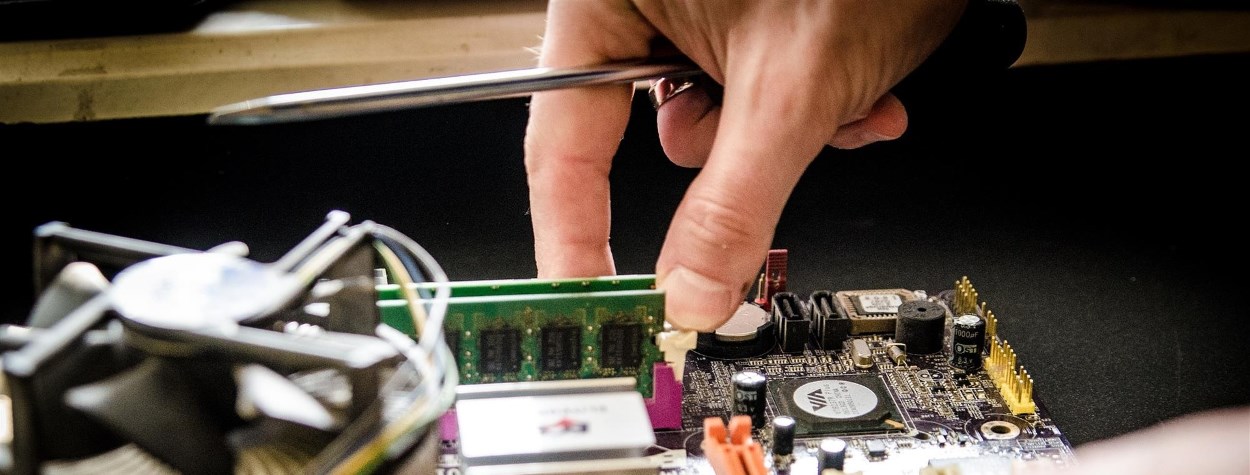
what worries me most is who is to decide what parts of a product must be user replaceable or replaceable at all? Does the piece have to comprise a certain percentage of the device or will the separate it down to only specific components? Components being battery, screen, and logic board.
As always in politics, getting the incentives right works wonders.
- Suddenly the most basic things are much more complicated - you now enter a contract (likely with few pages of 8pt legalese you're expected to understand) to do your laundry.
- Service model assumes you always have proper cash flow. When you lose the job, you now have to worry not only about paying for rent, water, gas, electricity and consumables, but also for all the services you depend on. Your friend can't help you because their contract likely disallows washing clothes of third parties, and they can't even borrow you the detergent, because they don't have any.
- Oh, so the service sucks but you're in a year-long contract with them. Have fun. And no, free market will not help you in time - crappy services are the service economy's equivalent of crappy product in the ownership economy.
- You want to use your oven for a quick reflow job? Good luck getting the hot-food service provider to agree.
- What will you do when the only available laundry service in your area is the Comcast of clothes?
Ownership of products has some really useful aspects.
Let those who want a service pay for one, and those who don't not. Let's have a mixed free economy, not a centrally planned one with a bias.
Also, let me ask: would you recommend the government to look for a service contract for their fridges/lighting/washing machines? Or would you recommend them to look into buying this equipment?
What would be different for companies and consumers?
I would recommend all entities making purchasing decisions to do so based on some form of economic analysis (e.g. https://en.wikipedia.org/wiki/Engineering_economics). The choice of a service contract vs anything else (which may involve other contracts, or may involve purchasing nothing) is the result of the analysis, not some broad sweeping bias. I also wouldn't mind seeing a prediction market for tracking how accurate analysis results tend to be.
Removing socketed components to save a few cents off the BoM and a couple of mm off the thickness is a revolting trade-off.
Especially when it comes to batteries, this is moronic. Ultrabooks are only possible, because multiple, weirdly shaped battery packs can be installed wherever there’s room inside the casing.
This effectively means that hardware producers would need to create a larger, shittier version of their products just for the EU market, and EU citizens would be forbidden from purchasing the good versions of things. I sense a massive wave of parallel imports coming…
Like it or not, at the level of miniturisation we’re at, you need skilled technicians with proper equipment, and the easiest way to guarantee that, is for producers to do the service themselves.
Otherwise, you’ll end up with lots of consumers with broken phones, because they chose the wrong repair-option.
If I open my phone and break something it's obviously my fault. If I root my phone, that should never void warranty when e.g. internal storage wears out way before time without excessive writes (this happened to me). There are still millions of people averted to the idea of "rooting" because it supposedly voids warranty (it never did under Dutch law) and because phone shops make it sound scary. Meanwhile making backups without sending it all to a foreign nation (Google) is impossible and installing another ROM (which made my Note 2's battery life go from 5 hours to 2 days after three years of use -- I'm currently at 5 years of use and it's finally starting to wear out for real) can't be done without doing effectively the same thing. What a bloody mess.
And repairability? I don’t see the problem. If my iPhone breaks, I can go visit the Apple store, and they’ll take care of it. Having third-party repair services for some so tiny and complex is just a recipe for warranty problems and headaches.
They're part of the higher level discussion, and recycling should be placed there where repair is no longer feasible (in the context of appliances/machinery).
Please
To make it plain: this is trotted out whenever someone wants to push through some kind of draconian law upsetting the privacy rights of many in order to pretend to go after the few, typically in the context of hypothetical victims of child pornography and/or pedophiles, and in some extremely rare cases actual children.
Since we really are talking about our actual children (and in this case mine) and the context is manufacturing and the environment it is perfectly valid to think about our children.
If you don't have any children do me a favor and re-visit this comment when you have some and see how you feel about it then, it might change your perspective.
A device could have everything you claim it needs to be user-serviceable yet without the right to repair that device it would be illegal for a user to do so.
ie. the Eurocrats want to dictate hardware design. Hard to imagine anything good coming out of that.
This is a pretty bad summary. They don't want to dictate hardware design - only dictate additional constraint of "stop making shitty stuff". How to do hardware design while respecting this constraint is up to hardware designers.
The "right to repair" doesn't give people the right to buy a Fairphone. They already have the right. It removes their right to buy other kinds of phone.
Building a small amount of concept phones is one thing, shipping (and supporting) 100 million devices a year, with extended warranties, quite another.
The laws of scale will make the Fairphone actually better and cheaper when more are produced (as they always do).
To legislate that no cheaper versions of things should be available, even making them illegal, seems blind to the issues of those of limited means. It seems like a society pawn saying "I always buy Gucci; I mean why do they even make other brands? Har har!"
Demanding a warranty for instance would be a softer approach. But to make cheap, low-lifetime options actually illegal shows some fundamental misconception about how a free market works.
Not at all, Gucci is almost entirely without objective value relative to its increased cost, a fridge that lasts 10 years rather than 5 years, all else being the same, is objectively better than the alternative.
Also, it's highly likely that any direct legislation would work through a minimum warranty, like the laws which already exist.
I'm not convinced that raising the minimum quality floor would increase prices or make cheap products disappear. I give two reasons for that: one, manufacturing costs are usually only a fraction of the sticker price, and two, supply and demand - people of limited means are a market too, they have some money and want to buy stuff.
My biggest worry here is that companies could respond by changing their business model from selling stuff to "hardware as a service" - i.e. since crappy products are disallowed, we'll make only premium products, but we'll only rent them out.
I've long imagined a lifestyle-as-a-service business. Imagine pledging some (large?) fraction of your income for inclusion in an association that provides housing, transportation, appliances, food choices, vacation rentals etc as a service. A sort of concierge life. Just join and move in!
That said, I find myself wishing for some of my life to be turned into a service. I'd gladly give away a large fraction of my income in order not to have to bother with most house appliances, food, shopping and clothing. But I suspect different people would prefer a different set of services. The risk is that, as everything becomes a service, there will be no products at all, and you either take a service or live (die?) without it.
That already exists, and it leads to many companies just throwing products away and replacing them several times over the warranty period. This increases prices, and is worse for the environment.
Yet, companies try to use DRM and copyright laws to prevent people from repairing products.
That's why we can't have nice things (i.e. Paris agreement).