182 points · by gbrown_ · 9y ago · 137 comments
What you are talking about is enforced v-sync to prevent tearing on the normal desktop environment.
Technically there is, it's called front-buffer rendering and there's specs for it (look up EGL_SINGLE_BUFFER or EGL_KHR_mutable_render_buffer). The only practical usage of it, and the only reason the spec exists at all, is for time-warping in VR where the warp is done race-the-beam style so to speak on a per eye basis (as in, while the left eye is being scanned out do the time warp for the right eye)
Granted this is unrelated to OS desktop composition, but hey, the more you know :)
In terms of OS desktop composition windowed vs. fullscreen this is actually something mobile solved, or at least Android did I don't know if iOS is the same or not. By shifting final composition to the hardware compositor and using extensions such as EGL_EXT_swap_buffers_with_damage only the area of the screen that was damaged gets updated & re-composited. Desktop has been pretty stubborn and slow to adopt similar systems, Intel only recently added a HWC fast path at all and only for video playback.
Just a neat fact.
https://developer.apple.com/library/content/documentation/Pe...
I think this fell out of use when people moved to the "compose everything" rendering scheme.
Edit: as the sibling noted too, they could also de-prioritize other apps since presumably you're not really using them.
Could also have something that just gives the movie larger slices of computer time and clock down, if in full screen.
https://developer.apple.com/library/content/documentation/Gr...
I am just guessing though. Interesting that the difference is over 2 hours though, I wouldn't have guessed it would be that much.
1. Screen brightness can be dimmed in full screen mode without a perceivable difference.
2. App nap. It's a macOS feature that dials down the power consumption of apps when their windows aren't visible.
Mac OS X reached an astounding level of technical goodness in Snow Leopard. Downhill since then. When my Macbook died I bought a refurbished, shitty Chromebook. Living off Azure Notebooks for any kind of computing...
Edit: 3 releases actually. (Mavericks)
Memory compression is just awesome.
(Now if only Apple would sell a Macbook or iMac with 512 SSD & 16 GB RAM for a reasonable price)
Actually, I remember reading something that Windows doesn't do any blitting / buffer swapping if you just leave it idle and no updates happen on screen. However, there are many ways to throw this off and force drawing every frame if you are not careful.
The thing that stands out to me like a sore thumb though is the 'load' numbers. You only get 1 hour of battery life.
I know modern chips can be a hog but that terrible, especially compared to the 11 hours of light surfing on wifi.
This is the problem with optimizing power sipping all over the place. As soon as you push things none of that matters and your battery time PLUMMETS.
I don't know what they could do though outside of doubling the battery capacity.
You're already giving up performance if you choose a laptop over a desktop computer as your "tool", and probably using some form of cluster if you're doing any heavy computation.
Sometimes reading pros talking about how they need to do pro computing on their pro computer, you wonder whether they would get even more satisfaction from a bag of external batteries and lots of serious-looking accessories.
If they're running complex models somewhere off the grid, a large solar array and some car batteries would look even cooler!
There are worlds where people need self-contained mobile compute.
I think a significant proportion of people who are even moderate computer users would prefer increased battery life and snappy performance at the expense of a slightly bulkier laptop.
A Thinkpad T430 with the 9-cell with a Slice battery pushes that to 188 Wh, and no one seems to question it. You can also bring spare batteries (not the same as an external battery) to plug into it.
The MacBook Pro is not pushing these limits. They have a glued-in, non-replaceable 49.2 Wh battery.
Your best bet at this point may be an external, but users would be better off if manufacturers offered machines with large, replaceable batteries.
And for the love of god I don't understand why a pro notebook does not have swappable batteries [1]. It would add a millimeter and a few dozen grams, but allow you to choose between slim and fat batteries, and replace them when they lose capacity. You can get rid of ports and tell people it is for their best, and they will buy it. Surely you can make it a bit thicker and use the same explanation.
And here is an idea for a business. You know how companies like Westfalia and Karman take VW buses and modify them? Take a new MacBook, saw open the case at the bottom, and add an aftermarket battery, and if you're at it more RAM. Impossible for an individual, but maybe not impossible if you have a factory with all the necessary equipment. It's going to be expensive, but just sell those modded MacBooks to people who buy business class tickets and who have enough money.
[1] OK, I know why - so people have to buy a new one when the batteries go bad.
The 2017 15" MBP has a 76W.h battery.
$699 412Wh / 116,000mAh / 11 pounds
Note the "Pro" in the title (and, yes, I bang on about this a lot when provoked).
Apple, please: I work on batteries a lot. Start putting in BIGGER batteries, along with better connectivity (yes, I would like standard USB 2 and 3 connectivity without requiring dongles for, like, most things I want to plug in; yes, I would like an HDMI port or two built in so I don't need to carry dongles; yes, I would like a wired ethernet port because it's still a lot better than WiFi and, again, doesn't need yet another dongle; yes, I do require line in audio built in to the damn box, not just line out, and don't be forcing me to use a dongle to plug in a pair of headphones or I will become militantly angry).
Also, whilst I'm at it, more cores, please: 8, minimum. More memory as well. 32GB minimum, ideally 64GB. And 2 - 4TB storage.
I know, it'll weigh more: I don't care, I'm not puny. Even still, you used to be able to build decently powerful machines with good battery life without building the kind of ridiculous lumps that Dell, et al., shovel out the door as "desktop replacements". Please, remember how to do this, and stop building toy computers for undernourished hipsters with chronic muscle atrophy.
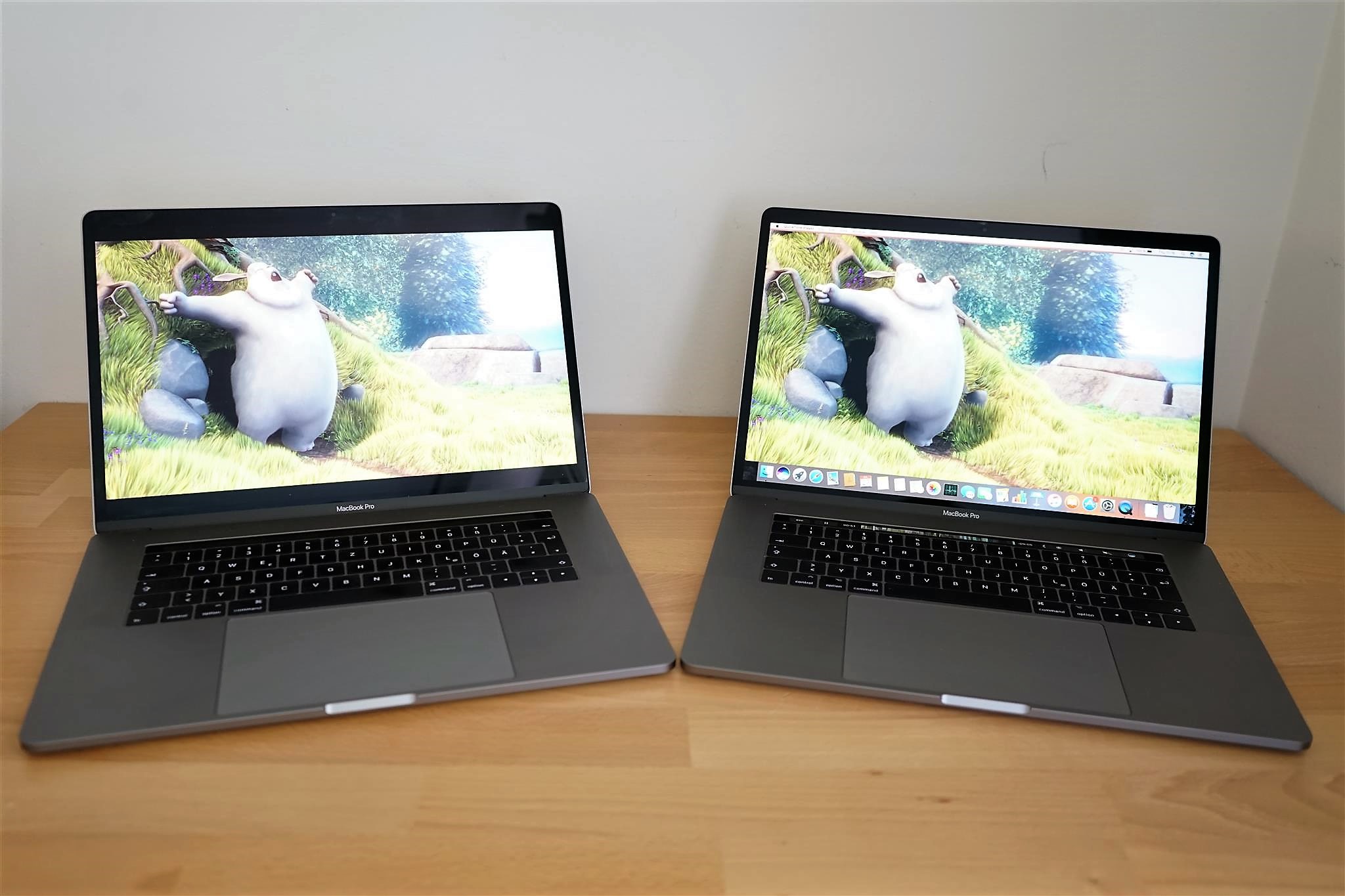
Enabling “Reduce transparency” and “Reduce motion” in accessibility preferences also causes a considerable battery gain on Macs.
This is surprising because
1) The time - it's a full 2 hours and change - is not nothing.
2) It's not immediately obvious to many active computer users.
I know it's cool to pretend like nothing is surprising these days, but this is something that's legitimately surprising to many people.
So while it may be an obvious optimization to some people it doesn't seem to be implemented everywhere it could be. Or the DWM is more efficient than OS X's window composition stuff and there's no difference between windowed and fullscreen modes. Either option probably will annoy some fanboys one way or the other.
One thing that they may have done is to simply change the refresh rate of the display to match the played video's (akin to GSync/Freesync) in fullscreen mode. You can't do so in windowed mode since it will affect other applications, but when a fullscreen video is shown you can safely do so and it may save a bit of power.
> > Using the Windows Media Player in Bootcamp, power consumption was at a much higher 28.2 W, and we found absolutely no difference between regular and full screen playback.
Windows was less efficient overall, just with no difference in full-screen.
edit: http://www.pcworld.com/article/3023430/hardware/tested-vlc-v...
Apple started implementing variable refresh in iPads, but not on their Macs as far as I know.
Apparently only you and Apple know the secret to this because similar battery improvements weren't seen when trying this trick in Windows on the same machine. Microsoft should hire you.
So… it seems, in addition to Apple and me, Microsoft has also figured out the secret to having a battery life–conscious window manager.
Maybe it is related to "unredirect fullscreen" optimizations many Linux desktops employ. The people saying they don't get similar improvements in Windows by going fullscreen on the same hardware should run the test again with all the Windows 10 graphical improvements disabled.
[1]http://losca.blogspot.com/2012/11/game-performance-improveme...
Does the same test run on W10 or any linux distro do the same? I highly doubt it.
On Windows 10, it doesn’t compare, as the most heavy effect DWM has to deal with is alpha blending (status bar transparency). Microsoft dropped all of Aero to save battery life. We’ll see how it fares once the new design elements (with blurred backgrounds) start appearing in future betas.
https://www.apple.com/batteries/maximizing-performance/
http://www.macworld.co.uk/feature/mac/17-tips-increase-mac-b...
There's a lot of junk and mostly obvious stuff in the second article.
Yes.
>All the window composition with frame-buffer effects takes a toll.
Which would be relevant if they were moving windows around, instead of just watching a movie in full screen mode vs typical window mode. So not much (if any) composition and no frame-buffer effects in place. At worst, the tiny rect with the clock on the menubar was changing.
(I rarely watch video on battery in a window, but I might start browsing fullscreen on battery if there's a benefit)
That this is surprising is really interesting. I honestly thought this was a known thing.
I do a ton of road warrior stuff on my old MacBook, and I've been struggling with a battery that craps out in under 2 hours due to all the background junk in the Mac OS. This looks to be super useful to me, hopefully others will find the same.
How about they figure out the combination that leads to consistent kernel panic when plugging in/out external monitors.
A feature film is anything longer than 40 minutes. This idea that movies need to be 90 or 120+ minutes long is absurd.
The reason people are reacting negatively is not because of the truth value of your point: it’s because your point was pedantic and irrelevant.
Is that time the length of a feature film? Yes. Many of them. Does that mean all feature films have to be that long? No. Are most feature films the general public encounters ~90-120 mins? Yes.
So you’re not adding to the discussion. You’re being that “well, actually...” guy.
I’m not trying to rag on you to be mean, I’m trying to help you understand why it came across poorly.