207 points · by pepys · 9y ago · 123 comments
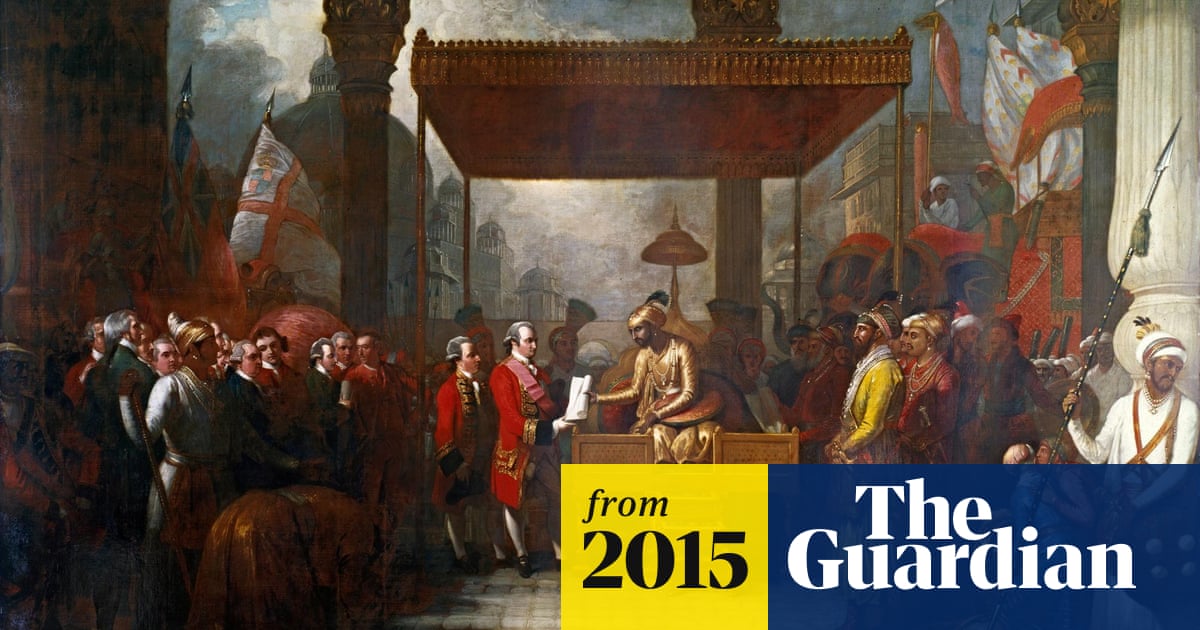
India is important because it was the crown jewel of the British empire and was completely destroyed of its soul by the colonialists with very clever mixture of politics, military and other methods
The problem, as I understand, is that a lot of British people don't know all the bad things the Empire did, or don't learn about it the way German people learn about the Holocaust and the Nazi's. Same thing might apply to Belgium - I was appalled to visit Brussels and see a park called "Leopold Park" [1] in the center of the city.
Edit: Turns out this park is named after King Leopold I, the first king of Belgium, and before the Congo atrocities. See https://news.ycombinator.com/item?id=15314232 for the person who educated me :)
On a more personal level, as an Indian person who grew up in the US, I always thought Churchill was a badass dude and a good wartime leader. It wasn't until Middle School that I learned about the WW2 famines and all the stuff he said about Indian people. He hated Indians and was extremely racist. His decisions directly lead to the death of millions of people in India. He's no better than Hitler or any of those dictators in my view, and it's mind boggling that people idolize him as the Lion.
Tangent aside, a lot of people did bad things (globally), but saying the Ottomans are bad or the Belgians are bad doesn't absolve the British Empire of its crimes. I don't think we need reparations or blame anybody today, since we all understand bad things happened, but more people should be educated about what happened and how to make sure it never happens again.
It gets even more ironic than that. During the 1940s Bengal famine, things were so bad that the Axis powers offered to step in and send humanitarian aid. Churchill not only refused, but he tried to prevent the newspapers from printing news of the offer, so that people wouldn't know how truly unnecessary their starvation was.
Lest I be mistaken, this is not to say that the Axis powers were somehow anything other than evil themselves. But it does highlight the level of hypocrisy of the British to claim the moral high ground when their own leader was intentionally starving millions to death out of spite. (And yes, it was spite - read what Churchill himself said on the topic).
I wouldn't be so sure of that. A lot of Akbar's praises can be attributed to 'creative' history writing after the 1950s.
It is important to note that while the foundations of the Mughal Empire were forged with plunder and loot, the Empire itself became native to the Indian subcontinent not soon after and also subsequently for a couple of centuries brought about great cultural boom in the general area. The Mughals eventually came to see themselves as "Indians"(sic) and built their homes here.
This is a far cry from an Empire which was founded on loot and extortion & also evolved into siphoning off the wealth (both cultural and scientific) to a motherland completely disinterested in the welfare of its subjects.
That is the key difference. The British were never interested in anything but looting India. The Mughals were more like the Normans in British history -- they started off as conquerors but eventually completely assimilated into the local population.
For those who read Hindi/Urdu, this ghazal, which eventually became his ephitaph, by the last mughal emperor Bahadur Shah Zafar is quite touching (https://rekhta.org/ghazals/lagtaa-nahiin-hai-dil-miraa-ujde-...). The whole ghazal is well worth reading, but it ends with:
कितना है बद-नसीब 'ज़फ़र' दफ़्न के लिए
kitna hai badnaseeb 'zafar' dafn ke liye
दो गज़ ज़मीन भी न मिली कू-ए-यार में
do gaz zameen bhi na milee koo-e-yaar mein
Rough translation: How unlucky is Zafar; he couldn't even/be buried in the streets of his friends.(The British exiled Bahadur Shah Zafar to Rangoon and he was eventually buried there.)
I'm curious if this is because the arminian genocide killed 90% of the ethnic groups population, being one of the most horrific and close to complete acts of ethnic cleansing ever to happen.
1. The British Raj is still in living memory. All 3 of my surviving grandparents were born before independence and were adults and married by 1947 (when India gained independence). They remember British rule. Comparing the criticism that an evil empire from living memory receives with empires that came before it is pretty disingenuous.
2. As an Indian, it leaves a bad taste in the mouth when tyrants like Winston Churchill are celebrated in modern Britain. His thoughts on the Bengal famine of 1943 and his inaction during that time which caused the death of an estimated 2 million people due to starvation is a matter of public record.
The reason has more to do with the fact that victors write history, and the Empire co-opted and exploited local institutions. So while Britain’s Empire was lost, its language and cultural impact reigns supreme in many ways to this day.
Also, the scale of the British empire was much vaster than the ottomans or the Belgians, and we’re still dealing with the repercussions of it the empire and it’s collapse all over the world.
Fewer still know about the "Turkish Genocide" (https://en.wikipedia.org/wiki/Turkish_genocide) but that's more to do with cherry-picking "historians" such as yourself.
Of course that Wikipedia page redirects to https://en.wikipedia.org/wiki/Persecution_of_Ottoman_Muslims which kinda proves the point that for some reason we can't use the term "Turkish Genocide" and must use quotes and softer language like "Persecution".
I've never claimed to be a historian, and it's impossible to not leave lots of things out in a Hacker News comment, especially if the scope is as broad as "all historical atrocities". I didn't write these Wikipedia pages, I'm just linking to them out of convenience since I can't link to copyrighted history books.
My class covered the Jallianwalla Bagh massacre in some depth at age 15; a lovely example of late Empire brutality where one of our army officers ordered machine guns turned on a non-violent crowd who were demonstrating in breach of government order.
So it's not covered in any depth, but the empire certainly isn't celebrated uncritically in school or in other official contexts.
"There are un-tragic peoples, whom history pearls off of like water from a well-polished boot." - Rolf Peter Sieferle
IF you ever meet a Englishman from nobility, know that he is culpable to blame for all of this.
Things have gotten better though. We have elections and the internet. We can more openly sympathize and empathize and learn and hopefully this will make us all better together.
The only way they could have protested the government back then was refusing to pay taxes. And that would have gotten them killed.
So you believe in inherited guilt? I reject that idea. None of us is responsible for the actions of our ancestors.
To add to this, it's not just the British. The Portuguese, French, Dutch, Danish, and Swedish (among others) colonized parts of India long before the British did, and the Portuguese and French also kept their colonies in India much longer. When people talk about India's independence in 1947, that's just referring to the independence of British India. The French stayed until 1962, and the Portuguese held their colonies until 1975.
Amusingly, most Portuguese and French people I've talked to under the age of forty[0] or so are genuinely shocked to learn this.
On the other hand, most British people are apparently proud of their colonial plundering[1], so I guess everyone has a long way to go still.
(P.S. If you're thinking of responding to this with a comment about how the British "improved" India by industrializing it, or all the "benefits" India got from being plundered for 450 years, please save us all the trouble and don't. These are typical revisionist talking points that are easily debunked as ahistorical with some basic research, and they're put forth to distract from the sheer volume of wealth that was stolen, the amount of infrastructure that was destroyed by colonial regimes, the genocides and other war crimes that were committed by the colonizing countries, and so on. For most of recorded history, India (Bengal in particular) was the world's largest economy - over 25% of the world's GDP[2] - and every discussion that attempts to rationalize that loss after colonization without recognizing the value that was destroyed, stolen, or outright murdered ultimately into revisionist white supremacist history, which is not what HN is for.)
I know I'll get eventually downvoted for this, because talking about the brutality and legacy of European colonialism is always unpopular on HN for obvious reasons, but it's important enough that it needs to be said.
[0] ie, young enough that this wasn't in their lifetimes
[1] http://www.independent.co.uk/news/uk/politics/british-people...
[2] https://www.coursera.org/learn/passport-to-india/lecture/uYU...
I once overheard my white coworker say, that the British did India a huge favor, by bringing them English. It was in his belief that back then, the Indians were just killing each other for fun. So the British did them a huge favor by colonizing them.
And because of that, today, India is a major software player for outsourcing, all thanks to the British for colonizing them, and bringing them English.
I sat there thinking to myself, this is unbelievable. I didn't want to talk politics in a business setting, so I ignored it.
The British destroyed a civilization. Enslaved a generation. And enriched themselves in the process. But all that is swept under the rug, because they brought English to their colonies.
You mean in those parts of recorded history when everyone was dirt-poor, only Bengal had more people? I've read my Maddison, India was no better than anyone else at the time.
EDIT: I'm trying to highlight the fact that preindustrial productivity is a function of population size and therefore per capita GDP is not really a good measure in that context.
https://i.pinimg.com/736x/14/4a/6c/144a6c7feb3823f5fd4baa562...
It seems to have originally come from here
https://i.pinimg.com/736x/14/4a/6c/144a6c7feb3823f5fd4baa562...
[1]: https://en.wikipedia.org/wiki/East_India_Company_(disambigua...
FYI, that's the Dutch East India Company, which was separate from the British East India Company, which this article is about.
The British East India Company was actually much larger.
Do you have any sources for that? Most things I can find mention the opposite. For example, from Wikipedia[1]:
> Between 1602 and 1796 the VOC sent almost a million Europeans to work in the Asia trade on 4,785 ships, and netted for their efforts more than 2.5 million tons of Asian trade goods. By contrast, the rest of Europe combined sent only 882,412 people from 1500 to 1795, and the fleet of the British East India Company (EIC), the VOC's nearest competitor, was a distant second to its total traffic with 2,690 ships and a mere one-fifth the tonnage of goods carried by the VOC.
The British company had the bigger long-term impact. And probably did a lot more business in the end. But not while the Dutch company existed.
I'd have to go back and check, though; I'm not certain.
What are the units on that graph?
https://www.youtube.com/playlist?list=PLhyKYa0YJ_5CwbTgovbJJ...
Either way, it's cool to see that the East India company was real, and about as terrible as the show makes them seem.
1. The White Mughals
2. The Last Mughal
3. Kohinoor
I began reading The Last Mughal just as I had left Delhi and Agra and I regretted not starting it before my visit.
Dalrymple knows his onions.
Also, just logically speaking, the parent wasn't talking about assimilation into a culture they despise, but rather about subordination. I don't agree with their perspective, but I'm more sympathetic to it than I am to yours.
The number of apologists for colonialism on this thread is depressing.
What's the point then of elections if its continuous lobbying with periodic interruptions that merely change the player?
Add revolving doors, favours to family and friends, media propaganda and modern democracy ceases to be meaningful and looks like lip service.
I mean, we have more oversight on casinos than voting machines, and more interest in who's first-round in the sports drafts than who's standing in elections.
It takes a carefully crafted culture to keep a democracy defanged enough to not get in the way of the wealthy and powerful yet legitimate enough to defray mass revolts.