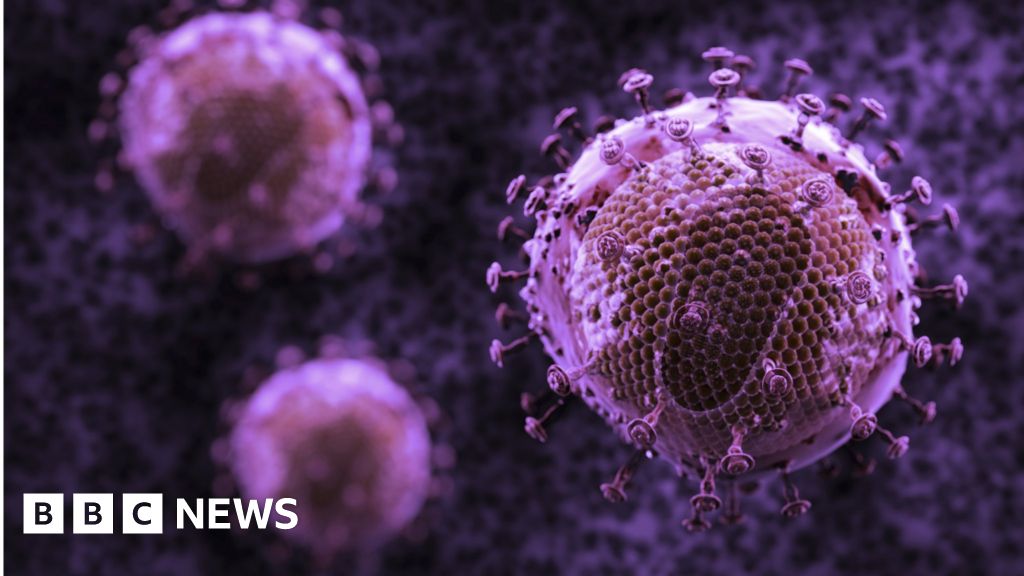
New antibody attacks 99% of HIV strains
It will enter clinical trials to prevent and treat the infection next year.
bbc.com
829 points · by hexrcs · 9y ago · 246 comments
I think it needs to kill more than 6-9's before it has a good chance at being a cure.
A given strain can have some variability but will share general traits.
HIV strains are named and numbered: https://en.wikipedia.org/wiki/Subtypes_of_HIV
An efficient treatment against a specific strain would save millions of lives. An efficient treatment against the 99% of them that are the most prevalent would basically solve the epidemics.
The problem is that people often end up with more than one strain. This is why doctors tell HIV+ people to continue protect themselves and were worried about the appearance of "free-sex parties" for HIV+ individuals. Most people do not differentiate between strains but if you got HIV from a partner, you may have had only a part of their strains, you should not have unprotected sex if you want to maximize your chances.
Given this drug kills 99/100 HIV virus units, then this really only helps you for log2(100) or ~7 generations
The math is pretty easy, but the results are something that always surprise me: it turns out humans are pretty bad at estimating exponential growth.
0: real life conditions are probably slower than this, I concede.
Which is long enough for you to complete your lunch! :-)
Another illustration of that is, if 99.99% equates to 1/10000 survivors, the meaning of it depends on how many bacteria exist on the area in the first place. It has quite a different meaning if the typical number is 10000 vs if it's 100000000
Then avoid dipping your hand into beef stew for too long. Most of time, germs grow like sigmoid function.
Not that we should consider in insurmountable nor ungrasp-able. But that we -- or parts of our society and professional institutions -- should lose some of our arrogance.
On the upside, that complexity also harbors enormous opportunity. Just, don't be simplistic about it an let your ignorance take you into disaster.
Granted, also, that there are lots of doctors who do follow research.
That's basically what HAART (the technique we've used to treat HIV successfully for the last 25 years) is. People take three antiretrovirals simultaneously. They're designed such that, for the virus to adapt to one, it has to make itself more susceptible to one of the other two.
That's not really accurate. HAART works because the 3 drugs are taken simultaneously, and it's extremely unlikely for a virus to get random mutations that confer resistance to all three in one generation.
I think the problem with a widespread, highly studied virus like HIV is that a "good enough" treatment isn't "good enough." Any treatment will be deployed in a limited manner to test the efficacy, which will in turn give it a chance to develop a resistance and spread.
That having been said, if the treatment CAN treat 99% of current infections, it will be a boon for at least a couple generations of gay and minority communities in the developed world.
"I have a common but chronic ailment so all I had to do was re-route the phase-converter to the deflector shield and invert the chromaton particles in Shelk-Einstein space and we're done!"
:/
In this case, the patient (A) may be getting the drug from a pharmacy (B), and the pharmacy bought the drug from the manufacturer (C), but the patient's insurance (D) is paying part of the cost of the drug, but so is the manufacturer, and insurance is paid for partially by the patient, and partially by the employer (E). There may also be direct government subsidies, and there are certainly indirect subsidies as well. Of course none of the 5 parties can really know how much anything costs, or how to reduce costs. Not to mention all the extra labor involved in administration of this complex system.
Fun fact: A lot of the original Star Trek screenplays were written with [tech] everywhere and the science writers came in and tried to right some jargon that was believable.
In regards to health care, it's a mess. I spent years working in the industry and it's truly a little frightening. I've been in other country's systems before and recently put together a writeup on it:
http://fightthefuture.org/article/returning-to-america-and-t...
*I'm South African, antiretrovirals are free.
Almost got it right: Drugs elsewhere are cheaper and largely subsidized by USA citizens.
Those drugs cost a fortune to make and the companies make their money in USA https://www.reuters.com/article/us-pharmaceuticals-usa-compa...
For those downvoting: His foundation made sure the WHO subcontracts all studies to companies he has a stake in. He isn't a saint, he is a capitalist.
Can you elaborate on this? I thought he was a type of person who does more than he talks.
https://www.globaljustice.org.uk/sites/default/files/files/r...
They even advised not to lower prices for vaccines, because then pharma corporations wouldn't invest in the global south anymore.
He's doing it to win a Nobel prize, not for money.
(Related personal anecdote and why I recommend them so highly: I'd been listening to them for awhile, then a research paper came out showing a possible link between Chronic Fatigue Syndrome and XMRV in mice. People online had taken the paper and went crazy with it and some people were finding sources for murine (mouse) cancer drugs and dosing themselves with it in hopes of curing their CFS. They went through the paper and recognized the researcher and lab who wrote it. And noted that the lab had previously published XMRV research. XMRV is apparently remarkably difficult to eliminate contamination from. Basically if a lab has ever worked with it, you have to burn down the lab and build anew if you want to be sure it isn't around. So they advocated skepticism and said wait for independent verification before getting too worked up. A couple months later, the original paper was retracted as the researchers announced no other lab could reproduce their findings and it was down to XMRV contamination of their samples. That is the kind of thing you only get when you're listening to bona fide experts in their field and it blew my mind.
In the 2010s, getting HIV means that you are likely to live until... Your 70s. (Assuming you have access to medication.)
The problem is that you need to take expensive medication for the rest of your life. And that you can infect other people.
https://www.reuters.com/article/us-health-hiv-transmission/p...
This is why "treatment as prevention" is important part of stopping further spread.
Thus, if someone is undetectable but then their treatment fails, they would become detectable and able to transmit the virus. But they could still infect someone else before they discovered their treatment failed.
Can you please put this into simpler terms? I am pretty confused. Because HIV transmission is not a theoretical and is not a myth. My understanding is, OP meant to say "transmission of HIV via known risky activities."
--EDIT--
Thank you for those clarifying. Often the unfamiliar technical terms can throw me off.
It has never been quick.
> Without treatment, average survival time after infection with HIV is estimated to be 9 to 11 years, depending on the HIV subtype
https://en.wikipedia.org/wiki/HIV/AIDS#Prognosis
You may be thinking of the ~1 year survival times after an AIDS diagnosis, but HIV is usually latent for a decade after initial infection.
I've tried to do a brief search for earliest HIV (non-AIDS) diagnosis, but many websites use AIDS and HIV interchangeably.
The way you've phrased this, it sounds like you are casting "other hard to cure STDs" as a protective measure against the "threat of 1960s style of unprotected sex wave."
Isn't sexual freedom a goal?
You always have the risk of undesired pregnancy and the best cure for that is the condom, since birth control pills are basically hormone bombs, not very healthy for women in the long run, or you could undergo surgery, which is invasive and not without peril. So just use the condom already, those minty ones are actually cool.
And if we don't have "sexual freedom" it's probably because there are really good reasons for it. We shouldn't dismiss taboos without considering that some of them is why we've survived for so long.
If that's the way you want to live your life, it is fine. But don't try to impose your ideas to other people.
Lots of women, including my wife, are perfectly happy with hormonal birth control. For others, there are lots of other options, and even more in development. It’s a very personal decision, but condoms are by far among the least effective techniques.
> And if we don't have "sexual freedom" it's probably because there are really good reasons for it. We shouldn't dismiss taboos without considering that some of them is why we've survived for so long.
The entire parable of Chesterson’s fence suggests that we shouldn’t get rid of something in society without knowing what function it was serving. It doesn’t suggest never reforming society at all.
The taboo against fornication is obviously there to prevent the spread of disease and unwanted pregnancy. If we have other ways to prevent these side-effects, there is no longer any reason for the taboo; much as the religious taboo of not eating pork or shellfish no longer serve the same useful purpose they did in the ancient Middle East.
A condom is not the best option for birth control, merely one of the options. The best would be voluntary sterilization for both the man and the woman. There are other non-hormonal birth control methods, such as a copper IUD and other barrier methods that work, some better than a condom and some worse.
The main benefit from a condom is STD protection, but for that to be effective they need to be readily available to everyone and cheap enough to afford.
I've heard this a few times but I'm curious for sources on the fact that they're not healthy. They're certainly not natural, but, like, living until you're 80 years old isn't particularly natural either. Do you mind expanding on this?
I read it as him casting the threat of those 'hard to cure STDs' as an incentive for people to not take the 1% risk of HIV infection.
So no, unprotected sexual freedom isn't a practical goal for medical science. Better to use condoms instead.
I'm a little tired of the disconnect between medical advice and reality when it comes to sexual practices. Dental dams, anyone? Sure they're smart; I don't think I've seen one outside of health class. Doctors could easily provide more helpful advice.
Even then, knowledge of condoms wasn't widespread like it is now. My grandmother was super-pissed-off when my grandfather told her about them after she was pregnant for 18 months straight! She made it a point to tell me that I had to tell my future wife about birth control! (What made it funnier was that, at the time, if you didn't know what a condom was you were living under a very large rock!)
Also the legalization of abortion in 1972 contributed to this as well.
During those times there were lots of people having lots of sex. Unwashed sex with a string scent of sandalwood and patchouli, but still lots of sex, drugs, and rock n roll.
Then you had the disco era, fueled by fruity drinks and cocaine, sideburns, and lots of finger guns. There was still a bunch of sex. Those people would become yuppies, while many of the Free Love people would have moved into the woods to eat tree bark and become one with Gaia.
The most likely significant health threat as far as STDs go in the future are anti-biotic resistant gonorrhea. There were a couple of those spreading in Asia a couple years ago that were positively nightmarish.
If AIDS is actually curable, I would bet that all other STD would explode in the short term
Aiming for 'less sexual activity' is a very bad goal. Abstinence is harmful. The tremendous health benefits of sexual activity are myriad. The amount of research backing up the idea that modern society is dangerously sexless is huge. One of my favorites was a study of ALL men, across all ages, socioeconomic groups, everything, of an entire town I believe somewhere in northern Scotland (maybe Ireland?)... those who had the most frequent orgasms had a 50% lower chance of having died of any cause over the 15 year period of their study. They also had very significantly reduced incidence of heart disease, cancer, and other health problems. But, of course, such things get reported as 'health benefits of sex' and not 'health dangers of abstinence' because they assume people are abstinent by default which is ludicrous. We'll know if public sentiment is changing when the headlines change.
There seems to be a causality, but to me it is not obvious, what its direction is. The most healthy men, are probably also the most attractive.
It is a reasonably simple, safe, and effective drug, so it really should be available from any PCP. However, some community physicians do not prescribe it for one reason or another. HIV/STD clinics are almost always happy to see HIV(-) patients who are interested in PrEP.
So what you're saying is, they don't always have sex, but when they do it's unprotected? That sounds pretty normal to me.
could be but those two things needn't be mutually exclusive. maybe the youth is just more extreme in both directions whereas earlier people might have been more similar.
And while condom use has fallen a little since its height, it still remains significantly higher amongst the young than any older generation or group.
[0] http://www.nationalsexstudy.indiana.edu/ [1] http://www.nationalsexstudy.indiana.edu/condomgraph.html
If one assumes that the different strains also compete against each other the total number of infections may not go down much, and if it does, that may only be temporarily.
We still haven't come close to "eradicating" or curing HIV/AIDS; the issue lies in the virus' insidious biology. HIV is a retrovirus, meaning it incorporates into the target cell's genome, specifically CD4+ T-cells. An obvious barrier to "only" 1% of virions is that an infected person produces billions of virus particles every single day[2]. A less obvious barrier is the "latent" reservoir of the virus in cells.
Essentially, not all cells with an incorporated HIV genome are producing virus, and thus these proviruses can evade detection. A 2013 paper in cell[3] provides what I think is the most devastating example of this. Basically, an idea that has gained more traction lately has been to activate these T-cells, thus alerting the immune system and hopefully clearing the virus. It turns out that not all cells are activated, and the size of this reservoir is ~60X larger than previously thought.
When it comes to something like cancer, we often define "cure" or "beating it" differently — look no further than Randall Munroe's heartbreaking visualization, Lanes.[4] We need to do something similar for HIV. We can't get rid of the virus, but we're already pretty good at making life not so bad if you have it. Access and affordability are larger barriers to preventing mortality/morbidity.
There's also a quiet undercurrent that a standard vaccine for HIV is biologically impossible, but that's for another day.
tl;dr HIV sucks but we're okay at managing it. 99% sounds good but it's probably not enough.
1: Read: moderately well-off people with health insurance in wealthy, industrialized nations.
2: DOI: 10.1038/nrg1246 The oft-cited rule of the thumb is that every base of the viral genome is mutated every day.
3: DOI: 10.1016/j.cell.2013.09.020 This one is absolutely worth reading.
Isn't it pretty weird that, despite this massive diversity, infections seem to be only caused a single, or sometimes a few, distinct virus particle(s):
>"we show that 78% of infections involved single variant transmission and 22% involved multiple variant transmissions (median of 3)" https://www.ncbi.nlm.nih.gov/pubmed/19193811
To me that means something is horribly wrong with our understanding of HIV.
This is assuming that we can get the vaccine to everyone. In first world countries with developed and trusted this is mostly possible, but would still be a massive undertaking.
That's your takeaway from this interesting news? I don't understand how you jumped from this article to immediately drawing some opinions about sexual responsibility and behavior. The article has nothing to do with sex behavior, and HIV is hardly the sole deterrent for reckless sex.
At least, that's where the idea of tying sexuality to economic considerations like 'responsibility' and phrases like 'saving yourself' come from.
Obviously people mean the economic term. Couldn't possibly be the everyday meaning.
Are you implying that unprotected sex is bad in itself?
Edit: It was an honest question.
https://www.brainpickings.org/2014/03/28/daniel-dennett-rapo...
But... it was a question...
The topic is sensitive and you will see a lot of people hide their moral beliefs behind "health concerns".
I'd rather make a blunt and direct question rather than play hide and seek and be lured into a masqueraded conversation about morals and believes.
Actually getting the vaccines that cover the high risk strains into the developing world is a much more obtainable goal, and even that is extremely challenging for a number of reasons.
I mean does the UN have existing programs that offer vaccines in the third world?
I mean it would be a shame to have a vaccine and not see it being used.
I like how the ID is 71neat
  -what about that 1%? I'd fear if it became the new super HIV
  --Can you not appreciate the 99%?
  ---He's a 1%er for sure...
  ----Let's git im!
  -----ANGRY AT OP? WANT TO JOIN THE MOB? I'VE GOT YOU COVERED! COME ON DOWN TO /r/pitchforkemporium...
  ------Here you go Comrade
  -------!redditsilver
  --------Here's your Reddit Silver, ZarathustraV!
---------Good botthankfully, /r/science has you covered. https://www.reddit.com/r/science/comments/71ndtd/scientists_...