332 points · by electriclove · 8y ago · 353 comments
I'm a Prime subscriber but can't watch Prime videos (TV and movies) on my regular Android device, although if I had an Amazon Kindle device I could watch them there. (And Kindle devices are an Amazon fork of Android, thus benefiting from Google's work.)
When it comes to physical streaming devices, I can use my Prime membership to buy an Amazon Fire TV, but I can't buy an Apple TV or a Google Chromecast. I could understand if Amazon wants to sell only their own device, but they do sell third-party Roku devices ("ships and sold by Amazon.com"), which means they are selectively targeting certain products.
This is pretty clearly a case of Amazon trying to use its leverage to improve its position in the streaming hardware and streaming content markets.
Arguably Google went too far by blanket blocking based on device, but it might have been the only viable option available to them. Now that Amazon has folded and made the app a wrapper to the YouTube web page rather than accessing the videos directly, I expect Google will enable access again.
https://www.theverge.com/2013/8/15/4624706/google-blocks-win...
What was Amazon thinking?
Google has a point about Amazon not carrying their devices, but I'd take a different approach - I'd lead every YouTube video played through a Fire device with an ad for Google's devices.
I disagree. On the "open web", users must have the right to consume the content the way they want to. Or do you also think that adblockers, user styles, and the like are "clearly a foul"?
The fight is understandable, but that's why I'll always choose to consume content using a general-purpose computer instead of these restrictive appliances.
Probably they won't. WebViews don't return device ids amd don't let you set persistent cookies which are basically what's needed to get ad targeting correct on mobile.
If I owned the Youtube, I'll block Amazon too. They're practically taking advantage and not want to give anything back. Don't want to sell google appliances, don't want to participate in youtube ad program. Only word that came to mind is to describe such a attitude is leech.
I feel like the web as we know it should be abandoned to coorporations and people that want an open platform for knowledge sharing should start something new that has to stay open.
I don't think that's a particularly bad thing.
JavaScript makes the web powerful so more content can be distributed via the Web. Without JavaScript we'd be having much more native apps, not less.
The web runs on any platform with a web browser (for the most part), native apps only run from one platform. Crippling the Web leads to more silos.
https://www.eff.org/deeplinks/2017/07/amid-unprecedented-con...
A company can introduce additional constraints on top to limit access. However this should still be done based on standards. Using a variety of derived properties to block specific device type is evil in my book. My 2c.
Of course, "all" does not include 1080p playback on Netflix unless you use Edge or Safari
(Almost everything these days is a general purpose computing device, even our "specialized" hardware is general purpose.)
Has a GPU to run games/movies? Fine.
Has an "Amazon" logo so it won't load any Amazon competitor's websites? Bull. Hocky.
This is so weird and dumb it's unbelievable. There is an Amazon Video app for iPhone and iPad why are they not supporting Android?
There is one for Roku but they have been dragging their feet with supporting the AppleTV even though they promised one "by the end of the year".
They support AirPlay to AppleTV but not ChromeCast.
https://www.amazon.com/Amazon-com-Amazon-Prime-Video/dp/B00N...
Edit: it is on Play Store apparently. Might changed recently
https://play.google.com/store/apps/details?id=com.amazon.avo...
https://sixcolors.com/post/2017/12/amazon-prime-video-now-av...
So there is at least an amazon video app on android in general, if it can't be on the google store I don't know.
The iOS app works, but you can't purchase from it (I speculate because Apple would get a cut). Same goes for the Kindle app.
What are you talking about? Either in a browser or via https://play.google.com/store/apps/details?id=com.amazon.avo... - both are working fine, even on systemless rooted android.
You can't call something open source and get all the benefits of that, while also allowing statements like this. Forking is fair play in open source, and if you don't like it, don't make your thing open source.
Or you use the GPL license instead of Apache.
FYI, Amazon finally released their app on the US Play Store a couple of months ago. Not that this excuses all their other crappy behavior, and the years it took for them to finally do the right thing.
That being said, Amazon (I believe) started this duel with stopping sales of various Google devices on their website.
This spat is dumb.
You've been able to do this for at least 3 years. Not one-step-you're-done-easy, but officially supported with no magic incantations required: https://www.theverge.com/2014/9/9/6126165/amazon-prime-insta...
200,000 reviews over that time is a lot.
http://www.cordcuttersnews.com/amazon-pulls-twitch-channel-r...
Why not? I regularly watch Prime Video on Android.
But I already have Chrome installed and use Chrome 90% of the time. I just find fantastically irritating to be badgered every time i don't use it. Now i see they are upping the ante and disabling accessing services because of corporate rivalry...
Amazon/Apple/Google are all engaging in this kind of passive aggressive low-level battle where they use their own consumers as weapons to fight each other and its a method that unfortunately works
I just hope that there will be some kind of backlash against this practice in the future, but given the level of Amazon-Apple-Google fanboism going around i'm really doubting it..
Actually when you reinstall windows10, and open up browser, the first thing the browser does, is show some marketing about how much faster edge is than chrome and firefox.
And surprisingly Microsoft hasn't actually limited me with the apps i can use, services or buying physical products with
Today you have the closed-app store system's, restricted services to preferential devices and not even being able to buy products from one of the world largest outlets. They do this because in the past these companies have gained loyalty and now use that loyalty like cattle funneling customers away from competitors
It's especially annoying for desktop versions of Google web offerings. When asked about it Google cite "low market share" as a reason for lack of support, but if one excludes mobile browsers FF still has a very respectable userbase on desktops.
And yes, just as in Opera days a User Agent switch magically lets you in and everything continues to work.
I honestly don't get why they continue with these practices. Chrome quickly approaches a monopoly position in browser space, and there are precedents what happens after. Besides, Mozilla and Google often align their interests in various standards groups and together push a common agenda for Web technology progress. I don't see why Google treats Mozilla as an enemy.
By the way, fun fact, old Opera had huge "compatibility" javascript where they fixed either general or specific issues that were result of developers not caring about the browser. Opera had over 50% share in certain markets at the time.
And Google supports Net Neutrality too. Isn't what it is doing exactly opposite to the spirit of Net Neutrality?
Just because your opponent did something bad, doesn't mean it's ok to sink to their level.
Google should do what Amazon does and when search for a Fire give the person a chromecast.
Just because it's an invaluable service now core to using the internet, doesn't make it a public utility.
Here's the actual difference:
If Google started blocking Amazon search results there would be an upoar.
Amazon has blocked selling certain Google items, and there is barely a whimper.
Here's the other difference: When GOogle shows Amazon search results, and users go through those results to make an Amazon purchase, Google gets a cut. That's how e-commerce works on the internet.
In response to a competitor being a big meanie, we have removed 1 result(s) from this page. If you wish, you may read about why they smell in our blog.
They already got in trouble with the European union for promoting their own sites in search due to their market share.
Google could remove Amazon app from play store. Or remove Amazon from search. Or change terms of Android that Amazon uses for the Fire and Echo.
Did they block them, or do they simple not carry them? It is completely different.
2. Not carrying them, is Amazon simply not having an interest in carrying the item as a retailer.
Aren't they two completely different things?
How is this even allowed? Is there any law on this type of stuff? Meaning as a consumer who is essentially held hostage?
I have seen cable networks do this with channels, but never this.
If MS was abusing it's market dominance then, so is Amazon now.
It's too bad Americans don't have some sort of organization that could protect American consumers from companies like Amazon and Google who are breaking antitrust laws in this manner.
It sure would be nice if we had some some sort of commission on trade at the federal level, to enforce the law and fight for the rights of citizens.
A crazy idea, I know, but one can dream.
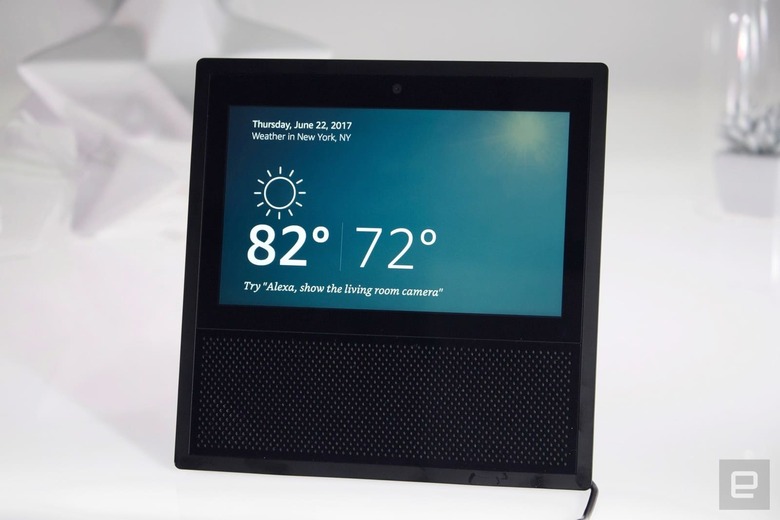
> "Echo Show and Fire TV now display a standard web view of YouTube.com and point customers directly to YouTube's existing website," Amazon's statement reads. "Google is setting a disappointing precedent by selectively blocking customer access to an open website.
Google is saying Amazon customers can't view one of their websites. That's as anti-web as you can get.
I understand Google is angry at Amazon, and maybe has good reason, but it crossed a dangerous line here.
In a kind of similar tune: Netflix some time now refuses to run on Firefox on non Windows/Mac OS platforms. They claimed originally DRM issues, which was not the case.
I am not sure if you can bypass the block in this case by altering the application's agent entry (which you can do in the case of netflix).
"However, a source familiar with YouTube’s thinking told Variety Tuesday that this newer implementation also violated YouTube’s terms of service by layering voice control onto a web app that wasn’t designed for voice interaction."
Well bob, it's called DRM and DMCA.
Don't want it? Stop buying products that use it. Richard Stallman was right. Again.
"(A)to “circumvent a technological measure” means to descramble a scrambled work, to decrypt an encrypted work, or otherwise to avoid, bypass, remove, deactivate, or impair a technological measure, without the authority of the copyright owner; and (B)a technological measure “effectively controls access to a work” if the measure, in the ordinary course of its operation, requires the application of information, or a process or a treatment, with the authority of the copyright owner, to gain access to the work."[1]
[0]: (a)(1)(A) https://www.law.cornell.edu/uscode/text/17/1201 [1]: https://www.law.cornell.edu/definitions/uscode.php?def_id=17...
The comical turn of control that Twitter instituted around their APIs for example. Oh, Twitter likes to control its own service and network? Big surprise right.
If Comcast should be semi-nationalized into a heavily regulated public good, then why shouldn't every major web company be similarly nationalized? From Yelp to Zillow to Dropbox to Airbnb to Uber to Lyft to the giants like Google. These are big companies, what's the moral basis to force a telecom carrier to obey a net neutrality concept, but to not force huge services like Twitter or Snapchat to have to operate their own services on a strictly wide open basis such that they're barred from restricting or throttling any connections to their services? Why shouldn't all Internet services be forced by law to provide fully open API access to all of their non-sensitive data, with zero restrictions and throttling? They shouldn't be allowed to discriminate in any manner on the ability to access their data. It's an entirely arbitrary line being drawn, derived from subjective bias of the supporters.
With these companies it's always do what I say and not what I do.
If Amazon can block Google products from their marketplace, can't Google also block Amazon from showing in the search results?
If blocking Amazon from search results falls under anti-trust laws, why doesn't the first one fall under same laws?
https://www.recode.net/2017/6/27/15878980/europe-fine-google...
Market share.
Amazon has less than 20% of the consumer electronics market share. Google has more than 80% of the search market share. It makes a real difference. No one cares if a small store with no market share refuses to sell something. Amazon is big enough that there's some concern, but 20% to 80% is a big difference.
While Amazon and Google Duke it out, they both want to gain market share, so the only way you can see everything is to go to someone else.
Know anyone who wants a used Chromecast or FireTv? :)
These devices are not designed to respect your wishes or freedoms. They are not designed to empower you. They are designed to keep you within a strictly limited set of options. You do not really "own" it and it does not owe you its allegiance; it acts in the best interests of its manufacturer, not you.
firetv is kinda trash though yeah
Now if Google can block their major apps for a behemoth like MS, imagine what they can do to some smaller companies.
Or perhaps going forward the solution is simpler. Make a script that generates a false and impossible identity for every website I visit.
Randomize my name,email, birth date, gender, location, ip address, browser cookies for every socket that a browser opens.
Incognito mode shares information across tabs, and until you restart it. I think there are extensions that will make the identity change per tab (at least for Firefox if not Chrome).
If you don't want cookies shared over time within a tab you can disable the cookies, but this will render much of the web unusable.
IP address is the tricky part. TOR will work for this. I think there are VPN services that let you periodically reset your IP.
So, yeah, we can definitely do this for ourselves. The tools already exist.
Buy a locked-down appliance, get a locked-down experience dictated by whatever the corporations want.
If YouTube decides to start blocking certain devices from its servers, ISPs can at least retaliate, in a free market and throttle their connection to pressure them to stop uncompetitive practices. Since the ISPs must consider the interests of their customers.
Right now there is no check and balance on these behemoth technology companies and they appear to be acting above the law.
Hahahahahaha
That's a good one!
Yes. And the timing is ironic. If one trusts Google (or any other company in that matter -- have no delusions in the matter) to guide them toward utopia or show them the right way to democracy, they are up for a surprise.
War is peace and the only monopolies to fear are the ISPs.
I should be able to use a laser to project a video on the back of I spoon if it's the way I want to watch it.
My personal view as a user of both companies' hardware and software is that Amazon is taking the lead. I bought a Fire TV a few weeks ago and it comes with a remote and turns any monitor into a useful, standalone entertainment device.
I also have a chromecast, which requires an app to stream (and the streaming tends to freeze or hang and frequently gets confused if you try to stream something from a different app while another stream has hung).
I also bought a $29 Kindle Fire that strongly outperforms my $200+ Nexus 7. When Google started getting into the hardware market I was hoping we'd see affordable, subsidized hardware, but instead we're getting high priced "luxury" phones which happen to be a bit cheaper than those sold by the market leader.
Of the two companies, I think Amazon has a strategy that is poised to take the lead in hardware. I say this after also buying a BLU Amazon ad-supported phone for $59 that has a super large screen and performs somewhere between an iPhone 5 and iPhone 6+ (I bought it a year ago).
One nice thing about the Alphabet reorganization is that we can see how hard this sort of competitive landscape is really hitting Google. We've already seen lots of free tier services getting taken away and many other signs of lower margins, and so the threat to block Youtube feels like an admission of weakness.
Also, FWIW, the minute Google blocks the Fire Youtube app, Amazon can simply make the icon load Youtube in the web browser.
This battle could be so entertaining that you don't need YouTube or Amazon videos at all ;-)
Somebody had to step up against Amazon anti competitive behavior. Amazon has now pulled Twitch from the Roku.
All with zero effort. The only configuration it took was selecting what apps, and putting in my credentials.
Sure, I could have bought a raspberry pi...but just the unit and a case would have put me in the same price range. I'd still need cords and an SD card. And then spent the time to setup and install everything, finding the right third party libs, troubleshooting any issues, etc. And then I'd get to make sure I updated all of them periodically, or set up an autoupdater that I'd get to troubleshoot any time it updated and caused something to break, rather than have actual QA people testing before updates get pushed.
Why would I do that? Why pay the same, and go through all that pain? I can see avoiding the companies that are also content delivery companies, but there is an obvious third party that exists -solely- to fill this niche.
The Nvidia Shield might be a valid alternative, but it's hard not to just recommend they use the Fire TV dongle and be done with it.
If it's just a web browser in full screen mode, now this is something else entirely; unless it has hacks that cater specifically to YouTube, then Google can just block those hacks from functioning whenever they want.
So which is it ?
Why are Google giving net neutrality opponents ammunition in the current fight by blocking clients they don't like and looking like complete and utter hypocrites about the open web?
I wish google would have just made their own prime app instead of blocking them.
Also, I think it's important to note that Amazon apparently develops this YouTube app for the Fire TV, and that YouTube has been a publicly accessible site as they mentioned. In contrast, Prime Video subscribers know what devices they can watch their content on, and sign up (or cancel) with that in mind. It seems like a stretch that Google is compelling Amazon to add a feature to their own app for their own service.
Google created the Chromecast and within a year added YouTube to the Roku. Versus a couple weeks ago Amazon pulled Twitch from the Roku.
Hope this straightens out Amazon. Big Amazon customer and fan of the company but their behavior is just awful and so unnessary as they won ecommerce and cloud.
I don't, however, agree with Amazon's decision to not sell devices without Prime Video support. I don't think the case they make that customers will expect Prime Video support holds much merit. In any case, the Apple TV is expected to return now that the Prime Video app has been released on that platform.
I would like to see Chromecast support added to Prime Video, which is easiest if both sides concede slightly.
Wait, sorry. I don't understand what we're supposed to be cheering for? How is any of this good for consumers?
And because of this upper-management level spat, mind-numbing amounts of money are likely to fly around a courtroom, and consumers will lose out because they always do.
Amazon is certainly the bad player here but I don't know if going to war is going to do anything but piss everyone off.
I think it's a lose-lose situation, a scorched earth strategy you could say, but Amazon is forcing Google's hand.
Google and Apple do not go as far as this on each other.
The only other company known to compete in this manner is: Microsoft under Ballmer and Gates. Those two were ruthless CEOs and gained sworn enemies to their brand.
Choosing what to sell on their merchant store is entirely a right of Amazon. Denied of access is not.
I think Google is right, Amazon shouldn't abuse their powers for banning products for personal intrest, while they benefitted so much from Google ( eg. Android fork)
What hack? don't tell me that they randomized requests across their network each time. They have announced that they are using generic webivew now.
Hypocrisy to the max!
> Amazon has been trying to do it itself -- a move that cuts out features and also likely affects Google's ability to collect on some of the ad revenue that comes from its videos.
My FireTV has always shown ads for YouTube.
The unfortunate that the Chromecast ultra etc...are braindead devices that require a phone or tablet to even use.
I probably use my FireTV as a youtube interface more than any other type of content and pay for Youtube Red.
I will most likely just drop my Youtube Red account and move onto more traditional content producers due to the poor UI on Chromecast and Google's decision here.
The fact that Google is making me suffer for their partnership details demonstrates that they don't value us as customers.
It's a tough position for them, since Amazon has been blatantly inimical to consumers of Google products for years. It seems like they finally decided to use the point of leverage they have.