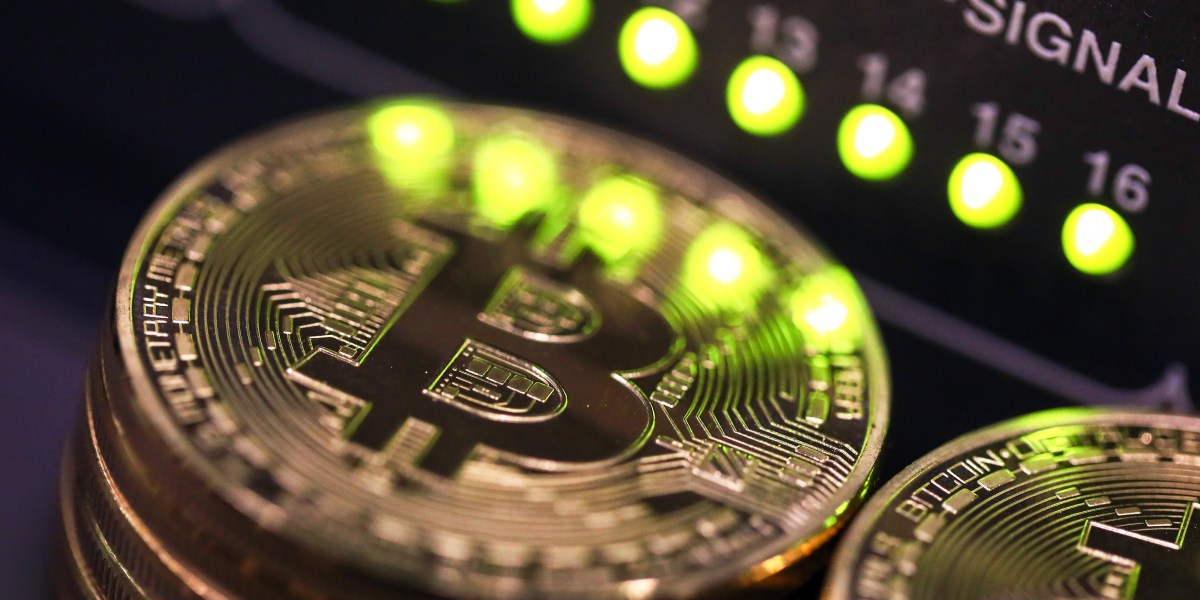
Bitcoin Miners on Track to Use More Electricity Than All of Argentina | Fortune
Or 0.6 percent of the global total consumption
Fortune
78 points · by downvote_me · 8y ago · 62 comments
Just an example: The poorest 5 percent of households use 247 gallons of gas per year, on average. The richest 22 percent, with incomes over ten times higher, each use about four times as much.
The basic issue is as wealth increases people spend more on services which have lower energy needs than say food. A cheeseburger takes not just energy to cook much energy to manufacture. An account on the other hand uses much less energy per dollar spent.
If you see it as an alternative to paying nothing (we wipe the slate clean and then consider each system by comparing it to that) the rich will still pay by far the most.
If you are concerned with a minimum form of income, you can always give a certain amount of credits to each person at no cost to them.
* "Quebec's hydro surplus to lure companies into data hub initiative"
https://www.theglobeandmail.com/report-on-business/industry-...
* "Chinese bitcoin miners eye sites in energy-rich Canada"
https://ca.reuters.com/article/businessNews/idCAKBN1F10BU-OC...
Bitcoin cannot, on a very fundamental level: energy expenditure for mining must at all times be so high that an attack is financially unattractive. So energy usage has to increase linearly with the market cap - and completely independant of how many transactions there are.
Physical fiat currency might be a different story, but bitcoin doesn’t address the problem of physical money so it’s not really relevant.
https://hackernoon.com/dummies-guide-to-bitcoin-energy-use-5...
Do you have any good easy to understand descriptions of proof of stake you could recommend to a layman like me?
Proof of Stake says that instead of distributing the work queue proportionally to the computing power you demonstrated to have, it does it proportionally to the amount of currency you have saved. It similarly prevents the attack where one could create infinite personalities to get in line, with different trade offs. In particular, beside the energy savings, it can be a much more scalable model, where you don't have to wait 10min in average for someone to solve the hard problem and instead you can know right away who are the next people eligible to generate the next blocks.
Doesn't this have an inherent disincentive to new people joining and using the network? Sorta like the poor stay poor, the rich get rich?
With PoS, the more coins you tie up, the more chance you have of 'winning'.
That's my understanding anyway - someone more knowledgeable, please feel free to correct me!
Other non-mined coins would never have taken off because they would never have gathered the critical confidence/interest that Bitcoin did. Only after PoW paved the way could others have any faith in DPoS or other coins.
I think this makes sense. Wouldn't it be beneficial if economic activity scaled with energy availability? It also creates a direct incentive to develop and utilize the most efficient energy sources possible, without regard for the politics between various stakeholders (hydro vs oil vs coal vs wind vs solar, etc).
This isn't how fees work. Fees are based purely on supply and demand. The payer sets their fee level when they create the transaction, and it's up to the miners which transactions they will include. Since there is always an excess of transactions, the miners typically select transactions to maximise their payoff.
If miners were to "lower their fees", they'd be accepting low-fee transactions and excluding high-fee transactions, which makes no sense for anybody. The miners would be getting less money than they could, and the people paying high fees don't even get any better service for it.
There is never any financial reason to mine blocks that have empty space if there are fee-paying transactions available to put in that space.
Supply and demand drives prices, but it does so through individual actors setting prices they are willing to pay/accept (or by algorithms that have been setup by some human who set up the rules by which it will set prices).
They're not "lowering their fee". That's not how it works. They might stop mining altogether, but it can never cost more to include a transaction than not to include it, unless including it pushes out another transaction that pays a higher fee.
When there's an increase in blocks, Bitcoin increases the amount of mining required for a block, to prevent an increase in the supply of blocks.
if crypto is here to stay, wont more efficient mining hardware, potentially more efficient software, and things like recent advances in solar relax these fears in reality?
Journalists aren’t supposed to have a stake in the subject they cover. That’s the point. Not having a stake in cryptocurrency is “disinterested,” not “self-interested.”
Just by the simple mechanism of people seeing an opportunity to profit and buying hardware and turning it on.
and even if the article is written out of self-interest, does that somehow make its conclusions incorrect?
Consider: Modifying a transaction block from, say, 3 days ago, is practically impossible, because it would require burning the same amount of energy the entire network has burned over the past 3 days in an instant, before the network invests even more energy adding more transaction blocks. Forget about trying to modify or revert transactions from more than a few days ago.[a]
The energy invested in Bitcoin is securing the transaction history.
There is value in that, no?
[a] Edit: I mean modifying a transaction right now, without forking the blockchain. Please see maxerickson's comments and my responses below.
You also don't have to do it all at once, you just have to be faster than the network (If the private blocks are calculated 10% faster it only takes ~10 days to go back in time 1 day). But of course this attack isn't practical, actually executing it would demonstrate that the public network was a farce.
Of course, but I don't know how anyone could be a lot more efficient that current miners, who are in a rat race to increase the efficiency of their mining operations. They probably think about energy consumption every waking hour of the day.
> You also don't have to do it all at once, you just have to be faster than the network (If the private blocks are calculated 10% faster it only takes ~10 days to go back in time 1 day)...
Of course, but by then the Bitcoin network would have invested ~10 more days of energy into the network, and now instead of being one day behind, one would be ~10 days behind. One would have a different, forked blockchain far behind the original one, with no hope of catching up.
If one wants to modify a transaction from a day ago over time, one must burn at least one day's worth of Bitcoin network energy consumption much faster than the network, in order to keep up with the network. If one wants to modify a transaction from a day ago right now, one must burn at least one day's worth of Bitcoin network energy consumption in an instant.
PS. Note that I mean without forking. SORRY if that wasn't clear in my earlier comments!
This is why the demonstration would fracture Bitcoin; it would reveal the hidden mining power and second there would be a bunch of discussion of ignoring the higher cost chain and sticking with social consensus.
(that's why it is a "chain", the head depends on all previous values)