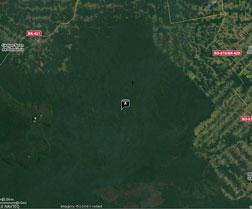
The most isolated man on the planet.
The most isolated man on the planet will spend tonight inside a leafy palm-thatch hut in the Brazilian Amazon. As always, insects will darn the air....
Slate Magazine
206 points · by grellas · 16y ago · 76 comments
Advanced societies invariably have subsumed whatever indigenous populations they've encountered, determining those tribes' fates for them. But Brazil is in the middle of an experiment. If peaceful contact is established with the lone Indian, they want it to be his choice. They've dubbed this the "Policy of No Contact." After years of often-tragic attempts to assimilate into modern life the people who still inhabit the few remaining wild places on the planet, the policy is a step in a totally different direction. The case of the lone Indian represents its most challenging test.
In fact, it sounds less like the Prime Directive and more like a type of basic respect--if the man wants to be left alone and seems to be leaving us alone, then live and let live.
So there's actually a lot of evidence that these hyper-insular tribes are products of the conquest, and did not have this extreme a society before Europeans arrived. In some ways, this man might be the last remnant of a hodgepodge guerrilla army of sorts that has been fighting a losing battle for centuries.
And when I say guerrilla army I'm being more figurative than literal. It seems fairly obvious there wasn't a serious power structure in place outside of the Andes, but I think that it's definitely true that the cultures we see today do not look much at all like the pre-colonial Amazonian culture.
we aren't reluctant to make contact with aliens the way he is reluctant to contact us. we wouldn't appreciate being "preserved" the way indigenous tribes would prefer to perpetuate their traditions.
assuming aliens capable of contacting are us out there, i think the likeliest explanation for the fermi paradox is complete disinterest. their relation to us is more like our relation to inanimate matter than our relation to this fellow human.
But it's also possible that we simply could not conceive of the kind of transformation which the alien contact would bring about. Lots of native tribes were actually eager to contact European explorers but had no idea that it would lead to the more or less complete destruction of their culture. There might be an analogy in contact with aliens but an analogy which are simply incapable of even understanding, despite belief that we are the most advanced thing around.
I suppose we may be isolated because we're still primitive. So it's one of those explanations of Fermi that relies on centralized planning rather than an eco-system. Cool.
Saw this film as a kid, pretty powerful as I remember quite a bit ~ http://en.wikipedia.org/wiki/Island_of_the_Blue_Dolphins
1. aliens 2. demons 3. spirits 4. some animal 5. lesser humans 6. and so on
Numbers 2,3 and 5 are not too far fetched. Heck even in the 20th and 21st century there are modern cultures that think this way. Racism is really all about #5. Various fundamentalist religions have a tendency to think in terms of demons and spirits.
It is a completely valid hypothesis that he believes he is the last man on earth or the last 'real man' or whatever.
Why is that necessarily the case? Perhaps there are some aspects of this culture that make is psychologically easier for him. For example, maybe he believes that his people are with him just in another form.
This is all very speculative, though.
(A grumpy cartographer).
An Island to Oneself
It almost made me want to stop reading, but the story is quite interesting. I wonder what the 5 foot deep pits he digs are really for. Pit fall traps for.... vehicles?
Many indigenous Americans prefer "Indian" to "Native American". "Native American" is a term invented by white people to make themselves feel better, by and large.
"American Indian" is the preferred term if you need to distinguish from the people of India.
"Charles C. Mann noted in his 2005 book 1491: New Revelations of the Americas Before Columbus that "every native person whom I have met (I think without exception) has used 'Indian' rather than 'Native American'."[17] Russell Means, an activist in the American Indian Movement, said in 1998, "I abhor the term Native American...I prefer the term American Indian because I know its origins."[4][17]"
"Many of those who are covered by the term strongly prefer "American Indian" over "Native American".[21][22] According to the US Census Bureau, as of 1995 50% preferred "American Indian", 37% "Native American", and the remainder preferred other terms or had no preference.[23]"
http://en.wikipedia.org/wiki/Native_American_name_controvers...
I grew up in Nebraska and I went to primary school with a number of Native Americans. It was considered very disrespectful to refer to them as Indians.
The Native Americans I grew up with would not put up with people calling them indians, engens, or anything similar. If you really want to respect a native (a real one, not just one with native ancestors) then don't stereotype them by calling them anything other than their actual name.
If you must refer to them by race you call them by the name which they give you which is going to be their tribe name and not some 500 year old archaic misunderstanding of the people on earth. Or if you want to be safe you can always call them natives, because the definition actual fits.
Both words translate to "Indian" in English. Maybe that is why the article calls him an Indian. What word would you use instead, "native", maybe?
So I do think we (all of us) can do better than following a 500 year old misconception, if nothing else
And as I keep telling you, many of the people we call "American Indians" actually prefer to be called "American Indians".
Each nation, culture, and language in the Americas has its own points of sensitivity. Don't describe "tribes" in Mexico and remember that the word is "first nations" in Canada while "native americans" works better in the USA. In Latin American "indian" is preferred when you don't actually know the specific nation in question and its native name.
For differentiating between East Indians and American Indians, remember the the politically correct terms are "casino Indian" and "call center Indian."
-Henry David Thoreau
"Is Urban Loneliness a Myth?"
On January 18, 2007, FUNAI reported that it had confirmed the presence of 67 uncontacted tribes
So in the last three years they contacted everybody in those 67 tribes but this one guy? Possible, but it seems unlikely.