Introducing MLflow: an Open Source Machine Learning Platform
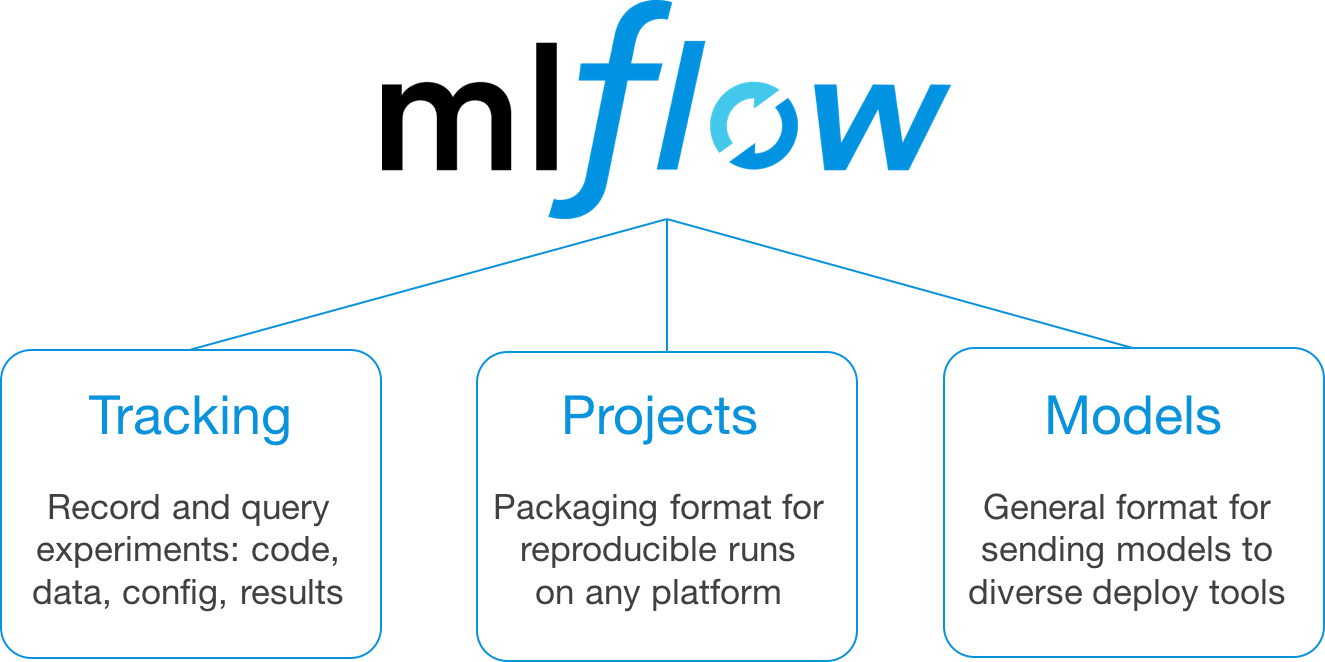
MLflow is an open-source platform to manage the ML lifecycle, offering tools for data preparation, model training, and deployment at scale.
Databricks
135 points · by r4um · 8y ago · 28 comments
The focus with Comet.ml is more on experiment tracking and hyperparameter optimization rather than model deployment. We make it very easy to compare your experiments results, code, and hashed datasets for better reproducibility.
We have a one-line integration with your existing machine learning code and make it stupid simple to start tracking your experiments.
All you do is:
  > import comet_ml
  > experiment = Experiment(api_key="MY_API_KEY")
Comet.ml supports many libraries (keras, tensorflow, scikit-learn, custom-built code spaghetti, and everything else that makes you a ML wizard/unicorn/armored flaming hippopotamus).
++ Its free for public projects and academics.FGLab (https://kaixhin.github.io/FGLab/)
Metricmachine (https://github.com/danielwaterworth/metricmachine)
Non-open source:
Neptune (http://neptune.ml)
Aetros (https://aetros.com/trainer)
Not to claim that the deployment processes are _good_, just that MLFlow seems more general than these open source alternatives listed here.
disclaimer: I am the author of Polyaxon.
Disclosure: I work at Google on Kubeflow.
Not open source though
Designed to automate and make repeatable different stages in classification pipelines. Written in .NET but agnostic about language or framework. Embeds a Python interpreter and can interface with Java or R.
Disclaimer: I am a walrus
H2o: https://www.h2o.ai/h2o/ Data Robot: https://www.datarobot.com/