Ecological “law” turns out to just be the result of us fishing
Mature fish are found deep not because of age, climate, or prey, but because of us.
Ars Technica
262 points · by curtis · 8y ago · 268 comments
I say this as someone who fully believes in man made climate change and its potentially catastrophic implications.
But...
I have yet to read a research report that is convincing that climate change is abnormal due to humans.
The report most often cited is a meta report, but I'd rather have something with hard numbers that I can show people. Meta analysis is fine, but not convincing.
I'm curious what convinced people here that climate change is likely caused by humans rather than just earths cyclical temp changes that have happened for a long time.
I say this as someone who wants to understand it.
> I'm curious what convinced people here that climate change is likely caused by humans rather than just earths cyclical temp changes that have happened for a long time.
What part do you have trouble believing? We’ve raised the carbon dioxide level by something like 40% since the industrial revolution. Unless carbon dioxide levels are somehow divorced from the amount of heat the atmosphere captures, we have clearly caused at least a portion of the increase.
Scroll down to the long term historical chart to see what we’ve done relative to historical concentrations.
I don't understand how even scientists can be so sure of the causality because in a complex system, proving that a one-off event caused another one-off event is supposed to be impossible, isn't it? You can't replicate it. You can't do a controlled experiment. It seems you can only model it and notice that your model shows causation. What if the model is wrong? It's too complicated for laymen to understand. It seems to be even harder than nuclear physics which even school kids can use to make predictions about nuclear reactions.
Don't attack strawmen.
As far as common sense and such goes, I'm getting pretty tired right now of people complaining about plastic pollution in the oceans which "lasts forever", but then in the next breath complaining about the breakdown products of that very plastic being a danger to wildlife. So which is it - "lasts forever" or "breaks down"? It can't be both. Much of this wildlife would probably be far better off if that plastic did indeed last forever; it would be unsightly, of course, but not all that dangerous.
Here's something else that stuck in my craw the other day. The author of this article (a "climate scientist") says at one point that "Science isn’t a popularity contest", but earlier had talked about "the consensus" among scientists. But what is such a consensus if not a popularity contest among those scientists? Also, the tone of the article is such that the author might ver well rain down scorn and disdain upon anyone who weighed in here who wasn't a bonafide climate scientist. But they themselves were actually trained in theoretical physics, not climate science. This situation is quite common among climate scientists, BTW - they weren't actually trained in climatology!
https://blogs.scientificamerican.com/hot-planet/why-i-wont-d...
So apparently there's not really that much "common sense" out there at all, from what I gather. At least not on the part of scientists, anyway.
It is both. Large pieces of plastic become smaller pieces of plastic, all the way down to microscopic pieces of plastic. In that sense, it “breaks down”. But it remains plastic, that is, it does not degrade to constituent parts. In that sense, it does not “break down”, and it does “last forever.”
Second, the opinions of the ill-informed don't count but they sure love to talk.
PS: Individual papers are about as important as tweets. On their own they say almost nothing.
> So apparently there's not really that much "common sense" out there at all, from what I gather. At least not on the part of scientists, anyway.
You're painting with an incredibly broad brush here. There are literally hundreds of thousands, if not millions of scientists out there. There are thousands of climate scientists alone! Scientists are a diverse bunch. They come from every country in the world, every religion in the world, every gender, height, weight, and sexual orientation. They don't speak with one voice, they don't operate with one voice, and they don't all share the same worldview. Science is an imperfect process but at least it's a shared commitment to open debate and following the facts where they lead. Tarring whole communities with perjoratives like "lacking common sense" is not useful to the discussion. Stop that.
> Dude, unlike you (I'm pretty sure) back in the day I used to actually _read_ various scientific studies on a regular basis; these were often in top journals, too. And after some years of this I got to where I routinely threw aside those studies, asking myself "How does this kind of crap get published, anyway?" The situation has only gotten worse since then, as far as I can tell.
This part of your comment starts with an insult, then transitions quickly into braggadocio, and then crescendos with derisive dismissiveness. Not helpful.
> As far as common sense and such goes, I'm getting pretty tired right now of people complaining about plastic pollution in the oceans which "lasts forever", but then in the next breath complaining about the breakdown products of that very plastic being a danger to wildlife. So which is it - "lasts forever" or "breaks down"? It can't be both. Much of this wildlife would probably be far better off if that plastic did indeed last forever; it would be unsightly, of course, but not all that dangerous.
Well, you brag about reading all these studies and then when it comes to arguing you don't actually refer to studies but instead into some kind of Catch 22 which you concocted on your own. Read some actual studies (like this one https://link.springer.com/chapter/10.1007/978-3-319-16510-3_...) and maybe debate their merits instead of trying to catch everybody in some kind of oversimplified "common sense" logic.
https://www.worldwildlife.org/stories/sockeye-salmon-and-cli...
I guess they might think that agreeing with science people automatically makes them smart and critical thinking.
Human-caused climate change has been in the public mindset for > 10 years. I don’t think there is much doubt that the earth is warming, and that CO2 among others cause increased global temp. However, here is where myself and others become disconnected with the movement. The adverse effects of climate change are fairly benign out to 50 years and at worse predict 10 ft increase in sea level in 100 years. So either humanity has already decreased output enough (unlikely) or the estimates have updated and long story short, probably doesn’t seem so bad. Definitely not worth the effort of completely revamping global economies.
How could the industrial boom in China or the USA in the late 1800s and early 1900s have happened without emvironmental destruction? How can growth happen in China now without it? Get real about human development and the necessities of human development.
What institutions exist that can make clean energy palatable to all the human societies that require it for their survival—at-scale, that they are all ignoring?
Leaving energy aside, what other powerful means of doing good to ecosystems as a whole, are they simply ignoring? Is there any quantification of the damage?
I am most certainly not trying to attack your position. I pretty much believe the same things you said. But we should have these answers documented. Is there a single source for these things on the web?
Not all of that environmental and human damage was necessary. Much of it was out of ignorance, and more was out greed, combined with a callous disregard for human life.
Who said anything about hard to understand?
Are you explaining the observation or justifying it? Because the former might be a fool’s errand; everyone understands, as you so eloquently put it.
In other words: just because I know why something happens, doesn’t mean that I think it’s a good thing, or that it shouldn’t change.
Just for starters: Why is "the Industrial Revolution happened" an argument against trying to do better in the future?
Although I suppose the animals are getting the worst of it since we actively go after many of them.
Possibly if they had used solar-thermal power generation and focused on battery tech instead of exploiting petroleum so heavily.
Worthwhile electric generators really weren't that far behind worthwhile steam engines. Without any fossil fuels, I think we would've just built lots of hydro and wind.
This assumes there can be an 'us' without a 'them'.
Only violence can protect this planet from the most violent creature.
> All the species in which older, bigger fish are found in deeper water have something else in common: we eat them
Hemm, not. Poisonous fishes show the same pattern. There are poisonous fishes also in the deep sea. If we do not eat then, why do not live in the surface?
Mola mola is the biggest extant bony fish. Is neither fished nor eaten normally. Adults still pass most of its time at deep waters.
To extrapolate the behaviour of 30.000 species of animals after one single species and one single variable leads often to wrong conclusions. Fishes are complex creatures.
To be a counterexample it needs to be a poisonous fish that exists in shallow waters but whose older members only occupy deep waters. Entirely deep-sea species aren't what this article is referring to. I'm not aware of any poisonous fish that aren't hunted by humans that follow this pattern.
Just saw your edit. I don't think that sunfish fish of different ages spend their time at different ocean depths? Wasn't mentioned on wikipedia.
A lot of pelagic fishes start their life at 1cm under the ocean surface also.
Also, bycatch can reduce the populations of large fish that aren't actively fished or eaten.
Mola mola is a fish, therefore this would lead us to "Mola mola dive deep to not be eaten by humans" that is a false statement.
This is basic evolution. It’s no different than commercial fishing farms having to deal with their fish growing more slowly or simply staying small (the selection criteria being “stay less than X cm”)
"the researchers added a simulation in which the depth and mass of fish were tied to the rate of mortality by fishing"
Is this really a process where simulation->result->theory. IE died the model or simulation played a key role indeveloping or validating a theory. Or, is this a process where they started from a theory (that works, explaining observed results) and then built a simulation that demonstrates the theory?
I feel like I'm seeing this kind of language in the pop science press, maybe starting from the climate/weather world.
Have models of ecosystems (eg) been getting more use as "theory generators," are researchers creating more models ex post as an supporting evidence, or is this just a shift in journalistic language?
...and... if the answer is "models are really playing more of a role"... please elaborate if you know anything interesting. What software is being used? Are biologists building these models/simulations themselves, or are there specialists available to them?
^ I'm not hating on language choices or ex post evidence gathering. Darwin used what we might call a "simulation" (or statistical analysis, depending on the journalist) to predict and then validate a theory about bird mortality in storms. That was great science, and foundational. Not hating. Just curious about changes in the role of simulation/modeling.
I understand that conducting experiments with ecosystems to prove why they behave in particular ways might be a tad tricky. But that just means that theories about ecosystems are hard to prove, not that they get a free ride to "proven".
[0] - http://cs.txstate.edu/~br02/cs1428/ShortStoryForEngineers.ht...
That is, the point is that this metric was largely driven by that fish species.
the real issue is that modern education is not cross disciplinary so you have highly specialized people creeping into fields they don't understand and making basic errors of judgement based on pre-conceived ideas of what ought to be. you see this for example in the interplay between physics, mathematics, computer science and engineering. the physicist wants statistics over big data sets, the mathematician wants abstract tools and automatic proof theorems, the engineer wants practical numerical solutions and modelling and the computer scientist is fixated on throughput and efficiency of generative algorithms. is this even true? has anyone stopped and said, what are we actually doing? is there a bigger plan here, are we trying to work towards a common goal, or has the ladder we climbed been pulled away?
the relativistic revolution and subsequent collapse of the western world, the church, the state and the individual all dissolving into a jumbled mess of professional agitators applying some bayesian strategy of influence maximization is an unfortunate consequence of a change in world order, from west to east. being on the wrong side of the cyber curtain is a slow bleak dawn, with the intellectual and political elite always the last to realize the surrounding darkness.
globalization is an example of a desperate last gasp of a former dominant culture trying to exert control and influence over a world increasingly more alien and separate from it. the irony of course is in the conceit of the name itself. project the growth of asia and africa forwards for another half-century, then work backwards and try to understand the hysteria behind fossil fuel usage and the impact this will have on the balance of world power if 3+ billion new people become electrified and industrialized.
Globalisation doesn't look like the last gasp of a former dominant culture here, it looks like the way out of crushing poverty. People WANT to work in globalcorp garment factories. They get really annoyed if the factories shut down. For all our western idealism about a pastoral lifestyle, everyone who has the choice between growing food for a living and working 90 hours a week in a factory chooses the factory every time. And yes, it is their choice. They can leave whenever they want, there are 4375979 other applicants waiting at the gates.
The interesting thing is that they're skipping steps in the process. Cambodia skipped desktop/wired computing/telecoms and went straight from nothing to mobile (in about 5 years). Mobile access is hugely cheaper and generally faster than it is in either the UK or Australia.
I can see solar power doing the same in the next 5 years. Rather than waiting for the electricity authority to get round to wiring up the rural areas, they're already getting on with rigging up their own solar. In 20 years they'll be self-sufficient and the megaprojects to dam the rivers will be bankrupt.
were not having this conversation in the 1980s and most of the worlds airports and shopping malls look eerily similar today, yet older systems are more brittle and prone to fracturing and new infrastructures tend to be cheaper, deploy faster and require less maintenance. giant malls in america remind me of communist apartment blocks dotted all over eastern european capitals, permanent monuments to a big idea that proved temporary. at least the soviet model serves some present social utility. the hidden cost of solar is of course in the manufacturing and re-use process which is fossil fuel dependent, but se asia has oil and gas fit to purpose. globalization for the western leaders means controlling the development of poorer countries by creating avenues for the corporations they front to come in and build, for the poorer countries i think they correctly see it as a way to accelerate society but not necessarily at the cost of autonomy like some corporate colony of an american or german or chinese conglomerate. people may reduce consumption individually, but over the scale of the planet the food industry alone must be undergoing some giant mutation. it's really hard for me to imagine a future in asia and africa without massive increase in petroleum and it's assorted bi-products.
Humans think that we can tell cause from effect but this is rarely the case.
BUT I am definitely not happy that this is going to be one of those weaponised stories that the anti-science brigade will start telling and re-telling everywhere, lending credibility to other lies they believe in.
Pretty disturbing.
With the advent of farming the rivers became full of the soil washed off the land and were no longer clear. Fishing now needed a boat.
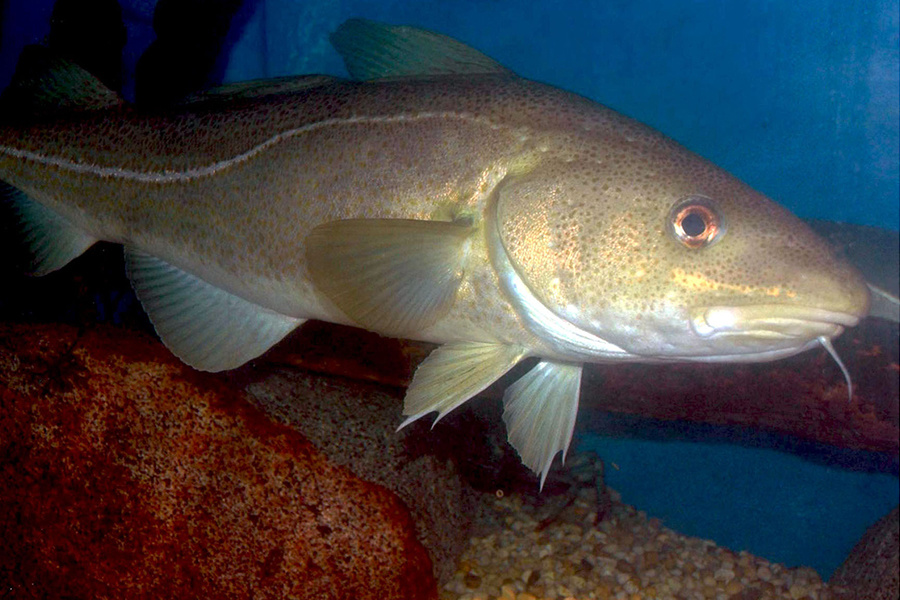
At first this fishing was easy, however we ate the big fish and made various fisheries a thing of the past, case in point being the Newfoundland Grand Banks, once famous for cod but no longer.
So what do people eat now instead of 'cod and chips'? This amuses me as there is no problem for them. They get some other fish shaped object - 'battered' - and make judgements of how tasty or otherwise it is. Maybe this fish comes from another hemisphere, perhaps it has some unusual name, maybe it tastes 'different'. Marketing conquers all though, this mystery fish caught somewhere off Antarctica will have a fancy name as if it is some deluxe, exotic variety. It is as if the 'chef' went out of his way to offer something more exciting than 'humdrum cod' specifically for them, charging them more for this 'nouvelle cousine' in the process. No discussion of what happened to the cod will be mentioned although the despicable newspaper that will be read with the 'faux cod and chips' will talk about the evils of the E.U. and the Spanish fishermen invading 'our' shores.
Soon these fools will be eating the scummiest bottom-feeding detritus that can be scooped from the ocean's depths. They will do it if not every day but as the mood takes them until the day they die. Discussion will be made on how well the faux-cod is cooked and how lovely it was. The thinking won't go much further than their bellies and bowels.
Meanwhile, driving in their cars and going on their cheap holidays, these consumers, whom the world's economy depends on, will be pumping untold tonnes of carbon dioxide into the oceans, acidifying them to make life in the seas quite intolerable for our friends with gills. The cruise boats they holiday on and the container ships that bring them their cheap junk from China will also make so much noise in the oceans that any fish with ears will not be able to hear anything but the sound of diesel internal combustion engines.
There is no penalty for complicity in this madness. However, the cost of stepping outside of it is quite high. If you don't eat your fish or your beef or your mechanically removed horsemeat then there is not a place at the table for you. Unless you have got a good excuse. But nobody says they are 'allergic to beef' or 'allergic to fish'. You can only be allergic to peanuts. Much like how folks in the mafia have to have slaughtered someone to get a space at the table, so it is with meat and fish, to be accepted by your peers you have to partake in the ecocide.
There are those that are vegetarian and wanting to live life differently. But these people are somewhat drowned out by the vegan crowd, many of whom have entirely different motivations. This new vegan crowd are more likely to have an eating disorder that has nothing to do with saving the planet. Plus they can't get five minutes into a conversation without wanting to tell all that they are vegan. Their fanaticism plus the cost of their fake-meat products, e.g. that organic almond milk flown in from California, is no example for others to follow.
We will see if the meek inherit the earth, maybe the fatties scoffing all the fish are going to be going extinct shortly after they have scoffed the last plastic-infested jellyfish they can find in the oceans.
The main reason was for the animals, followed shortly by wanting to have a minimized impact on the environment, and then personal health. Most vegans I've met are kind people who just want to act in alignment with their values.
Given that there is more impact to climate change from animal agriculture than all of transportation put together, it makes sense that people are starting to wake up to the reality.
This reminds me "Chilean seabass" [0]. I always chuckle to myself when I see it on a menu, usually for some outrageous price. Marketing conquers all, indeed.
That said, you're right in that vegetarianism is just not sustainable in this size a population - but not just for elitist vegan snobs. If we all ate mostly vegetables, and got our proteins from other sources, we'd be facing a scarcity of land to grow crops as well as sources of fertilizer. The math just doesn't work at scale, and that's why purely vegetarian nations are generally that way: because they are poor, not enlightened. They also aren't usually particularly healthy. Ironically the healthiest cultures (if you'll permit the generalization) are those eating mostly fish-based diets like the Pacific and Mediterranean.
Lets take a cultured plant of wheat from family Poaceae: There is a crop of seeds once in the year and then the plant die. The cow eats the grain and maybe they eat the straw also. Finished.
Now lets take a similar plant in a pasture or a meadow. But the cows aren't put there for the "once in the year" grain of this plants. Is the Poaceae superpower to grow leaves again and again after being grazed what counts.
Therefore we need to take in mind that we can extract more food from the same plant in a pasture, and this happens all around the year.
And not all fields are flat. Some are located in mountains and have inclinations of 60-70 degrees or so. You can't use machines there to sow or harvest. Would be economically unfeasible. Using this areas as grazing fields for goats or sheeps are a better option.
And there are the arid areas, where you have all the sun and space to culture, but none of the needed water; and where a lot of plants are poisonous or have horrid spines. If you remove the donkeys, goats and sheep, you can't have still tofu in return. Does not work like that.
We need to refine our master plan of "1 Kg of meat equals to 10 of wheat". For some places "1 Kg of meat equals to 0 Kg of wheat".
Of course if "we'll do it for the animals", a meadow inhabited by 450 species is much better than a concrete parking; and the later holds still more species than a monoculture of soybean. All soybeans means "no more butterflies, micromammals, flowers, and birds"
Personally I think vat-grown meat is gonna be the ideal win/win: low environmental footprint, perfect high quality kobe beef for all :)
That was mere observation, as is my commentary on how people just move on from whatever they have just made extinct to some other fish without batting an eyelid.
Some crazy scientist chap once wrote that 'Nothing will benefit health or increase chances of survival on earth as the evolution to a vegetarian diet.' He also wrote 'e=mc2'.
Anyway, as for these 'poor vegetarian nations', you mean India!!! India wasn't poor and did not have famines until the British arrived with their guns. Before then India made and exported many things, fabrics being a speciality. The likes of the East India Company closed that down. A lot of enlightened thinking has came out of India. And it still does.
Now if you are going to live in Scandinavia then you are going to have a tough time of it being vegetarian. Those long winter months don't help you grow your oranges.
As for nitrogen fixing and general soil fertility, what you need are turnips. This was worked out a long time ago in England. What you don't need is more and more fertiliser from oil/natural gas thrown on the land to grow crops to feed animals that get churned up into beefburgers, with the residue washing into the oceans to create uncontrollable blooms of algae, suffocating the fish below.
Despite the significant numbers of humans on the planet there is plenty of arable land, albeit mostly owned by the 1%. We no longer need cows to pull the ploughs, the Dutch invented the harness for the horses bred by the British to do that. But we no longer need any beasts of burden, we can make tractors and power them with things like sunlight if we wanted to, cutting big oil out of the agri-business.
There is no need to be defeatist and to 'compromise'. Or to insist on eating fish just because some Japanese bloke lived to 112 possibly because he ate fish every day.
Skill in physics does not necessarily equate to skill in macro-biology. 'Genius' is relative to one's profession.
> As for nitrogen fixing and general soil fertility, what you need are turnips. This was worked out a long time ago in England. What you don't need is more and more fertiliser from oil/natural gas thrown on the land to grow crops to feed animals that get churned up into beefburgers, with the residue washing into the oceans to create uncontrollable blooms of algae, suffocating the fish below.
Turnips are gross. Most people don't like eating them. You will never win that battle.
Eating fish is not a compromise, it's a logical place you end up if trying to feed a populous without forcing them to eat refined foods.
We don't drive (me or my partner), We recycle, I mend everything I can (which outside of a clean room is most things, it's never been easier with youtube), neither of use go in for excessive consumption (My current desktop is from 2011, it's finally coming up on time to replace that).
I even considered going vegetarian but with Crohn's that isn't really viable (I have to avoid high fibre and getting enough minerals/vitamins is a struggle).
We don't eat wild caught fish (or much fish at all).
I mean I'm not a tofu eating ecowarrior or anything but it just seems sensible not to piss in your own drinking water.
What to do about it would be for humans to effectively stop taking more from nature than we can give back. The tricky part would be to orchestrate that.
If you cut down your consumption but I won't it won't save the planet.
If I cut down my consumption but you won't it won't save the planet.
If you and I both did cut our consumption, the planet would begin to recover but then there would be someone else who starts taking what we chose not to take.
And because that someone would later have more than we, you and I would ourselves risk dying in resource wars that would likely follow.
This is basically what countries and continents do.
To make any difference it would take one powerful party who could hoard resources: just leave them unconsumed except for the amount needed to prevent others from consuming them. At the same time, they would keep others poor, or at least limiting their standard of living by denying resources from everyone. Assuming there was one ruler who could control the majority of the planet's resources that would still be an extremely hard position to be.
The other option is not to do anything and play along. When we out-consume and out-grow enough the population can't sustain itself and the headcount on this planet will shrink back to 50% or 30% of the current levels. Then the race begins again...
Here in Sweden it seems like most freshwater lakes suffer from overpopulation, and the commercial value of the fish is so little that the transportation cost to cat food factories makes it unprofitable to fish it. Making matters worse, overpopulation in lakes has a tendency to cause extinctions where some species crowds out others. There was/is some government initiative to fund fishing directly, but so far very few has taken up on the offer.
It is however quite hard to find a seller for this. Some restaurants has made a bit of PR from saying that they are serving this kind of fish, but I have never seen a menu with it or seen those species in any store. Your best bet would be to buy it directly from those fishing in the lakes which could be problematic depending on where you live.
"A true environmentalist may not birth or father their own children, only adopt."
RMS is famously known for refusing to own a cell phone until there's one that runs entirely on free software, what is at the same level of adherence for environmentalists?
Short of a massive population decrease, a complete switch in energy consumption, or some sci-fi type of technological breakthrough, we are doomed to run this planet into extinction.
At this point, most conservation efforts are more of a attempt to feel better as an individual then they are actually making a difference.
That doesn't mean we should stop, or concede, with our efforts. It just means we need to be realistic with what we do over the next 50-100 years.
Personally, I think the only way the human race will continue to thrive is to figure out how to survive without the Earth as a host. Whether we figure that out, or succumb to extinction, is really the ultimate test of our race. Were we designed to be a part of nature as it exists on Earth, or will we surpass it?
Fixed that for you.
We're nothing more than an extremely specialized animal. What we do is (whether you like it or not) a product of nature. Our use of technology is just the large-scale version of a bird's nest, or an ant pile.
We've done far less damage than the asteroid that killed the dinosaurs. Deal with it.
Look at bacteria. They are also crazily adaptable. The do it by changing their DNA and a very high speed of generational change, and we use "culture" and "science" with longer individual lifespans.
Sorry, no. Please don't fix any more of my comments. That's really passive aggressive and demeaning and you can do better.
I really meant it. Under essentially any accounting system that is not human-centric at its core, we are really tops when it comes to destruction.
Birds and ants reach a natural equilibrium with their environment and end up as integral parts of a functioning ecosystem. Humans. Just. Don't. We nuke and pave. Stupidly. Overfishing is just one example, a tiny one. We exhaust all available resources in an area and if we're lucky enough to survive the inevitable ecosystem collapse that we leave in our wake, we move on, either up or out or over, and exhaust all of those resources, too.
If you really think we are equivalent to ants and birds, and we're just some kind of specialized animal, then I'm not sure we share the same basis for dialogue. Please step back from the personal afront that you feel by my comment and behold the destruction that humans have wrought. It is incalculable. There is a reason they are calling this the Anthropocene.
Cyanobacteria wiped out most other species on earth: https://en.wikipedia.org/wiki/Great_Oxygenation_Event
Birds caused mass extinctions and extreme evolutionary pressures: https://news.ucsc.edu/2012/06/giant-insects.html
Trilobites - one of the most diverse, plentiful, and advanced forms of life at the time - went extinct thanks to the evolution of plants.
If you take a snapshot during any of those events, a brief glimpse, sure those events were cataclysmically destructive. But step back and those events can instead be seen as fantastically creative.
It is anthropocentric to view the preservation of the ecological status quo and cessation of evolutionary pressures as a "natural" ideal. Humans like things that make life easy, but we also don't like change.
I am not opposed to environmentalism and imposing our curated view - but it shouldn't be guilt-ridden. We shouldn't tell lies about what is natural for life by cherrypicking examples of equilibrium and ignoring the trillions of extinct. The equilibrium you see in other species (ants, birds) only exists due the destruction of countless other species. Akin to an alien observing the seemingly stable equilibrium between humans, cockroaches, and pigeons.
Life survived despite incredible climate pressures and invasive species in the past - far more extreme than what is happening now - and reached new levels of complexity thanks to those pressures. There's no reason that will stop.
Having said that, it would be in our long term interest not to continue doing this until the system collapses.
Birds and ants don't reach a "natural equilibrium". They, and all other species, simply (and similarly) exhaust what their habitat will sustain in one way or another, just as humans do.
Almost all the species that ever existed went extinct without the help of humans.
New species introduced into an ecosystem often wipe out existing species as they grow. It's happened on lots of islands. They eventually reach equilibrium too. It's quite normal and humans aren't special in that regard. We just happen to be the best at it right now.
There is some emotion in your statements. The reason we want to protect the environment is because it has value to humans. It doesn't somehow deserve to be saved independently of us any more than an asteroid deserves to stay floating in space without crashing into any planets. If we can truly and permanently survive OK without as many species, then what's the harm in making them extinct besides emotion?
Adding my own emotional opinion, I think humans really do deserve to dominate everything because we're absolutely the most incredible species ever to live on Earth. Through technology, we've giving ourselves more and more of the abilities of other animals. We can live in environments too hot, cold, or arid for any single other species. We can fly and "swim" across oceans, and even make meat for eating! If evolution had some sort of purpose, it would surely be to create the most capable organisms possible. So far, that's us and every species we wipe out deserved to go because it lost the game of evolution in the same way the poor soccer teams deserve to not win the World Cup.