281 points · by rterzi · 8y ago · 199 comments
While it's true that some of our customers have an army of consultants, the vast majority of our customers don't use consulting at all or that only use it very infrequently. If you don't want a lot of customization, have the right amount of people and the right people and realistic expectations you don't need consulting at all.
When people want to get a highly customized experience (often, for the wrong reasons), or want to get in production after 2 months, when their people have no experience in kubernetes and didn't do adequate testing (load, fault-tolerance, etc) it will give lot of problems. But that's the case for everything, not only for kubernetes
In my opinion (mine, not Red Hat's) getting someone to deploy it with you the first time, showing how it's done and why things are done, and after that and do a workshop explaining the basic concepts has great value, saves a lot of time and isn't expensive.
Neither helm or istio are part of the core.
Are you asserting that any modern production environment that takes less than 2 months to set up is bound to cause problems? Or the whole company/startup/project?
If the former, I'd say there are many tech startups who would disagree, or at the very least, point out that it doesn't matter because they'd cease to exist during those 2 months without an MVP in production.
The time intensive phase during the first Kubernetes deployment is changing the mindset of the engineering team and everyone involved in IT.
Kubernetes IMHO is pretty much like moving from college into work life and adapting to the fact that requirements for a decent adult life are very much different from a college life.
If you have an existing production which works well after years of improvement and stabilization, with people with a lot of expertise on it, you won't get that in 2 months, not the stability and quality nor the ability to troubleshoot it.
Startups start from scratch, don't have big workloads, also there isn't so much pressure to have a high quality service from day one because you don't have that much people consuming your services.
All of which roll into a single metrics server (Prometheus) and dashboard (Grafana).
The instructions are accurate, it's been easy to learn, and does not require an army of consultants. We will be moving 1000's of apps to multiple data centers globally with a team of around 6 people. It took 100s of employees years to build and maintain infrastructure for those apps.
Note - Consultants are not needed at all, they simply help speed up the process with expert knowledge.
The actual cluster deployment is not mess at all. Even if done with a mere Bash script, it can be done in like 20 lines of code.
I can only recommend to actually try using Kubernetes because what you wrote reads more like you are actually still in the state of "wtf is this and why should I touch this crap?" but have not yet tried it.
I am not disagreeing that it’s complex and a lot of buzzwords but every day the situation is getting better and better.
This is effectively what is being sold now but using Kubernetes and Containers instead of Application Servers and J2EE
K8s lets you build “containers” out of whatever existing software happens to be laying around, rather than having to write your services from the ground up for being run in a container.
Now try troubleshooting it.
And again the monitoring and auditing on Kubernetes is significantly better than trying to roll your own. There is detailed logs and metrics up and down the stack.
Take the standard cloud application stack: Every app needs an artifact (disk image), a running service, an instance template, a group of VMs running using those templates, networking and a load balancer.
Before kubernetes, you had to automate by writing terraform scripts which mutate physical infrastructure as you apply.
With kubernetes, you POST a bunch of well-defined resources (container spec for the service, pod spec for the instance, pod as a VM, deployment as the group of VMs, services and ingress for traffic). Every physical cloud resource has a clear API mapping. Basically you save in kubernetes what you need as a first-class API resource. And then, kubernetes responds to what you saved by changing infrastructure to match.
You can do the same for practically any kind of infrastructure resources. Want an S3 bucket? Duh, POST a S3 bucket resource and you can write a controller to react and fulfil that bucket.
Kubernetes comes with a built-in set of functionality that fulfils a certain core set of infrastructure using containers. But you are not restricted to that. In theory, you could POST a VM as a resource, or an Instance Group as a resource, and you can write a kubernetes controller to fulfil those resources.
Why? Because APIs are more powerful than tools. APIs allow a different axis of infrastructure evolution, even if you distribute the control to everyone. By modeling these as APIs, you can bake in a huge amount of infrastructure intelligence into the API. Want to enforce different, code-driven resource-based policies, linting, sane defaults, organizational context? Yeah, make the controller do just that. If you just provide a tool to every engineering team, you basically lose any form of cross-cutting orchestration, and you lose the ability to evolve infrastructure in a separate axis independent of the tool that each team uses.
Basically, kubernetes is "Infrastructure as an API". Thinking about it as a "new application server" kinda hides the whole point of it.
After: Write YAML then run `kubectl apply`
;-)
https://www.terraform.io/docs/providers/kubernetes/index.htm...
We could probably bootstrap our entire product from scratch in a couple of hours if it disappeared off the face of earth.
“Infrastucture as a config” is a very powerful concept. I’d say that’s what the big power of k8s is.
There will be specialisation once again, because it makes absolutely no sense to make people whose main job it is to think about use cases, business logic and user interfaces to also deal with stuff like this.
In this way, devs will be doing ops, but not as ops for any given prod environment, rather encoding operational tasks in reusable software.
Ops themselves will bifurcate, one towards configuring prebuilt controllers, others towards troubleshooting problems in production. The middle ground will hollow out.
But more broadly, Kubernetes in the hands of most developers that are doing non-platform level work is a step backwards and will be disastrous. It's far too low level, it's like, hey this Python/Ruby/Java thing was great, but have you seen this new bytecode linker and assembler?
New platforms and runtime built ON TOP OF Kubernetes are probably going to be fine. But that's going to take a while.
Everyone who comments about DevOps should have read "The Phoenix Project" first, so that they understand what you just said. It's not about consolidating workloads onto generalists, it's supposed to be about breaking down the silos in an organization, nothing more!
You are right. What I should have said is that using DevOps as an excuse to make application developers do complex infrastructure design, automation and maintainance as a side-job is an unsustainable practice.
As someone trying to be primarily a dev who keeps getting roped into doing ops stuff for deploying my stuff, my experience is the exact opposite, and in particular putting Kubernetes on the end as the least complicated technology seems outright crazy to me, like, seriously, what on Earth are you talking about? You literally can't bring up a hello world web app without basically knowing everything you needed to know to bring it up on bare metal, and everything you needed to know to bring it up on a VM (whose crazy virtual networking stuff now seems like simplicity itself compared to Docker/Kubernetes), and everything you need to know to bring it up in Docker, and everything you need to know to bring it up in Kubernetes... and you need some sort of solution around building Docker images, too, so you're still going to need to know that, too.
There's all kinds of reasons this is necessary and there's all kinds of reasons why provising a new hardware server, blasting a Linux distro on to it, and just running your server is a bad idea. By no means am I proposing we need to go back to some glorious past, where losing a single hard drive sector means "oh well, guess the database is gone! recovery plan? Our recovery plan is to not need the database anymore!" I'm just saying, it's crazy to think this is all getting simpler. Try looking at this through the eyes of a fresh grad sometime.
Granted, I'm a bit crabby that literally every time I go to deploy something new, on a roughly 18 month time frame (the intervening time being maintenance and feature development), I have to go learn something else for my one-off task. (I don't think devops manages to beat the Node/JS world for churn, but it's probably in second place.) But still, it's getting more and more complicated, not less, and I don't even sense that we've passed an inflection point on the complexity reducing yet.
Those "all kinds of reasons" aren't necessarily valid, though, because it's not actually possible to go back to that caricature of the past that you describe.
The reason it's not possible is that some things actually have gotten simpler, at least from a user's perspective.
Automatic bad-block relocation has been standard for effectively forever. Even line-speed hardware RAID has been affordable for so long that it's not even a question. Hardware, in general, is routinely villified as being a nightmare, when the reality is that it's boringly reliable and, more importantly, has predictable enough failure rates that there are simple, standard engineering solutions around the failures (often already baked in).
That "inflection point" may well just end up being peeling away all the abstraction layers to discover that simplicity underneath works just fine, since we don't live in the 20th century any more.
The reason for this is the enormous cost benefits (its super cheap, you only pay when your code actually runs, no upfront costs, no passive server costs, no overprovision or underprovision of compute resources etc).
The servless approach has its place just like everything else, it’s not a panacea though.
What will very likely not be going away in the next decade is networks.
Unless we can build tooling for setting up the network infrastructure below all these cloud tools, you will still be stuck with people doing admin work like 30 years ago. From personal experience: k8s clusters are easy. Building the hardware and especially networking below so that everything actually can be automated in k8s... whole different story.
But actually shouldering the burden of creating and maintaining the entire runtime -- and orchestrate it -- is a bit much and stretches people thin.
Writing native UI code is no more low level than using electron. It's just less familiar to web developers and less portable. These are completely different considerations than the greater degree of division of labour I'm predicting for the server side.
For one JavaScript doesn't have shared memory threads like lower level desktop languages do, it's all neatly hidden in JS event loop or your forced to go IPC route. Shared memory multithreading introduces low level complexity but brings performance benefits if you can leverage it.
Plenty of other low level APIs and technologies that you either can't use or are wrapped in higher level sandbox constructs for JS for portability, security, ease of use, whatever.
Writing native UI code often forces you to deal with low level platform specifics but you get the benefits, HTML UI is just a cheap way to do it (not meant in a derogatory way - it's easy to find devs/designers and target multiple platforms from same code base)
Without generalists with overview and situational awareness, you're going to need a lot of documentation, paperwork and meetings to preempt communication problems.
Sincerely,
DevOps guy formerly known as SysEngineer formerly known as SysAdmin for 15+ years.
At the beginning the author poses the following questions:
* Do you use Mac, Windows, or Linux? Have you ever faced an issue related to \ versus / as the file path separator? What version of JDK do you use? Do you use Java 10 in development, but production uses JRE 8? Have you faced any bugs introduced by JVM differences?
* What version of the application server do you use? Is the production environment using the same configuration, security patches, and library versions?
* During production deployment, have you encountered a JDBC driver issue that you didn’t face in your development environment due to different versions of the driver or database server?
* Have you ever asked the application server admin to create a datasource or a JMS queue and it had a typo?
I've experienced problems whose root cause are some form of all of those. Much of it could be chalked up to growing pains etcetera, but, for example, there are concrete differences between docker versions running on mac and linux that have shown up for me.
This doesn't reduce the author's argument, but they do seem liked strange examples.
Our choice to move to Docker and kubernetes came from developers, and specifically spoke to the need for consistent, reproducible test environments. We had dockerized most applications many months before the notion of using them in production was put on the table. What remains to be seen is if the switches in production reduce complexity and maintenance on the devops end of things, as well. I'm also curious how many other organizations had containers introduced 'from the bottom up' like us.
But For various reasons, political, personal, technical etcetera, consistent, accessible test environments were not available. It was a huge bottleneck for developers.
This is why docker was so appealing: it allowed devs to circumvent the political and technical issues. We didn’t have to justify provisioning more instances, since we could just use docker compose to run stacks on local machines.
So I’m that sense, the choice and it’s benefits arose from non technical hurdles.
That said, if you can, I'd be ridiculously interested in a retrospective when you have a chance on your transition. Good luck with it!
http://www.smashcompany.com/technology/docker-protects-a-pro...
Observing similar patterns creeping in the Kubernetes culture and ecosystem does not inspire optimism in a side observer like myself.
Windows can, surprisingly, handle it just fine.
"/path/to/thing/**"
in a nuspec file instead of "\path\to\thing\**"
The backslash was escaping the wildcard characters :(My team originally pitched how docker solved much of the dependency upgrade management by having layers for each major set of dependencies. That ignored the fact that upgrading a layer is not really something you do.
So, then you can go around the path of coordinating many containers communicating with each other. That works, but in that world, things really don't seem any easier than the earlier alternatives. Harder, in many ways.
Don't get me wrong, the momentum and raw money being put into containers certainly paints it as the future. It just feels like lying to say that they have even come close to parity with what we were capable of not that long ago.
The economics are interesting though. Computing resources are super cheap and getting more cheap everyday. (Well except for RAM!) The waste produced by containers means says, yeah, give each application its own app server. Its own web server, its own JDBC driver, even its own JDK. We'll throw it all on the cloud and run it for a few cents each hour.
The problem is that testing isn't cheap. This is where microservices and containers and the all this craziness will fall down. Now you've got dozens and dozens of applications all running with their own application servers, JDBC drivers, and their own JDK. This is a combinatoric explosion in your testing surface.
The true value of the application server approach is that it forced applications to conform to a clear contract. Once your application conformed to this contract it could be thrown over the wall into a full-time ops organization that could transparently deploy, monitor and manage the app.
The container madness will come to an end. People will realize that giving developers the keys to the kingdom and total freedom over their application is a terrible idea. (And smart developers don't want total freedom.) What will emerge will be something much more interesting: a hybrid approach where applications can be bundled into into artifacts that fully express their dependencies and containers can be annotated in a way that fully express their capabilities.
Containers provide isolation and immutable infrastructure and this is good. Appservers provide standardization, specialization and separation of responsibilities and this is also good. There's no reason why we can't enjoy both.
The devs just have a single base container to work off from and we use CICD to further enforce whatever we need to.
It also makes it easier for devs to propose changes, as we know we can consistently apply them.
Sadly, I don't think it's actually developers that were pushing for this "freedom" (with which comes responsibility, hence it makes sense that it would be unwanted), as such.
Rather, I place the blame with managers and with (fellow) sysadmins for not embracing, empowering, or forcing (whatever it takes) the aspects of the original DevOps cultural movement to have Ops bring the equivalent [1] of a production environment to every developer.
> Containers provide isolation and immutable infrastructure
I thought they weren't even (necessarily) immutable. If not, then maybe they're merely immutable-through-practice, but that's as unsatisfying as configuration management systems creating reproducible deployments that lack traceability [2].
[1] In terms of tooling for things like builds, deployment, and management (especially of dependencies), not necessarily full hardware capacity, although at one place I did provide each developer with a copy of yesterday's production database on their own, personal bare-metal database server, less "beefy" than the production hardware.
[2] is that the right word? something like chain-of-custody for code and/or configuration.
Containers are one way to force an application to explicitly declare all of its dependencies. The problem is the application then also bundles those dependencies. There's not much room for control or intermediation. Developers have total freedom to do all sorts of wackiness. (And oh the wackiness I've seen in containers. When the cat is away...) What's needed is a richer (and much more compact) mechanism for applications to express all their dependencies.
Another way to understand the issue to understand the underlying economics at work here. Container economics proposes that computing resources are so cheap that, sure, let the developers go crazy and do whatever they want. But those same developers must be on the hook for all operational concerns hence "DevOps." And this will scale until one day you look around and you realize that anarchy never works, not even a little bit.
Now there's a lot of room to fall here. RedHat is in the business of selling compute and storage resources. It's not clear that even if they could make their products more efficient they would. But as long as compute resources are cheap and getting cheaper you can let people go wild and RedHat will make a lot of money and everybody will be happy. For an organization the true costs will emerge in a very subtle manner: the productivity of the developers (already hard to measure) will ultimately fall. That's because instead of actually solving actual business problems their devs are deploying dozens and dozens of polyglot microservices and trying to figure out why on earth microservice #28 that Bob, who left the company a year ago, decided to write in a version of lisp that he invented crashes every day at noon.
But hey, at least Kubernetes makes it easy to deploy everything!
They focus at far too low level a problem.
> The problem is that testing isn't cheap. This is where microservices and containers and the all this craziness will fall down. Now you've got dozens and dozens of applications all running with their own application servers, JDBC drivers, and their own JDK. This is a combinatoric explosion in your testing surface.
I fail to see how this more difficult from 95% of existing enterprise systems that run various JDK versions, various WebSphere versions, JDBC drivers etc.
The difference with containers is that vendoring your dependencies makes all that explicit. Whether you choose to stay on old versions is a mistake you can still make (and will make if you leave container creation and patching in the hands of dev teams).
That said, since when does any organization build horizontal testing libraries, like, "test X version of JDBC", so they can standardize on a single driver across all projects? It's never done. Projects are all over the place with their dependencies unless there is institutionalized forcing through Maven repos or what not to block the download of old/insecure versions.
There is no combinatorial problem here, each test suite needs to unit test the individual service and then test the API contract of the service. If you let your dependencies decay you're accepting major security and maintenance risk, but you were in the WAR file world too.
> The true value of the application server approach is that it forced applications to conform to a clear contract. Once your application conformed to this contract it could be thrown over the wall into a full-time ops organization that could transparently deploy, monitor and manage the app.
LOL, I really think you're exaggerating. I've worked with WebLogic, WebSphere, IIS, JBoss, Tomcat, Django, Rails, Node, you name it over the years, and while some orgs got close in the Java world, this was mostly a pipe dream that never happened in any cost effective manner as a standard practice.
> The container madness will come to an end. People will realize that giving developers the keys to the kingdom and total freedom over their application is a terrible idea. (And smart developers don't want total freedom.)
This I agree with. It's all far too low level.
This really was Docker, Inc.'s fault IMO, their marketing message was to empower developers to get ops out of the way by building these containers that would magically just be run as opaque lego blocks. That was the hype everyone on HN was drooling over in 2013. Turns out it's not quite that simple.
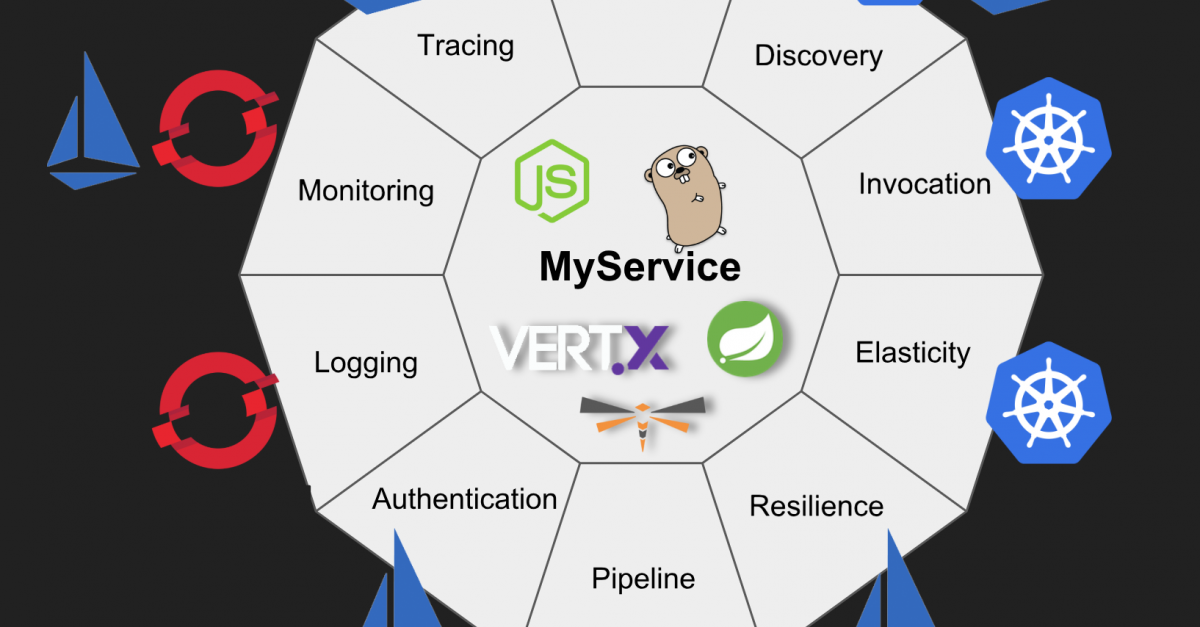
I honestly don't think this is necessarily a terrible thing. But, the idea that your common layers are stable is a dangerously bad assumption.
The fact that you can login to a VM and update a package does not make the system stable either (and of course you can actually do this with running containers as well). Add to that you still need to restart running applications to take advantage of the package update (assuming the packages is a shared lib).
Meanwhile you can push new base images, automatically trigger rebuilds and roll out the update when ready.
FreeBSD jails date from 2000
Solaris zones date from 2004
https://us-east.manta.joyent.com/bcantrill/public/ppwl-cantr...
That said, it is not limited to any one set of our industry. It is likely not even limited to our industry.
We like building new things, from different angles, but in the end it seems like everything cycles through the same ideas.
I’m only vaguely familiar with FreeBSD, and not at all with Solaris.
We were deploying into HP Vaults in 2000.
What really makes me afraid are the thousands of complex addons that are being pushed by the community (For example, Istio, Networking addons, etc etc). Those should be kept outside and it MUST be made clear they are definitely not needed for a normal installation of Kubernetes.
Istio for example, is such a political brainwash power-move by some bigger companies that benefit from it. I believe less than 5% of the use-cases really require Istio, still it is being pushed as something you should always install in your cluster. This is bad for everyone.
Seriously, this is so embarrassing at the current point ( with me having absolutely 0 understanding of the concept)
If you're still getting enough work as a sysadmin and enjoying it, I think "VMs" as a concept will still be around for a long time.
It's all about saving money on DR. When these companies realize that developers can't handle doing ops AND complex business logic, maybe they'll rethink it. Until then I expect this trend to spread rapidly as companies look for ways to abstract away DR costs.
Cloud services is pretty much a business of huge marketing budgets and old-school lock-in strategies.
Assuming you have a similar definition how does Kubernetes solve that problem?
So k8's basically runs a replica of your whole system behind the scenes so if a physical location goes down you still have your system running.
There's a lot more to replicate than just the bits in the apps.
Next up - lightweight k8s server - stripped down of all the crap that can easily run and deploy a single container.
Beats are pretty lightweight and for what I used them they work.
Without getting too far into semantics, I think the author is using a well overloaded terminology. When I hear Application Server, I immediately think tomcat or some other jvm.