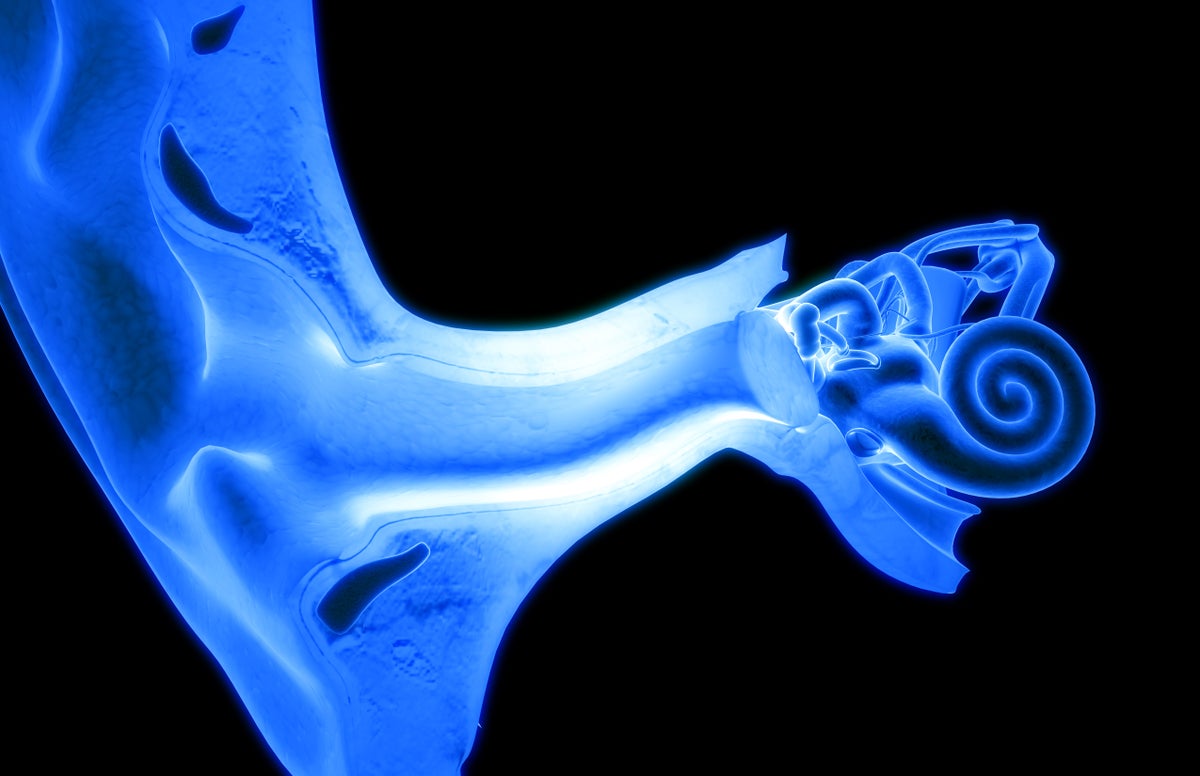
Light Beam Lets the Deaf (Gerbil) Hear
A next-generation cochlear implant might allow the hearing-impaired to listen to music and cope with noise
Scientific American
19 points · by 0xbxd · 8y ago · 4 comments
In almost all applications, optical stimulation theoretically (and in rodent trials) outperforms electrical stimulation. Once we solve the immunological roadblocks of optogenetics, I can imagine a huge spike in peripheral nervous system applications. Perhaps not as much in the CNS, since deep brain stimulation is a huge problem.
That being said, the immunological problem in optogenetics is the elephant in the room. I think everyone in the field knows that long-term loss-of-expression is heavily influenced by immune responses, yet are afraid to admit it. Essentially, if transfecting adults with light-gated ion channels leads to horrific immunological feedback, we could see people getting worse as their nerves are destroyed. I have seen this in my histological samples (PNS; hindlimb; rats and mice) and have quantified denervation atrophy by post-mortem weighing of muscle.
This is not a solved problem, even though a few promising solutions like drug treatments and chimeric protein engineering are being discussed. I suspect certain immunosuppressant drugs might be particularly effective. Despite the risks above, start-ups are trying to take this very promising technology to human trials. I personally find this reckless.
But I'm done with the negativity: the study in the OP is really awesome and I'm rooting for them. I dream of a day when opto is advanced enough that targeted, multi-color activation of sensory neurons is translated to people. Imagine feeling force and touch with a prosthetic because it talks directly to your nervous system... maybe one day :)
PSA: if you have sudden hearing loss, go to the ER immediately. I'm told the ideal window for treatment is only 48 hours.
The hearing aid you linked uses light to activate a transducer that's been placed against the tympanic membrane (eardrum). It could have used a wire, radio waves, whatever.
This technique is a combination of a viral infection that transfers light-sensitivity genes into the inner ear and a surgical implant that produces light in the inner ear modulated in response to sound.
One is an externally worn device and the other is a combination of surgery and viral gene-editing. They're "akin" in that they both use light as part of the system. Well, I guess they also both use devices made from baryonic matter.