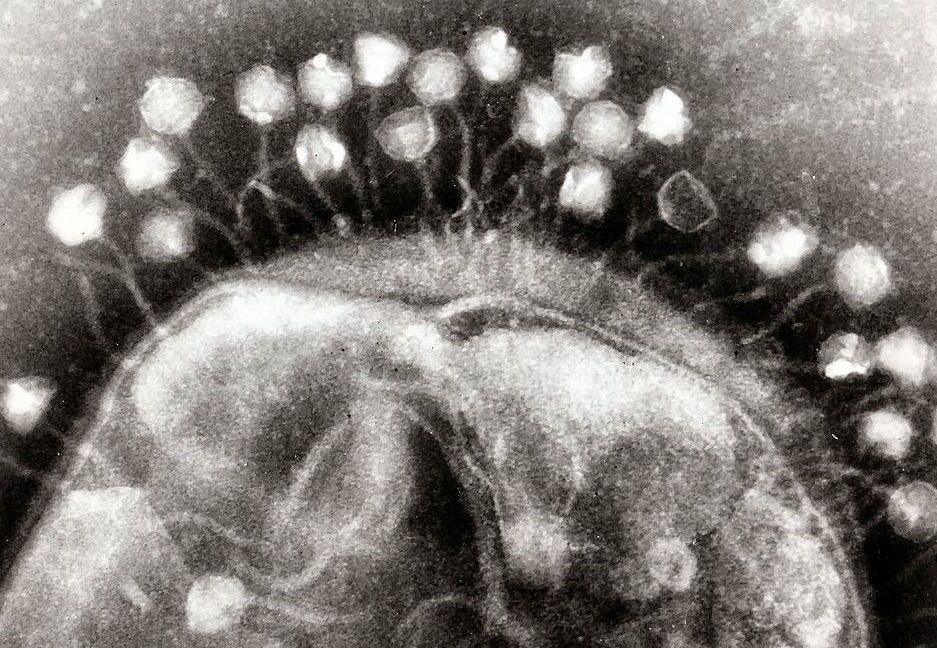
Using a virus to kill what antibiotics can’t
Long thought promising, viruses that target bacteria may be edging closer to use.
Ars Technica
134 points · by okket · 8y ago · 69 comments
A post on this from a day or so ago, my usual take on phage, from the standpoint of someone who works in healthcare epidemiology and has always been fond of phage therapy:
1) Even with resistance on the rise, we still have antibiotics that work. Phage therapy is a "someday we're going to need this...we think" type treatment.
2) There's no such thing as a "broad spectrum" phage. They're organism specific, and that means not only would you need to keep a phage library on hand, but you'd have to do a lot of diagnostic tests. That's going to be both expensive and tricky.
3) Phages are living things. Not only is that a weird regulatory framework to be in for a drug, but it also means that you need to be able to keep phage alive. In contrast, antibiotics are inert.
4) Phage therapy is also relatively new in the West, which means there's just less of a R&D infrastructure behind it.
There have been people working on commercializing phage therapy since I was in undergrad (I'm now a tenure-track professor). The problem is it's hard, and antibiotics are so much better as a treatment that there's kind of a ceiling on the excitement that they can generate.
We have antibiotics that work for most infections. For people with antibiotic-resistant infections (especially hospital-borne ones) they are already not an option. A childhood acquaintance of mine with CF recently died of an antibiotic-resistant infection in her newly-transplanted lungs. Lack of awareness and research into phage therapy was fatal in her case, as it meant they started the process late and it took longer than it needed to.
Said process is: take samples of the infectious agent, culture them, and send the cultured bacteria to "phage banks" so they can test their existing phages against it. There's a lead time both because of the initial setup required per-patient, and because of the scarcity of comprehensive phage banks and the lack of good coordination between them.
And yes, highly resistant infections are a problem - and one I work on - but from a "market forces" perspective they're still relatively rare. Even for most highly resistant infections we still have some antibiotics that work - not well, and not without side effects, etc.
Re 2) I don't think that would be a problem considering together with 1 there will simply be a need to develop a quick but reliable method to test for which collection of phages work, probably even develop cocktails of phages for a more broad application. Reducing the amount of antibiotics used would also help reduce the risk of the broad spectrum antibiotic failing because of resistant bacteria.
3) Phages are living things depending on who you ask. Phages are rather simple and will to my knowledge remain viable for a good and long time. Antibiotics may be inert but also have an expiration date, you can't just use an 60yo antibiotic and hope that works. At some point the contents of the antibiotic will have broken down and oxidized.
4)Fair but apparently people have been using it in the Eastern Block for a while with some success. There are some shoulders to stand on and continue R&D.
2) "There will simply be a need to develop a quick but reliable method to test..." is a really big ask. We don't have quick but reliable tests for some common human pathogens. You can't simply posit that a great test will work. You're right about antibiotic stewardship, which is something I work on, but that's orthogonal to how good phage are as a clinical treatment.
3) While yes, in some particularly strict senses they're not alive, the actual point of that is there's currently no phage preparation technique that is not extremely lab intensive at the site of treatment.
4) Agreed - and the Russians and Georgians have some really cool work, but even there, it's for what are, clinically, extremely difficult edge cases, rather than the kinds of things antibiotics are routinely used for.
4) USSR jumped onto antibiotics as soon as they were available, and hasn't really looked back.
5) phages are viruses and our bodies are very efficient at not letting them in, so you can't just pop a pill, you need them injected into the bloodstream
6) you need a lot of phages (and/or a steady supply of them) because they don't replicate in our bodies (they don't infect us), but our immune system is very good at clearing them out so their blood concentration drops really fast
7) because phages are viruses and we need them injected into bloodstream in copious amounts, our own immune response to them may become a problem. Potentially-fatal-cytokine-storm kind of a problem.
Viruses are more like a delicate molecule than like a living thing, because they don't have a metabolism. Kept in the proper conditions they last indefinitely.
"more like" in this context. "Are viruses alive" is the most popular thread in bio-ontology, locked by the moderator after 12,493 pages of heated debate.
But there's a few major concerns:
1. Most preparations are bespoke. The FDA has made some headway with this because of fecal transplants, but it's still a problem.
2. Phages evolve. That's one of the benefits of them. Generally speaking, self-adaptive medications are not something we have a good regulatory context for.
3. They need culturing, isolation, identification, etc. and those are "wet lab" things.
bacteriocidal antibiotics tend to be cytotoxic with aminoglycosides causing hearing loss, fluoroquinolones causing heart problems tendon problems psychiatric problems and even more. Cdiff colitis is a deadly risk and also toxic epidermal necrolysis. These effects are noted to be happening more often than previously thought in clinical trials, in some cases because they can develop overtime rather than immediately.
No they're not. Virus particles are totally inert on their own. They incorporate themselves into and modify other living systems. But that's no different from drugs.
How is that any different from probiotics or yeast? Those are also "living" but my understanding is that they are dormant and inactive until reactivated.
(Lots of good points raised in your comment, though.)
- Viruses aren't particularly stable. They're fussy little things - it's easy to deactivate them.
- How you get phage preparations is to find them where the bacteria you want to target are growing, then culture them, filter out the bacterial endotoxins (because that'll kill someone), and then use that purified preparation. That needs a lab, and one that's reasonably good at what it does, vs. a random pharmacist at Walmart.
https://archive.org/details/BBCHorizonS1997e13TheVirusThatCu...
Also, what other exciting front in biotech should I know about?
This is the equivalent of "roll your own encryption" in the computer security world.
The number of real world cases where people have no or little immune system is likely minuscule (real numbers?) compared to the number of people that destroy their immune system through poor life and health choices. (obviously high number)
Eat better, exercise some (any?) and let your immune system take care of this stuff. That is what it's there for. Introducing _another_ foreign substance that will need to be fought off later is a recipe for disaster.[2]
[0] https://en.wikipedia.org/wiki/White_blood_cell
[1] https://en.wikipedia.org/wiki/T_cell
[2] https://www.amazon.com/King-Mice-Cheese-Nancy-Gurney/dp/0394...
One of the nasty ones is that accidentally teaching the immune system to attack the wrong thing is catastrophic, and we don't really have good general ways to undo learned response once present. (Exposure/desensitization therapy works for some things, but is still relatively early in its refinement.) Just look at the fun with the lone star tick and induced red meat allergies, and that's apparently a purely incidental outcome (e.g. it's not obviously a beneficial part of the tick's outcomes from biting things, just a quirk of primate biology not possessing a protein that every other mammal does, and getting upset when it finds it in the bloodstream).
Another example that comes to mind of when this doesn't "just work" is culturing uninfected immune cells from HIV+ patients, teaching them to kill HIV, and then putting them back.
AIUI, this works for a little while, but then it just shows back up again, like it never left. As it turns out, T cells happily share information between each other by making a happy little bridge between the two cells, and HIV is perfectly capable of spreading that way. Womp womp.
If you want to see a really strange immune outcome, go read the recent experiments about graft-versus-host disease potentially wiping out HIV in patients. (It didn't work for two patients in one experiment, so not extremely hopeful about the outcome, but it's a fascinating complex interaction. [1] [2]
[1] - https://www.nature.com/news/hopes-of-hiv-cure-in-boston-pati...
[2] - https://www.newscientist.com/article/mg23431244-400-immune-w...
If they make something that helps you, I think that would be great.
Why not consider "stop weakening the immune system" first?
No one supports giving a lung transplant to a persistent smoker. This extreme example demonstrates that damaging life choices _need_ to be addressed to actually help people heal.
It isn't flashy. It doesn't make headlines. Doctors and scientists can't get rich off it.
It's also incredibly hard to explain the point of view you have.
I'm actually very sympathetic to your position, having pursued diet and lifestyle changes to manage a dread disease. But I will say that your comments here read as rather snarky, not good faith efforts to explain.
Edit: Having read through more of the article, it is (at least in part) research into helping patients with cystic fibrosis, who actually have a seriously impaired immune system.
It's actually what I have. And I'm quite sure you are wholly unqualified to tell people with CF what they need to eat to restore the functioning of their immune system in spite of a defective cell channel permanently impairing their functioning at the cellular level in all systems, but especially so in epithelial tissues, which includes both the lungs and gut.
If they make something that helps you, I think that would be great.
Note: I accidentally posted this comment further down. More proof of fallibility.
You source simple concepts and then use a children's book to back up your final claim?
Oh please...
Yes, your immune system is a wonderful defense that you can damage or improve based on lifestyle but medical advances are often necessary to assist the immune system.
Yes, because the concepts of healthcare in the US are absurd, and it's easily illustrated through a children's story book. In the US diabetes (1 version of it) has no known cause or cure, but in other countries (where there is free health care) it has a known cause and cure.
>...medical advances are often necessary...
Again, in countries with government supported healthcare they recognize that lifestyle choices are the number 1 cause of preventable disease. Number 1. What is "often necessary" in the US is in reality a rare exception.
Consider smoking, alcohol and drug abuse, junk food diets, no exercise, etc... these all are widely _known_ to deplete the immune system. So the only argument left for hacked viruses is for people with auto-immune diseases or other serious compromised systems, which is in fact rare.
"The only"
You start off making good points then you take this giant leap to absurdity. It's beyond hyperbole.
Please explain how you'll handle infection by a resistant strain.