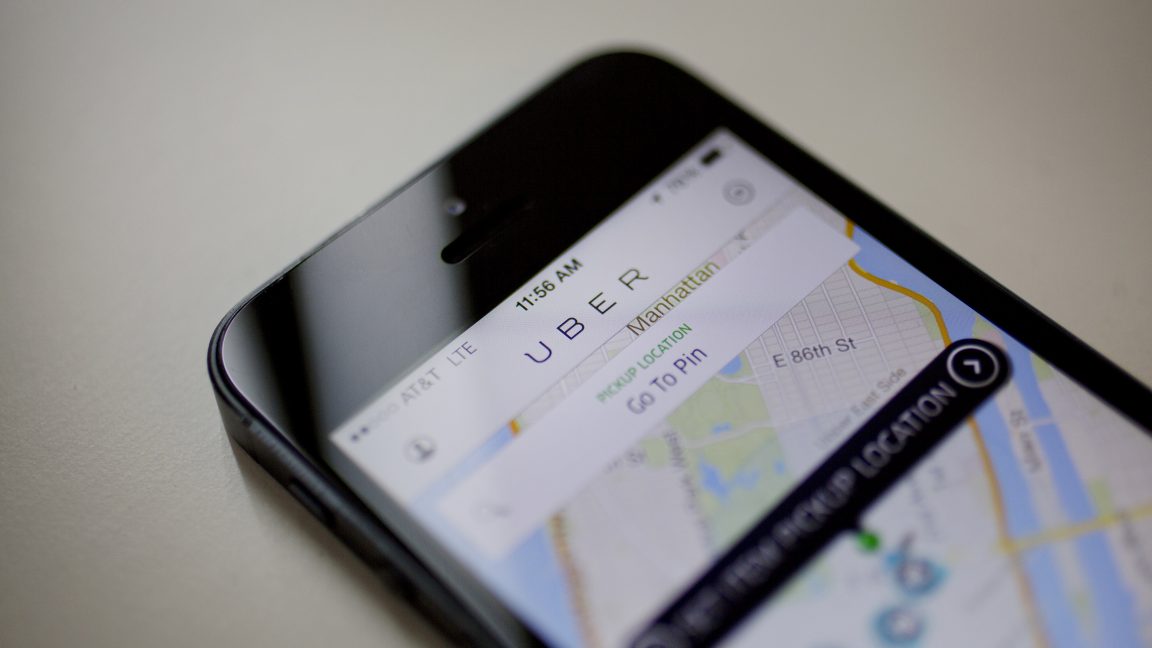
Uber drivers “employees” for unemployment purposes, NY labor board says
Meanwhile, the New York Taxi Workers Alliance called the ruling a "landmark decision."
Ars Technica
121 points · by Deinos · 8y ago · 189 comments
Uber has clearly shown that they’re happy to be as exploitative as they’re allowed to be. (And that even when they’re specifically disallowed they’ll do everything they can to ignore it and fight the laws.)
There's definitely work to be done to modernize our employment laws with the changes to the economy. It's not a clear cut "Everybody is an employee" though.
If someone drives for Uber for 1-ride per month should Uber pay $1000/mo for that driver's health insurance? How about 1-ride per week? How about if they have the app "on" but never accept a ride? Should they be paid for the time they didn't do any driving?
Clearly the driver isn't an employee in the traditional sense of the word. But they also aren't a totally independent contractor either as their livelihood is so closely tied to the platform of a private entity. My gut says to err on the side of not imposing restrictions or mandates until we figure out the right balance.
> Minimum wage laws, unemployment, etc, these are good things that should be preserved.
Unemployment insurance, as it's implemented in the USA through effectively a tax collected by a private entity, is a scamola. A better idea would be having the employee get their own private unemployment insurance. That would also lead to lower costs of insurance for workers that are less likely to be discharged.
> Uber has clearly shown that they’re happy to be as exploitative as they’re allowed to be. (And that even when they’re specifically disallowed they’ll do everything they can to ignore it and fight the laws.)
Nobody is forcing drivers to drive for Uber. An argument may be that they were enticed with higher rates that were subsequently lowered in some markets. There's also the argument that a lot of the drivers don't under the total costs involved (double payroll tax, depreciation, etc) but by itself offering work in the "gig economy" isn't exploitation. Uber (and Lyft, and ...) should be lauded for (net) creating thousands of jobs.
Does this also mean that, say, an iOS developer could be considered an employee of Apple due to their livelihood being closely tied to that platform?
It's no different than any other company. Most places have benefit levels tied to work levels. Working full time you get full benefits, for part time your benefits are lower and below a threshold, there are almost no benefits.
The biggest problem with this approach is that it's often used to delay action until it's well beyond the point where it becomes necessary. It's very similar to the 'Well, we just don't know, and we need to do research' approach that tobacco companies used, very successfully, for decades in the arguments about whether their products cause cancer.
In the case of Uber, one state implementing these stricter measures is actually a good way to collect the needed data to make these decisions on a wider scale across the country. NY will take this approach and we'll see the results. Other states can look at those results and try to figure out a better way.
In every state I'm aware of, unemployment insurance is managed by the State. It is a form of social welfare, and the government will intervene to e.g. extend unemployment benefits during periods of high unemployment. Applicants for benefits also cannot be denied on a case-by-case basis, and certain groups of people almost certainly receive more in benefits than they pay in. Private insurance would not achieve the same objectives.
Hence why it's important for employers to document the reasons for terminating someone, as it will result in more people being denied for unemployment insurance (if it was their fault) and employer saves money on their premiums.
Something tells me you’re not very familiar with the history of Uber’s business practices.
It’s pretty easy to “create jobs” when you can move into jurisdictions and skirt the local laws.
In some cases, for example Pensacola Florida (where ride sharing was criminal), Uber solicited drivers from other counties where ride sharing was legal, with bonuses, to provide services in Pensacola during spring break. One of those drivers was arrested almost immediately.
In counties throughout Florida where ride sharing was illegal (civilly and criminally) Uber drivers racked up millions in fines that have never been paid. Why? Because Uber paid for their own lobbiest (who is a lawyer) to represent the drivers in court and then literally did nothing on their case and just let them linger. This is all beneficial to Uber and damaging to drivers.
Not to mention other issues such as Uber training driver in these jurisdictions on how to avoid detection by police.
One day someone might put together a study of the total numbers of drivers who now have criminal records for nothing more that becoming an Uber driver...when you get a criminal record for doing what you were hired to do, that should fit the very definition of exploitation.
It’s similsr to the auto dealers preventing Tesla from selling directly.
From our comfy seats and nice intellectually stimulating jobs, it really looks like Bangladesh should be standing up for its workers and telling Nike what's what. But then Nike will just move to neighboring starving Nepal, and Bangladeshis will have to return to farming and being affected by flooding and having a really, really bad time.
It's bad that things are bad, but it's good that they could be worse otherwise.
We already account for these situations due to part-time jobs. NY requires a certain amount of wages be met to be eligible for unemployment benefits, for example.
Yes! A thousand times yes! Just because Uber is letting everyone i the door doesn’t mean they should get to dictate new terms of what employment means. Imagine your employeer removing your healthcare and defending the decision with the argument “well we’ve now set it up so anyone can just walk in the door and start working and we’ll pay them per hour worked. I know that’s not what you are doing but we have to treat everyone the same so we’re also cutting your pay”.
It's essentially a job destroying policy in a time when we see increasing automation and therefore very counterproductive.
In a country with govt healthcare & unemployment insurance, people being casual piece workers with a large corporation shouldn't be controversial beyond minimum wage. Because maybe the only difference is some tax paperwork.
AFAIK, other large minimum wage corps (like restaurants) force their workers to be part time to avoid having to pay these mandated benefits. Wouldn't that apply with these 1hr/month uber drivers?
With more and more regulation, you are essentially creating another large and bloated system. It also will impact the type of people that will be able to drive for Uber. If these regulations become the norm, there will be a fraction of the amount of people driving that will have to go through more of a formal/traditional hiring process. Anything else will cost the company too much money.
"Imagine your employeer removing your healthcare and defending the decision"
Uber shouldn't be considered an 'employer'. I am a software contractor and sometimes complete projects that only take a week and I never talk to the client again. This client shouldn't be paying for my health insurance.
It's not really Uber's fault that drivers decide to use them as their sole source of income. You really need to weigh the costs of driving, how much you earn, and if you can afford insurance. I figured this was common sense.
It's this weird middle-area that I think is causing the most friction.
As a thought experiment, I wonder what would happen if these platforms allowed drivers to set their own rates on a per trip or per session basis. As an independent contractor, you have complete control over how much you charge in order to make up for the burden of no benefits and heavy taxes.
I would rather not wait until more workers lose their lives.
This is the industry that decided that "ride sharing" consists of getting in somebody else's car and telling them where you want to go...
> there's so many people that went ahead and are doing it full time as their primary source of income.
Did you ever think that they do this because it’s their best opportunity and they’re acting rationally? That taking away the opportunity to drive for Uber would be bad for them? It’s a way to make money that didn’t used to exist and people want to kill it because it’s vaguely incompatible with their political ideas.
Also, do you think humans (in an economy or not) always act rationally?
The problem is that "contingent workers are persons who do not expect their jobs to last or who report that their jobs are temporary" and I don't think factors in anyone with a full or part-time job that also does side work.
To me this exemplifies everything that is wrong with the media today.
So, you might be right, but without better evidence and a more complex analysis from you, I can't really buy your conclusion.
So far most of the analysis I see - where it mentions this at all - speaks of only absolute numbers which is almost useless. For all the press the gig economy has gotten I'd expect more.
For the many people who do work these jobs, this ruling strengthens their protection.
I correct misinformation when I see it. The world is awash in false information.
Well, they are clumsy patches on top of an inhumane system of exploitation, and we could probably do a lot better, but preserving them is better than retrograde progress.
Consumer rights too. I've seen some really horrendous people on /r/Lyft arguing that they are well within their rights as independent contractors to refuse service to disabled people and if Lyft kicks them off the platform for it, they can sue Lyft for violating their rights as contractors.
And you can replace "refuse service to disabled people" with any other form of mistreating customers, and you'll see people on /r/Lyft arguing for it and claiming that Lyft can't kick them off the platform for it.
The gig economy needs to go.
Also, last I knew, Uber wasn't driving around forcing people to work for their service.
The only thing exploitative here is the state and Taxi Lobby imposing conditions on the agreements you or I make with an employer.
In the end it will mean fewer jobs for prospective Uber drivers and higher costs for people taking advantage of the service.
As an occasional user of such services, I am OK with paying an increased rate if it means that the drivers are able to get unemployment.
I chose to work as CEO of Amazon, but Amazon had other ideas.
The fact that you cannot choose to be the author of _War and Peace_ does not diminish the freedom you have in choosing to author non sequiturs on the internet.
People who have the ability to choose get to choose where they work. Many people do not have this freedom of choice. Otherwise people wouldn't continue to work for places that steal tips or sexually harass employees.
"Also, last I knew, Uber wasn't driving around forcing people to work for their service."
This is not, and never has been an excuse or defense. It has literally no bearing on anything.
The agreement between an employer and an employee is not "mutual" because of the massive power differential. Your premise is flawed.
But these days anyone who qualifies to drive for Uber could easily find another job making the same wage or more wages.
I take Uber a lot and not once has a driver had anything bad to say about the “gig economy”. Most are thankful to make a couple extra bucks during their free time.
Their ability to make that money is under constant attack by those who supposedly “know better” than they do about how they should be earning a living.
Playing devil's advocate here, doesn't the need to provide quality customer service come into play? I'm not arguing that you can't provide good customer service while also communicating a negative opinion about the company you're driving for, but I've got to imagine that at least a portion of drivers feel like it might be uncouth to discuss something like that and opt to not complain.
Made an app so that kids can deliver lemonade on weekends to neighbors for a few bucks? Someone will try to make a career out of delivering lemonade full time and sue you because it doesn't pay a living wage with benefits.
It would be like if someone leased a lemonade factory from a 3rd party in order to use my app.
Can you blame people for trying to make a career out of it when that's how Uber and Lyft marketed themselves when they first started to grow?
If Uber/Lyft really marketed it as a viable career option, then yeah, they definitely hold some responsibility there. The vibe I got was that ride sharing was something you could do on the side for fun, or maybe to/from a long commute or something for some bonus (but not sustainable) side income.
If by “nice things” you mean “maximally exploitative capitalist businesses”, sure.
If I wanted to help clean up local communities, I could make an app that allows you to post trash bounties on your neighborhood, to be collected by people that accept the bounty and go clean it up.
Soon: "CleanCommunities is an evil company! They maximally exploit professional trash bounty hunters with below minimum wage and no benefits, no protective equipment, etc!!!"
Like, geez, I wasn't trying to exploit people, I just saw a litter problem in my community and tried to fix it... I didn't even intend for people to turn this into a full time job, more like a "volunteer service with benefits" type deal...
Not in this case. In New York, taxi drivers are licensed but not employees. Uber and Lyft drivers are all licensed by the TLC, so they're no different legally from any other black cab service.
The situation may be different in other cities, but in New York, all of the established precedent so far classifies TLC drivers as independent contractors or self-employed.
What are we preserving exactly? The memory of some ghost? That's the wrong stance, if you want to advocate for something in this area it should be with shameless and unbridled aggression for change and new systems, not defensiveness or preservation.
I must admit that I’ve been working white collar engineering jobs for nearly 15 years now, so I’m not exactly an authority on being a minimum wage worker. I thought you were still eligible for unemployment and that it was paid for by your employer?
Yes, this is correct.
I agree that it’s important to push intellectually beyond a reform-minded liberalism that seeks to “take the edges off” of Capitalism. But that doesn’t exclude using the history of labor protections or organization as a jumping off point.
Well-intentioned (by some people, prob most people on HN) and not so well-intentioned (anti-competitive lobbying by taxis) efforts to make the relationship less "exploitative" are likely doing more harm than good.
What happens when the gov mandates all these extra benefits? "Drivers WILL earn more money!" The answer is some combination of: Uber becomes costlier, people take fewer rides (or growth is slower than it should be), and some people who are perfectly willing and able to drive right now are unable to do so. Or (if demand is more inelastic) a bunch of new drivers decide the new benefits make it worth entering the market, and not everyone who wants to drive can/people sit around idle, etc.
Either way, you're hurting consumers and many existing drivers.
I think the "mutually beneficial" is somewhat debatable. If you take in to account the cost of upkeep on the vehicle from increased driving some drivers barely break even or even lose money driving for uber. On median a driver makes something like 3 dollars an hour https://www.theguardian.com/technology/2018/mar/01/uber-lyft...
> The first draft of the paper, released last month, said the median profit was $3.37 an hour, but the author released a new analysis on Monday following criticism from Uber. In the new analysis, the researcher reported the higher median profit of $8.55 an hour.
Another quote from your link:
> Alex Tabarrok, a George Mason University professor who called the paper’s findings “dubious” last week, said he still had concerns about the researcher’s reliance on questionable survey data and that he believed the average hourly profit of Uber drivers was closer to $13 an hour (similar to figures the company has cited).
One of the biggest benefits is working whenever you want. A paper by the NBER found drivers get twice the consumer (or producer in this case I guess) surplus they would from less flexible arraignments:
I want to be clear here, and I'd appreciate it if you did not put words in my mouth. I never claimed rideshare drivers were slaves. I was questioning the degree to which the arrangement was beneficial to both parties.
If everyone was perfectly rational, I would agree with you. But many of these additional costs are hidden. Uber advertises ~$8 an hour, which sounds pretty good. But they don't mention the wear and tear on the car, the increased cost of mechanics, etc. I'm not convinced most drivers are aware of that or look into it.
Clearly it is somewhat beneficial for the drivers. $4 an hour is better than $0 an hour, but I still think it's worth pointing out it's not even minimum wage in the US.
The US, post-13th Amendment, still has both de jure (specifically, penal) slavery and de facto slavery, though there are laws designed to combat the latter (including, inter alia, the ones Uber tries to hack around.)
Good article with related thoughts on this: http://www.econlib.org/library/Columns/y2005/Robertsmarkets....
That seems like a far more legitimate "independent contractor" relationship than the one Uber sets up between drivers and riders.
The relationship that Uber sets up between drivers and riders in NYC is exactly the same as the relationship that all FHV services in NYC set up between licensed drivers and riders. Uber operates as an FHV service, no differently from any other.
EDIT: Before downvoting, you may want to look up the facts here. In NYC, unlike some other cities, Uber and its drivers are licensed by the TLC. There is literally zero distinction between the operations of them from any other FHV service.
If this ruling were limited to NYC, that'd be relevant.
A significant drop in wages can be considered constructive dismissal, but it's generally difficult to prove without explicit evidence of the intention behind it. And in this case, it's pretty hard to make the argument that it constitutes constructive dismissal, since there is zero evidence that Uber acted in a way to target the driver by intentionally cutting their earnings specifically, whether or not those actions were intended to target or retaliate against the driver.
You'd have to demonstrate intent/targeting for something like "they made me shovel elephant poop instead of my usual tasks".
A significant wage drop is inherently constructive dismissal as wage/salary tends to be most people's single most important criteria for accepting the job.
For all of the phoniness behind phrases like "ride-sharing" and "gig economy", workers have never had a more horizontal relationship with their bosses -- except, perhaps, in higher pay-grade service sectors where "bosses" are referred to as "clients".
It's extremely common to not have fixed shifts. You ask for hours, and you get what you get. It's really not that different from accepting individual driving jobs.
/rant
If you think that there are enough charitable people in the world to voluntarily sustain you through the end of your natural life, I invite you to try it out.