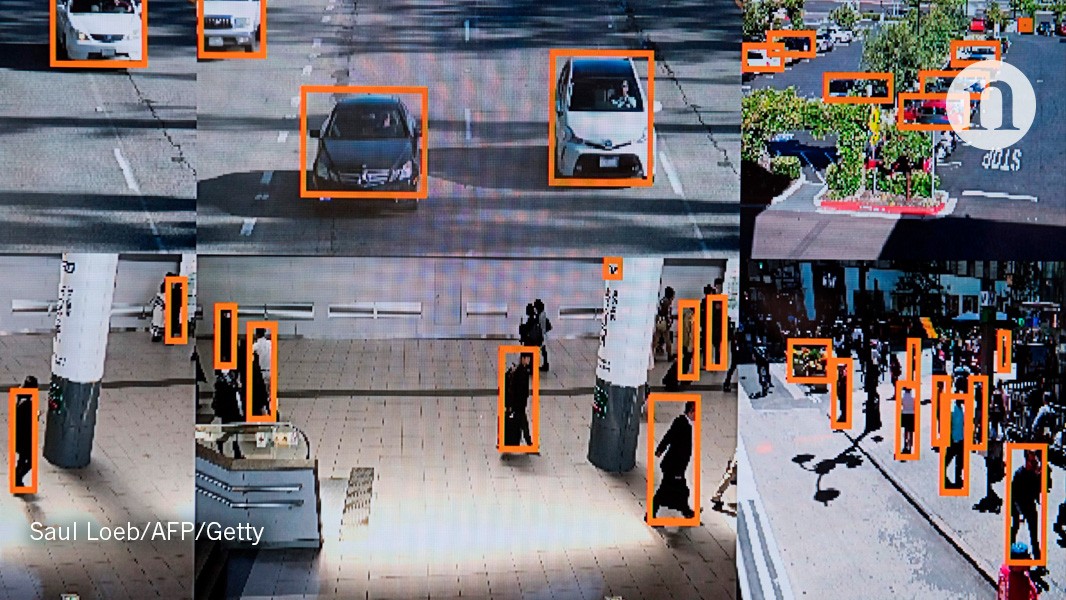
The ethics of computer science: this researcher has a controversial proposal
Nature talks to Brent Hecht, who says peer reviewers must ensure that researchers consider negative societal consequences of their work.
nature.com
252 points · by rbanffy · 8y ago · 270 comments
But, we cannot, and it's dangerous to think we can. After we develop technology, we will be surprised at how it is used and what the impact is, and we will have to respond to that, sometimes with more technology and sometimes with legislation and sometimes with changes in social mores. Thinking that developers can just anticipate in advance what will happen, is at best delusional, like thinking that if we spend more time on the specifications part of our next waterfall project, we can do better.
Moreover, if Tim Berners-Lee had specified in advance, "this world-wide web thing will probably eviscerate all advertising-supported media, from newspapers to magazines to radio and television", I don't know that we would have made wiser choices as a result of that.
This is incredibly false. Agile (or non-waterfall) style development is useful in specific limited cases. Where you're creating something where the cost of failure discovery is small. You're writing a mobile app, or a b2b website, or some other common problem. It's cheap and easy, and the cost of a failure is so small that it's cheaper to just fail and go from there, then to spend anytime thinking about how something may fail.
If you're doing something mission critical, space shuttle, something involving expensive parts, something high risk, you make sure you do thorough requirements analysis, well specified behavior, and well defined failure modes. You break the system down into individual small components (the more critical the failure the smaller the components) create well defined specifications for each component, test the he'll out of each one indicidually, ensure they work to spec and then combine them. You don't Agile your way through it.
Agile, you'd just get something minimal working end to end and iterate. If the thing you're working on can explode you don't just iterate through a minimal user story. You define each item well and ensure it meets it's specs and you understand it's failure modes.
Same thing for the topic at had on impact of technology. Understand the failure modes of the components you're creating - and write them in your paper.
I would much rather sit in a rocket that has blown up a 100 times on the launch pad but launched succesfully a thousand times more with each time being an opportunity to improve it, than one that has been engineered with waterfall and never flown...
https://spacenews.com/pentagon-advisory-panel-dod-could-take...
As our technology is becoming so much more powerful and evolving at exponential rates, don't you think it might be a good idea to think a little harder about the how things could backfire?
These considerations should be taken into account when technology is used, sometimes by policy makers in government.
There's no way industry will police itself, they've proven time and again that profit is far more important that humans.
I'd rather not list out a bunch of evil ideas, but I think any engineer with a bit of thought can come up with plenty.
Engineers are not philosophers and should not be placed in this role. We do not have the tools to do it. As with any human we have a duty to consider first order effects - but even the most astute philosopher will have trouble anticipating second order effects. This burden should not be placed on those least qualified to perform it.
Edit: Thank you to everyone for your thoughtful replies. I find this topic fascinating to discuss.
People who create something, who research something, should by definition have a better grasp on their topic than everyone else. To expect that they are more knowledgeable, and therefore better equipped to see what it means, and therefore also have a civic duty to explain this to less well-informed, not not patronizing. It's acknowledging their expertise.
> Engineers are not philosophers and should not be placed in this role.
This is an interview in Nature. Academics with the ambition to publish in academic journals, be they prestigious like Nature or Science, or smaller and more niche like <insert your favourite journal here>, are taking on a role of a philosopher.
And sure, engineers may "just" apply technology by comparison, but honestly I find that a very dismissive attitude as well. They are the "praxis" to academia's "theory", meaning that what they do actually has consequences in our lives. So if anything, their works comes with even more of a moral obligation to "Do The Right Thing" than that of academics.
They are experts in how the technology works. That doesn't make them an expert in how other humans will take advantage of what they have discovered/created. I've taken the charity of assuming the scientist or engineer themselves had non-evil aims.
> This is an interview in Nature. Academics with the ambition to publish in academic journals, be they prestigious like Nature or Science, or smaller and more niche like <insert your favourite journal here>, are taking on a role of a philosopher.
Yes, but a philosopher on which topic? A doctorate from an engineering background is not equally as educated as someone with degrees in history or other studies of human nature in regards to the societal effects of technology.
Humanity benefits when the broader impacts of technology are factored in. Who does this, with what influence, is arguably one of largest themes in human history. This particular proposal is just one of many options.
I don't find this article particularly compelling. Having a requirement for a social-impact section is a blunt instrument; it might become just a pro-forma exercise.
I think I would be more interested in encouraging (not requiring) journals with strong ethical foundations let authors opt-in to discuss social impacts. If they do, I would expect these social impacts to be vetted by social scientists, philosophers, ethicists, and so on -- areas where computer scientists often have large blind spots.
The Ph in PhD actually means something. It's not some kitschy decoration.
At least in computing, this seems to have been largely false. Whatever my respect for the expertise of creators, their track record on predicting the future uses of their developments has been genuinely bad. I don't think that's an indictment of their skills, just an acknowledgement of how complex and rapidly-changing systems really work.
Understanding the future impact of ARPANET was impossible without also anticipating the rise of home computers, but the creators of ARPANET had no special expertise on that point. Computability experts and chip designers got predictions about topics from weather modeling to AI Go play totally wrong because everything from GPU computation to neural network advances have rendered their accurate domain knowledge misleading. And the track records of AI experts predicting the real-world role of AI is so infamous that I don't think I need to elaborate.
Honestly, I expect that this would be computer science's Modernist moment. Corbusier and friends were genuinely excellent architects, but the move from "designing on sound principles" to "trusting that we know all the future uses of buildings and designing for those" was disastrous. The result is a legacy of inflexible building design, hostile urban planning, and government-embraced block housing that caused real harm to the people it was inflicted on.
"A better grasp on their topic than everyone else" is presumably true, but it's not enough. Complex systems are often beyond what any one person can predict, and that only becomes more true when they're also rapidly changing from many directions. I don't think most creators in computer science can make predictions good enough to act on until their creations have been exposed to the world for a while.
First of all, I love me a good Le Corbusier bash, and I totally agree with you here. I also get where you're coming from.
However, what the article asks for is the equivalent to demanding that Le Corbusier would have to ask at every step "how could my design, supposedly built on sound principles, have negative consequences?" which isn't something I recall being a thing he used to do.
Of course it won't be enough, but one could argue that if the experts don't even bother to try, things will be even worse.
Hold your horses, some of us engineers have philosophy degrees!
In all seriousness, engineers are more than capable of considering the impact of their creations. But can you predict future uses for technology with accuracy? Of course not.
I'm not sure how relevant it is for most work. People will always find ways to use technology to the detriment of humanity, but the overall effect of technology is beneficial. The internet is obviously for the benefit of humanity, yet there are plenty of people using it for evil.
The small set of engineers with philosophy degrees does not negate the parent's statement.
In any case, one doesn't need a philosophy degree to do philosophy, and many of the great engineers and scientists of history had a great deal to say with regard to the moral implications of their work.
Even today, engineers at many of the big tech companies are objecting to some work their companies are doing. Many others choose not to work for companies whose mission they disagree with.
Similarly tech shouldn't have to consider whether someone with unrelated goals will use their tech for unwanted aims.
If you write software for autonomous cars that is not foolproof at detecting pedestrians, you are culpable. In aviation, catastrophic failure means at least one death and the system should have an overall probability of failure at 10^-9. Critical software is frequently written at one or two orders below. That means 95%, 99%, 99.9%, are not enough.
If that civil engineer sold or allowed (for any reason from negligence, insufficient security protocols, malice, ignorance etc) blueprints for his design to end up in enemy hands, he most certainly would be held liable.
The thrust of that point is the very idea that software engineers on projects involving user data, regardless of how and what they think they are building, are not simply building “bridges”. They are building systems that have the potential to be misused as mass-surveillance apparatuses. And they need to build their systems accordingly, with appropriate data-security and with acknowledgement that their work could leave them personally liable to action should their work be found to be used as a threat-vector towards their users.
The current attitude of “well people know what they’re signing up for and since they signed the User Agreement, we don’t have any liability here” towards users in the industry is sick.
Funny how you believe that. Remember the Miami bridge collapse ?
Workers on the ground misplaced one of the supports, and then didn't stop work when loud noises started coming out of the concrete. This was not documented wrong on the design, it was those same companies first mismeasuring the location of the supports, then simply moving them around when they didn't fit.
Who's culpable ? The designers, of course.
Or take Dieselgate. European, German and French car manufacturers systematically and purposefully installed software in the cars to commit fraud on the testers (the government testers knew that this was happening).
Who's culpable ? A single engineer, of course.
Not the regulators that knew what was happening.
Not the European investment bank, who had seen reports on this.
Not Volkswagen management, that had built several facilities explicitly for committing this fraud.
Let's stop pretending the problem with engineering will be solved by assigning blame to engineers. It won't. It can't.
Large scale fraud, committed by management and government is the problem. It cannot be fixed with engineering.
"In my first ever AI class, we learned about how a system had been developed to automate something that had previously been a person’s job. Everyone said, “Isn’t this amazing?” — but I was concerned about who did these jobs. It stuck with me that no one else’s ears perked up at the significant downside to this very cool invention."
"Then, the gatekeepers are the press, and it’s up to them to ask what the negative impacts of the technology are."
Building an entire society of victims and allowing the hysterical press, who are in the business of feeding a hysterical public sounds like a formula for paralysis.
Automotive engineers willfully destroyed opportunity for stablehands, whip manufacturers, and train conductors out of hundreds of other occupations annihilated.
Civil engineers with their oriented strand board trusses, reinforced concrete, and dimensional lumber stole the livelihoods of masons, carpenters, foresters and so many more.
Engineers have centuries of unethical practice to atone for. They need to stop their work because everything that they do is harmful and unethical!
I absolutely disagree. That is why I specifically mentioned culpability for first order effects. If you build a gun for someone you know to be violent you have culpability for its use. What I disagree with is the broadening of this "liability" to include second order effects. That we are now supposed to predict chaotic systems and know in advance all perverse outcomes - and that we should have moral liability should we fail in this task.
Here are two rebuttals to the above statement.
1. At the level of projects it's asking engineers to think a bit more broadly about solutions. For instance, when designing a user comment service for social media you can trade-off between designs that encourage informed debate vs. ranting flame wars. In many cases both designs have similar implementation costs and meet business requirements, so why not pick the one that is more socially responsible? As these choices become better understood they should just be part of user experience design.
2.) To develop the trade-offs we should address more research to social consequences of technology and take the results seriously. Great engineers are philosophers or at least more broad-minded about the interactions between technology and society than some of the current leaders in Silicon Valley. Andy Grove, David Hewlett, Bill Packard, and Bill Gates were/are not just problem solvers but examples of engineers who have thought about how to benefit society as a whole.
Which is how we wind up with companies hell-bent on vacuuming up as much data as possible and selling it to anyone who asks. Perhaps if some software developers (or, at this point, some legislators) stopped to think about the ethical considerations of the tech industry’s actions, we all wouldn’t have to have conversations about how other countries can buy elections on the same platform where you share pictures of your food.
Tech was never the issue here - people were. The drive to scapegoat the upstarts should be regarded with great suspicion. While there may be questionable ethics involved with companies it looks to be a classic attempt to scapegoat the troublesome for matters that are peripheral at best and any action they could have taken would have dissatisfied people like how both the left and right are convinced Facebook is biased against them because they don't reflect the world as they wish to see it.
For instance, machine learning is now widely used for surveillance and advertising in ways that violate basic presumptions about privacy rights. Thing is, I imagine that if, say, ML researchers had gone on strike over privacy issues somehow, society would have essentially told them to shut up and get back to work. Sure, the same larger society now wants to blame ML for the constriction of privacy and for extensive state and private surveillance networks, but it was that very society which cheered the construction of these exact surveillance networks "becuz terrorizm" and for the sake of "free speech" (for billionaire multinational corporations) and for other awful reasons.
The people who were skeptical or critical over this whole social trend knew damn well it was all a bad idea, and we said so. Society deserves to get what it voted for, with both its ballot box and its dollars, and on some level, it deserves to get it good and hard without scapegoating the hired help, when it was them in the first place who told us skeptical, critical engineers and scientists to shut up and produce what society wanted from us.
"For instance, machine learning is now widely used for surveillance and advertising in ways that violate basic presumptions about privacy rights."
Those same mathematical techniques are also being used to more accurately detect cancer in MRI scans. Saying everyone needs to be held responsible for second order effects is unrealistic and ultimately damaging to society. Blaming the toolmaker for things they cannot control will only cause no tools to be made.
To me it points to a larger issue in our society that we are on a trend of completely removing context. Context no longer matters, what matters are the effects, regardless of whether you can reasonably be held accountable for them or not. It is thought-crime induced by those who in the same breath rail against that totalitarian behavior and then skip to implementing a version of it themselves.
A number of people on this thread immediately jump to the argument on surveillance and data privacy which is a useful discussion but tangential to what is being proposed in the original article. The article is moral hand-wringing with zero clarity or practicality. And the judge of who is culpable or not is left to a hysterical press, driven by a hysterical and sometimes uninformed public.
Look at what this behavior has done to political (and personal) discourse. Now imagine it being applied to science. No thank you.
As a matter of fact, my work covers fMRI scans of brains for a neuroscience lab, so I'm entirely with you here, but again, with a small caveat:
If society wanted the "toolmakers" (us) to take responsibility for which tools we make and how others use those tools, they would have to give us the actual power to decide what we work on and for whom. Instead the rule has usually been, "if you have ethical qualms about this, we'll find someone who doesn't". All exit and no voice means a society where nobody takes responsibility because everyone self-selects into positions where they can agree with what they're doing, and if broad masses and the hysterical press want to excoriate those doings while also materially demanding they continue, it gets to do so.
It's like when people say that engineers should refuse to work on weapons that would violate the Geneva Conventions -- but the same people then vote for a government that moves funding from the NSF to the Defense Department!
It's about raising the standards because we can. Standard publication sections: intro, material and methods, results, discussion, conclusion. It feels like you can add a "speculative impact" section somewhere between discussion and conclusion.
Socrates, From Plato's dialogue Phaedrus 14, 274c-275b
All you have to do is read the history of engineers and scientists who worked on nukes or rocketry. The ones that tried failed miserably. Understanding why is crucial in understanding the limitations of domain experts.
Science is about understanding. Engineering is about using that understanding for building.
Of course they are, but this article is very specifically about the role of the scientist. Not the engineer.
Will negative disclosure cause problems for engineers? I don't know. What I do know, is it isn't fair to place that burden of knowledge entirely on scientists while tying their hands behind their back with respect to open discussion in a professional setting. Academic publishing is intended to be open without fear of professional and personal repercussion for increasing factual awareness. Get rid of that and, well, sit back, relax, and I hope we all can enjoy the apocalypse of knowledge, because that's where stuff is headed without the ability to professionally discuss existing problems.
> Nobody would be discussing the moral implications of scientific discoveries if it didn't ultimately lead to machines that cause effect in the real world.
That's just factually wrong. Mathematics. Philosophers. Logicians. All the living and dead theorists who built the abstract foundations essential for the functioning of our machines. People who deal entirely in the world of the abstract. You don't develop a passion for abstraction because you want something out of reality. You develop a passion for abstraction because reality is sometimes terrible.
If a person can predict the consequences of design decisions well enough to get paid for it, they'll probably have some idea of potential negative consequences as well.
> programmers should not try to determine how society will react to technology
That is exactly one of the most important parts of our job.
Do you think doctors should not think about the wider impact of treatment decisions? Legislators should not think about the second-order effects of the laws they pass?
Yes, prediction is difficult (especially about the future, as Yogi Berra said). We all know this. Most of the things that most programmers are doing have known and predictable effects, because most of what we are doing is not new. If we had no idea how society would react to technology, why would we even develop it? Of course thinking about the effect that your work has on the world is a basic responsibility of any human being, how it could possibly be otherwise?
I agree completely that it's hard or impossible to just predict in general how society will react to technology. But in many cases, there are people designing systems specifically for the purpose of getting people to behave a certain way. This implicitly acknowledges that they believe that they can affect behavior in a predictable way. If they can make predictions one way and be correct enough to profit from it, they should be capable of making predictions about things that could go wrong.
I agree completely that predicting something like what Facebook will look like 10 years in the future is impossible, and there's surely a lot of research where the possible consequences are infinite. A lot of results in CS research are like someone developing a new material - "Like, sure, this could be used to make a new, extra deadly tank or something, but it could be used for literally anything." In that sense, it's not useful to make predictions, but I think there's also a lot of research going on at Facebook and Google that looks closer to what I mentioned above, where they absolutely have an intention to change people's behavior and so probably also have the ability to predict the consequences of their complete success.
It is not useful to expect good predictions from the former group, and the later group isn't really interested in publishing in CS.
This is still really difficult, and quite ethically fraught.
When I was in high school and college (late 90s & early 2000s), I was one of the techno-utopians who believed that the Internet would usher in a new era of censorship-resistant free speech, free information, and free exchange of ideas with people across the globe, regardless of whatever walk of life you happened to come from. It would give a voice to marginalized people regardless of how niche their views are. By and large, it succeeded in this, and this site (HackerNews) is an example of that. I have no idea who you are or where you come from, and it could be literally half a world away from me, but I can still post this comment, and probably hundreds to thousands of people will read it.
Yet nowhere on our radar screen was the idea that maybe we wished some of those marginalized groups would stay marginalized. That in addition to giving a voice to dissidents and hobbyists and nerds and subcultures, we would also give a voice to racists and militants and pedophiles and drug traffickers. Why would we even consider them? The definition of "marginalized" involves being "out of sight of the mainstream". Yet now, one of the main complaints being levied against Silicon Valley companies is that they aren't doing enough to police hate speech or kick undesirable groups off their platforms.
And then this is hugely ethically fraught, because I'm sure that from the perspective of people in those groups, I'm the evil powermonger, and they are just exercising their human right to believe what they want. Silicon Valley has remained largely libertarian in outlook, but what if people get their wish and it starts cracking down on undesirables? Who's to say that your group would actually be one of the desirables? The new boss starts to look an awful lot like the old boss.
That this phenomenon came about through the heretofore unprecedented (sarcasm) exploitation of human credulity and vanity, that dopamine spikes are the very mechanism of addiction, and that we react more strongly to things that trip our amygdalae than our cortices, should surprise precisely no-one — least of all the people who were building tools predicated upon those things.
None of this stuff is new. None of this stuff is news. You don't get to play ignorant of the implications of the things you're building. Not while you're selling your time on the basis of how smart you are, anyway.
I don't agree. I think this causal relationship makes sense in hindsight, but I don't think most people capable of designing or implementing software can reliably extrapolate what its impact on society will be. That goes for both positive and negative impacts.
Researchers and engineers should still put the effort into questioning the nature of their work and its impact on society, because that's a good exercise in general. But I'm skeptical any given individual would be good at arriving to the right answer.
Facebook, Google, and some game companies definitely do hire lots of human-computer interaction Ph.D.s who definitely are trained in exactly this sort of thing.
There's a reason the title is "computer science researches" and not "computer programmers".
This is an interesting point, a whole lot of companies do actually hire soft-sciences talent specifically for that purpose, has been quite common in the gaming sector for years now (Blizzard, Valve, Bungie, just from the top of my head).
I'm reminded of the Tom Lehrer lyric:
  Once the rockets are up
  Who cares where they come down
  That's not my department
Says Wernher von BraunBeing able to hypothesize about potential risks and being able to perform experiments to verify the hypothesis are totally different skills.
You can guess that maybe your game will be unhealthy for teenagers, but constructing an experiment to verify this is a whole different ball game.
I'm reminded of back when I worked in agency land, and clients would ask us to build something to "go viral" back when going viral was a new concept. They assumed it was as easy as just saying "make it so".
Of course, it's never that easy to know that it will catch on.
How exactly do you make something that is fun, engaging, and rewarding enough to encourage regular use, but not fun, engaging or rewarding enough to abuse? Seriously, if you can answer that question, you're sitting on a gold mine of knowledge.
Firstly, this is for researchers/academics who are publishing in journals, disseminating ideas for new technology.
Secondly, the suggestion also clearly states that the work will be reviewed NOT by judging the utility in the possible consequences, but for the thoroughness of the analysis. In practice, that means that the paper's authors can not be more sloppy than the reviewer (a peer in the field who can be assumed to have a roughly similar understanding of the technology). Reviewer feedback can point out any blind spots of the paper. That strikes me as a reasonable and concrete setup unlike the FUD in these discussions.
Nobody is being asked to balance the positives against the negatives. They are simply requested to initiate a conversation about the possible negatives so that other researchers building on the idea can work towards improving those aspects!
(EDIT: Most papers/presentations already talk about the possible positive impacts -- nobody holds back on that for lack of expertise. It is only fair to ask authors to be less partisan and more thorough, as responsible researchers.)
Whether all engineers/programmers should take analogous responsibility in trying to anticipate the consequences of their work is a related, but different question, with different trade-offs involved -- because engineers are concerned more with building things and delivering practical benefits, while research (and academic scholarship) is typically more interested in a longer term view of things. Both are important but distinct questions. Please don't conflate the two points in this discussion.
> In my first ever AI class, we learned about how a system had been developed to automate something that had previously been a person’s job. Everyone said, “Isn’t this amazing?” — but I was concerned about who did these jobs. It stuck with me that no one else’s ears perked up at the significant downside to this very cool invention.
Statements like that are frightening to me. It’s incredibly hard to define “negative“ in a reasonable way, and I guarantee you that someone else is going to define it in a way you don’t like.
What’s the negative impact of the recent discovery of a non-quantum recommendation algorithm on the field of quantum computing? Should the young researcher have spent time considering and detailing that?
If we consider the goal of research to improve society, then yes, I think it's reasonable to expect a researcher to spend some time considering whether what they're doing is going to actually improve society. In biology, most funding agencies require you to take a brief (~8-10 hours of class time) course on the responsible conduct of research, even if you aren't doing any human subjects research.
In the specific case you gave of the non-quantum recommendation algorithm, the negative impacts should be more or less the same as the impacts of the quantum algorithm, but with less of a barrier to entry. And even the person proposing this acknowledges: "We all agree it’s hard and that we’re going to miss tonnes of them, but even if we catch just 1% or 5%, it’s worth it."
But why must we burden the theorists with ethics, and not the programmers or companies who bring that theory into the real world?
My dad is out of a job now, too, but that’s because he got hurt at work, multiple times. He has had back issues my entire life because he got hurt at work.
The person proposing a consideration of negative consequences was “inspired” by jobs being automated away. Whether a researcher has considered the negative consequences enough will be determined by peer reviewers who have their own political leanings and potential agendas. In the end, I would expect the process to become completely subverted, without accomplishing much along the way.
This isn't just a matter of knowledge and familiarity. It requires some intensely personal moral and ethical judgments. One person's moral evil (self-driving trucks putting truckers out of work) might be another's moral obligation (getting rid of the life-shortening occupational hazards of trucking).
The verbiage around fully disclosing the possible outcomes adds an extra wrinkle. Reasonable results require social and technological forecasting and weighing of what researchers thing is likely or reasonable. It's possible that the researchers we're discussing might not have extensive training in forecasting large-scale social behavior.
I would submit that it's worth this effort to catch some small percent of potential negative impacts only if we can do so without excessive costs from false positives. A scenario in which an excess of false positives overwhelms the number of true positives at great cost is a very possible outcome and one that merits more than casual dismissal. If we can't predict outcomes reliably and can't agree on how to weigh them, then some might consider it wise to not predicate significant and consequential decisions based on a combination thereof.
You're absolutely right. Researchers should be taking a look at the long-term consequences of their work. It's just possible that researchers should not assume that they're equipped to make long-term predictions or shape the efforts of their peers around said predictions.
Hecht's heart - and yours - are absolutely in the right place. We can, and should, think carefully and deeply about the consequences of all of our choices with compassion and humility.
Absolutely. We shouldn't expect the authors of one paper to decide on the utility of various consequences and alternatives. Also, those consequences don't exist in a vacuum, and depend on other assumptions. Eg: Automating jobs is possibly an ethical positive provided people don't need jobs to survive. And this provides an opportunity to kick off other lines of research and inquiry.
> ...excessive costs from false positives...
Could someone give concrete examples of the possible costs of "false positives"? In the picture I have in mind, papers are not accepted/rejected based on whether someone likes the consequences or not. (as stated in the article)
> It's just possible that researchers should not assume that they're equipped to make long-term predictions or shape the efforts of their peers around said predictions.
I think excuses based on insufficient expertise is a cop-out. There is no social science specialization with predictive models such things. The authors are expected to have the most insight into the specific aspects they are writing on, and generally educated well enough to be a functioning citizen of modern society. If they can vote, they can damn well put some thought into possible consequences.
--
The way I see it, there are two goals underlying this suggestion:
1. Get a better understanding of the possible consequences of different lines of advancement, and, as a community, encourage the "positive" ones while discouraging the "negative" ones. (for some value of positive/negative, which might well be emergent only after much back-and-forth)
2. Get each and every researcher to actively think about the ethics of their research and the problems they choose to solve.
Most commenters are focusing on only the first one; I think the second is equally important. If the focus was mainly on the first problem, we might choose to have editors writing editorials every few months on recent advancements in some topic. Or a conference panel discussing the same. Those will help towards the first goal, but only partially towards the second goal, since most researchers could "outsource" ethics to others.
Or maybe automating certain jobs is an ethical positive because means fewer people die in coal pits. You're very right that this is an excellent opportunity to kick off other lines of research and inquiry. It's possible that what is essentially a journal of applied mathematics might not be an ideal venue for such, given that journals of ethics and economics already exist.
> Could someone give concrete examples of the possible costs of "false positives"? In the picture I have in mind, papers are not accepted/rejected based on whether someone likes the consequences or not. (as stated in the article)
What would be the point of a negative social consequences disclosure requirement if there were no consequences whatsoever for leaving one off or being glaringly silly in the disclosure? The point of this proposed process is that it is ground to reject a paper and require further revision.
To put it another way: the process proposed will either have false positives or it will do nothing. The extent to which it has false positives that exact a cost will be determined by the extent to which the process works as intended to discourage research deemed to have negative social consequences.
Rejecting a paper might end a grad student's career. It might prevent disclosure of a significant finding in time to have a major impact on something important. We have no way of anticipating the consequences of this. Perhaps this proposal should come with a discussion of the potential negative social consequences of it, given that some can already be reasonably foreseen.
Given how abstract that is, I shall offer a more concrete example. My past involves research into how to make circuits more efficient and easily produced reliably and at scale. At no point in this process did anyone stop and think about if this might have applications in computers used as part of weapons systems. Which, looking back, is obviously one application of computers.
> The authors are expected to have the most insight into the specific aspects they are writing on, and generally educated well enough to be a functioning citizen of modern society.
You're absolutely right. The authors can be expected to have deep and significant insight into the technical or mathematical aspects of their work. It's possible that this might not be the same as having the most insight into economic or social consequences of their work.
> 1. Get a better understanding of the possible consequences of different lines of advancement, and, as a community, encourage the "positive" ones while discouraging the "negative" ones. (for some value of positive/negative, which might well be emergent only after much back-and-forth)
This is a laudable goal! And it's perhaps worth considering if there might be unintentional and perhaps "negative" side effects to such a process.
> 2. Get each and every researcher to actively think about the ethics of their research and the problems they choose to solve.
If this is the goal, then perhaps the requirement should be for every paper to be accompanied with an ethical statement which is in no way part of the review process. That would satisfy your needs without risking significant unintentional side-effects, would it not?
That's not really accurate. Sure, people talk about positive impacts - but in a technical CS paper, they talk about positive technical aspects, e.g. "this new method will allow you to train ML models faster". They don't usually talk about societal impacts, which is what the article is about.
The implicit assumption is the engineers will use it to make something bad. The scientists must anticipate what engineers will do and document potential negative actions. At worst its useless boilerplate, at best its advertising all the negative uses. Science and Engineering are inextricably linked when it comes to impacts on society.
The next step of course is to stop research if its determined someone can do something bad enough with it. Why else would you go through the effort of documenting it?
I would posit that there was no good way to reasonably forecast it at that time. This isn't an irrelevant point, though it will seem that way at first blush. The point is that it's difficult to forecast significantly in advance the consequences of technological advancement. That the people asked to do the forecasting are not trained in analyzing social trends does not make this task easier.
And there are books written in English that talk to the social history of the species. History, physics, etc, being subsets of English syntax (or other "human languages") tailored to describe specific semantics.
A casual look at what happened over the years as various social bubbles suddenly slammed into each other; Columbus and Americas, repeated conquering of Europe and further east.
Doesn't seem a stretch to think "information network could be used for malicious shit." And it has been for years, depending on who talk to (content piracy, trafficking, AI guided weapons, etc) before Facebook. So there's a plain history in contemporary times too. No need to dig that far back into history.
And it's not advocating for binning the abstract research, or avoiding making these things concretely. It advocates for fostering a conversation about the potential pitfalls.
Like programmers do before considering a change.
Deep knowledge of the specifics isn't necessary, IMO. We code heads are already aware of "change in system may have bad side effects. Let's avoid it as much as possible." Emotional consideration is already there.
This thread is devolving into childish attitudes about having to be part of society. Division of labor taken to its extreme, leads people to just disregard they are a part of a bigger picture (society). What did Adam Smith have to say about such things? All the way back in the 1700s. And he had no where near modern formal training. Seems rather spot on here.
The people behind http://interactions.acm.org/ would say YES. I bet most of academia would say yes.
Then ask them if they understand just how much data Google & Facebook has on their browsing history via cookies, third-party trackers, adboxes & share buttons.
Then ask them if they know that, if they did an ancestry check, their DNA data may soon be shared with their insurance provider?
Then ask them if they know that their credit history was probably leaked to the public via the Equifax hack?
Then ask them if they know that all that data is legally allowed to be used forever with minimal oversight other than what’s mandated by law?
All of the above is obvious to nerds like us but the public at large haven’t got a clue about any of this.
This is a very long and especially old discussion, I'd say it approaches 150-200 years, and it first started out as a reaction to the optimistic views of positivists like Auguste Comte. Afaik nothing conclusive has come out of it yet, even though the discussion focused on some heated topics during all this time: should the physicists that invented the atom bomb be held responsible for Hiroshima? should the chemists be held responsible for the mustard gas used in WW1? should the bureaucrats with their focus on modernizing the State and having everything well-labeled and well-counted for be held responsible for the fact that that made the Nazis' job a lot easier when they needed to find the Jews among the general population? etc etc
It’s about having a public debate to decide what laws are needed to robustly protect the public before the technology is even misused.
So in your examples it’d be:
- when the physicists inform the public, MAD is quickly determined as the outcome of that technology and laws made to prevent nukes being made in the first place. (And optimistically, to negate wars ever happening again due to the possibility that an aggrieved side might develop nukes) Or, because the public debate did not happen until after they were developed and deployed, to allow nukes to be developed and defer wars between nuke-enabled countries to hyper-diplomacy while making every effort to restrict development & deployment, like we currently have.
- when the chemists alert the public that chemical weapons are possibly far more effective than anyone ever imagined, then laws are made to ban their deployment. As is currently the case after informed public debate. But instead of informed public debate before the fact, millions were gassed during WW1.
- when the bureaucrats realist they can identify large swathes of the population unrestricted, laws can be brought in to restrict data gathering to protect the public from such actions.
In all of your examples, an informed public debate could have urged politicians to create laws to robustly protect the public from these technologies.
The key note to realize is that the public debate will happen. It’s inevitable. The key role that the creators of these technologies can play is to raise these ethical concerns before harm is risked. Even though the public debate did not happen until after all of the above technologies were misused, they resulted in swiftly creating laws to robustly protect the public from that technology. Delaying the debate does nothing other than risking disaster.
I know that last line sounds like hyperbolic exaggeration but it’s an inevitability that, if ignored, is unethical.
This pigeon-holing was way beyond tiresome, not to mention grossly inaccurate, 20 years ago: please STOP IT. Computer programmers aren't in general some special class of person incapable of learning new skills and behaviours. Quite the opposite for the most part.
http://dblp.org/db/conf/focs/focs2017.html
So, what might the negative consequences be for An Input Sensitive Online Algorithm for the Metric Bipartite Matching Problem?
> The idea is not to try to predict the future, but, on the basis of the literature, to identify the expected side effects or unintended uses of this technology.
Besides being (ironically) arrogant, your dismissal sounds to me like you want to disavow any responsibility computer programmers have for what the technology they develop is used for.
> founded on an incorrect understanding of what kind of thing programmers are good at
In my personal opinion, if you're not always thinking of the applications and effects on society of your work, you're not a very fully-developed human being and certainly not the best programmer you could be, to say nothing of being a good citizen.
Take an example: your team has developed technology that can identify, with five nines accuracy, the yearly income of a user. That’s innovative, for sure. And nobody is taking the achievement away from your team.
But you don’t need to be Socrates to realize that what you’ve created could be used in horrifying ways. The article is asking creators to take a step back, ignore the excitement of creation for one moment, and consider if what they’re doing should be done. And if the answer is Yes, then decide if a public debate is required to protect the public from that new technology’s misuse.
Now the first reaction from many will be to scoff “fuck that, I’m just building an app here, I’ve got an investment to recoup and money to make”. That’s valid, but it’s an unethical way of looking at the act of creation. Feel free to hide behind the “I’m just doing my job” excuse, but we all know where that ended up.
That is the crux here, politicians can only make laws to protect the public at large from misuse of your newly created technology if they know about it. And the public at large can only demand robust protection (in the form of laws made by their politicians) from misuse of your technology if the public at large knows about it. Without a public debate, new technology could be misunderstood by politicians such that even if they are aware of the technology and even if they legislate, they may not make laws that robustly protect the public.
Thus, from an ethical standpoint, a public debate is needed so that robust laws are demanded and provided in order to protect the public at large from new technologies.
I think if we start to delve into the actual implementation of this, and look at real examples, it will be clear that this idea of "research that can be used for bad should be not published" leads to a bad type of society.
The physicists & engineers didn’t identify the MAD inevitability from developing nukes. The public did.
I’m not demonizing the physicists or engineers here either, how were they to know what the outcome of their developments could be?! But the public at large contains people who have other ways of looking at new technologies other than “this is innovative!” or “this will end the war!” this will be profitable!”. It’s these outsider viewpoints that are needed for the public to decide if laws are required in order to robustly protect the public from that new technology.
In specific implementation scenarios, these debates are pointless because we have the nukes & chemical weapons examples from recent history. The ethics are clear. I’m more speaking about developers of new technologies alerting the public at large about potential risks involved with their technology that would make robust laws protecting the public from misuse of their technology prudent.
But, in saying that, there are examples of programmers who could have alerted the public in the public interest, but kept their mouth shut instead such as the developers who developed the emissions cheat software for Volkswagen. Worse, they knew that their actions would lead to deaths among the populations in which those cars were sold because emission-related deaths have been intimately understood for decades now. That is a crime that was perpetrated at the frontlines of software development. Those guys knew what they were doing and their “secrecy” is nothing more than a bloody conspiracy to murder. They didn’t give a fuck how many have died from the emissions released by their cars during the decade they were on sale because “I’m just doing my job building the software I was asked to build” is an adequate excuse in their book.
Under that framework USSR's suppression of genetics in favor of Lysenkoist bullshit would be justified because an incomplete understanding of genetics could lead to eugenics travesties. It is like King Cnut trying to stop the tides only totally unironically and unsarcastically.
> It implicitly states that computer programmers are, as a field, competent to predict how a technology will impact society.
What the article is proposing is that creators of new technologies inform the public so that the general public can decide if new laws are required to prevent that new technology from being misused against the public at large.
There’s precedents here and I’ve written a ton of comments about them if you want to read a bit about why such a proposition is the only ethical option.
This is the problem, because you know what else is controlled by the market? Your employment. I fully encourage going on strike if asked to make surveillance tech, but you will be fired for it. Then some other firm will be hired, and, oh well.
If "the market" controls democracy, to the extent that the "democratic" government demands surveillance tech because someone on the market wants to sell it, that's the problem to be solved, not a shortage of research scientists martyring their careers for no effective gain against the larger social pathologies.
Someone else brought up the culpability of fission researchers for Hiroshima. That's one example of a major technical endeavor where even with historical hindsight people won't all agree on its ethics.
The article is proposing that that public debate happen during or before development so that laws can be made to robustly protect the public from a new technology in the event that it’s misused.
It is impossible to assess the risk of unknown unknowns, so rather than assailing someone with adjectives and persecuting them with the crime of “arrogance” and “hubris,” just judge less and listen. If they’re wrong, move on.
Look at the mirror before you call another one arrogant.
why? aren't we allowed to judge the wrong? nothing wrong in calling someone arrogant if he's arrogant.
Better than invective is a genuine and sincere mutual examination of the facts — actual content rather than mindless reputational slander of an entire field of study.
Your comment would be much better without its first and last sentences. The inverse of a shit sandwich!
The mistake he made was that he only alerted authorities. Which lead to atom bombs being developed in secret without any feedback from the public as to whether this was a direction that they supported.
What we need in 2018 and beyond is for current and future developers of new technologies to alert both authorities and the public so that politicians can legislate for that technology’s use with public input as to what limits are deemed appropriate by the public at large.
The deep fakes example highlighted elsewhere in the thread is a perfect example of this. How can politicians legislate for this technology when they don’t even know it exists? How can the public indicate to those same politicians that they feel that deep fake technology used to create revenge porn is something that the public wishes to be made illegal?
Laws, and society as a whole, are a feedback mechanism that rely on information. Those with that information have a moral obligation to alert the public to consequences that will affect them all.
The risk there is that if you dithered the enemy could get it first.
If Pandora's box exists, there is only so much you can do to stop someone from opening it.
The key point is that without the public’s input, politicians acting rationally, decided to direct their engineers & scientists (also acting rationally) to develop these weapons in secret, with everyone involved knowing that nukes were “extremely powerful” and “terrifying” and “war-ending” but not fully appreciating the whole MAD aspect that happens when your enemies play development catch up.
Tons of technologies today, while not as much of an instant threat to our civilization as nukes, are loaded with ethical concerns that current politicians and the public at large are just not aware of. Just reference the deep fakes saga for one recent example. There’s currently no laws outlawing the use of deep fake techniques to produce revenge porn but there’s every reason to believe that these techniques will be outlawed for such use in forthcoming legislation now that the public and politicians are aware of the risk. Extrapolate that to any number of innovations. With informed debate we can keep laws ahead of the game and prevent new techniques and technologies from being legally used for unethical purposes.
But sarcasm aside, a variation of the exact same quip could be made for a privacy and other assessments. I would argue that it is on other disciplines to keep up with what's going on in comp.sci to determine the impact of new findings on their fields, and for all STEM fields to be very careful not to invent administrative policing roles that can grant unmerited standing to arbitrary political interests.
If you are in privacy, you need to be on this. If you are in economics, political science, or equity fields, you would also need to be on this. Technology makes everyone necessarily more interdisciplinary, and instead of filtering out, they should be researching new developments that affect them.
My fear is that if Computer Science doesn't start acknowledging the ethical consequences of the work being done that it will lead to a sharp increase in regulations. This fear is primarily held with self driving cars which some seem to have been rushed into production and have lead to some serious consequences.
None of those ethical frameworks would lead me to conclude that, say, self-driving vehicles are net-negative for society.
My personal experience conducting research in computer science is that at least some of it is too abstract to have clear social consequences. What are the social consequences of making it marginally easier and faster to produce chip designs that are easy to manufacture?
They gathered a bunch of data and had a meeting in Asilomar (a pretty conference center in the middle of nowhere on the CA coast). In addition to the scientists who actually had the technical ability to splice genes (~100 humans at that point had the requisite skills), some lawyers and philosophers also attended. They argued a bunch. And at the end of the day, they agreed on a voltunary moratorium on splicing, even though the argument for immediately, direct harm had not yet been made (precautionary principle).
Very reasonable predictions were made. Some of the more irresponsible claims were tamped down as being overly irrational. Some basic rules were applied on how to minimize collateral damage. Some strong rules were applied on disease-causing experiments.
It seems, looking back with the luxury of historical distance, that they chose wisely. It was probably because the level-headed people who focused on clear and present dangers, not absurd hypotheticals, managed to win the day.
Today, the logical conclusion of those decisions are just starting to be felt; we now have technology that permits us to make germ-line modifications (those are permanent, inherited changes), and we're starting to do actual trials with newly born children (this is, IMO, one of the most extraordinary moral and philosophical developments of my lifetime).
It's unclear to me whether CS has the same level-headed maturity that lead to this. Nor do I think people in CS can really predict the indirect outcomes of their technology. Instead, I think CS people have an obligation to push the technology as far as it can go within a community-determined set of boundaries, and report the direct implications thereof to the general public, who will then (indirectly through democratic mechanisms) create laws that restrict certain applications.
People working in CS are mostly in industry and do not have 10+ year timeframes to leisurely discuss ideas.
And what CS inventions are as impactful as atomic bombs (as someone mentioned above?) I cannot think of any CS inventions that warrant such extended ethical discussion.
The only exception would be computer scientists working on weapons in the defense industry. They should absolutely be held back by ethical concerns like this.
I have a fair amount of expereince, being a biologist who did gene cloning who now works on large scale machine learning models.
TBH I can see a wide range of surveillance-related technologies enabled by CS that are as impactful (but not as explosively so) as atomic weapons (I think you actually mean ICBMs, since atomic weapons aren't an existential threat, while ICBMs are).
If anything, this should hint at the difficulty of forecasting. The full impacts of some technologies cannot be understood without also knowing what they synergize with.
To this end, we need to distinguish computer science (theory) from technology (application) – it is the latter of which has direct effects on society.
You shouldn't expect a computer scientist to deeply understand sociological/psycological/philosophical questions, but they can and should to some degree identify where knowledge from other fields is important. My understanding is that they are not asking researchers to predict the future (although this is apparently what the interviewee imply), but simply identify that there might be (societal) consequences, good or bad.
This is why in areas like social robotics and HRI you will find more and more articles that are written by researches from different areas. E.g. a Computer Scientist and a Psychologist.
But are such questions important? Very.
Ethics is not CS' strong point. Adding a statement "this is why I think this research is ethical" doesn't seem like a bad place to start, if only because it would force researchers to actually consider what they are doing.
Seems like a double edged sword, potentially making it easier to negatively utilize the research.
I imagine if all 3D printers were distributed with warning stickers saying that they can be used to print guns and knives that more people would try it than if it was less publicized.
Making it just a bit harder to discover the knowledge to weaponize something could give defensive researchers the time to build effective countermeasures.
In your example, the result shouldn’t be warning stickers, it’s laws specifically against building guns with your 3D printer. Or if right to weapons happens to be enshrined in your constitution, it’s aboyt legal liability protocols being amended to take into account the fact that a perpetrator used a weapon that they built in their 3D printer as opposed to a regularly procured weapon.
Think about some of the most famous and influential papers and try to come up with negative consequences. When Codd wrote A relational model for large shared data banks, should he have tried to think of ways big databases could be abused? When Ritchie and Thompson published the paper that introduced Unix, what could they predict? Or Knuth's many papers on compiler design?
Do other disciplines do anything similar? Computer science papers are often so close to mathematics, I suppose mathematics papers should include similar disclosures, right?
This feels a little like putting cancer warnings on everything in California. At least there I understand what they thought the outcome might be but maybe they didn't foresee how quickly people tune it out and you end up making it harder to communicate danger when it's actually there.
Also, this isn't the job of peer review. Peer review is hard enough, let us focus on reviewing the technical details, since that's what matters.
The mistake he made was that he only alerted authorities. Which lead to atom bombs being developed in secret without any feedback from the public as to whether this was a direction that they supported.
What we need in 2018 and beyond is for current and future developers of new technologies to alert both authorities and the public so that politicians can legislate for that technology’s use with public input as to what limits are deemed appropriate by the public at large.
The deep fakes example highlighted elsewhere in the thread is a perfect example of this. How can politicians legislate for this technology when they don’t even know it exists? How can the public indicate to those same politicians that they feel that deep fake technology used to create revenge porn is something that the public wishes to be made illegal?
Laws, and society as a whole, are a feedback mechanism that rely on information. Those with that information have a moral obligation to alert the public to consequences that will affect them.
Also, I kind think the secrecy of the manhattan project was essential, and after carefully reading multiple histories, I am convinced that Leslie Groves was a genius who did more than a good job managing the project. If you look at how he declassified the project, they did everything right. THey had a historian with access to all the data. And scientists who understood the context. And they worked together to release as much information as they possibly could, and even helped make the case for transitioning control of weapons to civilians.
But the point isn’t anything to do with any of that. The point is that without the public’s input, these weapons were developed and used in the very first place, without an informed debate to decide if this is how we want to conduct ourselves.
This kind of debate was as common back then as it is today and back then it lead to chemical weapons being banned after WW1 by the UN with the support of pretty much every country.
And since then, for the few years that the US was the only one with nukes, if not for the extreme restraint practiced by the higher ups, they might have happily used nukes more times (at the time, there was huge pressure to just nuke north Korea to end the Korean War).
Once it became clear that the “enemies” will catch up in the development race meaning that any future war would be nuclear, the public debate clarified very quickly upon the current philosophy: MAD is the only outcome in a nuclear war.
If this debate had been allowed to be fully conducted in an open and informed manner before nukes were developed, we might live in a world where nukes were outlawed at UN level in the same way that chemical warfare was, long before they were even developed in the first place.
Extrapolate that thought to aggressive data-gathering & storage by social media sites, genomic information ancestry services, tracking technologies and techniques developed in the name of marketing, facial recognition technologies by security firms, Three-Letter agencies recording and monitoring every web user’s actions, profiling techniques to identify depressed users etc etc etc. Right now laws are not robustly protecting the public from misuse of these technologies. In fact, a lot of the misuse of the above technologies is directly due to the fact that the politicians know that they’ve got a powerful technology at hand and decide to develop it. And when informed public debate happens, when the negative outcomes of misuse of these techniques becomes so obvious to the public at large that they demand political action en masse, laws with more robust protections for the public’s data will be forthcoming in future updates. But those are the technologies that we know about. (At least, we nerds!). What is currently in development that has similar potential to be weaponized or misused that none of us know about yet?
Nobel predicted that the dynamite will end all wars. Turns out, he was very wrong. On the other hand, plenty of technologies in recent decades have created predictions of impending dystopias, none of which materialized.
This all sounds like trying to blame scientists for not telling us the bad people will do bad things, instead of stopping bad people when they're doing bad things.
- police state actions and encouragement: entirely possible, especially now that we’ve all got location trackers that also contain our innermost thoughts in the form of our text messages, yet using all of that info against us is totally illegal.
- subliminal messaging & propaganda: never more possible than right now with our totally connected lifestyles, yet totally illegal.
And on and on. Just because the worst hasn’t happened doesn’t mean it wouldnt happen if left unchecked.
Also, Nobel thought he’d created the most explosive substance that would ever be possible, with hindsight we know that TNT wasn’t that but nukes absolutely are; and his conclusion was correct in the context that nukes are the next step up from TNT: with such powerful weapons, battlefield wars between those who hold nukes have effectively ended. (Proxy wars notwithstanding, if those countries had nukes they wouldn’t be used as pawns in a proxy war.)
I think the societal consequences are "what matters"
The technical details _literally_ don't matter without societal consequences
Since we can't predict the consequences of our actions (few scientists, if polled, would accurately predict the consequences of their papers), it would be entirely speculative.
Imagine a paper that showed an amazing improvement in machine learning- we could suddenly predict diseases just by looking at pictures of people's retinas, or predict any number of other fairly private things. Shoudl a technical reviewer say "I think this could and will be used to discriminate against people, so it should not be published"? I'd far rather the reviewer just say whether there was an error, have the paper be published, and let the faculty of 1000 or the larger community debate the legality of whether the technology could be restricted.
Note that editors, not peer reviewers, have far more latitude to reject papers due to (their perceived, speculative) societal consequences.
Google glass.
Over time, people will probably turn this task into copying and pasting a standard list for their research area. Existing researchers still mostly won't have to think about societal impact, but maybe it'll have an effect on which research areas people choose to work in.
That council would then have the task of reviewing new technologies and their potential impacts. The council may then have different subgroups each discussing a certain technology, or possibly each with a certain specific task such as: reviewing research papers, watching the developments inside companies, writing legal propositions, etc...
This council could then be under a government agency, or better yet, an NGO that can get funding by the government, from donations, universities, etc...
What would you think about that?
A council, no matter how large, is, relative to the general public as a whole, made up of a small number of individuals.
Such a council would raise so many ethical concerns, such as: Who are these individuals? Why are they on the council? What are their biases? What does their livelihoods ultimately depend on? What conflicts of interest do they have? Among hundreds of other questions.
Only an informed debate among the general public can lead to laws that robustly protect the public at large because vested interests get drowned out by informed dissent from other, equally-qualified, voices who are not affected by such vested interests.
This article is about what does happen now, and is stigmatized against being disclosed due of fear of personal reprecussions.
That was never the point of academia. These institutions exist with all their rules and regulations precisely because to discover and uncover, one must not be afraid of how it will affect oneself from keeping a roof over one's head.
Presently, this article is being severely misinterpreted.
https://arstechnica.com/information-technology/2016/11/adobe...
My career in technology has taught me its a lot more obvious. When your marketing team start buying massive collected data, or your sales team starts selling ad data to 3rd parties. We know things happen, and the grey morality of it. Yet we turn our backs to it.
The reason I think HN is so quick to jump on these topics is because if we search ourselves we see that our morals rarely stand up to our self-proclaimed ideals. Jobs are sometimes hard to find, stability is nice, and dying on that hill doesn't always seem important.
Those are negative societal consequences we are most dishonest about it. Not Promethean illusions of grandeur.
And it's very difficult for even the experts to balance the positives against the negatives: facial recognition could be used to find a serial killer ... or a missing child.
As one example, RMS has long advocated against the "ethics" of certain technologies and companies, while Emacs and GCC have greatly accelerated the adoption of technology, generally. And those tools have almost certainly been used directly or indirectly to build some very, very bad things.
It's kind of like using an Ox in modern farming because you want more farmers to have work. You wouldn't do that because your farming business (barring some great marketing that lets you recoup the costs) would just go bankrupt quickly.
I see where you're coming from but that's quite an oversimplification, don't you think? Software that drives a computer's graphic card, for example, which in turn gets used to run software that enables a physician to explore a 3D MRI, are just two examples of tasks that do not consist of automating manual labour.
(You could probably pay a lot of painters to paint a lot of pictures but hooking them up to the MRI might be a little difficult).
There's a lot of software that achieves new things, rather than old and well-known things really fast and without involving hands or a human brain.
I prefer to avoid discussing ethics on forums like HN, so I won't comment on whether or not working on software that puts people out of work is "the right thing to do" -- suffice to say that, if you wish to avoid doing that, there's plenty of room to do it while still doing your job as a software engineer.
Precisely. And the only way those new things are thought up is if someone has the time to dedicate to the task. If that person instead has to spend 12 hours a day foraging for berries just to stay alive, then they won't have time to build 3D MRI code.
The gains to productivity brought about by mechanical -- and now digital -- automation have lifted billions out of poverty and extended their lifespans by decades. I agree with GP that the only purpose for software is to automate a human task. Lucky for us, software is doing things that humans can't do at all (or would take years of effort, in the case of your MRI picture).
By the way, you can always find a "cost reduction" in anything you do, it's a matter of point of view and horizon.
Now, one farmer can work a hundred acres before breakfast with crop yields higher than ever due to technology. Would you have us go back to an ox and a plow so as not to kill agricultural jobs? Same story for textiles. Should we reopen the vast mills that employed thousands? We don't have elevator operator jobs. The printing press put all the scribes out of business.
Contrary to your viewpoint, the economic thing to do would be to automate as much work as possible. When labor is more productive, you can earn the same money in less time. This is how we can afford to not work weekends, not because of labor laws. When part (or all) of a person's job is automated, it frees them up to do something else. More importantly, they can take some workload from someone else's plate, freeing the other to do higher-order work.
How many brilliant minds throughout history never made a significant contribution because they spent their lives toiling in some field or hunting/foraging for their own food? It is only when material needs are easily obtained that the time is freed for the intellectual to think. Historically, this was only the aristocracy, privileged from birth, that had free time because of their serfs and vassals doing the labor. Compare to today, where anyone with enough intelligence can make such contributions, precisely because they're not trapped in a brutal subsistence lifestyle. (Yes, there are tons of issues about education and opportunity here. But we don't have to gather our food to survive anymore.)
However, while automation helps in the aggregate, the world isn't lived or experienced in the aggregate but on the individual level. Put Jeff Bezos and 9 people living without shelter or money in a room, and in aggregate their average wealth is $15 billion per person; but that number tells you nothing about the individuals. When the factory closes due to technological advancement, sometimes those individuals can't get another job or one that pays nearly as much.
So we need to both encourage technological advances that increase productivity, but make sure it benefits individuals. I think the basic principle is that capital can move much more quickly than people - e.g., you can pull the money out of a factory in Kokkata or Indianapolis and invest bit in one in Hanoi much more quickly than the workers can move to Hanoi (probably impossible) or find another job anywhere. The answer may be much better unemployment insurance, retraining, and laws slowing economic changes enough that individuals can keep up, to a degree based on the economic impact: e.g., closing a big factory in a small town is higher impact than closing a startup in London.
Of course, society has to be able to sustain and re-educate these people for new productive jobs. That's the part where most societies have failed, leading to civil unrest.
It’s not like CS researchers are the ones turning science into a dumpster fire to sustain 30% profit margins.
Most of the more hysterical screeching about AI, automation, etc is reminiscent of buggy whip manufacturers bitching about cars.
If you don’t want to be involved in the debates about AI, automation et al, then you can’t really comment on those who do. If you do want to chip in, inform the public about the realistic dangers. What they need is realistic information from experts so that they can deduce what risks are acceptable and what risks are unacceptable.
Even the most untechnically-informed member of the public will get the positives: AI, automation, (or whatever technology you’re developing) makes software better in someway, doesn’t even matter how or why, it’s taken for granted that you’re developing something that you believe will be a net-positive.
But it’s the negatives that are what needs to be legislated for. Regulations and laws don’t give technologies a pat on the back, they protect the public from misuse of a technology. Your voice would be welcomed.
Reading tarted-up flag-planting arXiv papers can be tough going even for practicioners, to say nothing of the general public. But ultimately the general public will have to vote on propositions, or vote in representatives, to pass sensible (not hysterical) regulations.
For example, after an Uber lidar-equipped vehicle killed a Phoenix jaywalker (a separate part of law that I do not like, but acknowledges physics and shitty drivers), Uber halted testing in most markets. This is sensible based on public reaction, but three major problems compounded to take Elaine Herzberg’s life:
1) the lidar did not function as designed, 2) the backup driver did not function as instructed, and 3) Ms Herzberg did not obey the law.
This is a situation where the facts eventually became clear, and still it is difficult to say that one side or the other overreacted (personally I think Uber did the right thing PR-wise, but I also worry that less testing means slower progress towards safer cars, since human drivers are legendarily shitty and much less safe than conservative self-driving cars with functional lidar).
Now let’s consider more complicated problems, such as replacing medicinal chemists with reinforcement learning systems, or China’s AI approach to “social credits”. Both have potential benefits and huge potential drawbacks, and both are relatively easy to grasp compared to some thornier cases. One is purposely obscured due to a dictatorial regime; one is obscured not by administrative fiat but by copyright law and a very silly tradition in academic and quasi-academic research. Hiding results in paywalled “prestige” journals rather than making it available to the general public is seen as a mark of distinction (and avoiding a $30k-$50k open access charge is just sensible conservation of research funds, in this scenario. I know because I am an academic and I personally think OA charges are a waste, though for different reasons.)
Anyone who wants to [break the law] can obtain the primary documents in the former case via sci-hub. That’s just a fact. But is this any more reasonable than Georgia allowing companies to charge for access to state laws? Is it reasonable for people to pay twice, in most cases, first for the research* and then for the report, when faster dissemination of primary sources can directly inform debate over some important issues?
It seems silly that we would have a system where others are expected to pay for, digest, and opine upon research done by the primary authors. It would not be necessary if the norm was to disseminate AI breakthroughs in a format like distill.pub, where the whole point is to explain both the results and their context. But until academic and quasi-academic researchers can kick the “prestige” habit, that’s unlikely to happen, and the public will be left to listen to pundits (often idiots) rather than forming their own well-informed opinions, and that sucks.
No time to edit, but hopefully you get the idea. Disclaimer: I am an academic, applying “AI” to medical care for children with rare and deadly diseases; I used to work at GOOG a million years ago; and what I see among the worst hucksters sickens me, because I think it’s going to kill people in spite of better competing ideas that could improve the human condition. I’m just one person with one vote. I’d like everyone else to form their own opinions, because theay might change mine. Thus primary sources are critical.
* anyone who does not believe that taxpayers subsidize industrial & corporate r&d via tax credits and incentives is quite naive; it is not different from academic competition in that regard.
Doing this would just be feel-good virtue signaling nonsense that would reduce the overall quality of the literature.
Often, the consequences of some new technology are both good and bad.
That's the point of this article. Not future prediction of what could happen. What is happening, and is presently an unknown.
The solution to this conundrum is obvious: Take the computer scientists who can make these amazing predictions and move them into the field of economics, where their predictive power can generally do more good for society. Then they won't invent anything harmful and can do trillions of dollars of good for the world economy, which is way better than all but the most black swan-y of research projects they could have come up with.
I'd also observe, HN gestalt, that you believe that pure research should be pursued because it is unpredictable where advances will end up being useful. This contradicts the idea that researchers can guess the societal impacts of their research. If researchers can successfully guess the societal impacts of their research, then people are justified in cutting pure research whenever they decide it's useless, because the judgment process that led to the conclusion "this is useless" is the exact same judgment process you're asking researchers to do here. Accepting that these predictions can be made will rather quickly result in the elimination of pure research. (Because, pretty much by definition, it looks useless for the forseeable future.)
If you want to decide this is a good idea and incorporate it into your worldview, you're going to have to give up several other things to get there. And have a frankly irrational view of the predictability of the universe, in my view.
You can't even really escape from this by saying "But it's so obvious in some cases that research is bad", because it really never is. Even germ warfare research can lead to valuable medical insights, and you really never know what valuable medical insights will lead to something that helps germ warfare. The idea that researchers can predict the future and should exercise some social responsibility by doing so is not some sort of major moral advancement; it's a childish regression from something we figured out decades ago, demonstrating our further scientific decay.
(The other inevitable objection is probably around nuclear bombs. Had the Manhatten Project never existed, there is no world in which we'd be sitting here in 2018 with no nuclear bombs. The only change would be who had them when. Nuclear bombs do not exist because of man's hubris and disregard for consequences. They exist because the laws of the universe permit them.)
I think this is taking hyperbole literally. The world is not at all completely unpredictable; it's highly susceptible to reason and science - in a way, that's the entire enterprise of the Enlightenment and its child, science. Predictions aren't perfect, but they are hardly useless. Your world is built on them; your alarm will go off; the train will be roughly on time and won't collide with other trains; investors invest based on economic and business predictions; software developers develop based on market predictions and predictions of user psychology; we can predict how well UI's will work, hardware failure rates, etc. The list goes on forever.
In particular, economics has provided, especially since WWII, a period of economic growth that is orders of magnitude beyond what humanity ever experienced before. Depressions used to be a regular occurrence; they have stopped. Systemic bank failures no longer happen, we know how money supply works, and the impacts of various policies much better than throwing darts at a graph. Recessions are not as bad; sustained growth is a norm, which is a miracle. The growth of the world economy, lifting billions out of poverty for the first time in history, is beyond all but the most visionary dreams of a century ago.
Do economists and economics get it wrong sometimes and to varying degrees? Absolutely. Unfortunately, there is nothing perfect in the world.