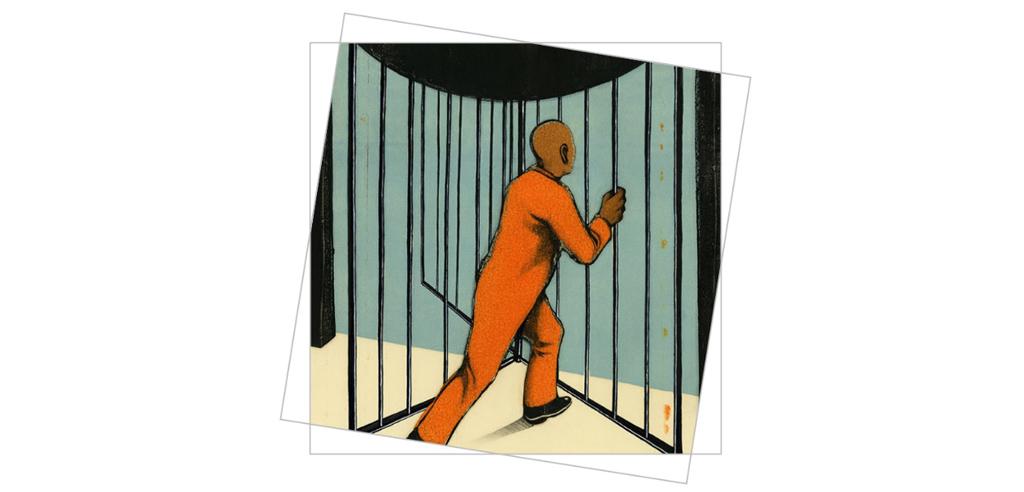
Study Finds Increased Incarceration Has Marginal-to-Zero Impact on Crime
Equal Justice Initiative
325 points · by mpweiher · 8y ago · 182 comments
One group "increased incarceration" definitely has a non-marginal positive impact on are all-of-the-above.
Can you show me any examples, anywhere in history, where a group that directly benefits from and controls the entry level and duration of access have ever decided to lower their wages and put at jeopardy their livelihoods?
Because at the heart of it, that's the real effect that decreasing incarceration will have...closing jails, firing police officers, lowering ridiculous attorney fees, and shutting down county court complexes.
And we are surprised when the very people whom benefit from the status quo don't see things the way we do?
http://www.orlandosentinel.com/news/politics/political-pulse...
I'm not a southerner. I'm certainly no Floridian. But I strongly suspect that's not a "coincidence". I think the current system was likely set up as a political "gimme" meant to appease Southerners.
> Neither slavery nor involuntary servitude, except as a punishment for crime whereof the party shall have been duly convicted[...]
The current system is absolutely a political gimme to appease the south, or at the very least the south of the past.
Once it's big business there's a huge finical and employment incentive to keep the machine running no matter who's running it. Some might say that privatising prisons would even make it worse.
It's hard to stop a multi-billion dollar industry but what the prison system is doing to our population is not OK.
In the US, the prison system is also used to deal with mental illness, unemployment and homelessness.
See NYC for how that works:
  1., Create a zero tolerance policy

  2., Invest in high police coverage

  3., Arrest people on small stuff, like public intoxication, urination, etc.

  4., Three strikes is a compounding factor, so three small things and boom, you're off the streets for years.
Now, is this for societies greater good? Is NYC overall a better, safer place for poor people? No easy answers there.
I don't think reducing prison time would necessarily result in all of those. Closing jails perhaps, but it's possible such a thing would require more police and county court bandwidth, not fewer.
That said, I believe non-violent offenders should never be put in jail. Give them mountains of community service or some other more productive remedy. If it's financial crime, freeze their ability to access the financial system. But sending them to jail is more likely to make them more effective and more hardened criminals.
Not to mention the court systems and police work are already incredibly backed up in many jurisdictions.
So how do we stop people from constantly stealing our stuff?
Ideally, lowering everything about the criminal system is a net good at all levels. Politicians and government are the ones who control expenditure levels along with what is defined as a crime.
Collectively, with would suit all levels of citizenry and government to raise threshold of what constitutes a "Crime", along with massive reduction of forces across all levels. However the first politician to 'defect' and recommend this gets lambasted as being "Weak On Crime". Unfortunately for the politician, it only takes a single person who was let out early and commit some assault/robbery/rape/murder to then show the 'evils and horribleness' of said politician.
Quote from the Slate Star Codex:
For example, ever-increasing prison terms are unfair to inmates and unfair to the society that has to pay for them. Politicans are unwilling to do anything about them because they don’t want to look “soft on crime”, and if a single inmate whom they helped release ever does anything bad (and statistically one of them will have to) it will be all over the airwaves as “Convict released by Congressman’s policies kills family of five, how can the Congressman even sleep at night let alone claim he deserves reelection?”. So even if decreasing prison populations would be good policy – and it is – it will be very difficult to implement.
Florida, for example (where I am from), is a retirement state mostly. You know what retirees reliably vote for? Fucking hard-ass law and order so they can drink their booze and eat their prescription dope without the fear of being robbed.
I see no chance that any politicians can ever win in Florida with a message of "soft on crime", so its depressing to think that this crap and injustice justice will ever be fixed.
And you know...it's hard to blame them for wanting that. They have worked their asses off their whole lives and now want to live the remaining years feeling safe.
And yes...the "one bad apple" metaphor always rears it's old ugly head when it comes to this topic. Hell, I've lived in the Florida DC and I personally saw inmates who would enjoy busting up any new "liberal" program as long as it got them an extra cigarette or a can of soda.
They literally couldn't give a fuck about anyone but themselves at that moment, and see any program that may be put in place to help inmates as security-bypass vectors that are to be exploited as soon as possible.
Want to really reduce prison populations? Take a hard look at the drug and sex offender laws. That might mean not locking up the meth dealer or rapist, but that is what reducing the prison population means: living with the knowledge that such people will not be entombed far away. That fear is the real issue underpinning the problem.
However, a lot of prison reform policy suggestions would result in increased costs, while making the prison system more humane.
These higher cost prison reform policies haven't been put into place, which sort of discredits the assertion that lack of prison reform is primarily driven by misaligned incentives.
Random. When your recidivism rate exceeds 50%, you might as well flip a coin at sentencing to decide whether they go to jail or not; will likely be just as effective as the current system.
How will it so any of these things? People will still be arrested and prosecuted for committing crimes. Its the incarceration vs alternative actions and programs that is being discussed here. Prisons would certainly be affected, but they aren't even in your list.
While it's true that prisons could be shut. Its also true that a whole new rehabilitation industry could spring up if alternatives to long term incarceration were enacted.
Incarceration is 100% effective for what America wants it to achieve: penance.
[1]: https://m.phys.org/news/2016-08-norwegian-prisons-criminal.h...
The Nordic model works in Norway because of Norway's society and culture. It wouldn't work in US, or South Africa or El Salvador because of what level of violence is deemed acceptable in those countries.
You can try to transpose the Nordic model in US all you want it is not going to work because these are different societies bound by different civil contracts and cultures.
Plenty of societies and countries have a prison system that doesn't focus on rehabilitation,at all, yet the level of violence is still inferior to US by a long shot.
Which other societies can you point to that don't have prison systems that focus on rehabilitation? Do you have data that shows their recidivism rates are lower?
People don't want to be criminals, they want to live, but they don't all know how.
Clearly the system you advocate is an abject failure at preventing crime, maybe it's time to open yourself up to new processes? It literally can't get much worse.
[1] https://www.businessinsider.com/why-norways-prison-system-is...
I advocated for nothing, if you read my message I'm not saying one system is better than the other. I'm just saying adopting the nordic model isn't going to work with a society with such a level of violence like the USA.
> People don't want to be criminals, they want to live, but they don't all know how.
Plenty of people want to make money the easiest way possible, and if it involves committing crimes like murdering people they'll do that. You are assuming everybody is like you and follow basic humanism. Well some don't.
edit to add, I'm not sure you can call the Canadian trail a copy of "the nordic system" but it is similar to it in that it focuses on rehab rather than punishment. I like to think you could adapt from "the nordic system" to make it work in the us.
And of course those rates are just within 3 years. They get much higher over time. The US is relatively unique in that we have a relatively large population of individuals that seem to resist all efforts at stopping them from engaging in crime. This is not really a problem in places like Scandinavia. The absolute and utter failure of rehabilitation driven systems further emphasizes the difference. For further statistics and information on various sorts of data related to prison, prisoners, recidivism, and so on you check out the Bureau of Justice Statistics [2]. Their page is loaded with all the information you could ever want.
---
In my opinion the major problem is once a culture develops around criminality it becomes practically impossible to detach the criminality from the culture, as resisting reform becomes part of the culture. I grew up in this very culture and it's quite clear that people talking about reformation just have not been around this very much at all. Prison is not seen as game over. It's just another part of the game, and prison time is worn as a badge of honor once people are out, as it shows how 'hard' they are, and gains instant respect.
For instance have you ever thought about how completely idiotic resisting arrest is? You're not going to do anything except add years to your sentence, and get either beat down or killed in the process of it. But the reason people do this is again because it shows how 'hard' they are. You or I might be thinking 'Well how can I minimize my prison time and get back to real life?' so we would never behave this way, and then engage in all sorts of mental gymnastics to try to explain why somebody else would. But the issue is that we're not part of this culture, and to understand why things the way they are you really have to live through it. In that culture prison is just a regular part of what we'd call 'real life' so this sort of loss minimization calculus simply does not exist.
The more important question then is where did this culture come from, how did it emerge and spread, and how could that be stopped in the future? But that's an entirely different topic.
[1] - https://www.nytimes.com/2013/03/25/nyregion/pennsylvania-stu...
[2] - https://bjs.gov/
Norway doesn't have a network of violent gangs sitting in their prisons.
> I'm not sure you can call the Canadian
Canada is mostly on the path to copy US when it comes to gang violence.
https://bloggingheads.tv/videos/53070
Usmani believes that something like the Nordic model would work in the US. I don't think Loury is buying any of it (and he knows quite a bit about this topic, quantitatively too) but is a model of polite, serious, engagement.
I think the only way to make inroads might be to somewhat circumvent the government. Build something that has a track record of true reform, and maybe eventually hold a monopoly on prisons that actually work and serve the purpose of reform over 'penance'.
The US prison system and the harsh police also contribute to violence, people are more violent because you are violent with them, it works as a feedback loop.
chicken and egg problem. I don't think US society was ever "not violent". It isn't more violent today than it was in the 80's at least.
Or consider Japan. They have a 99% conviction rate, and a big part of that is because it's an open secret that police will torture confessions out of people they arrest. But once again a different people with a different culture and we see an incredibly low crime rate.
For this matter we can perhaps even look at the US! Violent crime rates have been plummeting since the early 90s even though that has been paired with a sharp increase in the public perception of police violence. If there was a feedback loop then we would expect it to have been going sharply in the other direction!
The point isn't we should perfectly copy the "Nordic model" -- the point is criminals in the US would be better rehabilitated if we tried to rehabilitate them.
Prison reform movements began to push for both deterrence and rehabilitation over simple punishment in the 17th century. This started with British houses of correction, where people were taught how to make a living for themselves rather than beg or steal. The Penitentiary Act introduced solitary confinement, religious instruction, a labor regime, proposed two state penitentiaries, and abandoned gaolers' fees. (These were never built, though) At the same time, capital punishment for minor crimes no longer seemed palatable, so simply being detained also became part of the punishment itself.
In America in the 19th century, states began to implement plans for prisons to be places of reform and penitence, such as the New York system, and the Pennsylvania system, which placed offenders into solitary cells with nothing other than religious literature, and forced them to be completely silent to reflect on their wrongs. Eastern State Penitentiary is one of those, and still stands in Philadelphia as a tourist attraction. It's a building that in some ways even feels like a church or cloister.
Current American prisons are not designed for penance or penitence.
People get into trouble with law mainly because they have reduced judgment. Idea that longer sentence makes them think twice simply can't work with them. It might work for white collar crime, but that's not usually what is suggested.
“Punishment”, perhaps. It's far less than 100% effective for penance, which is voluntary, self-imposed, and done as an outward sign of genuine acceptance of responsibility and desire to make amends.
This follows a line of "counter-culture" mentality, an us-vs-them mind-set which is divisive and self-reinforcing. The same problem comes with the war on drugs, if someone experiments with drugs at a young age and consequentially finds that they like drugs then they are forced into a counter-culture where escape is difficult at best.
Edit: removed some superfluous words for readability.
In fact, I teach a class every week to 33 prisoners, inside the prison itself. Rehabilitation is absolutely the goal.
Drugs are everything. I'd say 90% of these guys are in prison because they were addicted to drugs of various kinds, and it wrecked their lives as they grew desperate to support their habit. Master the drugs, you master the crime.
It's a pretty stupid form of payment, I should say. They lose time and opportunity and so on, so they definitely paid something. The state paid a fortune for their incarceration, so the state is also out of pocket. The criminals are paying for their crimes, but they're not paying society. They're not paying the victim. Society actually pays as well! This is so ridiculous. The criminal AND the state are paying for the crimes.
There are obviously situations that call for incarceration because there are individuals who have to be kept away from society (diagnosed psychopaths).
However, simple incarceration is a dreadful solution so far as raw justice goes. If the criminal were instead rehabilitated, they would have to live the remainder of their life under the weight of their own guilt. Revenge is the quick or easy way out, for everyone.
I think many people are sympathetic to reform in the criminal justice system. It would be a good thing to do. Particularly laws around drugs and illegal substances. It also gets to the root of many of these problems. I think that’s a much better way to move the needle, rather than just looking at the money spent and deciding “well, this isn’t working based on my definition, so we might as well not do it”.
Is it also one of the safest in history in other nations that have not increased their incarceration rates?
Yes[1]
https://en.wikipedia.org/wiki/Lead-crime_hypothesis https://www.motherjones.com/kevin-drum/2018/02/an-updated-le...
If this were solely limited to incarceration rates the United States would have the lowest crime rate in the world.
You're making a lot of assumptions here. 1) There is no crime in prison. 2) The imprisoned would have kept on committing crime for their total sentence if they were not in jail. 3) Prisoners 'return' to the world committing the same type/volume of crimes that they were committing when they went in.
For #1: There is crime in prison, a whole lot of it, and (even if you don't have sympathy for criminals) it's bad for society; people may come out worse off than they went in, driving crime up further. Jail is an intense experience, and it seems like the skills that you develop while 'surviving' in jail may not be so constructive for society when you're released.
For #2: As a kid my friends and I made a lot of stupid mistakes and some pretty bad decisions. Purely arbitrary factors (race, affluence, geography, etc) meant that none of us were ever locked up for them. We had the opportunity to correct our behavior, grow out of it. Had we have been punished harshly, it's likely that that our bad behavior would have continued. This is due to #1 (exposure to crime/criminals in prison, and contact with the justice system), but also loss of opportunities, and probably a different exposure or experience with drugs.
For #3: The above two points lead to the possibility that people who come out of jail are more likely to engage in more or worse criminal activity when they're released than when they went in.
So while there need to be consequences for crime, it's not at all evident that increased incarceration, certainly the way we are doing it, would lead to reduced criminal activity.
She did not stay clean, and I'm sure we can do better as a society to rehab our people, but for 6 months she was limited in the damage she could do to those around her.
I'm pretty conflicted on the topic
Presumably someone or some institution stepped in, probably the family. How much was the jailing necessary for the kid to get this help?
If you want to help people get off drugs, don't criminalize them, send them to rehab, end of story. Portugal decriminalized all drugs and started sending people to mandatory rehab if they had problems and the rate of drug harm went from one of the highest in the EU to one of the lowest in just 15 years. Portugal has 3 overdose deaths per million citizens, compared to the EU average of 17.3 [2, 3] The US is 213 per million, accounting for 1 in every 4 worldwide. [4] Clearly the US system does not work.
It's crazy, right, that a country where all drugs are legal has a 100x lower overdose rate than one where drugs crimes are enforced as strictly as humanly possible.
[1] https://www.vox.com/policy-and-politics/2018/3/13/17020002/p...
[2] https://www.theguardian.com/news/2017/dec/05/portugals-radic...
[3] https://www.independent.co.uk/news/world/europe/portugal-dec...
It seems the US is using prison as the catch all for people who have trouble living in society. Be it for mental health reasons or drug addiction.
> "Incarceration is not only "an expensive way to achieve less public safety," but it may actually increase crime by breaking down the social and family bonds that guide individuals away from crime, removing adults who would otherwise nurture children, depriving communities of income, reducing future income potential, and engendering a deep resentment toward the legal system."
Put crudely: Put someone in jail and he's not going to be around to rob anyone. But he's also not going to be around to talk sense into his kid brother.
Nor is he around his children, making a stable household for them to grow up focusing on school and building their own futures.
That doesn't automatically follow.
First, it ignores crimes committed while in jail, which is totally a thing - but at least hopefully the impact of those on "innocents" is reduced.
Second, if punishment reduces honest opportunities and increases criminal opportunities (networking?), enough new criminal acts may follow to make up for the lost time.
Likewise, I think networking also doesn't account for much when your prison sentence is five or ten years instead of three. There's a big jump from zero to one, and a much smaller jump after. (Regardless, that's one reason why I explicitly excluded organized crime.)
These are a few reasons why I think corporal punishment might be a good idea.
An incarceration focused on rehabilitation rather than punishment is something i think would work a lot better, I could at least stand sending innocent people to such a place.
What if I told you that to imprison citizens for small crimes causes them to commit a more serious crime in the future? Does that changes your conclusion?
Your over-simplification does not make sense. And assuming that the people that did the study are just blatantly incompetent without any information is very presumptuous.
If you believe confounding factors make it impossible to use empirical methods to study the subject you're just giving up on scientific method.
Because your alternative seems to be a few slogans that claim to be "common sense", but are really just a projection of your moral preferences into a causal model.
Fortunately, policy professionals are not giving up on evidence-based decision-making quite as quickly.
> "Higher incarceration rates are not associated with lower violent crime rates, because expanding incarceration primarily means that more people convicted of nonviolent, "marginal" offenses (like drug offenses and low-level property offenses) and "infrequent" offenses are imprisoned."
I'm all for legalizing marijuana and other soft drugs, but not for going easy on rapists and murderers. Do increased jail sentences have a deterrent effect? A quick Google search shows that the answer is yes, up to a certain point, and this makes perfect logical sense. If the punishment for committing armed robbery consisted solely of one day in prison, so many more people would give it a go. As you increase the sentence from one day to multiple years, you would weed out the less hardcore would-be criminals.
We can debate the inflection point where the effects start to taper off. But there is no doubt that having some threat of jail time, has a extremely significant impact on crime.
https://www.economist.com/free-exchange/2016/03/29/longer-ja...
The article then deduces that high incarceration rates CAUSE high crime rates when it seems blatantly obvious to me that the causation runs in the OPPOSITE direction.
Areas with high crime rate cause high incarceration rates because as crime rate goes up, more people must be put in prison.
I don't necessarily disagree with the article's agenda (to support prison reform) but the reasoning seems shockingly lacking.
Also, the article mentions that the incarceration budget went up by 340% with no meaningful change to public safety, but fails to mention that inflation during the same time period was 240%....so the budget didn't really increase all that much.
The study can't tell you what would have happened if that state had reduced incarceration rates.
People who get cancer treatment are far more likely to have cancer than the general population. This does not mean that reducing cancer treatment reducing cancer treatment will reduce cancer incidence!
Seems like we should be looking at things like that. I never shook those conversations here though. W have to empower single motherhood (heroism) and not discourage it here... Well look at where that has led us.
California's murder rate peaked around 1994. Three-strikes sentencing was enacted that same year in CA and about a dozen other states. Are we to believe that the 50% decline in murders since then is not, at least in part, a result of the incarceration of repeat criminals?
I guess we'll find out soon enough now that 3-strikes is being considerably softened.
[1] http://www.ppic.org/wp-content/uploads/crime-trends-1.png
http://www.ppic.org/publication/crime-trends-in-california/
Also, the number of homicides specifically peaked in 1993 at 4,096 and dropped almost every year for the next 25 years. It looks like it bottomed out in 2014 and started climbing again.
http://www.disastercenter.com/crime/cacrime.htm
It's true that rates in other states dropped also. You mentioned Illinois who did not enact a three strikes law (but its neighbors did, as did the federal government). Note that it didn't see improvement on the same scale as California - and now Chicago's murder rate is so bad that it makes the national news almost every week.
I really don't know that the halving of the murder rate should be credited to tougher sentencing, but it coincides pretty well - so well that when I see claims that they have zero effect I can't help but assume that the findings are agenda-driven.
But tough sentencing laws are falling out of favor and being reversed - or partially reversed. Maybe the homicide rate will stay low and 3-strikes laws will be completely discredited.
https://www.youtube.com/watch?v=zk6gOeggViw
Primary evidence being that the crime rate started dropping everywhere in a similar proportion around that time, even in states without a 3 Strikes rule.
The study can't tell you what would have happened if that state had reduced incarceration rates.
People who get cancer treatment are far more likely to have cancer than the general population. This does not mean that reducing cancer treatment rates will reduce cancer rates!
"...thousands of people are serving life sentences without the possibility of parole for nonviolent crimes as petty as siphoning gasoline from an 18-wheeler, shoplifting three belts, breaking into a parked car and stealing a woman’s bagged lunch, or possessing a bottle cap smeared with heroin residue."
[1] https://www.aclu.org/files/assets/111813-lwop-complete-repor...
Here's Newt Gingrich's classic "debate" between FBI crime statistics and his own "feelings". Notice particularly the language he uses to frame actual facts that don't agree with his ideology:
https://www.theguardian.com/world/2014/apr/28/death-penalty-...
If a legal system grants the death penalty, it isn't murder under that legal system.