163 points · by ikeboy · 8y ago · 224 comments
The law on this is pretty clear, and they can't unilaterally decide not to apply the gaming regulations of the state, or change them through their contracts.
(They can decide not to do business in states they don't like the regulations of course)
BTW, somewhat hilariously, the part they "..."'d is just 4 words.
[1] http://state.nj.us/lps/ge/docs/Regulations/CHAPTER69N.pdf
[2] (c) Upon accepting a wager pursuant to this chapter, a wagering cashier shall cause the wagering system to generate a wagering ticket.
(IE them generating the ticket is acceptance)
(d) A wagering operator shall not unilaterally rescind any wager pursuant to this chapter without the prior written approval of the Division.
(h) Winning wagering tickets shall be redeemed by a wagering cashier after verifying the validity of the wagering ticket through the wagering system.
(IE they should have redeemed it because it was valid)
(k) No wagering ticket shall be voided after the start of the wagering event on which a wager has been placed
Another reason the could not have voided it.
Essentially the best argument they have is that it's a house rule under 13:69N2-2 . This only works if their internal controls were approved by the division. Even then, a reasonable court would likely find that clearly contrary to the written regulations (and thus, not a reasonable interpretation of the regulations by the commission).
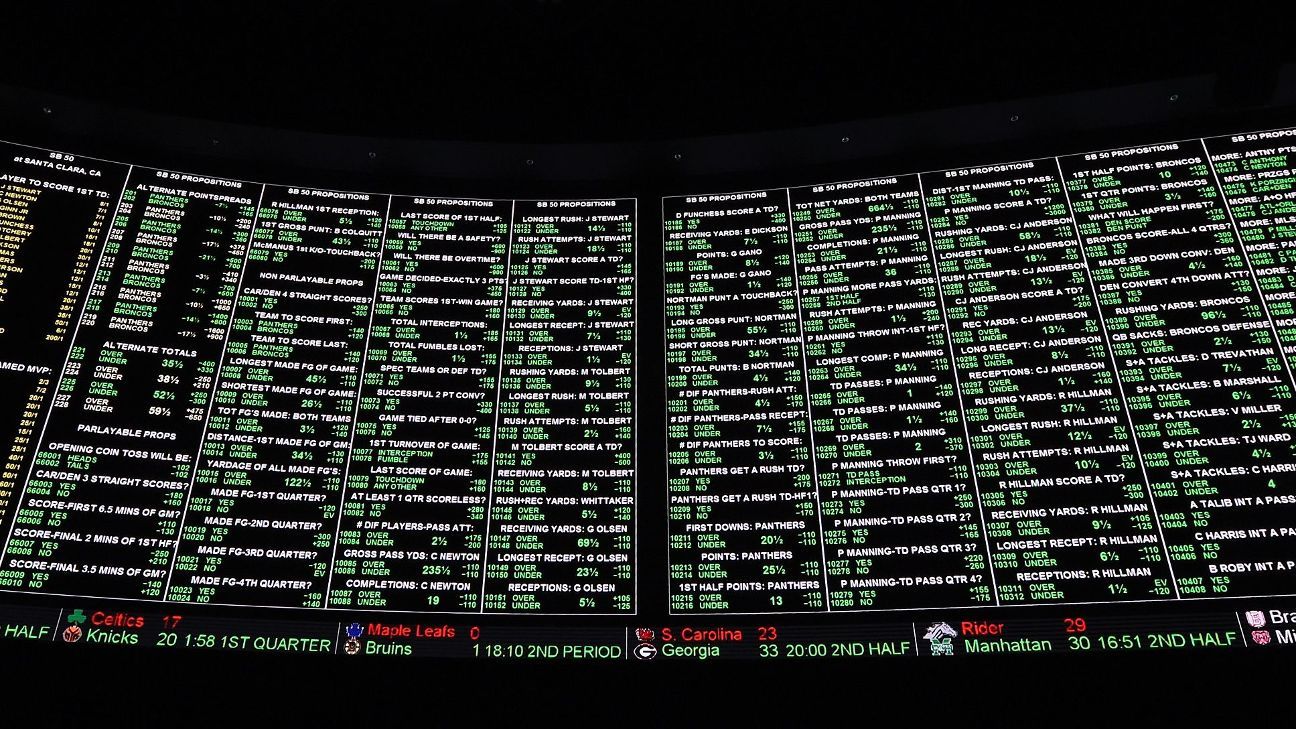
There could easily be other offsetting law, regulation, or precedent. There might have been a prior decision which effectively gave "written approval" to void future egregious odds/payout errors. There may have been "prior written approval" of the house rules allowing recision.
Regulators & the industry have a converging interest in a predictable business, without "gotchas", and with precedents that protect against other potential larger future errors.
I would bet even-money that Mr. Price, the bettor, is never paid the full $82,610, either as a private settlement or at the direction of any regulator or court.
2. I grew up in NJ and am quite familiar with the gambling regs (but i admit to not having paid attention in the past few years)
3. I checked with other NJ lawyers.
But, I have a perhaps-unreasonable amount of confidence in my understanding of regulator-regulatee dynamics. I further think FanDuel competently understood their legal environment before making their statements defending the non-payment to the press. (If their experts knew they'd eventually have to pay anyway, why take the PR hit?) And finally, I believe that on general principles of fairness, such blatant errors should be voidable.
So, would you like to bet me $20, even-money, that your "FanDuel is gonna lose this one" prediction comes to pass? Me, a rando non-lawyer armchair commenter, versus your many credentials, familiarity-with-the-gambling-regs, and confirming opinions from other NJ lawyers?
You win if FanDuel ever pays this bettor the full $82,610 – whether due to public outcry or any action by relevant legal authorities. I win if the bettor accepts a settlement for less, such as the tokens-of-apology that FanDuel has already offered.
If your slot machine is supposed to pay out 1000:1 and you set it for 1:1000, sucks to be you, but it isn't an "error".
Actually: I apparently stand corrected. The situation generally gets investigated by the state board who works out the appropriate remedy.
So in this case, where the remarkable odds were spotted by someone who knew it was a probable error, and would not have otherwise made the bet except for the error, I think a court will nullify.
What if it were billion-to-one odds? Should a company be destroyed because of a single numerical mistake? There is a line and I think this situation crosses it.
Conversely, bookies do not have to take into account whether pundits are likely making a mistake. Betting schemes thrive on the appearance that the bookie made a mistake. Either way, the places I know limit possible wins (e.g. 1000$ for a bigger, casual one). And even if not, they should be allow to take bets only if they can back it up.
That a pundit could not nullify the bet for the same reason is an edge the bank system abuses to no end. It's institutional. Since they don't have rigid rules for liability in computer security (e.g. in IOT and all the data ex-filtration cases) or code correctness only means the court would resort to opinionated decision on a case by case basis and precedent would only mean they can, not that they should, if the situation isn't exactly the same. There is bound to be precedent for exactly this case, which would open an avenue for abuse by the bookies. I don't think it's clear at all.
Yes they should honor it or else thy have 2 options.
1. Close business 2. Request a bailout.
Someone more competent should take their place. Fanduel is not above the law.
Absolutely disgusting.
The imbalance is obvious even before the bet is placed.
It would be encouraging to see FanDuel just cough up the erroneous wager (which is surely cheaper than a lawsuit) and tighten down the definition of errors in spreads to something more specific such as anything outside like 2 standard deviations within the scope of a game*
*I'm not a gambler just someone who believes the definition of error can be mathematically defined for everyone's benefit
I think the reason they won't is they don't want to set a precedent for future similar mistakes. If they pay out here they would almost certainly lose future similar disputes in court.
As long as there is no "I made a mistake, get out of jail free" card for bettors there shouldn't be one for the companies serving those bets either. FanDuel would have collected this man's money if the Broncos had lost and they would have collected his money if he had clicked this bet accidentally, to that end he deserves to collect his money.
What they could do is pay this guy off, then follow the good press for a very likely net gain.
I had to make a call and go to the transportation office to settle the matter. They told me the shop was likely to suffer repercussions after the incident.
Would FanDuel void your bet if you misread the odds?
(On the other hand -relevant to the topic- an agreement may be declared void in the case of "obvious error"; so Fanduel could possibly have been off the hook if they had been operating in .nl .)
These companies operate completely arbitrarily, and they really hate winners of course.
Which companies do play by the same rules as you? I can't think of any time I've been able to compel a company to use an arbiter of my choosing for any disputes.
If someone bets and wins often on a specific sport/league, and they make a big bet for it that doesn't really make sense, maybe the line is wrong or that person knows something everyone else doesn't.
Because of this, mistakes in the interaction between an individual and a corporation should favor the individual. However, it seems that the system favors the corporation.
Gaming companies are especially bad about this. Their whole setup is designed to take advantage of human weaknesses in evaluating risks. However, when they make a mistake they are often the first to say that the bet is invalid.
I am in two minds here. Firstly this is a "contract" - honour it.
Secondly, I understand the industry practise, but Indont think it is in line with society needs - that is a human bookmaker would never have given 750-1 with the team leading and minutes to go.
So either you write software that won't do that and take the risk, or you stop using software to rinse every last penny out of human addiction
my preference is that mistakes in the software can bankrupt you. That way you pay attention to the software process
Finance has seen its fair share of this. As an example, I was ashamed to see the difference in reactions between when it was Knight Capital [0] vs Goldman Sachs [1].
For Knight Capital, the entire company floundered after a trading glitch, and they closed shortly after.
When it was Goldman who suffered a glitch, many of their trades "qualified for cancellation". Co-author of the Black Scholes formula even spoke up against this hypocrisy.
Both companies lobbied to the exchanges and the SEC, but one had more capital. If this is any indicator, a company like FanDuel may be let off.
[0] https://dealbook.nytimes.com/2012/08/02/knight-capital-says-... [1] https://www.ft.com/content/37fff9c6-0b36-11e3-bffc-00144feab...
With bookies your honor and reputation is #1.
When you gamble, you take a risk and the counterparts takes a risk. Then it is up to Lady Luck to decide.
If you take a bet, you can’t back out. Just don’t take the bet in the first place.
In this case the guy sure had his stars aligned. To not honor that is insulting to all gamblers who respect the unknown and risk taking. They broke the social contract between the gambler and bookie.
Fanduel absolutely does not deserve to be company and should be grouped together with all the shady overseas bookies.
Edit: to add, if users saw unresolved bugs in the platform, the contract could be forked and improved or users could just leave. If code is law, and that code is deployed publicly for everyone to see, then nothing is left to the discretion of "owners" because the "owners" don't have discretion to begin with.
Whether or not that is good here, in general it is an issue. That is a large reason why we have courts.
Whenever there's doubt side with the customer but this was such an obvious error that any reasonable better would have realized it. Had the better lost the money I'm pretty confident they would have refunded the bet as well (since the bets were voided).
You should not encourage a business to have a "head we win, tails you lose" policy.
On the other hand, offering something like a 1000x payout for an event that has a 50% chance of happening is a clear and obvious error.
If an error is egregious and obvious, it seems reasonable that a company (in this case FanDuel) not honor the deal.
Similarly, say a grocery store meant to have a "Buy 1 get 2 free" steak sale but accidentally keyed it in as a "Buy 1 get 200 free" sale. Nobody would expect the grocery store to actually give away 200 free steaks to every customer who bought a single steak.
Neither is an oddsmaking posting odds out of line with your perception of thpe likelihood of events—if you are gambling, that's exactly what you are looking for normally.
> If an error is egregious and obvious, it seems reasonable that a company (in this case FanDuel) not honor the deal.
This bet was made over the counter: if there was such an obvious and egregious error, it should have been refused at the counter. Would FanDuel have tested the bet induced by the odds as null and returned the funds if the bettor had lost? If not, why should it get to nullify it when the bettor wins?
But, essentially every bet is exactly the bettor assessing that the odds represent an assessment of the likelihood of an event that is wrong; from the bettor’s position gross errors of the market (the other bettors whose actions are the input to odds-setting) that they should mercilessly exploit are indistinguishable from gross errors of the aggregation system which you suggest they should not.
Especially with a human-in-the-loop system for taking bets, the protection for the oddsmaker should be that their agent refuse to accept bets when there is such an “obvious(ly attributable to the odds-setting mechanism) error”.
Somehow everyone else seems to think otherwise, so maybe I'm just a sucker.
If we lived in a world where companies did their best to be reasonable and fair to customers, particularly when mistakes occur, I would agree. However, considering most companies are quite hostile and willing to use any advantage they may have to maximize profits or minimize costs at the expense of customers I believe we need to act the same. If companies are going to hold us accountable and punish us for mistakes or errors to the fullest extent then we should do the same
"Well, they probably took advantage of people" isn't a very good argument.
It is so obviously a genuine mistake that some dude is trying to capitalise on and make a big media hoo-hah out of. He's getting $500 and three free games, just take it and be happy.
If the situation were reversed, and due to a genuine mistake FanDuel showed that the customer owed the company the money, do you think they would simply accept that it was a mistake and fix it? If I had to bet I would guess that they'd attempt to collect the money using any means necessary just like the customer
Two wrongs don’t make a right, and setting a precedent that it’s a feee for all makes thing much worse for everyone.
I don't think a company should have to shell out tens of thousands of dollars because a software bug resulted in a couple of extra zeros somewhere. Do you?
Quick edit: A thought experiment. What if the bug created odds orders of magnitude higher than this? Should FanDuel be forced into bankruptcy from the debt to the customer?
That makes it somewhat different, no?
Completely different situations
Wait - what? What the hell is a line error?
This is pocket money for them. They should honour it and move on.
I'm happy to hear your data point that "gyp" may already have fallen into disuse; or did you mean that you now intend to start using it now to signal your non-PC-ness? If so, others that I recall hearing in childhood but not lately, which you might also consider adopting, include: "indian-giver" (one who reneges), "jewing down" (bargaining excessively), "n....r work" (which seemed to mean "hanging around and not working" back in the day, but now Urban Dictionary has it as "easy, repetitive work").
Fan Duel should send him some tickets to a game, try to create a positive interaction for him, and let's move on.
It's within their power to improve their automated system to not offer stupid bets.
So then it's also within your power to never write bugs. Have you ever written any? How did that happen? It was within your power not to do so, right?
That is, my argument is about how you decide responsibility, not about technical excellence.
I've literally made tens of thousands of dollars in mistakes over my careers (try not to make the same one twice) and 9 out of 10 times the company would go "shit dude, don't ever let that happen again!"
Wouldn't it then be reasonable for them to give a refund?
That or they might need to close up shop.
Most people prefer the current system where they are able to make very dynamic sports bets, sometimes in real time, with the rare mistake.
Test the hell out of that and you are a long way towards where you want to be.
It kind of smells like they had one, except it only panicked after the bet sold...
If a better makes a mistake, they still lose their money.
The same should apply on the other side.
I think they should bite the bullet, pay it out, turn to their software engineers, and say "it's worth 82,000$ to this company to ensure that never happens again."
Such bugs becomes not a costly mistake but instead existentially threatening
And we certainly don’t have a software industry capable of supporting that environment
You know they did not inform people of errors the other way.
They offered that and $500. He refused and got a lawyer.
Yes, but corporations aren't humans. If the mistake went the other way, it likely wouldn't matter. The human would have to deal with it. I say give him the $80k+ and learn to deal with your mistakes.
Mitt Romney gave your opponents their line: "Corporations are people, my friend"
This isn't a "human interaction". A corporation isn't a human and is governed by the "make as much money as possible" theory (Shareholder Primacy), so why would we treat them the same as if this is a human interaction?
>FanDuel instead offered to pay him around $500 and give him tickets to three New York Giants games. Prince declined to take FanDuel's offer and told News 12 New Jersey that he planned to hire an attorney.