NASA’s Hubble Space Telescope Returns to Science Operations - NASA Science
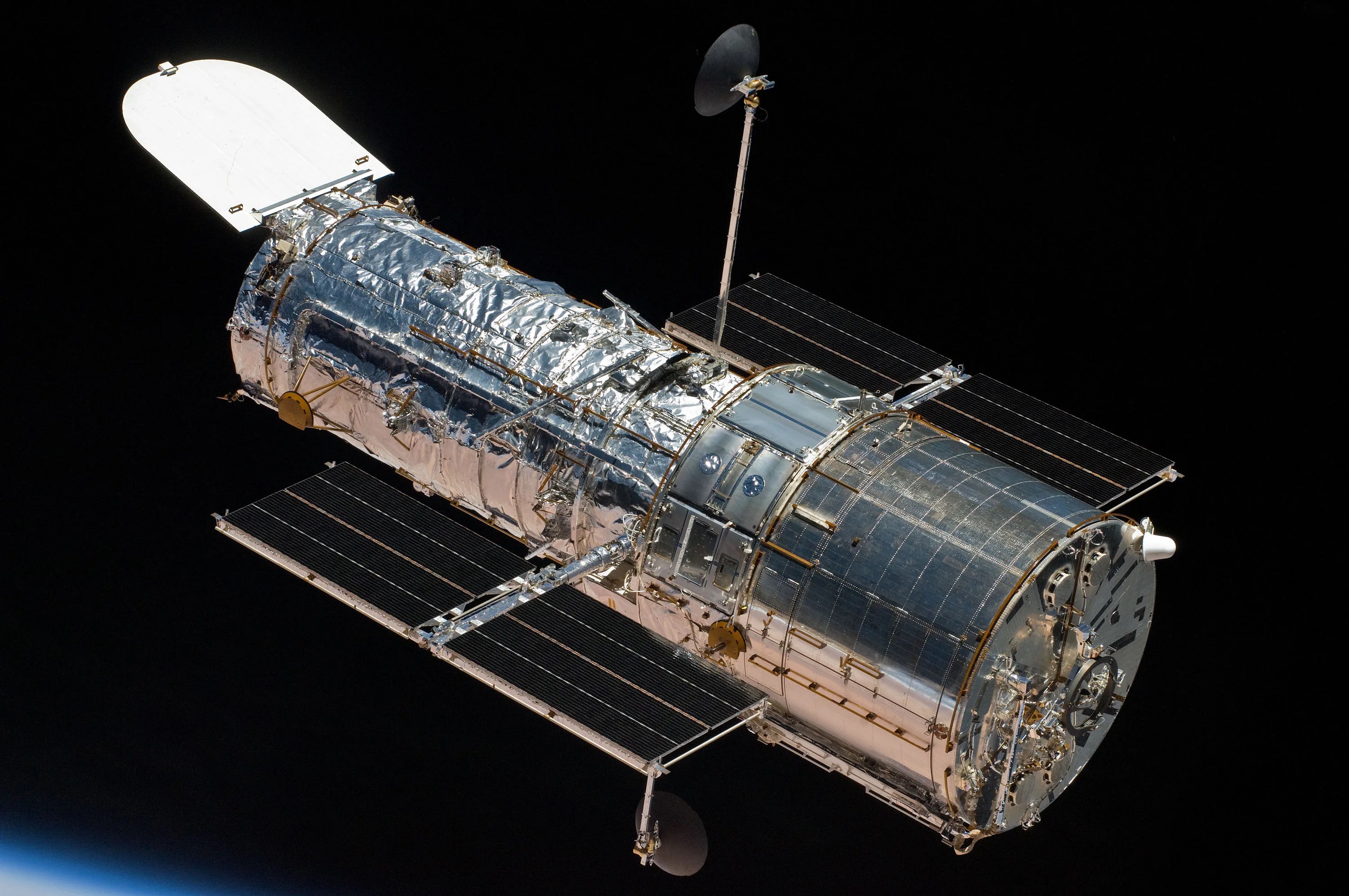
NASA’s Hubble Space Telescope returned to normal operations late Friday, Oct. 26, and completed its first science observations on Saturday, Oct. 27 at 2:10 AM
NASA Science
768 points · by perlgeek · 8y ago · 117 comments
They were able to recover the failed backup gyroscope by executing a series of attitude maneuvers while switching between operational modes on the gyro.
They literally shook the spacecraft and turned the gyro off-and-on.
Sometimes you gotta bang on something to get it to work!
I would love to buy a beer for the mission operations team member who came up with that idea!
edit: I have to add, i just found out about the extent of the definition.
>make a malfunctioning device or person work.
If you want to know how an unknown system reacts, first thing you do is to hit it hard.
What he meant was that applying the Heaviside function to the inputs of a system to determine the step response [1] is one of the first things we should do.
https://en.wikipedia.org/wiki/Impulse_response
(Actually, our control classes told us to do both to get a basic view of a system.)
Or its siblings, including https://github.com/mattdiamond/fuckitjs
They know the gyros will eventually give out and they have contingency plans around what kinds of science they can continue to do even when they're down to 1 gyro.
Very impressive. I'm always discouraged hearing people say NASA is wasting money and science and that's just not true IMHO.
But regardless recording it would likely be helpful as most problems in engineerings seem to recur over time in different and new contexts.
In the Netherlands they have outsourced the organisation and managment of health care to the doctors themselves (roughly speaking). It is often cited as one of the main reasons the Netherlands rank #1 in health care ratings over the years.
That has a far higher outcome on healthcare than taking doctors away from patients to run hospitals.
[0] https://www.dutchnews.nl/news/2018/10/slotervaart-hospital-s...
That it since followed the path of every other monopoly bureaucracy was of course unavoidable.
pareto -- 80% of work done by 20% of workers.
there's also some other law about the work being done by the square root of the total workers.
http://hubblesite.org/the_telescope/team_hubble/#hubbletime
Each year astronomers from dozens of countries vie for precious minutes of Hubble's unrivaled view of the cosmos.
A review committee made up of experts from the astronomical community determines which proposed observations address pressing scientific questions and make the best use of the telescope's capabilities.
Each year more than 1,000 proposals are reviewed and approximately 200 are selected, which represents roughly 20,000 individual observations.
I feel bad for all the projects that got delayed. I wonder if they'll be rescheduled, or have to be resubmitted or are just out of luck.
Also, overall there isn't a huge advantage to this hardware. It doesn't save much money as most of the cost of the telescopes is in the other components: the spacecraft parts (including the attitude control system which as we've seen with Hubble is quite important) and the instruments. The biggest advantage to the NRO gifts (the NSA doesn't have telescopes, that we know of) is not that they make building space telescopes cheaper but that they mainly just make those missions more likely to be funded.
NASA has plans to maybe use one of them sometime, but because of how expensive the James Webb Telescope turned out to be doesn't have money to do anything with the second.
The wikipedia article gives some more context: https://en.wikipedia.org/wiki/2012_National_Reconnaissance_O...
On the other hand, I remembered that hubble was manually repaired by astronauts mutliple times back in the space shuttle era. I'm wondering that, do we have capabilities to perform in-space non-ISS-kind repairs now? Soyuz may be able to do in-space rendezvous but cargo space is limited. Soyuz+Progress composition (may be too complicated)?
However that mission will unlikely be possible for both technical and political reasons.
It's conceivable that a repair mission might be possible with the soon to come into service US crew capsules (Dragon 2 and Starliner) since the rockets that launch them have more performance than the Soyuz, but even then it would be a pretty ambitious mission.
- some NASA scientists, probably
And here I am on Earth, barely capable of debugging JavaScript code.
But also surgeons make misstakes. Lots of them. Or don't find the perfect solution in time, needed to save someones live.
If as much education was required of software engineers as it is from people who work on the Hubble telescope then you wouldn't have any troubles debugging JavaScript.
I don't think there's any other language with as many independent production-quality implementations.
In what way do you think it could be better specified?
Obviously such measures would be very much impractical outside of NASA.
Government can be better, and I hope we can make it better too.
What else to say? I love a good NASA win, geek, nerd, engineering story.
nasa.gov's accessibility is absolutely terrible for a government website.