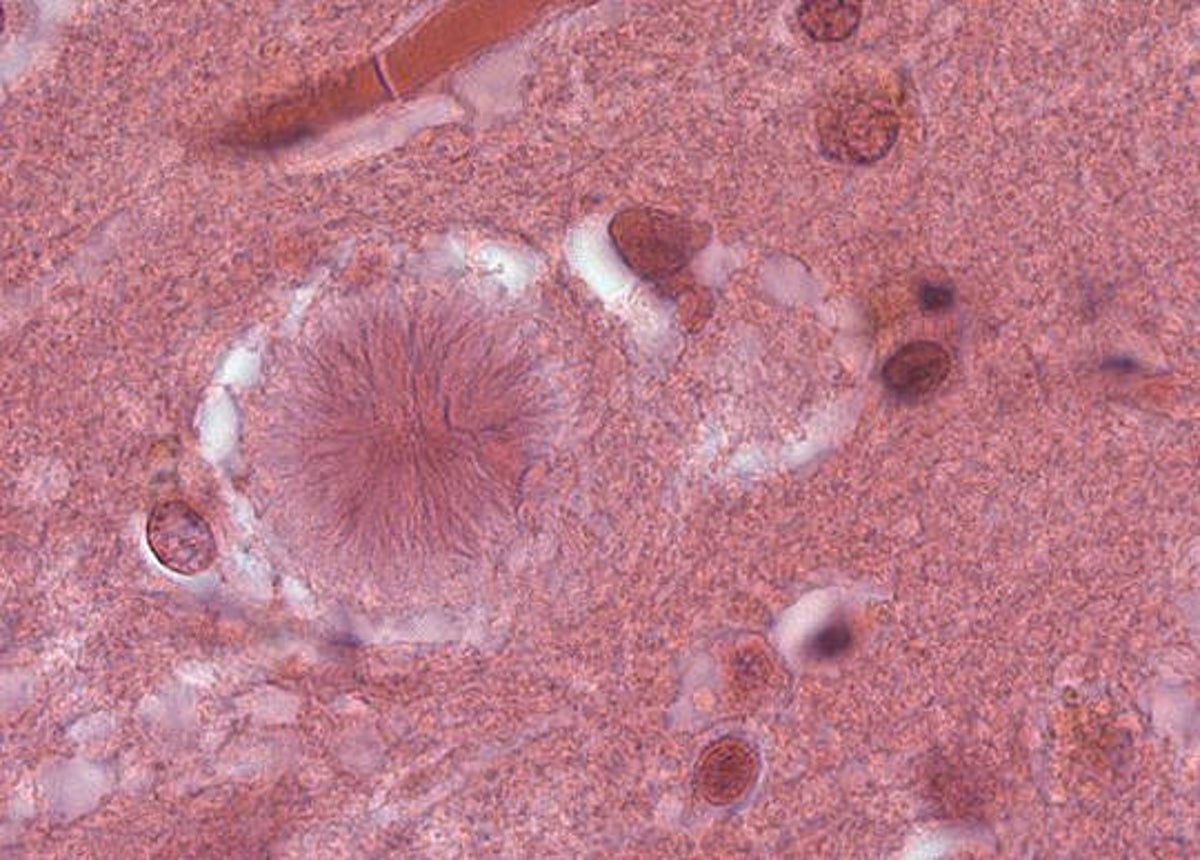
Prions, Nearly Indestructible and Universally Lethal, Seed the Eyes of Victims
Discovery suggests worrying transmission possibilities
Scientific American
433 points · by tshannon · 7y ago · 189 comments
Iatrogenic transmission is a rarer subset still: the riskiest transplants (with respect to CJD) are in the central nervous system. The UK tracked their transmission rates from 1970 to 2003 (a long period is needed because surgical transmission usually occurs in folks with long incubation periods - up to ten years or so) for dura transplants (something that goes into the CNS) and found a total of eight.
This article is one good step above scare-mongering, but only one.
(1) there are only so many resources to go around. Should we be devoting them to vanishingly rare things rather than things that might actually affect you?
(2) prions will never be a wildfire plague. They have little or no tranmissive ability, by nature of being absolutely naked protein. One step up from that - encoding the protein for space constraints and encapsulating it - is called a virus.
Chronic wasting disease (CWD) (affects deer) can be transmitted by infected saliva. One of the symptoms of symptoms of CWD is excessive saliva production. It is very transmissible, and is devastating captive populations of deer, although it is relatively rare in the wild.
I think if a similar TSE affected humans, spreadable by infected saliva, it would absolutely be a wildfire plague.
Mad Cow Disease was caused by a prion[0].
[0]:https://en.wikipedia.org/wiki/Bovine_spongiform_encephalopat...
> In a particularly vexing twist, prions are also nearly impervious to destruction, even when attacked using a strenuous combination of disinfectants, heat, and pressure.
> In a particularly vexing twist, prions are also nearly impervious to destruction, even when attacked using a strenuous combination of disinfectants, heat, and pressure.
I'm not sure there will ever be a prion that hasn't already existed, whereas I am sure there will be new viruses and bacteria.
The phrase is actually “deep seated.”
Many on this board point to the inelasticity of their transmissible potential and call this fear-mongering. However, it is that same inelasticity that makes them intransigent. Once they have compromised an instrument, that instrument will remain compromised until each prion has specifically been destroyed. When you pair that intransigence with its lengthy incubation period, you actually have a force multiplier that, while not viral, would be scary enough to change behavior.
Fortunately, the article hints that retinal scans may eventually be used for initial diagnosis.
Isn't that begging the question? I mean, the author's concern seems to be that the prevailing belief hasn't been well-tested compared to the potential impact of it being wrong.
It's already happened before: There was a period of time when most medical practitioners were adamant that their actions could possibly be transferring disease, and it was an uphill fight to get regular disinfectants and hand-washing.
https://www.newscientist.com/article/2151909-alzheimers-may-...
So while wiring together two bloodstreams is a bit extreme, and likely to result in most things being transmissible, there's nonzero evidence that you can have a bad day from a blood transfusion.
I agree. Could a moderator please change the title at the least?
"Prions, A Rare and Lethal Infection, ..." would be slightly better.
http://www.virology.ws/2015/06/12/resistance-to-prion-diseas...
* Kuru (laughing disease) was transmitted from cannibalism. Women and children of the tribe were more likely to contract it because they were more often given the less palatable parts of the bodies, which included brains
* Some countries do not trust American cattle because our standards for Prion screening are too low
* Kentucky has issues with Prions because Squirrel brains are a popular dish
Try not to eat animal or human brains and you can dramatically reduce your chances of getting Prions
Looks like the dish is called Burgoo
> The center of the burgoo universe is Owensboro, Kentucky
Thanks!
Maybe it is an issue but goes underreported? Prions related diseases were historically easy to misdiagnose because they can present in so many different ways. I'm sure medical science has caught up in 1st world countries but maybe lags elsewhere?
* Do we have a good grasp on the number of prions in the world? My recollection from when MadCow became a big thing in the late 90s was that prions weren't even looked for and were hard to find as a general rule, but that was 20+ years ago. Might there be many common-but-harmless prions that we haven't even noticed?
* WHY is brain consumption (both in humans and in animals) such a source of prions? What makes that situation more likely to create prions?
People talk about Mad Cow, Kuru, Creutzfeldt-Jacobs, Chronic Wasting Disease, Scrapie, and a dozen other diseases like they are not all manifestations of the same underlying problem with PRNP gene variants.
From what I remember on the topic, we do not have a good grasp on prions disease. There is a good chance that some other diseases in history may have actually been misdiagnosed prions disease. It can present as a form of dementia and the incubation period can be so long that many people are middle-aged before symptoms occur.
Tissue of the brain and spine are better for Prions propagation. Prions cause other proteins to misfold themselves. The proteins they affect are related to brain matter.
Or is that the only organ where they manifest in symptoms?
Is it a big issue out there?
If I've eaten sheeps brain twice myself, how soon should I plan my funeral?
iirc, incubation periods can be decades long. I believe the more you injest, the shorter the incubation period
Honestly there’s a lot of fear mongering in this thread about brain consumption...if anything it’s healthy for you. The main issues are most likely when the animal eaten has participated in cannibalism. For example, Cows were fed bovine blood meal which is what led to the Mad Cow scare, kuru is caused by cannabilistic human tribes, squirrels are known to be cannibalistic, etc. Lamb/sheep don’t participate in cannibalism. No need for unnecessary fearmongering
Now all I can think about is the dinner scene at the end of Hannibal.
1. Symptoms show up soonest in brains and so can be distinguished from other causes of impairment or death.
2. Humans already some immune mechanism that helps protect against prions, but brain tissue is particularly susceptible because of it's less-usual immune-system setup.
http://www.cureffi.org/ and http://www.prionalliance.org/blog/
> Wife-husband team Sonia Vallabh and Eric Minikel are on a very personal mission to find a cure to prion diseases. When Sonia was diagnosed as a genetic carrier of a rare disease called Fatal Familial Insomnia (FFI), she and Eric quit their regular jobs and began studying molecular biology to learn as much as they could.
Theirs is an incredible story so far. https://www.newyorker.com/books/page-turner/a-prion-love-sto...
There are a few comments here about how talking about prion diseases are basically fearmongering. It shook me a bit, though. I always thought of CJD as one of those freak diseases that you hear about in the news, but is such low likely hood that it's basically non-existent. Not so much anymore.
Are you sure it's CJD? Article says 95% of CJD patients won't live 12 months after diagnosis.
> Another family member that was a nurse in Kentucky(?) said they have a high rate of prion disease due to farmers inhaling contaminated dirt for years.
What kind of prion disease and what kind of dirt?
The nurse family member said cow farmers, so I assume cow feces contaminated dirt, and that their brains looked "like Swiss cheese". This was also in the context of mad cow disease. I checked my notes from the day and it was North Carolina, not Kentucky.
More likely is that my eye problems are from wearing contacts in for too long and staring too long at a computer in a low-humidity environment and never blinking. My cognitive issues are probably from not eating healthily, not getting enough sleep, not exercising, and from being depressed.
You could also explain this with low-level heavy metal exposure, e.g. mercury, as well as a large amount of other possibilities :-)
I thought hard if I should write this, as a joke and only the above line at first, but here it goes. Having read your second paragraph too, that is pretty much exactly what I said to myself a decade ago and before. Then some things escalated a little bit and I was forced to either accept all my increasing issues, or do some research myself.
Turned out I had chronic heavy metal poisoning from mercury. Fortunately diagnosis was made easy because I actually had high levels of it in hair and blood (and urine - same as blood since that's where that comes from). Anyway, the scale of the problem was only made clear during chelation therapy, when both I as well as my (university clinic researcher) doctor were amazed at all the things that improved, including "miracles" such as thyroid normalization (had been enlarged and with a nodule for decades, completely gone within half a year of DMPS chelation, left the endocrinologist speechless, literally, he checked me twice with ultrasound to make sure he had not make a mistake). This issue is next to impossible to diagnose with today's methods, unlike acute poisoning, because how much you see in blood, urine or even hair does not say anything about the size of the problem, it only shows up when it actually moves around the body which it only does after exposure.
I had had dry eyes too, and of course the ophthalmologist as well as I myself attributed it to too much screen work. Today, after years of chelation, I sit in front of a monitor much more than ever before - but now I have zero issues. Same with RSI. Sooo many little things are completely gone from my body, depression too.
The crazy thing is, up to that point ~10 years ago when I had to confront that something was not quite right, I called myself "healthy". And why not? I could run a half marathon just for fun and still come back feeling relaxed. All the many little issues I had, such as a few warts on the feet (more and more over the decades but I ignored the trend), winter depression (many people have that, it's normal!), eye problems (not really severe, so not worth thinking about it) and many many other, my brain refused to think about it. The reality my brain created of my world was highly distorted, but I did not know it. Only the huge and unexpected changes happening after I began chelation (DMPS, later DMSA) showed me the extend of the thus far ignored problem.
Ageing? And basically what you describe. I wouldn't worry about it :)
If you eat brains, your risks go up by multiple magnitudes.
In 2017, there was a Canadian study that seemed to show that feeding macaque monkeys raw muscle meat from infected deer was capable of transmitting the disease. I don't think the study has been published yet, but it's described in detail in this Norwegian report (https://vkm.no/download/18.25950e0715e84a118a6ec492/15069251...) and forms the basis of an advisory by the Canadian government (https://www.thetyee.ca/Documents/2017/06/24/Risk-Advisory-Op...) suggesting that consumption of all potentially infected meat be avoided.
Then in 2018, a separate seemingly very similar American study was published (http://sci-hub.tw/10.1128/JVI.00550-18) , saying that no evidence was found for transmission to macaques, even after direct cerebral exposure. The NIH issued a press release (https://www.nih.gov/news-events/news-releases/nih-study-find...) with the headline "NIH study finds no chronic wasting disease transmissibility in macaques".
Suffice it to say, there seem to be contradictory messages here. Is there some overview that would help to clear things up?
> To date, in the US, there have been no known cases of variant CJD, or human prion disease acquired by eating contaminated beef. Here at the NPDPSC, we have diagnosed 4 cases, but they were all acquired out side the US; 1 case in 2044 acquired in UK, 2 cases in 2006 acquired in Saudi Arabia, and 1 case in 2014 acquired in the middle east.
> In several western US states, Canada, and now South Korea and Norway, there is concern that chronic wasting disease (CWD), the prion disease of elk and deer, may be transmissible to people who hunt, butcher, or eat the affected animals. Although transmission of CWD from animals to humans is unlikely, recent data indicate that the barriers between species may be weakened when CWD has been transmitted from animal to animal several times (as may happen in the wild). The NPDPSC, along with the CDC, Department of Health, and the Game and Wildlife Administration, is carefully monitoring any possible case of acquired CWD in humans.
Asked for extra clarification, "So although there is a concern with CWD crossing that barrier, there still haven't been any recorded cases?"
> That is correct.
[1] https://www.the-scientist.com/features/the-bright-side-of-pr...
There were also human cases getting reported at a rate that some suggested matched the pattern for the early days of an epidemic.
Luckily that never materialised. Still though having lived in the UK during a certain time period precludes one from donating blood elsewhere, to this day.
> patients with very long incubation periods of at least 34 years, and probably more than 40 years.
https://www.thelancet.com/journals/lancet/article/PIIS0140-6...
An epidemic is by definition a statistically significant deviation from historic baselines.
Every single upswing within the normal rates of variability - all of the sin curve living above 0 - looks like “early epidemic.” We have one every month.
That was scare-mongering, too. Everyone loves to report an incipient disaster, at least until people get numb and the ratings fall down.
https://en.wikipedia.org/wiki/Cattle_feeding#Mad_Cow_Disease
Compare US position: https://www.feednavigator.com/Article/2017/07/22/USDA-Feed-n...
VIC position: http://agriculture.vic.gov.au/agriculture/livestock/beef/fee...
"Undiagnosed CJD patients may seek testing. And the diagnostic equipment used to test them may then become contaminated, the authors write. They recommend single-use instruments or the adoption of new decontamination procedures for opthalmological equipment with better effectiveness on prions."
In my last several visits, nothing has touched my eye at all.
Or are the abnormal prions in CJD and the like not uniform enough for general prophylaxis?
I really have a naive understanding of immunotherapy, so sorry if my question is dumb.
I don't completely understand your answer, due to my ignorance of the immune system. I thought the immune system could target specific proteins (e.g. how snake venom vaccines work) rather than using the proteins to identify target cells. Is this correct? I as assuming such a mechanism would be able to do something useful with the target.
The other part of your answer I did understand, and that was helpful, thanks!
FWIW, both my parents had cataracts removed, and my father who'd worn eyeglasses since the 1940's said he'd never seen better in his life. So, chin up.
https://www.allaboutvision.com/conditions/cataract-surgery.h...
> we estimate that the mean duration of the incubation period is 16.7 years
https://www.thelancet.com/journals/lancet/article/PIIS0140-6...
> A comprehensive statistical analysis had earlier reported that the mean incubation period was between 10.3 and 13.2 years, but the tail of the distribution was long. Using these estimates, we calculated that the upper 0.4% quantile was 40 years, and even larger for those infected young (>50 years), very much in line with these new observations.
> them may then become contaminated, the authors write. They recommend single-use instruments or the adoption of new decontamination procedures for opthalmological equipment with better effectiveness on prions.
Are there statistics on Creuzfeld-Jakobs in Langley?
I understand how something like bacteria or a virus enters a host and replicates, but an anomalous protein corrupting other protein is just so strange. I'm sure science will adequately explain it someday but until then it's a pretty WTF anomaly to me.
Think of "slap bracelets", those curved metal strips that spring around your wrist. If you push two straight ones together, nothing happens. But if you push a curled one against a straight one it will make the straight one curl up too. The curled slap bracelet is acting like a prion.
Wow, I've not heard someone mention those in probably 2 decades.
Neural proteins are very complicated, so they need other proteins to help them fold properly. One of these protein-folding-proteins (PRNP) can be mis-folded in such a way that it mis-folds other proteins in the same way that it is mis-folded itself.
When most factory robots break, they simply stop working and they get recycled. But when a robot-making robot breaks in just the right way, it starts producing robot-making-robots that are broken just like itself.
It was an analogy and reading https://en.wikipedia.org/wiki/Proteopathy#Seeded_induction it sounds very much like they act like a piece of code corrupting another piece of code
>Some proteins can be induced to form abnormal assemblies by exposure to the same (or similar) protein that has folded into a disease-causing conformation, a process called 'seeding' or 'permissive templating'
That sounds a lot like many computer viruses
>A computer virus is a type of malicious software that, when executed, replicates itself by modifying other computer programs and inserting its own code
What makes prions so weird is that they are a protein that has been mismade (misfolded, generally). That something is being made broken isn't that weird in biology. Mostly, the body degrades them pretty quickly. However, prions, while not being able to do what they're meant to do, can take well-made versions of itself and break them in the same manner.
And science doesn't know how they get misfolded in the first place then they basically go "hey other protein, boop you're like me now, let's burn this mother to the ground" and then you get something similar to the 'corrupted blood incident' https://en.wikipedia.org/wiki/Corrupted_Blood_incident except you lose your mind and die.
As far as saying we know how proteins misfold, I'm going purely by what I've read both on and on wikipedia as I'm not an expert in proteins and amino acids...
>It is not known what causes the normal protein to misfold
Second sentence of: https://en.wikipedia.org/wiki/Prion
Prions misfold in a way that induces other of the normal version to misfold in the same way and therefore spread.
On the plus side prions kills pretty quickly and so there is unlikely to be much underlying mutation in their form or function.
Protein folding is incredibly complicated but I could imagine enzymes which could snip the prion or another similar protein which induces it to fold back into the preferred state. I doubt we have the science to explicitly design such a thing, but you could expose prion molecules in bacteria and put them under evolutionary pressure and they might eventually develop something that disables/fixes the prion.
You would essentially align survival of the bacteria to disruption of the prion molecule.
This link has an image of the two versions
https://www.mayoclinic.org/diseases-conditions/creutzfeldt-j...
The similarities to the 'corrupted blood incident' start and end with them both spreading to others in a local area. Prions don't really suggest that life is a simulation.
Prions are proteins too. And they can create themselves from source material too. But their source material are proteins which are not intended for processing. As such, prions are defined like weeds in a garden: They're not supposed to be there.
Marvel at the wonderful world that is biology: https://en.wikipedia.org/wiki/Protein