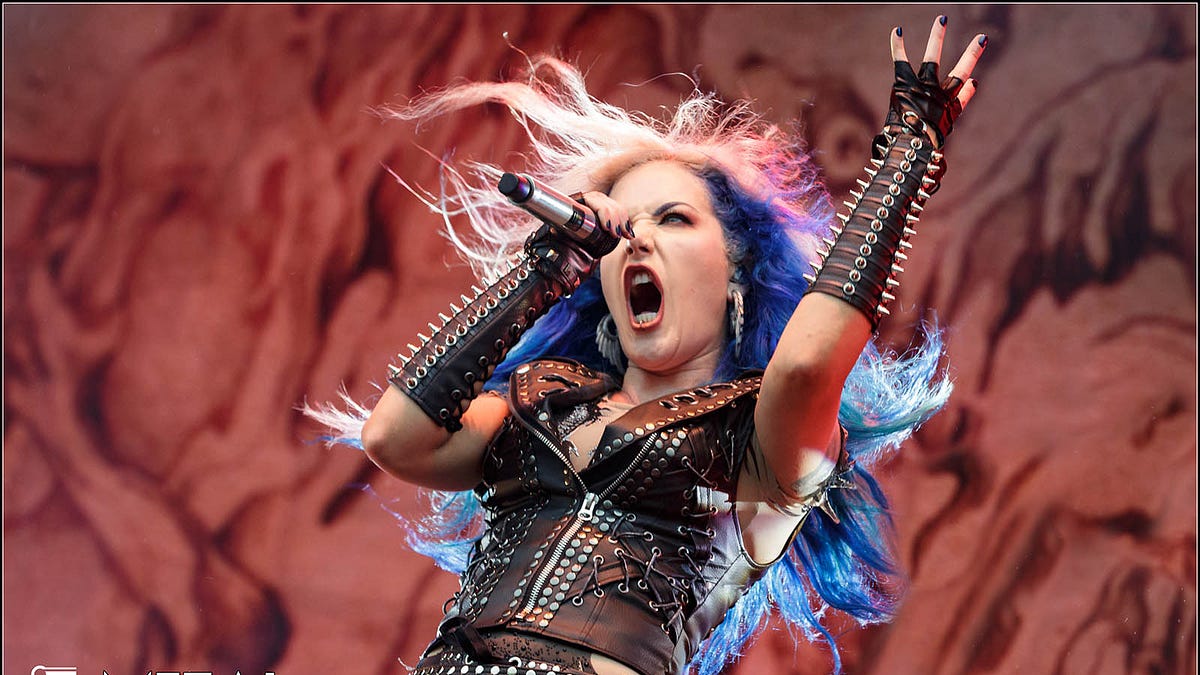
How I got Banned from Photographing Arch Enemy
How a pseudo-anarchist band tried to destroy my career.
metalblast.net
157 points · by pmlnr · 7y ago · 141 comments
The authors reply to band management was overly long winded when he just needed to stress that he didn’t want his work being used by random commercial uses, and that he offered them 100 to charity.
Instead of that he demanded money to charity from the band itself (!?) and put the strongest emphasis (to my read) seemed to be about his rights. This unnecessarily amplified the aggression, and triggered the band to exercise their rights with the banning.
Everyone within their rights, everyone loses.
I assume the author thinks that this makes him look unselfish, i.e. he is merely concerned about the principle of the matter and his artistic integrity rather than the money itself. But it actually comes across as overly self-righteous, and feels like he's just being difficult for no real reason since he doesn't even stand to gain anything from it.
Unfortunately, it was worded to make it sound like, "I took a photo of you. Your can either pay me 500 Euros or pay someone else 100 Euros."
> While, in general, I might allow fans or even the musicians [themselves] to use my work, this does not change the fact that I hold the right to authorize or deny the use.
to a band and not expecting to get banned from all future events is pretty amazing.
I am aware the law is (probably? Depends on, eg, free admission and contracts etc) on the photographer's side, if the photog wants to be a dick about the subject of the photo sharing it on instagram, there's lots of photographers in the world.
After a very short time I realized that it's very much a pit of vipers and an endless source of drama. Everyone puts on a front of being very cool but in almost all cases it's just that. It doesn't matter if it's bands, promoters, photographers, fans, etc., anyone who is even the slightest bit invested in it is likely to screw you over or air some irrelevant feud out in public. I don't go near any of it anymore (except the occasional Meshuggah or Ihsahn show) and remain a fan in private, with headphones on.
As right as the guy is, he totally didn't go about any of this the right way and neither did the band.
It does seem that the band massively overreacted though.
I don't think this will play in their favour now that this has been posted so widely. Apparently the photographer wants the last word on this.
The band is also within their rights to ban him from their shows because they disagree with the way he uses his legal authority.
Personally, I find the idea that the photographer has more right to a photo than the subject ethically repugnant.
If you came up, took a photo of me, and used it to make money on your Instagram, and then sent settlement letters to people associated with me for using it you'd be asking for a broken nose if I ever laid eyes on you again, legal right or not.
However, if a photographer creates pictures of an artist in a concert-style venue, I imagine the artist (or their management) might expect the Terms and Conditions of the venue to override any arrangement that an 'unauthorised' photographer tried to create.
That's not that clearly cut. One needs to fit in one of the following 3 cases if one wants to take "professional" photos at a live show:
1) hired by the performer, thus the copyright belongs to the performer
2) hired by the organizers/venue: copyright goes to the venue/organizer
3) 3rd party and this goes complicated, because based on your contract with the venue/organizer, you might or might not retain the copyright on the pictures. One thing that people on here and even on reddit, seem to not know is that the usual arrangement is for these 3rd parties to get free access to the festival, in exchange of helping with promoting the event/bands.
This is why on virtually all live events you are not allowed to show up with a professionally looking video/photo device. In one case, this was explained as "any device with detachable lenses". In order to be admitted with such a device, you need to have an accreditation, witch means you fit in one of the categories above. Which in turn means there is a contract that stipulates what exactly you are allowed to do with the material you are gathering.
I guess that totally depends on the type of shoot. If it's a studio shoot with a paid model signing waivers/releases/etc, then of course the photog owns it. They put in the time/work/money to produce the image. Street photography is definitely where it starts to get fuzzy (to me, not legally). If the person in the image is the entire point of the image, then I definitely feel like the photographer should have a conversation with the individual. Ethically speaking. Especially if it's an image that the photographer could be making money from later. A release form should be made available. If the people are just part of the image giving "life" to the image, then I have no issues.
It is pretty annoying at times. I have taken studio portraits of family members, and then gave them digital files to make what ever prints they wanted. These were clean images meaning there was no watermarking or any type. One CVS refused to make prints without a release form. Another place hemmed and hawed about it, but the third place never even thought of asking. I just wanted to do a nice thing, and made it as easy as possible for the family. It never occurred that someone would question it. Lesson learned, I now always provide a signed release granting permission for creating prints.
my own photos are published with an explicit license given to the subjects of an image, because i agree.
i should be in 100% control of what happens with my likeness.
this also applies in the case of tattoos: https://news.ycombinator.com/item?id=18769227
if someone gets a tattoo, they should not be prevented from using pictures of themselves in whatever way they like.
That’s in the US. I’m sure there are some differences between countries especially in defining commercial use.
I agree, but, I find the band's stance that the subject's permission is sufficient to also be repugnant. Two artists (subject and photographer) are involved in creating the work. Imho, absent an agreement, consent from both parties should be required to redistribute the photograph.
Disclaimer: I am american so this is all based on my (extreme layman) understanding of the law and copyright.
The system is pretty simple, if you are in a public place you can be photographed. Just like anyone can look at you, someone can take a photo. Their camera, their knowledge of how to take the photo, their correctly producing the photo and circulating it, via whatever methods they have developed over years of producing content (eg instagram, personal website, art shows, magazines, whatever). Why should you own the rights? You are certainly welcome to take photos of yourself and you of course own all the rights.
It has to do with the dreaded "reasonable expectation of privacy". Walking to the local corner store, you have no sane belief you wouldn't be photographed.
The part I think is a little silly is the paparazzi with telephoto lenses shooting into the window of a hotel from a quarter mile away. Technically, it's a public space because the window was open. Doesn't matter it's the 37th floor and the photographer is several blocks away; since anyone looking into the window could see what the photographer took, it's fair game.
I agree, the whole "if it is visible from a public place it is fair game" thing seems a little crazy. I think the argument is "do you have a reasonable expectation of privacy" and if you are standing in front of a window, would you? I certainly do not assume so, but I also don't live on the 37th floor. But if I can see out a window then someone can see in. I think if I was famous enough to have the paparazzi photographing me I would just get tinted/mirrored/something windows that I could see out but they couldn't see in.
Legally, the photographer in this story is correct. But I think he's dealing in absolutes in a situation where the economics are strongly in the band's favour. The band would be much better off with photographers that signed over copyright and it's not difficult for them to get that, because they're adding most of the value. The fact that they didn't, and permitted this chap to take the photos he did, is IMO down to them not having had this experience before. Now they have, and perhaps they'll be smarter about it going forward.
When it comes to explaining what makes a photo "good", there's the problem of it being a creative endeavour, so there are no strict guidelines.
The point remains however, they chose his photo. Likely because it's a good photo: lighting, composition, pose, all work well, and these are more-or-less definable criteria of what makes a photo good.
That's not an accident. Professional photographers know how to create the time and place for such photos to happen, unlike an average person with a camera.
Good photographers cannot easily be substituted by a random crowd with phones, no matter how much they see themselves as "photographers".
There's an art to being in the right time and the right place. It's not that a crowd can't produce good pictures, it's that a professional photographer can produce them with higher frequency and with intent.
It could be just as easily argued that the "craft of the photo" here conveys a dynamic that is very favorable for the band (which is probably why they chose it), urging people who only peripherally know the band to check them out because they connect with that dynamic, so the "craft" here is more valuable than the subject.
It can be argued - you've just argued it - but I think it's a stretch. Selling something to an audience you've already built is more valuable than a marginal increase in audience, especially if it's a static visual and the draw of the topic is dynamic.
If the photographer had his own distribution channel, and could put the photo in front of lots of people who don't know about the band, then your argument would make more sense. But then it's a marketing value proposition, not a technical photo quality value prop.
Oh and I agree that the photo isn't worthless. It's just not a strong bargaining position relative to the band, and trying to leverage law to get a better bargaining position isn't likely to turn out well, and there's no reason to believe that it won't turn out even better for the band in the future.
> a strong bargaining position relative to the band
He doesn't need a bargaining position. A clothing company infringed on his work, that's the whole of it. The band is not even involved. It's just it turned out someone in the band was likely closely related to the company and it was perceived as some sort of extortion so they decided to get personally involved apparently without being very clueful about the matter.
It really seems like a misunderstanding as was suggested ("Wait, photographs are subject to copyright too?") that should have ended at the manager, or at least their legal counsel, but somehow management was an idiot and doubled down being defensive and vindictive for no reason at all for what is really not some extraordinary practice.
I'm unsure the photographer is trying to leverage the law or get a better bargaining position here, but he sure should try to retain access to venues by explaining his side of the story, hoping that other bands and organisers are a bit more clueful about copyright and realise that coverage and good photos don't appear out of thin air.
P.S. I really doubt a simple message from the band stating that the clothing company was small business and a personal friend would not only have prevented the situation, but delighted the photographer in lieu of any monetary compensation.
You are by your own definition completely wrong. If the photographer is so substitutable and adds so little value like you argue, then they could have used anyone else including their own. Yet in actual fact they (and more to the point a clothing sponsor engaging in commercial advertising use) did not do that, they chose his. However many hundreds/thousands of people with cellphones and other cameras, however many hundreds of thousands of random people in the country they could have just given a camera and had a specific official hired "photographer" to take photos that they'd own the copyright to, and yet they didn't and just took someone else's without asking instead.
Again by definition that means that they found his particularly valuable amongst everything else, and didn't find the cost/benefit right to hire somebody random for minimum wage to photograph for hire. This isn't some gray case whatsoever, there is no fair use here, it's not fans, it's not some perpetual copyright shenanigans, or any of the other many issues with IP. It's a company & band violating copyright immediately and using a photo for advertisement getting snooty about being asked to give 100 clams to charity. That's a pretty amazing thing for you to defend.
>The photo is normally only interesting to people who are interested in the band, rather than for the craft of the photo itself.
You can say "normally" but we're not talking averages, we're talking a specific case where the photo was "interesting" to a for-profit corp for advertising purposes.
>But I think he's dealing in absolutes in a situation where the economics are strongly in the band's favour.
"Absolutes" would mean a immediate c&d or for that matter a demand for restitution of at least the mandatory minimum statutory penalties. "If you want to keep using it please either pay me the normal amount or give 1/5 normal amount to charity" doesn't seem so bad to me at least. It was entirely their blunder and sense of entitlement.
And the bit about hypocrisy for a "anarchist" metal band that also complains about infringement of their IP are pretty on point too if you want to go beyond legalities.
It does, that's a market at work. Why do I choose one thing over another one when there are lots of competitive options and essentially no barrier to entry? Because I value it more, I think it's better for me then whatever else there was. This isn't an area of natural monopoly, in fact it's about as polar opposite as can be.
>Of course some specific photograph had to be chosen
Some photograph is not this photograph. You need to choose "some" car or "some" phone, that doesn't mean they're all perfectly interchangeable. Furthermore no, there was no "need" to choose anything that they didn't own copyright to or wouldn't negotiate for, because they could have made their own or asked any other person who took photos at that concert, many of whom likely would cheerfully give it up for free. This was for an advertisement. You're reversing logic here.
>But that doesn’t mean they couldn’t have chosen a different photograph.
Yes they could have which is precisely why it's so wrong. You could have chosen to use/buy, or not use/buy, many different things over the course of your life too. I somehow doubt you just roll a die for every decision you ever make though.
>The only difference would be that a different photographer would be writing the same article about their interactions with the band and sponsor.
No, the whole point is that different people will put different values and terms on their work. So if you don't agree with one person's, you go to somebody else. Not liking their terms though doesn't mean you necessarily get to just take it. Seriously, how could you possibly even get that into your mind in a case like this?
And again, if photographers are so interchangeable then this is even more trivial, because they could find any random out of work person or student or fan and offer to pay them minimum wage (or less, many fans might do it just to be able to attend a paid concert for free or get some beer money or something) and take pictures as their agent. Then they'd simply own the copyright directly. If photographer doesn't matter then why not do that? "Equivalent photo" and they'd get it for 10-20 euros (or less).
If you go buy an apple at the grocery store you pick it out of a hundred others but that does not mean there is anything special about that particular apple. It's just the one you happened to pick out of the many of other equally good ones. And I'm sure we'd all be equally annoyed if some apple picker e-mailed us saying they normally charge 500 per apple picked but they'll settle for a 100 dollar donation in this case.
>If you go buy an apple at the grocery store you pick it out of a hundred others but that does not mean there is anything special about that particular apple.
It is a well known fact of marketing that much of the population absolutely will look carefully even at something like a crate of apples and try to pick "the best" one as well as they can, something which has resulted in unfortunate phenomena like supermarket fruits and vegetables being bred for appearance and resilience against shipping rather then taste such as the infamous Red "Delicious" (of course people specifically choosing against appearance for flavor aren't selecting at random either). Also compared to IP where there is infinite reproducibility the more apt analogy to choosing between various photos would be choosing between varieties of apples. Or one kind of apple, but some are organic and some conventional. They're all apples, and you can acquire as many as you wish to pay for, but they aren't all the same nor will their pricing be the same.
>And I'm sure we'd all be equally annoyed if some apple picker e-mailed us saying they normally charge 500 per apple picked but they'll settle for a 100 dollar donation in this case.
Sorry but not all of us would think picking an apple at random would entitle us to walk out of the store with it without paying for it. If after we took $500 worth of apples without paying the actual legal owner emailed us and stated that normally they'd call the police but would settle for a donation of 1/5 normal price to a charity yeah, that'd be pretty decent deal.
It's genuinely kind of weird how you seem to think that you not caring would mean you can have whatever you want on whatever terms you want.
Edit: In response to the shadowbanned comment that I can't reply to, I don't think there is a line beyond which extremely poor economic negotiation power crosses over into reduced status in the legal system in any court system or even moral system in the world... Except for metal band photographers, apparently. (With the possible second exception of third world countries.)
Copyright is a tool for giving a temporary government monopoly—a distortion of the free market—for the promotion of "science and useful arts". It attempts to emulate the market behavior of physical objects (like, oh, fruits) when the valuable work is easy to copy. I believe certain things about its appropriate use and the markets to which it is suited. That has little bearing on my beliefs about other markets or the value of free markets in general. I believe copyright is a bad tool to protect labor rights (just as I believe machine guns are a bad tool to protect labor rights); that doesn't mean I think labor rights aren't worth protecting.
Besides, my actual belief is migrant farm laborers should be documented (i.e., we should have open borders, the historic policy of America back when it allegedly was "great") and unionized and receive a UBI and preferably live under fully automated luxury gay space communism. At that point copyright doesn't really matter, certainly not as a tool to protect fungible workers.
The way I am seeing is that he is trying to make money off them without compensating them as his 'models'.
What I am saying is that the economics of the situation exist. They can't be wished away. Outcomes tend to follow economics, even if they're illegal, as the existence of black markets, forced arbitration, legal battles based on spending and might rather than right, etc. show. And sometimes the economics are morally superior to the legality, even when the legality is nice and clear.
Part ownership of content production would be morally superior to the bright line clarity of copyright ownership. Ideally, it would reflect how much of the global culture is a part of content, how much is ideas floating in the air, and the multitudes of people who contribute to the gestalt of a moment. But the accounting is impossible. So the legality is simple, and sometimes it creates conflict. The answer is usually more law - signed agreements up front, etc.
A copyright that accounted for value added - if it were possible, calculable without continuous auctions and comparisons against alternatives, which is of course impossible generally - would accrue mostly to the band (and, recursively, to people who influenced the band), I reckon. But I think trying to implement something like that is impossible, and like I said, I don't think things should change. Instead, the band should make photographers sign something first.
Whether or not this is true, the band is transgressing a hidden rule that is actually more important than copyright. They are changing the deal after the fact. If they had required the photographer to sign away his rights, he would have had the option to find another band that didn't. By not requiring any signatures but then turning around and acting like they got them, they are essentially tricking everyone. The idea that you are not supposed to do this is both pretty intuitive to everyone, and also is more or less the fundamental axiom of contract law. I'd expect an anarchist metal band to be anti-civic, but not like that! ;)
Indeed, just like almost all of the value in a startup comes from the MBA bros with the “idea” and the engineers are infinitely substitutable.
Wait, what?
And a photo can be technically excellent, but if it's not of something interesting, it's unlikely to have broad interest.
https://qz.com/1500717/what-is-salesforce-four-days-170000-p...
External confirmation.
Wouldn't the Rolling Stones be a worthy contender for that title?
Ihsahn might rock sweaters and short hair now, but he is still making some really dark metal.
Being an even mildly popular band is probably a gigantic annoyance. I can't even imagine how hard it is to be "famous".
You basically have no weekends, not much free time, touring is hard, especially on bus. A lot of nights in hotels (in which you checkin one days and checks out in the next day). A lot of airports. You probably can't have a quiet mean in a restaurant without getting people wanting to talk to you (if you're lucky, if you're not then it's fanzillas and crowds).
But of course fame is a drug.
b) AE behaved like total jerks but they are a mainstream pop metal band, so it's not really surprising.
It's a little weird that they got so vitriolic in defense of a sponsor, having no stake in it themselves. Not extremely weird, but a little weird.
So they have a personal stake... plus a commercial one if they want more merch to wear by keeping the sponsor happy.
I mean really, if you're not one of the old-timers like Iron Maiden or Megadeth or something, is being a metal artist really a good career choice these days? Genuinely want to know.
[1]: http://repostapp.com/ (note: I have not personally used this app)
The clothing brand would have probably contacted the artist, assuming that the band or singer had owned the rights since it went out on the singer's instagram. Upon learning they didn't they would have taken it down or bought the rights.
But know we all now what an insufferable prig the photographer is and how unpleasant all parties involved are. If you're gonna be a lawyer, be a lawyer not a morally preening victim.
Edit: their webpage is back up for now, but I'm keeping this around just in case.
I made this photo, I own it! - photographer
I'm on this photo, I own it! - band
She wears my product, I own it! - props maker
Photo was made with camera I made - camera maker
That patch of violet is a trademarked color - Milka
Everybody is a photographer today and unless there is some value in the name or style associated with the photographer, they are just replaceable.
More like "everybody is a shitty photographer today". Most people have no clue what the f they are doing and calling themselves a photographer is just plain stupid.
There are many people that 'take a picture', just like there are many that 'drive a car' or 'work at Burger King'. Doesn't mean they suddenly are a professional, or know what they are doing. Taking a picture isn't photography, just like driving a car doesn't make you a formula one racer and working at Burger King doesn't make you a five star chef.
Everybody has a device that can take photos - that doesn't make them photographers. The difference between a seasoned concert photographer and a fan with a phone is quite immense.
I don't argue with the sponsor part though, however, the new world order of "sponsored" things is making me skeptical - see https://www.theatlantic.com/technology/archive/2018/12/influ...
Apart from the taste, making good concert/event photos is challenging, especially with modern, narrow band lighting systems (LEDs), where if there's blue light on the stage, it will only hit the blue sensors, which is usually 1/4th of the total pixels you have.
I don't think that was the problem.
And everybody is a band today too. Doesn't mean we shouldn't respect their right to be paid for their work, no matter how "replaceable" they are.
https://www.youtube.com/watch?v=Y7aLiIL75q0&t=4m46s
It's like saying most people can grow hair and move their heads around, and today everybody can distort and speed up any sound file on their phone, so who needs metal bands.
Same as everybody is a programmer - I mean, everyone has a machine capable of it, right?
> “no band wants to have photographers on site who later send such threatening correspondence to monetise on their images.”
Not surprising. Photographer has the prerogative of producing copyright images, they just "forgot" that taking pictures of concerts is half the story. I'm not surprised the band acted like they acted, they probably get a lot of those as well.
It's like the recruiters that find a CV on the internet then try to apply as the person and charge a fee.
The legal aspect is what it is (although it would be interesting to analyze exactly what the creative act of the photographer is here), and the reaction of the band was overly harsh, but the photo wouldn't exist without the band performance, so I feel like there should be some kind of shared right here.
The fact is that subjects of pictures don't really have the right to refuse to be photographed in public, they only have the right to prevent their image to be used commercially- which is categorically no what this guy was doing.
Edit: and when I complain about stolen karma I get more downvotes. What a weird place.
Nobody gives a fuck about who gets Internet points. Sometimes things reposted and take off when they didn't the first time and there's not a lot you can do about it.
There's some randomness to if a story makes it to the front page or not (how many/which people were paying attention to /new, how were other stories ranked in relation, ...), which is why limited reposts are explicitly allowed, you were unlucky this time.