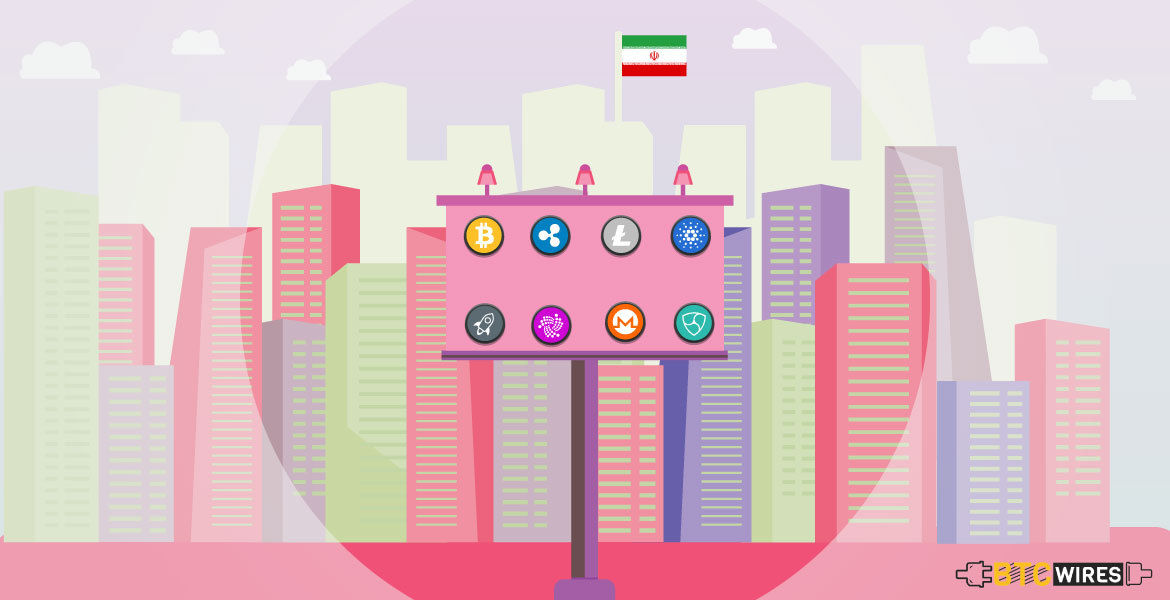
Iran to Launch State-Backed Cryptocurrency to Counter SWIFT and US Regulations
According to a news report published by local Iranian English
BTC Wires - Asia
89 points · by riya_876 · 7y ago · 47 comments
(I am CTO of a local cryptocurrency exchange market in Iran)
Might not be more efficient than, say, shipping tankers full of oil to countries who don't do the sanctions, or other goods, but it's an option. I think if there were essentially a way to anonymously buy 30% interest rate Iranian bonds at a retail level for crypto, you'd see people do it. They could also go after the stablecoin market by earmarking oil/other commodities/physical USD/etc. as backing.
Why would a free market buy bonds denominated in some newly created currency? Smells like the issuer just wants to be able to devalue this currency in order to pay the interest.
In the end, the reason reasonable investors won't buy 30% BTC-denominated Iranian govt. bonds is that Iran will have to exchange the ETH/BTC earned from selling the bond (because whoever Iran wants to pay don't accept ETH/BTC), which exposes the investment to a huge exchange rate risk.
Is it still possible to trade there? I remember reading that some exchanges like Bittrex are going to block Iranian accounts because of new sanctions.
Also local exchanges like out startup operate in Iran to match domestic supply and demand without the need of external entities. But anyways, this is all about not-so-large sums of money and not government level transactions.
enemy, or Grey zone neutral power, announce they will use something a state always wanted a reason to jump in but didn't really had a legal reason.
with this news, real or otherwise, every intelligence agencies will be allowed to monitor cryptocurrencies. and then "cooperate" with the irs or do whatever is their real intent.
However they are not using existing cryptos: instead they try to bootstrap their own crypto to still milk the seignorage cow they like, and to keep the ability to rewrite the rules later that they also like.
My trust in these countries monetary policy is less than the trust I have in say Grin.
The only reason not to is:
1) They don't want local currency holders expropriating their capital
2) It could result in their local currency having high inflation or even possible collapse down the road
But... if cross-border flow was really their goal, then they would use Ethereum.
Once they’ve traced the original ETH all transactions flowing out of it can be blocked by the other exchanges.
Their options are to either use a privacy coin (Monero) or make the initial purchase underground and somehow hope it doesn’t get discovered.
* Their main goal, and problem, is to exchange to & from other currencies. They'll be subject to their coin being a poison pill that causes any bank or exchange dealing with it to be sanctioned, risking their own access to SWIFT, etc. How will they attract miners when miners will face the same exchange difficulties?
* Trust will be minimal, since it not only starts out as just another shtcoin among thousands, but unless they are VERY transparent and do no pre-mining or take other excess rights/value available to coin-makers, who else would trust it? E.g., that Venezuelan coin, supposedly backed by oil barrels, has it done anything good?
Even if they do get people to trust it, and get ways to exchange it, they'll certainly be target of state-level cyber-attacks if the currency gains any traction, and either a massive corrupting hack or a 51% attack could be even more devastating than having never started in the first place.I'm buying popcorn.
Tokens on the eth blockchain? Something else?
By the way, why wouldn't sanctioned countries including Venezuela, Iran, Russia (all the three trading oil) and others find some countries willing to partner with them and establish a common cryptocurrency? Wouldn't this make more economic sense than every country inventing a crypto of their own?
I read through this and lack of any detail is telling ( not unlike with EU SPV and Venezuela's own crypto attempt ). Personally, I think that crypto will face the same fate as potcoin, but even when we assume it works, it will work well locally.
If there is one thing we learned by now, it is that the whole point of sanctions like these is to limit sanctioned country's access to the international markets. Few exchanges will touch it and if they do, they will likely be sanctioned.
So there is that, useful article to add to my linkedin feed.. but that is it..
edit: added missing 'they'
Using something such as Monero/Zcash (pick your flavor of the month) makes far more sense as there is already a widespread supply allowing them to optimally 'wash' their funds. They will likely not be able to convert their crypto currencies into dollars and use those dollars in any meaningful way but they could use the crypto currency to purchase needed goods and services and allow the vendors to worry about fiat conversion.
Creating an Iranian cryptocurrency for use anywhere outside of Iran is doa. I don't really understand the point of using it inside Iran either as they have fiat for that.
Crypto advocates often make a big deal out of the idea that states cannot in practice effectively prevent or regulate use of crypto currency.
If they decide to fork any existing cryptocurrency or create some kind of token, it's likely to be banned on exchanges. I don't see how they could pull this off.
Monero used to traded for around 45 cents ($0.45) for about 2 years, it trades for $45 right now, your argument would have worked A LOT better then. Why is Monero $45 right now? For the obligatory devil's advocate response who will you blame: dark net markets, sanctioned countries, better user experience? All we have are correlations and these networks are working as intended, and have gotten a lot more hardened and resilient. So let it trade for $4,500 just because Iran has some money to move.
Then you get to the bigger problem: being involved in these activities has significant risks in any country which follows the sanctions. The authorities are going to want you to prove that you aren't involved in the illegal activity if you don't want to be charged with money laundering.
https://www.aljazeera.com/news/2019/01/iran-inches-closer-un...
Edit: Yes, I understand the banking tie in. I was thinking more of mining, and trading other cryptocurrency (monero maybe) for "bit-rials".
All a cryptocurrency adds is a public record making that task easier and the hokum used to sell it may make the NSA’s job easier if people believe it’s anonymous. Setting up a separate one also means there’s less benign traffic to hide behind.
If the purpose is to allow Iranians to circumvent restrictions on international trade, then you encounter the problem of not many people wanting to swap their goods or dollars for crypto-rial. (If the purpose is to allow people to make payments within the Iranian banking system in accordance with Iranian law, the crypto layer is redundant)
China, Russia, Iran, and even Venezuela can play with cryptocurrencies, but when the money needs to go elsewhere, it has to be in a currency that people have faith in and is accepted everywhere.