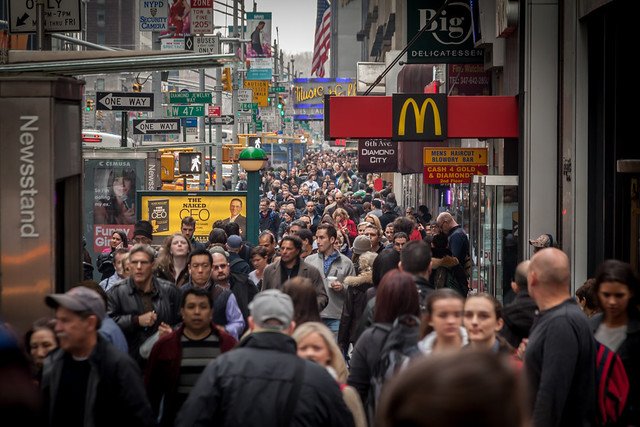
City life damages mental health in ways we’re just starting to understand
Scientists are just beginning to probe how air pollution and other physical aspects of the world around us contribute to psychiatric problems.
Popular Science
154 points · by dtagames · 7y ago · 168 comments
However I also know the dark side of rural areas, mainly substance abuse triggered by boredom and lack of opportunity. There is always a trade-off.
I don't know where people get this idea that rural America is some kind of idyllic, serene place. It really isn't, for the most part. If you want idyllic, you'll have to find some extremely remote place in the mountains of the western states.
https://en.wiktionary.org/wiki/peninkulma
I like rural places fine but the constant barking kills me.
It's pretty bold to be talking about cities and mental health when about five minutes in a small town will vividly show you the backstabbing, gossipy, popularity contest bullshit that comes with "closely knit communities" of all types. Like someone said, it's all a big trade-off. Human beings can go thoroughly nuts anywhere they lay their heads.
However, I just spent 2 weeks in Japanese cities, including almost a week in Tokyo, and it was extremely clean. Even on trash day it didn't stink.
That's plenty. There aren't any stinky farms or noisy trucks around. There is a lot of grass to mow, though.
All things considered, I like it.
A few extras:
* You can't exercise, because dogs don't just bark but also chase you, and no one cares or thinks you're the asshole for complaining because you're in the country.
* Daily life is /very/ stressful. Forgot milk? Well, fuck you, buddy, because you're either doing without it or you're making a 50 minute round-trip that costs $8 extra in fuel. Want a pizza delivered? Nope. Chinese? Hahah. Need someone to come out and provide service? Oh, sorry, the first five places on Yelp don't serve your area. Grandma's calling? Sorry, but you're going to have to get used to repeating things not just once or twice but also a third and fourth time because that one bar of signal isn't going to cut it.
* Depression, drug use, and other adverse coping strategies are literally epidemic -- my entire neighborhood of stable working adults where I grew up all ended up on some combination of meth/oxycontin/xanax/antidepressants with alcohol use in excess of anything I ever see at 2 am throughout the nightlife districts of a top 10 US city.
* Oh, do you think you might need to get actual mental help? Well, those handful of upstanding people who aren't addicts are now going to be judging the hell out of you. Most conditions are just you being weak minded or morally inept. And don't even think about talking to someone or others about your thoughts, because that's not something you do. (And if it's sadness, fear, anxiety, or hallucinations, expect to have everyone suggest spurious religious interpretations instead of physical explanations, which, honestly, as a devout Christian, I now find really damaging both to peoples mental and spiritual health.)
* Friendships are forged as a practical proximal matter and not by choice. No one else benefits your mind or academic or professional achievement, and you probably won't share common interests -- you're buddies because Larry's the most likable dude on your block. In fact, even among friends, most people hold a majority of views that you find seriously revolting, and very few people appreciate any kind of artistic or intellectual activity of any kind. Romantic relationships are even less glamorous.
* Did we go over your essentials yet? Oh, wait, that'll be $70/mo for 1.5Mbps DSL that can't stream Netflix. The water bill will be double any reasonable amount and wastewater is processed in your back yard and at your own expense/peril. If you aren't lucky, you may even need your own well. You'll also have to burn trash or contract a company to come take it. Groceries and house supplies cost 30-50% more per quantity, and you have very little to no selection.
* Trash, everywhere. This alone makes me question anyone who thinks mental health is in any way better in a rural environment. It's sick having to look at collapsing, skirtless mobile homes and junk cars and scrap materials strewn across 15 peoples lawns on the way to the gas station. Any "green space" consists of trespassing behind barbed wire instead of a neatly maintained park.
There's rich rural (think of the Hamptons, Tahoe, Marin/Napa Counties) and poor rural (Appalachia, Deep South, Central Valley), just like there's rich urban (lower Manhattan, Pac Heights, wealthy areas of Taipei/Shanghai/Tokyo etc.) and poor urban (the Tenderloin, the Bronx, much of Baltimore or Detroit). I never see things like trash left out, drug use, etc. in rich rural areas, and it's usually a 5 minute walk to an organic food market. Conversely, I see trash, shit, junkies, mentally ill people, random stabbings, and so on all the time in the Tenderloin. While there may be some correlation between poverty and rural areas, it seems like poverty is a much bigger cause of various social ills.
Yep, I've seen this with Christians: "you have mental problems because you have demons in you!" This kind of thinking is extremely common in rural America these days.
>If you aren't lucky, you may even need your own well.
Wells are pretty expensive. Sure, the water itself is free, but the electricity to run the pump is not, and even at the frequently cheaper electric rates that rural areas enjoy, it adds up.
>You'll also have to burn trash or contract a company to come take it.
When I was growing up in rural areas, the common thing was to save it all up and haul it to the dump yourself every week or so.
All in all, you make a lot of excellent points that remind me a lot of the time I've spent in rural areas.
uh. if that constitutes stressful, how do you survive receiving bad personal news?
Even if your neighbor or neighbors have well-trained or well-controlled dogs, you have to worry about wild animals more than you do in urban areas. I'm not talking about predators as much as prey: A mountain lion is scary, but most of them pretty well leave humans alone. A buck deer in rut is big and deer in general are just really, amazingly stupid.
Plus... there's nowhere to walk to unless you really like seeing not only scenery, but the same scenery, over and over again, unless you spend more money to drive someplace with noticeably different scenery. (Rural areas are big. You can drive for days without seeing noticeably different scenery.)
> Depression, drug use, and other adverse coping strategies are literally epidemic -- my entire neighborhood of stable working adults where I grew up all ended up on some combination of meth/oxycontin/xanax/antidepressants with alcohol use in excess of anything I ever see at 2 am throughout the nightlife districts of a top 10 US city.
Another reason to stay in your home or stick to a small group of friends with no real ability to branch out. Want another friend? OK, pick the person with whom you have no common interests, the other person you have nothing in common with but this person's an alcoholic, or the person who moved there and obviously left the big town for a reason you'll hear about in gossip which will make you very happy you didn't interact with them.
> Oh, do you think you might need to get actual mental help?
Have fun driving hours to and from the next big town in all kinds of dangerously crappy weather!
> Any "green space" consists of trespassing behind barbed wire instead of a neatly maintained park.
Yes. This is something which needs to be mentioned more often: Cities have more public spaces than rural areas, because in rural areas, land is being used. You can't just wander into a wheat field or a cattle ranch. You could be arrested. National Parks are wonderful, but most rural areas aren't parkland, and most rural areas aren't even close to parkland. BLM land is by no means even close to being the same thing.
Some European countries have "freedom to roam" laws, but they're also more dense than rural North America, so most of those countries don't have "rural" to begin with, by and large.
Sure you cannot ‘order a pizza’ or anything else in this countryside (sometimes someone new moves in a few km down on another mountain who starts out delivering something, like pizza, but gives up pretty quickly), I can bake one in my homemade woodoven though, with friends who I met here and sound very different from the ones you met over there too.
If dogs attack you, they are not removed over there? They are here which is why that hardly ever happens. There have been none such incidents here for many years.
Radio beamed internet (point to point) is cheap and streams Netflix, Video conferencing etc fine and now everywhere is cheap unlimited 4g, so I can hike in the forest and take a rest with a funny cat video.
Water and electra are cheap and enough space to put solar for hot water and electric: waste is collected at waste points.
The only thing is that the ambulance comes late indeed, but you can have a chopper (for free) and the healthcare is excellent here (and free); but I would imagine a solid heartattack would kill me here, but it does so in most places, just here it is more sure. But in return for that I have clean air, a ton of space, and, opposite of your experience, far less stress; it is Spain, nothing is in a hurry here which is great once you accept it. Probably will save you a few strokes in the end. Everything is cheap over here as well, my neighbors live of 500 euros a month, something that can be picked up doing a few hours per month of coding for a city client while sitting in the garden.
The thrash also rings no bells and mobile homes are not normal (or even allowed long term), cars have to pay road tax even if they cannot drive until they are scrapped at an official scrapyard, so people have them destroyed etc.
I guess this really depends on the country; things like rural HK, Shanghai, Thailand (ChiangMai), France, Germany or the parts of rural Australia or New Zealand I have been for longer stretches are also not as you describe at all.
Also, a lot of people, including me, who grew up in rural areas, hate them after they leave for university etc but later in life start to long for them again in my experience.
> You can't exercise, because dogs don't just bark but also chase you, and no one cares or thinks you're the asshole for complaining because you're in the country.
This is literally what pepper spray and similar is intended for. Don't go cycling without it! You have to look out for yourself if you're in the middle of nowhere. Not willing to do that? Then don't live or do things there. Idiot dog owners are everywhere, but a pack of farm dogs is no joke when the nearest person is more than a mile away.
Especially for those that grew up around it.
Grass fed cattle dung barely smells even when it's fresh. Same with horses. Pigs are the same, only when in concentration.
The dogs don't bark up our tree.
https://drugabuse.com/country-vs-city-addictions-differ-says...
Rural people are more likely to abuse alcohol, whereas city dwellers are more likely to abuse hard drugs.
But I still feel that city people are crazier and more dangerous on average. The stick and carrot aspect of big cities does drive people at least slightly crazy.
Cities arent perfect. I'm absolutely stressed over the hectic pace of a large city. But I'm not depressed and hopeless like those I know in rural areas.
Maybe we each have to pick our poison.
Too many of the people I meet are ground down, sliding by, holding on, grappling with their identity and place in the world, somewhere on the scale of mildly scarred to full blown post traumatic, anxiety ridden, and/or profoundly lost.
Religion has abjectly failed humanity as a primary means for grappling with and managing the crushing gears of life. The idea that our non-denominational “community” is supposed to fill in the gap is laughable. The dream that the Internet would somehow fill that role at scale has proven in many cases to do just the opposite.
It’s not that humanity is lost or without hope, but we destroy ourselves (and our planet) in the way we live, and I doubt strongly that our genetic predisposition / survival instincts will ever allow us to reach any form of widespread enlightenment.
How do you diagnose this? Is there a checklist of signs you look for? Do they eventually tell you, etc.?
Just curious, because I don't get to meet than many people all the time, so I can't collect sociological samples and reach conclusions in the way you seem to be doing.
>In their review, Meyer-Lindenberg and van den Bosch found that some potential threats had been examined more thoroughly than others. For some, including pollen, there wasn’t enough information yet to show a convincing link to depression. However, the team did find a number of studies suggesting that heavy metals like lead, pesticides, common chemicals like bisphenol A (BPA), and noise pollution may contribute to depression, although further research is still needed to confirm that this is the case.
The article gives me the distinct impression that the author is in denial of the stress associated with living in a crowded place. I doubt that it has to do much with fumes in the air- stress is a side effect of spending all day hustling, bustling, and competing. The popular opinion in the zeitgeist is that urban development is a good thing- so any bad effects are treatable. Adding green space may be a decent way to treat the symptoms of city living, but I think it will always be a stressful, mental illness-inducing lifestyle.
The fact that he doesn't even address the "human factors" that basically don't exist in rural areas (you can leave your house unlocked and it will probably never be robbed, you don't have to worry about the tax man screwing you if you misread a sign about when you can park, you don't have to actively avoid stepping in human feces) are kind of a tip off. Worrying about other humans who you have not chosen to interact with doing things that screws you over is a whole category of stress that's basically nonexistent in rural areas".
If you're interested in the historical/humanistic perspective on urban planning more generally, check out the New Urbanists. Understanding pre-car settlements, how and why they worked, long-term norms, etc. is kind of their thing. It's also worthwhile to visit some old (500+ year) built environments in person.
I found this piece on "Sabbath as alarm" [0] through Slate Star Codex, and it resonated for me:
>One more useful attribute of the Jewish Sabbath is the extent to which its rigid rules generate friction in emergency situations. If your community center is not within walking distance, if there is not enough slack in your schedule to prep things a day in advance, or you are too poor to go a day without work, or too locally isolated to last a day without broadcast entertainment, then things are not okay.
[0] http://benjaminrosshoffman.com/sabbath-hard-and-go-home/#Sab...
After a while you realize that there's no such thing as a stress-free, liberating walk. Traffic is so all-pervasive that everywhere you go, you're constantly negotiating your way around vehicular traffic, most of which believes that yielding to pedestrians is a distant second concern to getting around as quickly as possible at any cost. Every cross-walk you use you have to watch yourself for drivers turning left and right who aren't paying attention. Every four-way stop you have to look around and make sure that drivers are actually going to stop for you. Blocks are short, so this is all you're doing all the time.
The sheer volume of infrastructure that's built for cars means there's not much left over. The only places to get that that sense of liberation back besides distant parks or suburbs well outside the municipal core. Any parks of non-trivial size in the city are filled to the brim with roads, many of which actually act as throughfare shortcuts for standard traffic most of the time (e.g. JFK in Golden Gate Park), so you're facing all the car problems as any other street.
After a while it's hard not to be constantly on edge looking out for the next person who's about to do something dangerous to you, which is quite stressful and almost certainly has negative long-term mental effects. It really doesn't have to be the case though — contrast the car-first streets of San Francisco and other American cities to the pedestrian plazas and legitimately car-free urban parks of some cities and Europe, and it's a world of difference. We could be doing so much better.
* kids being killed if they try to play in the street * urban centres being destroyed by parking lots * elderly people being terrified to cross the street * Dead cyclists etc...
Press a button to call a ride. Press a button to select a destination. 24-hour automated operation, and free-to-use for passengers with hand-carried items.
Compared with an elevator, a street-driven electric car is a bit of a nightmare. The closest horizontal analog is commuter trains on electrified rails, and even those are shaped by car culture.
If a city were planned like a building, and horizontal movement given over to externally-powered single-car on-demand vehicles that move exclusively on dedicated trackways, there wouldn't be so much space and energy wasted on cars.
Unfortunately in the US many criticize such efforts as being like Disneyland - as if that is a bad a thing.
Electric vehicles do nothing to address roads occupying more space than sidewalks, for example.
    New York, NY        45.6%
    Newark, NJ          59.7%
    Washington, DC      62.9%
    Jersey City, NJ     62.9%
    Cambridge, MA       63.2%
    Boston, MA          66.2%
    Paterson, NJ        67.0%
    Hartford, CT        67.4%
San Francisco, CA 70.1%https://en.m.wikipedia.org/wiki/Cycling_in_the_Netherlands
I've driven in Amsterdam and paradoxically it's a hell of a lot nicer than driving in, say, LA.
I don't wish to conflate Denmark and the Netherlands but they've both made huge improvements in similar fashion with respect to livable cities. If career allows it I might still move because I want to live somewhere my child can ride a bike to school. Houten comes to mind.
https://www.hopkinsmedicine.org/news/newsroom/news-releases/...
If I'm suffering from mental illness, I'd be more inclined to seek the anonymousness of a city, rather than the exposure of a small town/village
(In my experience the same is one of the reasons why homeless tend to move to bigger cities and/or why most of a city's homeless population is made up from people who weren't born there).
Wow, that is HUGE. Especially considering the population shift out of rural areas and into cities. We'd better get some social psych types working on this.
I moved from Toronto to Waterloo.
Productivity up. 'Mental illness' gone.
Less noise, less pollution, less stress, more sense of optimism.