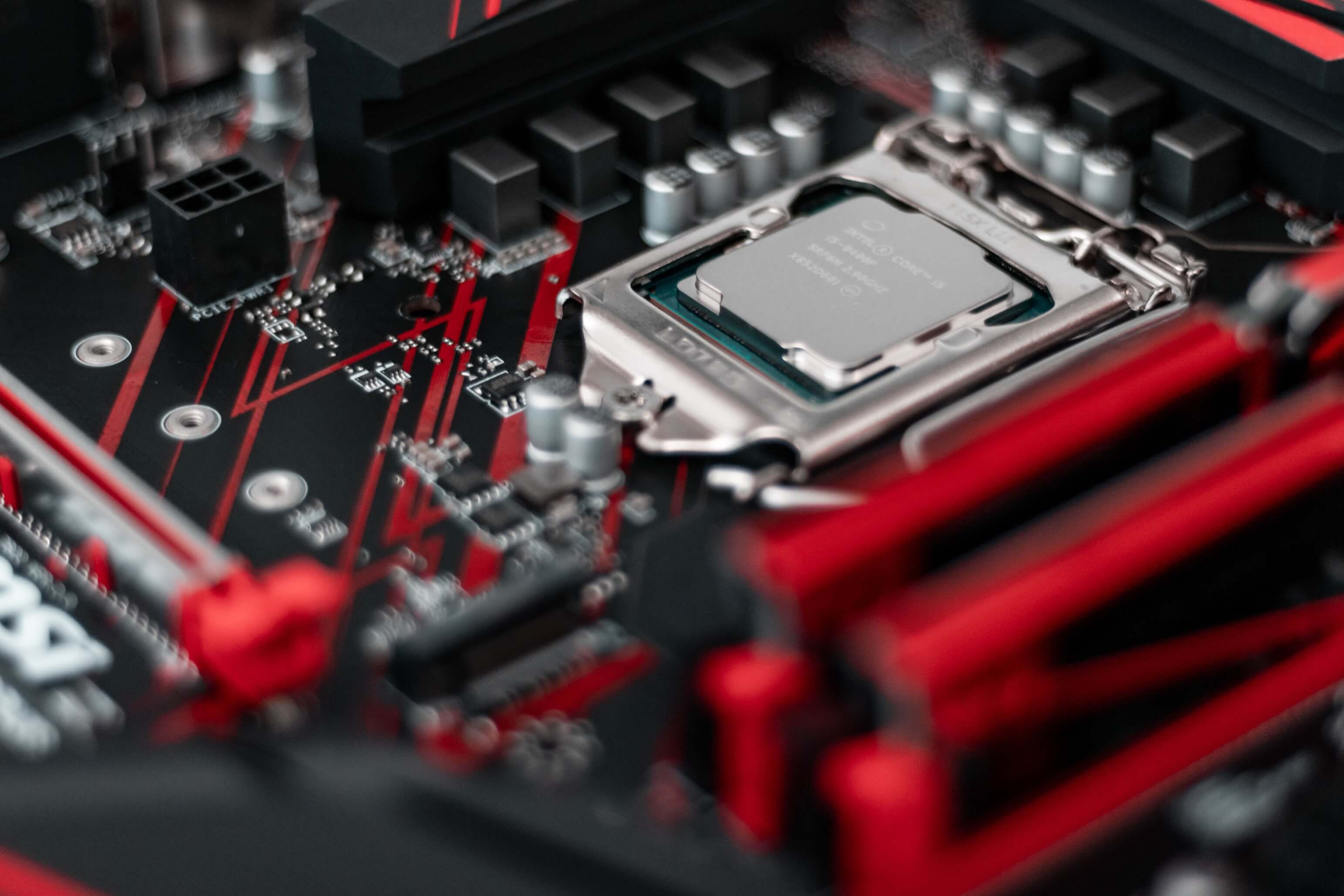
How Screwed is Intel without Hyper-Threading?
Today we're exploring the impact disabling Hyper-Threading has on Intel processors. We've done this in the past and it's an interesting test, however there are new incentives...
TechSpot
232 points · by rbanffy · 7y ago · 218 comments
If you're using an overclockable workstation CPU, the good news is that turning SMT off gives you additional ~200Hz of overclocking headroom. Modern Intel chips are thermally limited when overclocking and turning SMT off makes them run a bit cooler. My i9-7900X overheats over 4.4Ghz, but with SMT off it's comfortable at 4.7Ghz on air (Noctua D15).
[1] https://www.guru3d.com/news-story/intel-core-i7-8700k-benchm...
Here's another problem with the article:
> Microsoft is pushing out OS-level updates [...] However, this doesn’t mitigate the problem entirely, for that we need motherboard BIOS updates and reportedly Intel has released the new microcode to motherboard partners. However as of writing no new BIOS revisions have been released to the public.
That's wrong - microcode updates can be successfully applied by either the OS or by the early-boot firmware, you do not need a BIOS update (just apt update intel-microcode).
https://www.geeks3d.com/20190306/tested-cinebench-r20-cpu-be...
So Techspot numbers are fine, just a typo on version of benchmark, should say R20 on graph not R15.
In any case, the article is worst-case FUD-like nonsense. No idea what the eventual perf loss will be, but it's a safe bet it'll be less than that.
Consider that it's likely safe enough for 99% of usages for the OS to allocate CPU cores to processes in pairs, and that would incur only a small penalty. And something smarter is almost certainly possible, too.
"First off we have Cinebench R20 results ..."Personally I wonder whether the cost of mitigation is worth it. According to the article (and their simplified HT methodology) certain workloads experience a 25% performance hit.
The only cases I currently consider as exploitable are VMs in the cloud (perhaps a reason to own dedicated servers after all this time) and running JS in the browser (perhaps a reason to disable JS).
There will always be side-channel attacks. Our devices are physical devices and will leak side-effects, like electromagnetic radiation ( https://en.wikipedia.org/wiki/Tempest_(codename) ). This recent spate of MDS flaws don't necessarily fit in my threat model.
Maybe instead of slowing everything down for the sake of JavaScript, we need a special privilege mode for untrusted code that disables speculative execution, sharing a core with another hyper-thread, etc.
You are exactly correct. However, the advent of "The Cloud" changed that.
"The Cloud" by definition runs untrusted machine code right next to yours. IBM and other players have been screaming about Intel being insecure for decades--and it fell on deaf ears.
Well, suck it up buttercup, all your data are belong to us.
While I hear lots of whingeing, I don't see IBM's volumes rising as people move off of Intel chips onto something with real security. When it comes down to actually paying for security, people still blow it off.
And so it goes.
In particular, disabling JS would be pretty disabling for an average modern web user, so an easy, practical attack through this vector is especially relevant.
If we were able to run without JavaScript and have basic use of websites again then these attack vectors wouldn’t be so scary.
Maybe it’s a personal failing of mine; but I don’t understand why people don’t consider JavaScript untrusted code when other vectors of running software on my machine come from a gpg-signed chain of custody.
Interpreting the code instead should completely kill any chance of exploits of this class. It will also completely kill the performance though. Even tor dropped that idea https://trac.torproject.org/projects/tor/ticket/21011
So instead of trying to achieve the impossible (perfect safe code that still has unlimited access) the direction is stricter sandboxes. Then at least you only need one near perfect piece of safe code (the sandbox) instead of tens of thousands.
I think that ship has sailed..
We should work to build secure sandboxes instead.
Also, to keep this all in perspective, we are talking about one company that made egregious engineering decisions to maintain their market leadership which has put their customers at risk. To say we should do away with JS in the browser because Intel made some really poor decisions to undermine their competition is just crazy. As far as I'm concerned, this is typical Intel and they are getting what they deserve yet again. I just feel bad for their customers that have to deal with this.
The exploits that do worry me, are ones that can be done remotely without any action from the user. Heartbleed is a good recent example. Fortunately those tend to be rare.
Security is always relative to a threat model, and not everyone wants perfect (if that can even be possible) security either, contrary to what a lot of the "security vultures" tend to believe.
All the more reasons to run your own servers and compile your own binaries. Like we used to do.
Compiling once from a tarball and reusing that can definitely reduce the number of times you would need to trust something from a third party.
This is fucking scary. If it's a package used by Wordpress you could end-up with 30% of the web open to an attack.
1 - See "Synchronized ring 0 entry and exit using IPIs" in https://software.intel.com/security-software-guidance/insigh...
> There is no hardware support for atomic transition of both threads between kernel and user states, so the OS should use standard software techniques to synchronize the threads.
Ha, “standard software techniques”. Let’s see: suppose one thread finishes a syscall. Now it sets some flag telling the other core to wake up and go back to user code as well. But the other core is running with interrupts on. So now we sit there spinning until the other core is done, and then both cores turn off interrupts and recheck that they both still want to go to user mode. This involves some fun lock-free programming. I suppose one could call this a “standard software technique” with a somewhat straight face.
Meanwhile, the IPI on entry involves an IPI and the associated (huge!) overhead of an x86 interrupt. x86 interrupts are incredibly slow. The IPI request itself is done via the APIC, and legacy APIC access is also incredibly slow. There’s a fancy thing called X2APIC that makes it reasonably fast, but for whatever reason, most BIOSes don’t seem to enable it.
I suspect that relatively few workloads will benefit from all of this. Just turning off SMT sounds like a better idea.
Intel themselves said [1] "Intel is not recommending that Intel® HT be disabled, and it’s important to understand that doing so does not alone provide protection against MDS."
[1] https://www.intel.com/content/www/us/en/architecture-and-tec...
[1] https://www.intel.com/content/dam/www/public/us/en/documents...
The "don't apply the updates" argument in security is basically philosophically comparable to the antivax movement
As long as you also apply the quarantine principle when relevant. And herd immunity, both applied backwards:
Quarantine for when you run code that's under your control, like an HPC cluster; the biggest dangers from these vulnerabilities are when you're running completely random code supplied by others, JavaScript in browsers for normal users, and the multi-tenant systems of cloud providers.
Herd size matters because the bigger the herd, the larger the number of potentially vulnerable systems. IBM mainframe chips are vulnerable to Meltdown and Spectre, but there aren't hardly as many of them as x86 systems. Although the payoff of compromising them is likely to be disproportionately high.
Is this situation so unexpected that major companies don't even know how to react? If I were Amazon or Google, I'd be requesting my 30% discount, retroactively. Perhaps they are?
IIRC Vulkan was designed to be more suited to modern multi-core processors, and I believe that the "HT-agnosticism" it exhibits is good proof that they managed that pretty well...
Wouldn't that win half the battle, at least on server-side? It wouldn't apply to workstations, of course. Malicious/untrusted processes running there would still need to be isolated (malicious JavaScript in the browser, say).
Also, am I missing something, or are these concerns really not applicable to gaming applications (which the article emphasises)? That's a highly trusted codebase, so securely containing it isn't worth a 15% performance hit, no?
plenty of places rent bare metal machines, and the price doesn't seem quite that world-ending. see packet.net for instance.
and it only gets better if on the bare metal machine you get to turn off all of the performance-draining fixes.
They're probably a bad match for when you have a single batch of work to do, like when the New York Times converted their archives, or every time Netflix has to reencode their video library.
I'm not convinced the cost difference would be a showstopper. More little computers rather than few big computers. Same total horsepower. More motherboards, sure.
What issues? If your cloud architecture can't save power when demand is low, how can that be a positive?
> Go too far and you won't be able to also run a spot market in CPU instances like AWS does.
As I understand it, a spot market isn't ever an architectural goal, it's a way to exploit the practical realities of unused resources/capacity. If that necessity goes away, that'd be a win.
I see at least 3 possibilities:
1. The spot market is about filling temporarily-vacant VM slots on host physical machines
2. Additional physical machines must be kept online so that VMs can be quickly spun-up, and the spot market is about capitalising on this necessity (this is really a variation on Option 1)
3. The spot market is about deriving at least some revenue from the unutilised fraction of an always-on fleet, encouraging customers to run heavy jobs during times of low load on your cloud
I doubt Amazon's fleet is always-on -- I imagine they have fairly significant capacity in reserve to keep up with growth and spikes -- so I doubt it's Option 3. (This is a perfectly obvious question but I really can't find a definitive answer. Maybe my Google-fu is weak today.)
That doesn't sound right. A large number of weak computers, should be easier to cool. A cluster of smartphones can get by with passive cooling, but my laptop cannot.
Apart from cooling, I'm not an expert on this but I don't know that performance-per-watt has to improve as overall power increases. Going with my idea you'll need to power more motherboards, but they'll be less powerful motherboards. (The total number of CPU cores being powered remains the same. Same goes for RAM modules.)
Is that true? My phone gets quite hot if I run a taxing load on it for too long. My, perhaps poor, intuition tells me that phones can rely on passive cooling because of the burst nature of phone use. If you’re utilizing your smartphone cluster, I can imagine your fleet overheating.
If cooling systems for machine rooms haven't caught up with modern systems that dissipate more heat, the direction you're thinking has merit. But I doubt there are serious limiting factors here, besides cost.
So: even if I built that machine to not be exclusively used for gaming (which would be an outlier), anyone who has a machine of that kind could easily motivate making it exclusive for gaming, because there is so much money in that 10-15% that we can buy a second much cheaper machine (e.g. a low end laptop, chromebook etc) to use for other things.
Is there any way to mitigate this performance drop, disable the fix?
Then when your fuckups are discovered, other people not on your payroll expend their own resources to fix it.
And you don't even have to compensate customers who paid full price but now find 40% of their compute evaporated.
And that massive performance hit needed to fix your fuckups stimulates incremental demand for your product because customers now need more cores to finish their compute.
This isn't an excuse for Intel and how they (sometimes poorly) handle issues that come up. And it is well known that many of these vulnerabilities are currently specific to Intel and how their subsystems are implemented, or only exist on Intel processors. But side-channel attacks are a nearly universal vulnerability.
SMT of which Hyper-Threading is an implementation of is used in many chips from many companies, AMD's Bulldozer, IBM's POWER, Sun/Oracle's Sparc, etc.
These exploits are not a monolithic process, but many techniques chained together to get most of these exploits to work, and this common knowledgebase which has been refined by the researches will most certainly be recycled and reused on other processors.
If anything, the "capture 90% of the market." by Intel as you put it only ensures that these problems will usually be discovered on their processor's first.
If as much effort was put towards other cpus as it is towards Intel, you would see significant performance hits as well with them.
> If anything, the "capture 90% of the market." by Intel as you put it only ensures that these problems will usually be discovered on their processor's first.
Precisely. I haven't looked at the MDS set of flaws yet, but to take the first version of Foreshadow/L1TF, it targets the Intel SGX enclave, by definition the designs of other companies that don't have SGX won't be vulnerable. But as you note this doesn't mean they don't have their own design or implementation specific bugs.
This is extremely disingenuous phrasing. You seem to be trying to craft a narrative that makes putting security vulnerabilities in products an intentional thing to sabotage people, time, and resources.
It's intentional business decision to maximize performance and minimize costs paid by Intel, making their products faster and generating higher margins.
They achieved this by gambling that vulns wouldn't be exploitable. But Intel externalized that risk onto their customers and partners without their knowledge or consent.
So when the gamble failed, the rest of the ecosystem bears the cost while Intel harvests the gains for themselves.
Externalizing risks and losses on others without their knowledge or consent is a form of theft.
That's a huge leap, and seemingly without merit. You're still just arguing that Intel knew this would create huge vulns and they went ahead regardless, which is baseless.
And the decision to implement it without that study, or despite it, was made. Because implementing it increased performance which made the numbers which captured market share.
It's not like the processor designed itself that way. Humans made choices along the way, and every choice is a tradeoff. Execution-time attacks and other sidechannel leakage have been well-known for years, and I can't imagine that at a place like Intel, nobody had heard of that.
More than the following big things, in both directions?
- A consistent fabrication advantage until very recently? That's said to have wiped out a generation of clever hardware architects, when Intel beat their best efforts with their next process node.
- Falling behind AMD with the Netburst "marchitecture", the front side bus memory bottleneck, and only supporting Itanium as a 64 bit architecture?
- Reversing the above by licencing AMD64, reverting to the same Pentium Pro style design AMD was using, and copying their ccNUMA multi-chip layout (each is directly attached to memory, with fast connections between them).
- AMD losing the plot after the K8 microarchitecture, including putting a huge amount of capital into buying ATI instead of pushing their CPU advantage? And then having to sell off their fabs, putting them at a permanent disadvantage until Intel's "10nm" failed? (And what happened to the K9??)
- Anticompetitive marketing and sales?
> Execution-time attacks and other sidechannel leakage have been well-known for years, and I can't imagine that at a place like Intel, nobody had heard of that.
The strange thing is that security researchers assumed for years that Intel was accounting for this, when it turned out not a single one of AMD, ARM, IBM POWER and mainframe/Z, Intel, MIPS, or SPARC did?
Because we should assume all your past missteps were due to willful negligence? Yeah, let's not just start making shit up to support the group think outrage.
It obviously wasn't obvious to the very, very many people worldwide who know about execution-time attacks and other sidechannel leakage, as it took more than 10 years of almost every chip worldwide being vulnerable until it was noticed. It's not as if some 2016 design tradeoff suddenly enabled Meltdown. Engineers were carefully studying competitor's chip designs, and none of them noticed that flaw for more than a decade.
Those professors aren't doing too bad now either, with plenty of papers to be published outlining the flaws and proposing solutions.
/s
Really, though, humanity is still pretty new to this whole computer architecture thing in general, and running untrusted code securely in particular. Im skeptical that someone at Intel was aware for the possibility of vulnerabilities for 10+ years before any of them were made public.
To be honest, I'm a little perplexed by the animosity directed towards Intel after all these vulnerabilities. Vulnerabilities in software are most frequently the result of ignorance, but everyone seems to assume the engineers and managers at Intel knew better (or should have know better). Who would have told them?
http://www.daemonology.net/hyperthreading-considered-harmful...
That is, these earlier timing side channels can be avoided, even in the presence of SMT/HyperThreading, by not doing data-dependent branches or memory accesses, and not using instructions with data-dependent timings. For instance, instead of "x = cond ? a() : b();", do something like "mask = cond - 1; x = a() & ~mask | b() & mask;".
That is not the case with MDS: even if you carefully avoid data-dependent branches, memory accesses, and instruction timings, you are still vulnerable. It's really a new vulnerability class.
Anyway, that's not the same vulnerability as any of those that have become public in the last 18 months.
Or maybe it was an industry blind spot, now a very big deal because so many of these CPUs run other people's random code, JavaScript in browsers, and anything and everything in shared cloud hosts.
In my case, we observed very marginal performance impacts from last year’s mitigations.
So I think this is some sort of misguided hit piece against intel.
Everyone knows pcs are riddled with security flaws less obscure than this. People who run their business on cloud servers might care. Gamers though? No.
https://react-etc.net/entry/javascript-spectre-meltdown-vuln...
Gamers are are the 5 dollar whores of the security world, they are riddled with bugs and the dont give a crap.
The only two mitigations is either disabling hyper-threading or disabling JIT.
IMO Intel customers should not be indifferent, what you thought you bought was not what you got latter, you lost performance and you have to do advanced stuff to disable the security patches and be unsafe
Edit: My bad, I considering buying i7 and got an i5 , I got confused(my i5 is a K CPU 6th gen).
Haven't kept up on Intel well enough for the last two years or so to be sure, but I seem to remember there being a generation where that happened.
Your argument is invalid.
> Note that n1-standard-1 (the GKE default), g1-small and f1-micro VMs only expose 1 vCPU to the guest environment so there is no need to disable Hyper-Threading.
I'm wondering if they've decided to just eat the loss on the single vCPU nodes, and for vCPUs >= 2, they pass the decision on to the customer.
Or is there someone else's VM running on the other hyperthread?
Here's their guidance on machine types: https://cloud.google.com/compute/docs/machine-types
> For the n1 series of machine types, a vCPU is implemented as a single hardware hyper-thread on one of the available CPU Platforms.
I wonder how much these continuous performance degradations are costing bigger customers, like cloud operators. This shit can’t be cheap.