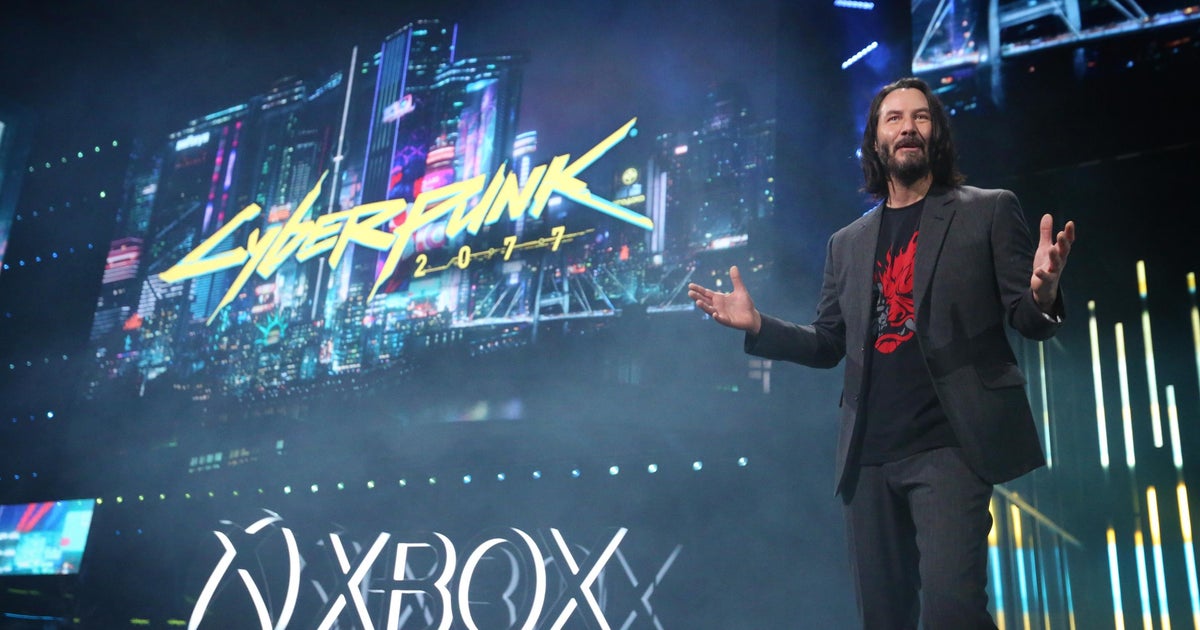
Developers don't want to show gameplay at E3 anymore, and who can blame them?
Game developers try to show, not tell. But on the stages of E3 this year, they haven't been showing very much either.
VG247
180 points · by luu · 7y ago · 265 comments
You have to stop thinking that you're in charge and start thinking that you're having a dance. We used to think we're smart [...] but nobody is smarter than the internet. [...] One of the things we learned pretty early on is 'Don't ever, ever try to lie to the internet - because they will catch you. They will de-construct your spin. They will remember everything you ever say for eternity.'
You can see really old school companies really struggle with that. They think they can still be in control of the message. [...] So yeah, the internet (in aggregate) is scary smart. The sooner people accept that and start to trust that that's the case, the better they're gonna be in interacting with them.
A small group of smart people on the internet may do a lot of noise, but it just echoes in the void then it's business as usual.
  (it's after all the studio
  that made Baldur's Gate)
If you read enough of of them you can see BioWare has had three phases in their life:
1. Shattered Steel to Mass Effect 2, where they were largely independent and taking on feast-or-famine work (more of the former given the quality of their work at the time)
2. Mass Effect 3 to The Old Republic, which ringed-in the EA era and cracks in the quality of their work start to show. The end of this era is also when the co-founders and some key contributors to their past games left.
3. Dragon Age 3 to Anthem, which ringed-in stronger ties with EA—specifically having to work with Frostbite—and where we see that a lot of the problems we saw in the last era were probably chronic rather than acute. Lots of key contributor churn.
At the end of the day your decisions still matter to you. The debate around the ME3 ending has left me with a lot more respect for the ME3 ending over time than after I played through it the first time.
Which of those 3 buttons a player chose often says so much about their combined playthrough of all three games. Linearly in terms of that playthrough so many gamers felt they only had "one choice" at the end, and that is an amazing psychological trick because the statistics BioWare revealed show that among players that did complete the final choice it was an almost even split (and a surprising number of players took the interesting fourth choice of just quitting there and not making a choice).
I think the ME3 ending even before the Extended Cut (and more importantly the final Citadel "cleanup" DLC) was better than a lot of gamers gave it credit for, but the problem with it was that it was a very hard situation to see the forest from your particular gameplay tree.
(Now, Anthem from a story perspective I have a lot less respect for. It's a weird KOTOR B-Plot [almost entirely recycled] with the Star Wars filed off.)
Your decisions do technically affect the ending, but it's subtle and not very satisfying. The outcome of every major decision in the trilogy is assigned a numeric value and added to a "war assets" sum as you progress through the game. Different decisions result in slightly different amounts of war assets, and actions in the third game were heavily weighted over previous games. The size of that number changes each ending very slightly.
https://www.ign.com/wikis/mass-effect-3/End_Game_Chart_-_Wit...
PS: I had no idea it was such a controversial statement to suggest that things matter even if the universe is ultimately doomed.
Some other game maker would crush EA in the market if they were allowed to use NFL logo's and names.
Though in hindsight who knows what a 2K NFL game would look like today. With the way they butchered their NBA games I don't have much faith that an NFL game would be any better.
I haven't figured out how they are still releasing a new game every year - they really should be releasing every season, or really, every team, as a DLC. The content is where it is at, not the engine.
Maybe. But outrage that results in meaningful action lasts a few months at most. The first person shooter industry is fascinating to me. Somehow Call of Duty is still extremely popular and commercially successful series year after year despite continued management by the exact same studios that repeat the exact same algorithm:
1. Release re-skinned game each year with huge promises of new and original content to come
2. Underdeliver on said promises and lock remaining ones behind micro-transactions, loot boxes, and DLC
3. Abandon game 6-12 months in to begin preparation for the next iteration of the game after raking in millions on suckers
4. Repeat
You'll see thousands of people swearing they'll never pay another $60 + add-ons for a CoD game ever again and yet somehow the cycle continues year after year.
There are numerous other video game series (not just in the FPS genre) that follow the same pattern. Some eventually get run into the ground, but only after a very slow and profitable death. People have short attention spans. You might remember touching a flame, but the feeling of pain quickly fades.
But this doesn’t happen in isolation. It’s likely that people who dig up that “promise” had an axe to grind anyway, so it’s about scoring points based on spin and lies.
The problem is that the people I would want to play with stop playing the older games, so if you want to play with your friends and get a half-decent matchmaking experience then you have to get the new ones.
There's also a minor problem with the older games, people get so good that the enjoyment is sucked right out, it's nice when everyone is unfamiliar with the balancing/movement/etc in the first months, it evens the playing field a lot.
(also, older and thus cheaper/free games lead to a lot of cheaters who don't care if they get perma-banned).
Every couple of years they promise "completely new engine from the ground up" and deliver an incremental improvement on the previous years. I don't necessarily consider the result a bad thing, but the marketing is always BS.
I wonder what proportion of the cod sold are first or second purchases into the franchise before the infatuation tapers off, my hunch is that it's quite a majority
‘You can fool some of the people all of the time, and all of the people some of the time, but you cannot fool all of the people all of the time.’
The public in aggregate have a perspective that insiders in a company don’t or cannot because of culture or they’re too close to the problem or they’re just being disingenuous. And the public always finds out, sooner or later.
The individuals do not have to be smart here, there just has to be one person who will bother.
I don't think it works like that, most social media are a game of numbers, if one smart person was enough, you wouldn't have nonsenses like flat-earth and similar becoming "popular topics".
> The smart cow problem is thought to be derived from the expression: "It only takes one smart cow to open the latch of the gate, and then all the other cows follow.”
Sure, the internet will remember everything you ever said, but the question then isn’t whether what you said measures up to the truth, but whether what you said can be spun in a negative way for you.
Also, none of this is inevitable or even very predictable.
The internet might rage,and might call your bluff. Butbas long as it doesn't show in my wallet. Why should I care as a company?
As an aside the exact same is true in the movie industry. Ticket sales have been on a sharp decline since about 2002. [2] This is masked by similar effects as above, but there's also another one in the movie industry. They focus on "gross receipts" instead of ticket sales. Gross receipts = tickets_sold x price_per_ticket. Far fewer tickets are being sold, but their costs have gone up. So the whole dissonance about Hollywood releasing increasingly rubbish films because this is what people want is clearly untrue. To be clear this was also not just a clever rebalancing of price:demand. Their inflation adjusted revenues also peaked in 2002.
Hollywood's in decline, overhyped games are in decline. It's only our perception that's lagging behind.
[1] - https://www.statista.com/statistics/321374/global-all-time-u...
The picture I'm talking about...
Even GOOG seems to not be immune to this one. They're cited in recent headlines regarding a promotion of RCS but IRL they're abandoning it.
I even work(ed) on a game that was actually embroiled in a scandal regarding E3.
I can probably shed a little insight as to why:
1) Once you show gameplay footage, you’ve promised. This isn’t necessarily the worst thing in the world but a lot of the time the “promise” is a mega polished version of what you want to show, it’s on rails, it’s going to show all the best features of the engine, you control the pacing etc. Even if those things make it into the game (as, my game actually was in 100% parity graphically, but we ran out of budget for animations) then people /perceive/ it worse, regardless.
2) what is shown isn’t actually a game- even if it looks like one. It’s a prototype. And there’s many reasons that the final product has to be trimmed down. Either it’s required because the budget goes towards something else (such as smarter NPCs, or better animations) or it wasn’t ever possible to produce what was shown due to things that were not known at the time of creating the demo or footage. The fact is simply that you’re showing something that may not be able to exist. So that is in direct violation of my first point.
3) we got burned the last console generation, we thought the machines were going to be at least twice as powerful as they ended up being. (You May notice that my publishers “downgrade” scandal happened post-E3:2013). What we had prepared was geared towards significantly more powerful hardware. (So, number of props on screen can’t be as high, number of light sources can’t be as high, issues with streaming “pop-in”) My publisher won’t make this mistake again and with a new console generation around the corner it doesn’t makes sense to underpromise (and use the current gen, which our competitors may not have done this E3) or overpromise, and guess what the next console gen will have.
As an aside: I know it’s a trope that “console gaming holds gaming back”, and there’s a grain of truth there, but I would caution allowing developers to use as much hardware as they can, our work machines have obscene hardware (latest high end Xeon with 64/128g Ram and a gtx2070 is common), if we were not optimising for a limited platform then pc would suffer too, I just don’t know how much it is currently limited.
One of the main reasons that things get bleached out of a game (menu's, HUD, rich graphics) is accessibility or localisation. I think a lot of people only look at games in an able-bodied western way, but if you want to sell your game in arabic then your menu's have to support going right-to-left, if you want your games to be sold to people with near-sightedness then you can't have dense darkness or heavy fog for most of the game unless it's removable (thus' more testing scenarios).
For demos/proof-of-concept pieces: artists have free reign, until it comes time to actually address accessibility, discoverability or localisation concerns.
Sometimes, they feel just deliberate.
But I'm talking specifically about things like Watch_Dogs and The Division, where it was never the intent to mislead by anyone involved, even the marketing department (which can be overzealous) thought they were playing it relatively safe, only for the situation to get dicey quickly.
For a small time game dev like Hello Games failing to meet expectations with No Man's Sky, I was generally willing to accept their failure and apologies, and continued to go back and try games.
For a major publisher like Ubi, I ended up boycotting them for years.
One AAA game I worked on released a trailer for E3 which we were really proud of. Our game looked amazing and that's what we showed.
The trailer was recorded in game. The only "trickery" was custom placement of some cameras and rendering to a 4K backbuffer and downsampling (which the final game does support on PC, anyway).
Despite the trailer being rendered in real time on a relatively powerful gaming rig using the actual game, the YouTube comments were flooded by people being angry at how this was obviously fake because it cannot look like that in the final game. There were even people explaining why and how this was obviously fake.
I thought AAA studios would be in close communication with hardware manufacturers (Nivida, Sony, AMD, Microsoft, Ninendo, etc).
and lol no PC gamers aren't a part of that equation whatsoever
I feel like the potential console gaming crowd is so heavily diluted towards mobile and casual formats. any of the good VR titles are also running in wireless mobile formats with good enough graphics
I hope there is a differentiating quality to make the 'set top box' format a staple in the 2020s instead of "just" better graphics. I feel like it is necessary
I think Microsoft is also deviating now. Microsoft tried to differentiate the Xbox One with Kinekt and an online-only console, but reverted due to backlash. Now they're trying again with Xbox game pass and much more cross platform/cross play availability. There're almost positioning themselves to go up against Google Stadia. But they might revert again.
So far I only see Sony sticking with the traditional model. Their marketing for PS5 and PS1 are essentially the same. "We have more games that look better."
PS4 is just a PC with some useful extras; PS5 probably will be too.
Microsoft has been talking about their Project xCloud and has had Xbox Game Pass around for a lot longer than Google Stadia has publicly existed, so it's maybe more that Google Stadia is positioning itself to go up against Xbox.
Also you are not locked into generations and such. I own a PS4 and I can't play my PS3 games for example unless I buy the "remastered" versions like Wipeout Omega Collection. Don't know if it's the same in the Xbox world. I know Sony has claimed that the PS5 will be backwards compatible with PS4 games at least. With a PC this is a non issue. I can still play Half Life 2 on any PC and it is a 15 year old game from the PS2 era.
The other issue is game prices. With PC you get huge discounts. It's common these days to find 50% discounts on a 3 year old AAA game during Steam sales, sometimes even 75%. The Sony Store never gets great discounts, except on very old or not so great games.
IMO the only clear advantage of console gaming is that it's "plug and play".
1. https://www.pcgamesn.com/pc-gamers-vs-console-gamers-numbers
Biggest case-in-point since Watch Dogs: Anthem.
Here's the E3 reveal: https://www.youtube.com/watch?v=EL5GSfs9fi4&t=330s.
We have since learned[1], after the disastrous launch of this game, that this video was showing even the dev team what the game was supposed to be about. This game did not even exist yet as an official entity until after E3 2017 (heck, it was going to be called "Beyond" until the week-ish before E3), and then the team had just over a year to build and launch it, with predictable results.
[1] https://kotaku.com/how-biowares-anthem-went-wrong-1833731964
I cannot find it anymore, but there was a (very old) website about game development failure quotes.
One quote I can still remember was something like:
"You know your game fails when you read in the news about the feature you are supposed to have"
This kind of stuff is going on for a long time. Only, the internet changed how the audience reacted.
Man, I haaaaate these "fake-gamer" actor gameplay videos so much. I've never ever played a multi-player game for real and had people talk like that.
The indie games I follow are very cautious about what early stage stuff they show. I suspect that is pretty close to what developers would decide.
I guess you could relate that to the Steve Jobs quote about how when product focused companies get their decisions made by the sales/marketing team, they begin failing.
Their game would fail, but they wouldn't know why.
https://www.youtube.com/watch?v=l7iqzwD3hlI
It's so bad, it's like a low budget porn ripoff version of the game they sold.
I would hope we could collectively rally against this sort of behavior by refusing to buy such games that refuse to preview any actual gameplay. But I doubt that will work, given that Dead Island sold five million copies[0], based off what I can only assume was due to enamor with the trailer.
Can you do that with what you have now? Will you get it right? We as software engineers aren't great at predicting what we'll have in two weeks.
If the community doesn't want to see target renders, good. They derail development anyway
I don't think anyone would have an issue if there was a giant watermark that said "CONCEPT" across ones that are no where near being represented in the final product yet, but it obvious that these companies are being intentionally deceitful.
I'm struggling to think of a diplomatic way to express how naive I feel this statement is, so I'll just leave it at that.
The online community doesn't even need real reasons to be angry, they'll make them up at they have to. It's somewhat ridiculous to suggest they aren't capable of ignoring a "CONCEPT" watermark to get riled up about "broken promises".
"WORK IN PROGRESS - DOES NOT REPRESENT THE FINAL LOOK OF THE GAME"
As well as having similar messages reiterated by the narrator throughout.
Previously CD Projekt Red was roasted for perceived "downgrades" in The Witcher 3, notably in lighting which CDPR had to change to accommodate the day-night cycle in the game.
That said, hype for Cyberpunk 2077 is incredibly strong right now. We'll get to see whether players really do take disclaimer messaging into account when the final product launches, no doubt with "downgrades" evident in many facets of the game.
The solution to this is showcasing your product when it's much closer to release. I'd welcome the idea of revealing games months before release and some developers already practice this approach, like Borderlands 3.
Hell, I'd even go as far as suggesting a true announce when it's done approach: Take something like Cyberpunk 2077 - just imagine the idea of Keanu Reeves mentioning that it's available...today.
I think that's because our development is supposedly agile and we iterate a lot because we don't know what we're actually building very well (that's not a bad thing). Iteration in game development is much slower and lends itself to a waterfall approach because the developer is the client most of the time. In theory the game should look like a very close approximation of the final version years before its launch.
Given that much of game development is an iterative creative process, you would hope that iteration is much faster than in other development work. Maybe not for the programmers, though.
I don't see how its any more suited to waterfall than any other industry. Sounds like something game devs tell themselves so they feel better about their bad habits, like how crunch is necessary or how automated testing is too hard.
Before online gaming, games were required to deliver a 1.0 and had no further chance to patch or improve it. They would do so in silence — like Nintendo does — and essentially work for years on things that no one even knew existed until they released their 1.0 gold master and began producing marketing material from it.
Nintendo continues to follow this policy today — we get demos when they've finalized the game, and not before — and Nintendo refuses to market games until they've finished them, so we get years of "will there ever be another Super Smash Bros" and "OMG TELL US WHAT'S COMING" which they silently ignore.
Now you declare openly that game developers who tell us what's coming while it's not yet finished will be punished if:
1) What's not yet finished doesn't match what's finished on 1.0 day in any way that is personally meaningful to you and/or anyone;
and/or,
2) What's announced is announced only with a complete finished 1.0 product from which marketing materials are exclusively developed and provided immediately upon announcement.
So, you're championing the Nintendo model, which is fine — we will hear nothing about any upcoming games until they're ready to be released, and if that means years of silence from the owners of properties such as Halo, GTA, Pokemon, and so on — then that's completely acceptable and we should expect to hear no complaint from the gaming community as a result.
I am not led to believe by your response that "we will hear no complaint" is the outcome that will occur if and when the entire gaming industry complies with your demands by stopping all pre-release announcements altogether, which leaves me wondering: How, precisely, do you expect a valid outcome to occur from your requirements that both satisfies your demands without triggering complaint over the lack of updates over time from studios who are busy complying?
EDIT: To pre-address the most obvious reply — "they should only demo what's done" — I guarantee that nothing is ever done until the final day of development, as critical features can be cut literally hours before gold master if there's an undiscovered flaw that QA discovers at the last minute — so since "nothing" is ever done until the final 1.0 release, "they should only demo nothing until the final 1.0 release is done", and we're back to the above question.
"Don't lie" is a very low bar, and there is a lot of room to exist above it.
Maybe, things change because the mechanics proved to hard to learn.
Maybe, things change because to fit X number of characters on screen in level Y, you had to downgrade the main character visuals.
Either way... Is that a lie?
In the eyes of most developers no, it's just part of development.
In the eyes of consumers...yes?
It's simply marketing spin, gameplay or no gameplay, it's why you can never really trust such hyped up demonstrations and they can only tell you about their product, not show it. That also applies in further interviews on various news outlets.
And E3's reputation for housing flim-flam and lies is well established: https://www.penny-arcade.com/comic/2004/03/03
I think another view is how the FF7 remake has been treated for years since its initial announcement. There was hype, skepticism, and finally support.
There was some pre-release publicity for many games in development before online gaming. Peter Molyneux was working the press with his famous enthusiasm before 1990: https://www.youtube.com/watch?v=DAuvaAGnqQw . Maybe Rise of the Robots was the first real debacle of pre-release hype, but it was probably as bad as anything since: https://www.youtube.com/watch?v=E4udiQq5gpY .
I can only imagine, with contempt, the cube jockey who figured out that distributing game demos was bad for their bottom line.
I grew up in a tiny little town in Texas where the nearest, non-Walmart video game store was 45 minutes away - this is back in the tail end of the NES, the middle of the SNES, and the dawn of the PlayStation era.
The store I went to would often only get between five and ten copies (beyond what was pre-ordered) of a video game on launch day, with a typical waiting period of two to three weeks to get more copies.
I vividly remembering pre-ordering video games that sounded interesting, some for as few as $5 that could be transferred to another video game pre-order if I changed my mind. Back then (and still today for physical games in some stores), you could pay the balance when you pick up the game.
Today, aside from bullshit pre-order bonuses that the video games companies make exclusive to each retailer, there is very little reason to pre-order - Steam/Origin/GOG/Epic Game Store will not run out of copies - they can copy the bits an infinite number of times. In fact, in the case of some flops (looking at you, Fallout 76, with your nearly 50% price cut within a month of release), it makes no sense to pre-order.
The real mind-melter for me is Kickstarting games. Crowd funding is nice and helps projects that would otherwise not be funded, but why would you want to pay for a game that isn't even completely conceptualized yet?
It depends on the game, I'd say. While I'd like often playable demos, I try to document myself on what's available (videos - not trailers - and previews) and if it is interesting to me (but again, I don't really get most of the AAA games, although some of the ones I own may be classified as such).
Also, at least releases in Japan and in Asia have actual perks with preordering (and by actual perks I don't mean useless digital items), although that comes as an additional cost.
That not to mention the industry feedback you get that you could be incorporating.
  Sure, you could just stop development,
  but then you're just wasting 6 months
  you could be spending making the game
  better.
Seems to me the problem is more when people feel the opposite is happening?
The average developer has almost no input into what is and isn't shown at E3. They can present some source material but E3 decisioss like these are made by a marketing company or the publisher.
It is vastly cheaper to simply pay streamers to hype up your game on Twitch or youtube than it is to give an honest, sober demo live on an E3 stage. The audience at these press events has shifted from enthusiast reporters/critics to hyperventilating influencer personalities. It was so bad this year that they were obnoxiously screaming and interrupting the presenters every few seconds to the point where the people on stage were losing their train of thought.
The other aspect is that putting together a demo takes time out of development. Almost every game shown this year had a release date of either Fall 2019 or Spring 2020. That means they're either on crunch or ramping up for it and can't afford to set aside a few months to make a vertical slice for E3. This is partly due to the end of this console generation with new hardware coming next holiday season.
The longer term trend is that marketing has caught on to the irrelevance of E3. They can run their own Nintendo Direct style live stream whenever they want to speak to their audience and the press will disseminate that info to the wider community.
You're even seeing companies like EA experiment with dropping a new title with zero advance notice as they did with Apex Legends (their take on battle royale, from the Titanfall developers). They just had an influencer preview event the week before and dumped it to the public with pretty wild success.
I've done this with Subnautica, Starbound, Rimworld, and The Long Dark. I don't regret going on a journey with the developers at all.
Yet Nintendo let people play Breath of the Wild at E3 2016 and it came out in 2017. Everything from that trailer are things from the actual released game as well: https://www.youtube.com/watch?v=6LIq8ryhG9c
So some companies clearly manages to do this. Another example is Blizzard, they typically have wysiwyg games as well.
Even if you dislike their games, you have to admit they 1) have the best polish, 2) always communicate clearly what's in the game. If I don't like a Nintendo or Blizzard game I would know much before I buy it.
Overwatch was a buggy mess in the first year and disposing a weird handling of inputs to the max. SC2:WoL and previous season in LotV had the most unbalanced multiplayer towards single race in a whole 20 years history of the franchise.
> always communicate clearly what's in the game
Like getting hype in Diablo community towards Blizzcon 2018 to ask "You don't have phones?"
Nintendo gives us 3 minute videos apologizing for a previous video announcing that a game was in development and that they're restarting development because they don't like where it was going.
One of these companies is worth your money, the others aren't.
Good. The amount of abuse the gaming industry has heaped upon consumers the past ten years is almost beyond belief. Microtransactions. Day-1 DLC. Season Passes that don't include all the DLC. So many versions of games you need a literal spreadsheet to keep track of how to get what feature. Broken piles of shit that rely on a "90-day roadmap" to tell us when they'll be playable. Using gambling mechanics to make children rob their parents to pay for loot boxes. The list is endless. Every second game dev could have night terrors for the next decade and it still wouldn't make up for how they have mutilated their own art form in the pursuit of unlimited profit. Almost every major games publisher, from EA to Activision-Blizzard to Ubisoft to Warner Brothers has behaved absolutely reprehensibly and in a just world would be burned to the ground by an angry mob.
Not to mention how they chew up and spit out the people making the games.
What's funny about this is that part of the press actually encouraged microtransactions and what not when they were still not widespread (I remember a piece on FFXI/XIV arguing to drop subscriptions and go microtransactions).
Cue a few years later, everyone in the press is screaming about how microtransactions and pay to win ruin everything. Quite ironic.
Meanwhile there is this enormous multi-billion dollar world of dozens of AAA publisher FPS titles that all look basically the same. People apparently line up in droves to pay $60 for these titles and the publishers are now so confident about their revenue stream that they don't want to release gameplay footage before they sell you the game? The #1 thing I do before buying a game or installing one I already own (since I own hundreds, thanks to Humble) is look at gameplay videos on Youtube. No gameplay video = not touching it.
What insane alien planet is this? It's certainly not the Earth in the dimension I live on, and it sounds much lamer.
A lot (if not most) of these new AAA games that are coming out have a strong social aspect. The game is a way to hang out with friends, the same way going to see a movie in the theaters might be, or checking out a new restaurant, or trying a new board game, etc. The novelty of the new game helps to decorate the shared experience.
It's much cheaper than plane tickets, we can all drink the booze we like and have whatever dinner we want, all for the low price of one $60 game a quarter, at most.
I'm personally very glad the industry exists in its current form, even though I don't participate. This mean in 5 to 10 years, I'll have great beautiful games I'll be able to play for cheap (lately, I enjoyed Vanquish for example, which used to be a AAA game). They are participating to the growth of the market, meaning there are more indies whose games I enjoy trying their luck. They participate to the industry improvement.
I'm also not someone who buys many new titles unless they are offering something beyond the norm, but what fps titles do you mean?
I guess I'm a bit disconnected from the hype cycle, but I'm struggling to think of dozens of AAA FPS titles released in the past year. It's mostly Battle royale games that are FOTM, and there are only 3 AAA titles that do this that I can think of. (And the answer to those ones are: kids.)
That said, I agree with you that there is a lot of rubbish being released prematurely without gameplay vids and embargoed reviews that rely on preorders and the uninformed to purchase before people catch on.
I found Dunkey's satirical take on this amusing. He spliced together footage from multiple FPS titles and reviewed it as a single game.
It can often be really hard to make a demo or trailer that isn't a mess without polishing it as much as possible. Development is messy. But sometimes you really can say "that's a lie" or "no, it [game feature] won't do that" and those ones beleaguer the benefit of the doubt.
It's a tough problem.
Gamers community trained to don't trust publishers - this article trying to say "because gamers are too stupid and suspicious", but in reality, as usually, because publishers lie too often.
Sometimes you set out to achieve something and you fail, ending up with something that's contrary to what you set out to achieve.
I remember way back whenever, being excited to pick up a copy of Doom 3 for my new top-end system to show off what it could do. And being amazed that Id had spent so much time and effort to build this incredible engine to show effects that you couldn't ever actually see.
Because they'd chose a color palette consisting of only Black, Dark Grey and Dark Brown, and set the game in the dark.
It's nice to see they haven't backed down from their stance that "Nobody should be able to see anything in our games". In the linked screenshot, the entire world is literally on fire and the things standing in front of you are still too dimly lit to see.
And they're Black, Dark Grey and Dark Brown.
The muted backgrounds and bright targets are needed though. Unlike Doom 3, Doom 4 and now 5 are so fast paced you'd have a bad time if the whole game looked like a pride parade.
Yeah, but they never deliver. They show a carefully remastered video and then they release a game with a worse quality.
It's not about what could an E3 demo be used for. It's not a corporate event. Show us gameplay. It's a consumer show.
They've all had bad experiences in the past when they demo'd graphics and learned from it. Nintendo's 2000 Zelda video sent expectations the entirely wrong way for Wind Waker. iDs Doom 3 mishap (no one wants a sneaky, shadowy Doom Guy).
The reason Sony's 2016 E3 press conference is widely regarded as the best press conference ever, in addition to the live orchestra, was that they blasted the audience with long gameplay demo after gameplay demo. It had very little filler speeches by executives and few empty CGI trailers, and it made a big difference.
If you haven't watched Sony's 2016 conference recently, which you should, here it is: https://www.youtube.com/watch?v=GwofRzkROo4&t=1800
But then again, a couple of cut scenes every six months and secrecy otherwise is probably safer
I'm pretty sure I read a plan file from the '90s where he wrote a massive screed against this Mythical Man Month shit. And this was John Carmack, actual mythic hero. No name game developer will get super shit on.
In my outsider's opinion, spending that time focused on building something fun without the outside world intruding would be better. When it gets to the point of only needing polish, then start showing it to the world.
Only one is actually fun to play
There are tons of journals and streamers out there that review finished games. At that point it is pretty obvious how the game actually looks and plays. If the preview would be anything like the real game they would be shipping it.
SMH
Why the outrage now?
However I didn't see a higher quality gameplay B/W movie of that game before buying it. They eventually tricked the ZX81 to get 256x192 pixels [1] [2] and if I saw that kind of commercial, buy the game and get the standard 64x44 I'd be pissed off too.
[1] https://retrocomputing.stackexchange.com/questions/6134/how-...
In any case it took a big down turn so the industry agrees/agreed with you contrary to the downvotes. Big publishers went off and did their own events at the same time at a different location.
I think E3 is still important, though, because it pulls the industry together. Now whether or not something like GDC could replace it is another thing but I don’t think E3 is any more rote than CES.