62 points · by foenix · 15y ago · 67 comments
There have been scenes, areas and movements of popular intellectualism in the past. The Lower East Side in the 1910's for instance.
I think Chomsky is an incredible political analyst and thinker, and I appreciate the work he's done immensely. But I think it's important also to consider how important it is that we do not separate ourselves or others from "The Intellectuals", that we don't acquiesce to a certain academic dilettantism instead of building a culture of intellectualism for ourselves and others.
The major steps towards that are to first drop any pretense that intellectualism comes from a specific context, whether academia, the middle classes, white, male, etc. Wholeheartedly adopt, instead, the idea that anybody can and should be encouraged towards intellectualism.
In short, replace The Intellectual, with a culture of intellectualism.
Secondly, to encourage the importance of facts, the complexity of the world, and infinity of ideas. Intellectualism doesn't thrive when people choose strict ideologies, and argue them stubbornly. Instead, encourage people to accept being wrong, to revel in it, even, and to put their ideas up to scrutiny like a scientist.
The internet puts us in an incredible point in history where facts are non-exclusive. We have all the facts we could ever need, and it's gotten easier and easier to locate them. This major barrier to being an intellectual, historically provided by academia, is almost completely gone. It's time we learned how to move forward with the rest of it.
I agree the internet makes it even easier, but access to raw facts hasn't really been a barrier for decades, if not a century, at least in the United States. The average person has long had access to a ton of information they simply didn't use, via libraries, especially in major cities with good library systems. You occasionally read about people even some decades ago who became experts in a field by just sitting in the New York public library reading all the books on the subject they could get their hands on, but it's not the usual case. Many university libraries are open to the public as well, but most of the public doesn't take them up on that offer, either.
Maybe the internet will be what changes that, but I have some doubts. My guess is that the people who will use information on the internet to truly become experts on a subject overlap heavily with the kinds of people who, 50 years ago, would've been in the library becoming experts on the subject (though it's probably the case that there will be more of them).
If anything, the library is probably still a better resource, at least for now. If someone wants to learn physics on their own, to the point where they could really be an expert in some area, grabbing a bunch of the best physics books they can find and reading them cover-to-cover is going to get them there faster than reading physics blogs and Wikipedia will (though blogs and Wikipedia do have some quite good information, and are good for keeping up on recent advances).
Someone pointed out below the issue of time investment in order to be an intellectual. The internet makes searching, information retrieval, access to experts, etc. so much less time consuming, that it becomes perfectly reasonable to work a full time job, have a family, and still slowly build a repertoire around a subject. So that does mean more people can become intellectuals.
And that increase in numbers can build momentum, but what I'm suggesting is to not just bank on that as a natural occurrence, but to actively work towards a culture of public intellectualism.
Others down below let their skepticism get in the way, and that's exactly one of the problems I think we all need to overcome. Of course, it's difficult, a lot of people have grown up in a culture of anti-intellectualism, of ideological stubbornness, or of passive acceptance.
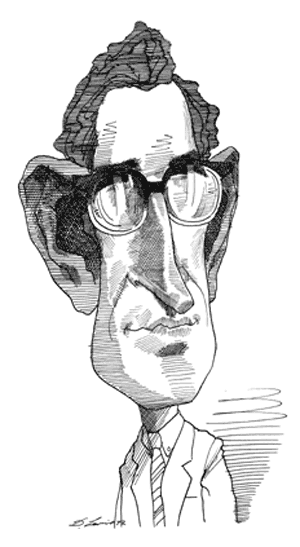
Think of it this way, the first step in changing a culture is to no longer accept that a culture must be the way it is. It doesn't mean that everyone will suddenly become Noam Chomsky, but instead of simply accepting the goal as impossible, take it as a challenge: How do we get from here to there?
If you want to learn physics, reading all the physics blogs on the internet is probably not as good an approach as picking up the best 20 or 30 physics books you can find and reading them cover to cover.
Sure, blogs aren't great, physics books are much better, but we now also have MIT OpenCourseWare, Connexions, etc. I can almost completely get a full MIT education, sometimes including lectures, without ever having to get accepted into MIT.
But the most important thing is that books and lectures aren't everything, so the next step isn't just about people taking the initiative to self-learn a subject, but to actually build free institutions where people can meet with others working in the field, hobbyists, etc.
In past popular intellectual movements, that has meant something as simple as a coffee shop. LUGS are a good example of that kind of common interest organizing. In the future, more structured places of intellectualism will be necessary, much like universities, but explicitly free of charge and without any purpose of degree or accreditation.
But hey, let's take it a step at a time. :)
Wow, what an amazing conclusion. Well said and thanks.
It is not lack of access to information ('facts') that is a barrier to being an intellectual. It is a combination of inability/unwillingness to think analytically about information and ideas. IMHO.
I sometime recognize that the discussion is going nowhere because the difference in ethical and principles are too great.
One example of this is the concept of democracy and the idea of popular consent. I am extremely distrustful of human beings, so my political ideology tend to have a strong anti-authoritarian bent.
I was watching an interview with Chomsky on hulu the other day and they asked him what he though about blogs and the Internet vs. traditional news papers and it seemed like he thought the destruction of newspapers was a very bad thing and that blogs were not a suitable replacement.
However, I don't think that will be the case forever, and once independent internet journalism catches up, the net result will be a much better situation.
i prefer the term "intelligence" rather than intellectual. any idiot (every one of us) operates on intelligence, tho it might not be well developed for all domains.
i'm unsure if intellectualism was historically provided by academia tho. nor whether that matters. intelligence is everywhere, and can manifest itself in any place and medium.
this has a minimum grace of style: http://www.youtube.com/watch?v=JJb3ka_ZNtM
This is interesting, and something that (rather importantly) shatters many Americans' world views :
"It surpasses belief, that is, unless we look at the matter from a more historical point of view ... No one would be disturbed by an analysis of the political behavior of the Russians, French, or Tanzanians questioning their motives and interpreting their actions by the long-range interests concealed behind their official rhetoric. But it is an article of faith that American motives are pure, and not subject to analysis".
This ability to shatter a world view is why I appreciate and support Noam Chomsky and Wikileaks and Colbert and anything else that challenges the duping.
> With respect to the responsibility of intellectuals, there are still other, equally disturbing questions. Intellectuals are in a position to expose the lies of governments, to analyze actions according to their causes and motives and often hidden intentions.
"The facts are known to all who care to know. The press, foreign and domestic, has presented documentation to refute each falsehood as it appears. But the power of the government’s propaganda apparatus is such that the citizen who does not undertake a research project on the subject can hardly hope to confront government pronouncements with fact."
This speaks to the great failing of today's media. Who has time to stay current on all the world's events? I can hardly keep up with my Hacker News RSS feed! We rely on the media to do this research that Chomsky speaks of (or at least to use sources that have done said research). Given limitations on our time and focus, we have no choice but to accept what the media reports at face value. The more information proliferates, the more important becomes the filter.
That is why populist Libertarianism (Randian muck) and the ghastly half'n'half-baked ideology of the Tea Party are so awfully (and often ironically) misdirected these days.
all these things are toys and distractions. it's up to you to choose what to follow: the false prophets or the real ones. the issues that actually matter or the ones that actually don't.
the main thing i have found is that it all feels impossible/insurmountable in the beginning. but as with anything else, it gets much easier over time as long as the work and effort is there. e.g. "programming is too hard". but in reality EVERYTHING is "too hard". nothing is easy. nothing is black and white. etc.
This guy comes out and contributes to what the press should have been doing the last 10 years, and what happens? The cable news networks spend all their time talking about his "motivations" and how "anti-american" he is or isn't. Or who on the washington circuit is saying he's anti-american and how that fits into the political gossip column. What about the damned cables!?
Just as an example of someone of prestige and integrity, standing up for Wikileaks and kicking ass while doing so (on national television), is Ray McGovern, "former high-ranking CIA official":
http://www.juancole.com/2010/12/former-cia-official-ray-clos...
http://www.chomsky.info/articles/19670223.htm
Readability still left a big graphic ad in the middle with the nybooks link.
[Refs: http://oliverkamm.typepad.com/blog/2004/11/chomsky_and_hol_1..., http://econ161.berkeley.edu/movable_type/archives/000155.htm..., http://wernercohn.com/Chomsky.html, http://www.jochnowitz.net/Essays/ExtremistPolReg.html]
If so, then Chomsky -- the idiot-savant of the American far-left -- discharges his responsibility admirably.
Being lectured by Chomsky on the responsibility of intellectuals is like being lectured on humanitarianism by Stalin.
Members of the Chomsky cult may now begin sputtering...
disclosure++: i'm less a fan of lies or mudslinging or false conclusions or character assassinations
with that said....
chomsky doesn't "cheerlead for hezbollah"
chomsky doesn't deny the holocaust
chomsky isn't an anti-semite
the "criticisms" are similar to what the interviewer here keeps repeating (and constantly ignoring his answers):
http://www.youtube.com/watch?v=BM7IFBIfQ1M
1) "chomsky doesn't "cheerlead for hezbollah"
"Chomsky hails Hezbollah on TV" (http://www.wnd.com/?pageId=36210): 'Hosted by Hezbollah, leftist professor Noam Chomsky ended his visit to Lebanon with a tour of Al-Khiam Prison where he declared the terrorist group's success in removing Israel from the south was "a victory for all the peoples that fight injustice and oppression."
In a broadcast by Hezbollah's Al Manar television Sunday, translated by the Middle East Media Research Institute, Chomsky was shown embracing Hezbollah leader Nabil Qauq at Al-Khiam, where Israel kept prisoners during its occupation of southern Lebanon. Hezbollah was credited with liberating the area after Israel withdrew in 2000.'
2) "chomsky doesn't deny the holocaust"
I didn't say that Chomsky denied the Holocaust. But he engages in apologetics for those who do, specifically Robert Faurisson, who he knew denied the Holocaust yet termed him a "a relatively apolitical liberal of some sort" and referred respectfully to his work as "extensive historical research."
3) "chomsky isn't an anti-semite"
I didn't say that Chomsky is an antisemite, but again, he throws in his lot with blatant antisemites. For example, Chomsky praised the Israel Shahak, a bizarre Israeli antisemite (really) who propagated slanders such as ""both before and after a meal, a pious Jew ritually washes his hands....On one of these two occasions he is worshipping God... but on the other he is worshipping Satan." Chomsky praised Shahak on the cover of the book in which this quote appeared as "an outstanding scholar, with remarkable insight and depth of knowledge" and went on to say "[h]is work is informed and penetrating, a contribution of great value."
did you watch the vids i linked to? i placed them there because they refute/clarify all the claims/mischaracterizations you mentioned and linked to.
i can't force you to watch them, but i'll help you out even further:
1) in vid 1, at 4:15 in vid 1, at 3:30 in vid 2, at 0:45
2) and 3) in vid 2, at 2:55
enjoy
Besides, I think you may be veering off-topic and just using this brief chance to get the boot in. That type of opportunism is unhelpful, distracting and poisonous.
I personally believe that this topic (the responsibility of intellectuals) touches upon an issue that troubles me a huge amount. Assume that one isn't an intellectual but that you have gone out of your way to discover the truth about the world around you and how your government and other governments act. Assume that you have developed a layer of cynicism, skepticism, mistrust, and now have a healthy wariness of propaganda. If you do not act on this knowledge, how culpable are you with respect to the actions of your representatives? Do you donate to just causes that try to prevent or undo the harm done to others in your name? Do you sign petitions? Do you write your representative? Do you organize meetings to talk about these issues? Do you protest on the street? Do you write articles and books? Do you run for office? I do none of these things and I _hate_ myself for it. I feel that I have done the easy part, I have made myself informed - it is our responsibility to get informed and I have done that part. But the responsibility must go further or society won't change - we get a nation of informed but glassy eyed proles. I am that prole and it saddens me greatly.
† but I'd sure avoid chatting to you at a cocktail party :) haha, joke! No I'm sure you're a lovely person really.
I'll take a couple of examples of where Chomsky and the left wing position (that I've read) is strange. (Any reader might want to skip to "And so on.")
The condemnations of US foreign policy is weird. Consider that countries (including democracies) implement realpolitik. And all (I know of) lie about it.
It is ridiculous to condemn a group (US) for playing a game where their lives are at stake and acting like the other players. Instead, note that the game is bad -- and how it could be changed (implement more democracies).
For a second example, I'll take Israel. I'll compare it to Bangladesh.
Even with an extreme description of Israel in 1948, the treatment of Hindus in Bangladesh has been much worse for much longer (the Hindus are also citizens, not in the middle of a civil war without an existing country. Etc).
http://en.wikipedia.org/wiki/Vested_Property_Act_%28Banglade...
No one cares! (Well, the Hindus driven away care. And the ones lynching them.)
Israel can be condemned on some issues (which is natural, the country is under an existential threat). But to demonize only one side in a conflict when the other side arguably is factors of ten worse?! (Even with antisemitism in their state controlled/censured media!)
And so on.
On the other hand, Chomsky is for me like vim. People whose intellect I respect use vim instead of Emacs. Hence, there should be something in Chomsky.
What speaks against that argument is that even the intelligent followers tend to be idealists and believers regarding their political opinions. (-: Like, well, me and Emacs. :-)
Edit: I should note that I have to run some errands now and probably won't read answers until this evening.
re: US foreign policy, israel, bangladesh, etc. see the vids i posted elsewhere in this thread here http://news.ycombinator.com/item?id=2051777 you're right about all your comments and questions the main issue of confusion i find is that the conversation is all about "chomsky" or "chomsky's hidden intentions", rather than the actual facts/policies it's like wikileaks/assange deja-vu all over again....
full disclosure: i use emacs (with vimpulse). and i also try to use vim whenever possible as well. and if you want your mind blown by vim: http://blog.extracheese.org/2010/11/screencast-custom-vim-re...
I think it is quite clear, really. We seem to agree on that Chomsky isn't arguing honestly. We can end there, since Chomsky's exact motivation for writing propaganda isn't that interesting.
(And re WikiLeaks, see this fascionating little factoid:
http://www.guardian.co.uk/commentisfree/andrewbrown/2010/dec... )
I'm sure Chomsky acknowledges that. Even more back in the time he wrote the article, access to information and having the time to disseminate it was very uncommon. Which is why it is important that the people who have such a luxury use it responsibly.