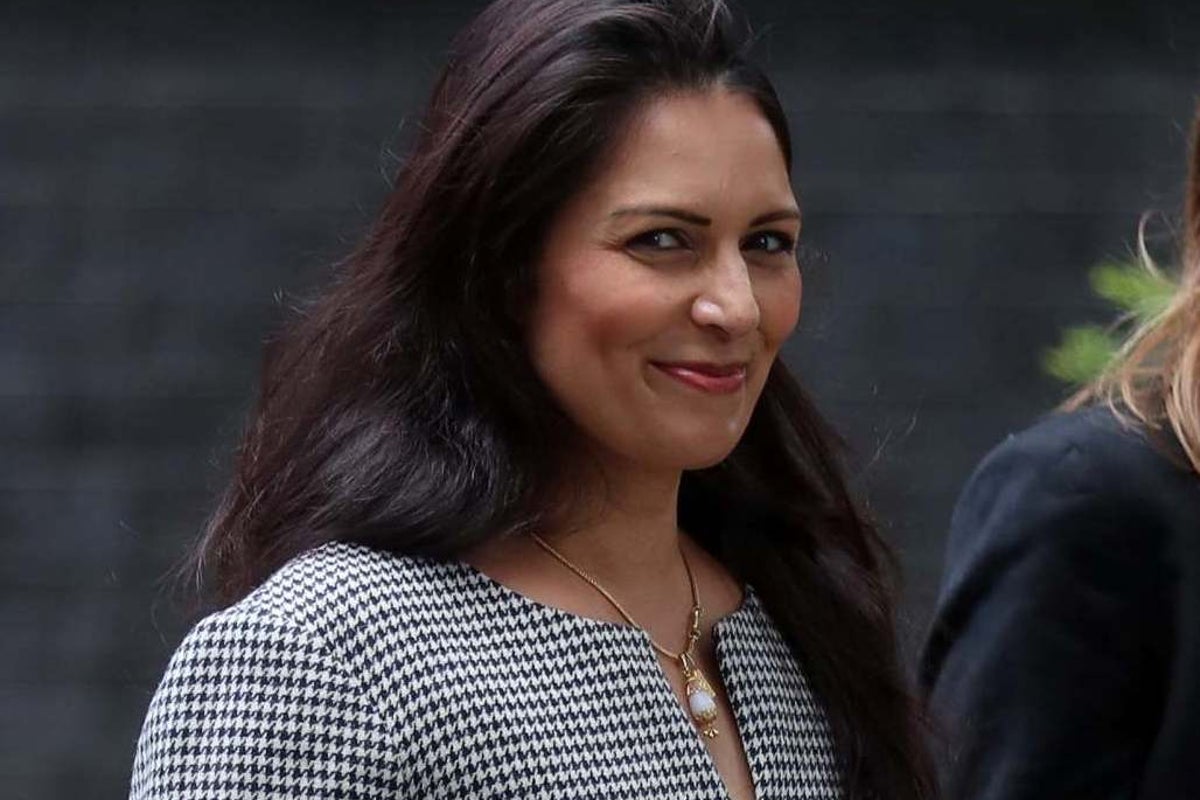
UK seeks to end freedom of movement for EU citizens on day one of Brexit
New home secretary wants border restrictions imposed immediately on 31 October – despite warnings of people trapped in legal limbo
The Independent
56 points · by tosh · 7y ago · 128 comments
See here for a response to this article: https://twitter.com/adamfleming/status/1163335442542059520
> As has been previously been made clear, in the event of no deal, EU citizens and their family members already resident in the UK by 31 October 2019 will be welcome to stay and we want them to do so. They are part of our community, and part of our country and we welcome the contribution that they make. If there is no deal, they will have until 31 December 2020 to apply to the EU Settlement Scheme to protect their status.
The new Home Secretary wants to institute a different regime from day one of no deal, which deviates from original plans and creates a whole range of issues for EU nationals with and without settled status who are resident.
While it is aimed at voters to show that they'll be treating new arrivals differently, the systems and laws and all of the bodies that deal with EU nationals are not equipped to differentiate between existing residents and new arrivals.
Only about a third of EU nationals have applied for settled status and this new messaging from the incoming Home Secretary is saying the hostile environment measures must be eagerly applied to all EU nationals without it. Employers, landlords, banks, health service providers and border officials all have the burden to verify a person's legal status and the majority of EU nationals will be unable to demonstrate their status from day one. Their status furthermore isn't protected by primary legislation and for most people only amounts to being in a digital system that must be checked online.
Most parties involved in having to check resident's status is not trained in doing that, in so far it is even practicable from day one of no deal. And it most certainly will create discrimination, making it more likely that those that have a harder time demonstrating their rights will be unfairly rejected or skipped over, or be faced with additional burdens to prove status.
The real world consequences for people affected could be not finding a place to rent, being evicted, losing a bank account or being unable to open one, being denied health services or being asked to pay for services that should be free, being denied a job, being let go, or simply being skipped over by employers. This all can happen to people who have been in the UK for decades but are unable to easily demonstrate their status. This is not hypothetical stuff, this already happens but the occurrence would jump up by an order of magnitude as the result of the course taken here.
Yup. This is setting up for Windrush fiasco all over again, just on a much larger scale.
The reporting is light on details, because the 'how' has not been drawn up yet. What has been newly decided is to immediately kill freedom of movement in practice. And the UK does most of its border controls behind the border, by making landlords, banks, hospitals and doctors do checks. Even if what Patel means to implement is purely what border officials at airports do to check people's status as they come in (and I very much doubt this is all she intends), it reinforces the message to employers, health service providers, banks and landlords that EU nationals are a higher liability if they turn out not to have the required status. The Govt may very well even advise landlords for instance that they won't hold them to account with the usual criminal penalties for accidentally renting to a EU national without settled status or other valid migration status, many landlords will simply eschew EU nationals going forward because it's safer. Messaging like this underlines that a EU ID is no longer a sufficient signal that a person is in all likelihood a legal resident and that a tough line is meant to be taken against EU nationals.
The whole process take about 15 minutes, especially if you have an social insurance number.
My wife, which has been in the country for the same time but has not been under continuous employment will have a much harder time proving residence status and will require going though ton of documentation.
The 15 minutes are a fiction.
And it may take 15 minutes if you have had continuous employment or have been drawing benefits with no gaps at all for five years AND they are able to verify that in an automated way. Hundreds of thousands will be spending much more time on their application. And although the overall process is pretty lenient and fairly well done, many people are going to have trouble with it.
If you fall under a less certain scenario, you may be reluctant to apply at all, because it doesn't guarantee you'll get approved and the consequences of not being approved are daunting.
Under no deal, failure to be accepted for settled status equates to being officially recognised as a resident with no workable legal status and that is a very, very bad place to be in. And if you don't apply by the end of 2020, you lose out altogether under current plans. Note that with 3 million EU citizens, plenty of people are simply not even aware of the consequences or the need to apply in the first place.
There is no longer the 2-year transition period in which EU workers can work in the UK, and UK workers work in the EU.
This means that existing working arrangements will be severely disrupted. Each week, there are hundreds of thousands of people crossing the border, a significant proportion of them for work, including providing on-site support services, training, professional engagements or just cross-channel commuting.
In the absence of a deal it was always made clear that freedom of movement would end immediately or as soon as practical.
See [1] (published in January) about immigration in case of no deal Brexit.
[1] https://www.gov.uk/government/publications/eu-immigration-af...
> 5. Once free movement has ended from 31 October 2019(1), EU citizens and their family members arriving in the UK will be admitted under UK immigration rules and will require permission (leave to enter or remain). Unlike EU free movement, this will not be a rights-based system so those who do not hold valid immigration permission to be in the UK will be here unlawfully and may be liable to enforcement action. This is a crucial difference between UK immigration law and EU free movement law, which does not require permission from the Home Office for a person to be here lawfully.
So, what happens to an EU national who is ordinarily resident in the UK but has left briefly and is now returning to the UK? What exactly happens at the border? Which documents do they present to guarantee re-entry?
(You quote below the statement that they will be able to show an EU passport, but of course that does not constitute "valid immigration permission to be in the UK")
> The information below is concerned with those EU citizens who arrive in the UK after exit, not those residing here before the UK withdraws from the EU.
The authorities might - either conveniently or due to incompetence - lose relevant documents in the future, at which point you might not be able to prove anymore that you've already had a leave to stay in the UK before 31 October 2019.
This also might be used as leverage in upcoming negotiations with the EU.
While more reputable news sources have not yet picked up this story, if it is indeed true, there is a very marked difference between what is claimed in the article and what has been said by the government to date. The article claims that the Home Secretary will attempt to enact secondary legislation to end freedom of movement, while the gov.uk link in your tweet claims that it will be done ASAP through primary legislation.
If true this is an important difference as we likely won't know until close to the October 31st deadline whether no deal is actually going to happen (though it is clearly more of a risk now than ever), and it implies that the government plan not to wait until they achieve a majority in parliament for the bill to abolish freedom of movement, but instead plan to abolish it any way they can.
However, to answer your question: Coming back from abroad is a complicated thing, even from France inside the EU. Technically, after a hard brexit and without these temporary papers, they are citizens of a foreign nation and the german state has no diplomatic relationship with this state. As such, they could get detained or denied entry if they run into some kind of border control. As such, it is recommended to not leave the country while this is going on. This had tossed quite the wrench into their vacation plans.
We were talking about it last night and neither of us have a clue how you'd even go about getting a UK visa in an EU country. Yes, people who live here already and don't leave are "good" until 2020. However if this does go ahead there will be tens of thousands of people who cant (for example) go home and visit their parents over Christmas without a risk they might be told "nah" at the border.
I believe that in her specific case she can't get settled status as she (despite being here 8 years) had a period a few years ago where she worked on cruise ships so was out of the country for > 6 months.
There is currently no system in place to allow re-entry for people with either "settled" or "pre-settled" status (that's why this announcement is mad.) But your girlfriend should 100% absolutely as soon as possible make sure she has pre-settled status.
This can be proven by applying for a permanent residence card.
It has always been a sensible idea to keep evidence of residence and work in order to prove your status although it seems that a surprisingly large number of people never bothered.
In any case, I would think that anyone would have pay slips, P60s, council tax bills.
Citizens of EU/EEA countries can currently travel to and work in other EU/EEA countries (including the UK) with essentially no restrictions. There are currently around 3 million citizens of other EU countries resident in the UK, taking advantage of freedom of movement to avoid the tedious, expensive, and time-consuming process of obtaining UK citizenship (or just never feeling the need).
A system has been introduced allowing these residents to apply for something called "settled" or "pre-settled" status, indicating that they are habitually resident in the UK. This will give them the ability to remain in the UK legally, eventually being able to obtain the appropriate long-term rights.
However, it's a virtual certainty that hundreds of thousands of these people will end up not being registered for various reasons. Additionally, there is AFAIK no process in place for performing checks using this system at the UK border. With the proposed approach, it's extremely likely that many people previously using free movement rights to travel between the UK and the rest of Europe will find themselves stuck in a limbo where they have been resident in the UK for a long time (and it's their home), but end up being unable to re-enter the country because they have no actual legal basis for that residency any more.
This wasn't expected to be an urgent problem, as previous plans for departure from the EU were to continue allowing EU/EEA citizens freedom of movement into the UK until December 2020, eventually implementing controls as systems became available. This change in policy makes this much more urgent; there are a variety of issues affecting people who travel a lot, particularly in the immediate aftermath.
The good news is that this approach will collapse in the face of reality because it's totally insane and will result in widespread chaos, and it's unlikely to even make it to the level of actual firm policy at any point.
So for you to say that the UK is holding EU residents hostage is not only unfair, but very untrue.
The UK is very obviously attempting to bargain with the rights of UK-resident EU citizens. It is both totally fair and true to say so.
I mean, clearly the government's policy of threatening the EU with a no-deal brexit is just not working, so the next stop is using EU citizens as bargaining chips(I remember saying this 3 years ago, that we will end up being used for exactly this purpose once the time comes. I don't know whether I should start packing my bags now or later, the anxiety level is just through he roof at the moment).
https://www.ons.gov.uk/peoplepopulationandcommunity/populati...
https://fullfact.org/europe/how-many-uk-citizens-live-other-...
1) this would mean that the government (executive) would need to bring in primary legislation to allow EU citizens to continue to work and live in the UK. (those who have registered I think would be ok. I'm grateful for corrections on this point though) This is something they have promised, but not actually delivered (Which I suspect will be running theme.)
2) haulage companies would need to change drivers (and probably truck) at the border (possibly the EU side, which would be interesting, as I'm not sure how haulage licenses work in practice. I know multidrop/mixed purpose [as in deliver x and pickup y are expressly not allowed])
3) as far as I'm aware, any truck driver delivering stuff would need a temporary work visa, which requires a sponsor and load of cash and time (The first is difficult, the last in very short supply.)
If anyone has links to legislation that contradicts this, I'm all ears.
https://www.gov.uk/government/publications/eu-immigration-af...
https://www.theguardian.com/politics/2019/aug/19/threat-to-e...
Are wages going to shoot up immediately because of labor shortage?
If the margin of profit is like low single digit, the labour cost rises too fast will just lead to the business to shut down. In more profitable business though, what you said might happen, like software engineering I would guess. Or the position goes remote.
"…temporary transitional arrangements will apply from 31 October 2019 to provide some continuity for EU citizens and businesses in the UK. The transition period will be in place until 31 December 2020."
This was essentially "continue free movement for a bit until we get a new immigration system in place". This announcement suggests that this is no longer the case. It's unlikely to happen because it will be literal chaos, but it's important not to underestimate the incompetence of the current UK government.
The document from January very clearly states that free movement would end immediately (or as soon as practicle) in case of no deal.
E.g. "5. Once free movement has ended from 31 October 2019"
As I wrote previously this is nothing new.
The transitional arrangements are for EEA citizens already in the UK, and I haven't read anything that suggests they want to change that.
[1] https://www.gov.uk/government/publications/eu-immigration-af...
This is supported by earlier statements from the former Home Secretary Said Javid: "If there's a no-deal, we won’t be able to immediately distinguish between those Europeans that were already here before March 29, and those who came after – and therefore, as a result, I wouldn’t expect employers to do anything different than they do today. There will need to be some kind of sensible transition period. I mean, these are the kinds of things I’ve been working on for months and months."
Further, that they insist this contribution can be solved by “future technology” but cannot actually point to any such future technology only adds to the farce.
It's just not possible logically, and efforts to paint it as a 'both sides' problem is completely dishonest.
The elected representatives of the EU and the UK agreed to a deal. A deal in which the EU compromised a lot (the backstop applying to the entire UK was a UK demand, insisted upon by May to retain DUP support).
That agreed upon deal was then ratified by the EU parliament, but rejected by the UK parliament.
Considering the UK is the party that is rejecting the deal, one would imagine they would be the ones responsible for at the very least stating what they want. But they cannot do that because there is no version of Brexit that has majority support. If they move in one direction away from the deal, they lose left wing votes while gaining fewer right wing votes. If they move in the other direction, they gain a few right wing votes, while losing more left wing votes.
That’s why the UK has constantly insisted the EU compromise, without ever explaining what that compromise should look like (other than, no backstop, which then raises the impossible desire to both maintain an open border between Ireland and NI, while the UK insists on controlling its borders and having a different customs regime on one side of that border).
It’s stupid, and the UK’spoliticians are entirely at fault here. The EU has been compromising to a fault, honestly. They should have listened to Macron and not extended the deadline. At least you wouldn’t have an incompetent lying charlatan leading the UK during Brexit. You’d only have an incompetent leading the UK.
I think this should be:
The EU have offered the best [deal they want] given the UK negotiation red-lines [and the UK's lack of leverage].
The UK may have a relatively strong economy as a Country, but it's currently against the EU super state in the negotiations. The EU has most of the power when brokering a deal and this is just one small step towards making the negotiation table more even.
> It's not an adversarial negotiation, it's a future partnership.
Every political engagement is adversarial, there is of course common grounds, but each side wants to 'win'. The EU wants to remove all incentive for other member states to leave to safe guard its own future existence as a super state.
I really disagree with that. A dysfunctional EU is worse than for the EU than countries leaving.
The EU could do far more to "punish" the UK. So far they've been quite accommodating, like agreeing to keep the entire UK in the customs union for the backstop rather than splitting NI and GB.
Firstly, there will be accommodations for existing EU immigrants, read the actual government website and not some jumped up news article [1].
Secondly, I agree holding people hostage is immoral, but you're conveniently forgetting the Irish backstop clause.
> And it's not likely to be effective either.
Thirdly, the idea of negotiations is that both sides have something the other side wants to negotiate about. So far negotiations have been very one-sided, with the UK wanting to continue negotiations and the EU cutting it off completely (hence May submitting the same deal three times to parliament despite demands made to change it). The idea of having a large stick is not having to using it, but sometimes it's needed to encourage the donkey to move.
[1] https://www.gov.uk/government/publications/eu-immigration-af...
What about it? This was a British government proposal in the first place. https://www.irishtimes.com/business/economy/the-backstop-was... / https://www.instituteforgovernment.org.uk/explainers/norther...
And it doesn't hold anyone hostage, but the reverse: it guarantees freedom for people affected by the border with Ireland.
It is a mess, but if UK has to leave that is the only way. And some UK citizens will return home.
> but if UK has to leave that is the only way.
No it absolutely fucking is not. The UK government has always had the option of treating them better and chosen not to do it. Being hostile to immigration is a choice. Ending free movement is a choice; the UK is not required to end free movement to leave the EU (see Norway).