134 points · by dvcrn · 7y ago · 172 comments
We do not control our own devices, we cannot stop certain processes on them, and we do not know where our personal data is sent.
We either have to flash ROMs from questionable sources and apply temporary exploits to get some kind of resemblance of control of our own devices, or we have to spend years to learn the skills to unlock these systems ourselves.
The idea that ROMs from questionable sources make your device safer sounds very strange to me.
Basically every electronic device has countless security issues. Some of them are found of which some are published of which most are eventually fixed (by rather large teams of professionals). In that regard, Apple could and should do better.
But the burden of making such a complex device secure simply can't be put on the end user.
While I would welcome deeper access for technically inclined people, I'm not sure that option can really be given by Apple/Google without the risk of becoming a disadvantage for many users.
Now what? Millions of users have to wipe and restore their phones or throw them away and buy new ones because someone's app trashed the phone? That would cripple Apple
It's about owning your hardware, not safety. A person that's willing to go through the hassle knows the consequences of such actions and how to deal with them.
Do "normal people" need to do that? Absolutely not. Should it be easy to do that? Absolutely not. But for those of us that really want to own our hardware, there should be a way of doing so without relying on exploits.
The first step on Android is usually to unlock the device boot loader in order to flash a recovery that will allow to erase partitions and install a tarball of the system. I saw no tutorial suggesting to re-lock the device boot and I bet people rarely do it.
This means anyone can take the device, boot it into recovery, plug it into USB and throw some adb/fastboot commands to do anything they want. Device encryption becomes moot because neither the recovery nor the bootloader can be trusted.
The general population uses macOS just fine.
The exact same goes for regular computers and operating systems. And we still have those. Shouldn't we at least have the option on mobile?
You have computer form factors and OS'es invented in the 80's and 90s for desktop. The only reason they still work that way is because of legacy/inertia.
The exception is the ChromeBook and CromeOS and that works similar to a smartphone. For a reason.
That's not the point. The point is that the community will be able to do it and auditors' lives will be much easier, which benefits everyone because it vastly increases the likelihood of an issue being found.
> The idea that ROMs from questionable sources make your device safer sounds very strange to me.
On Android by default most vendors ship a lot of bloatware and have demonstrated almost infinite incompetence or malice of both. While the developers "custom ROMs from questionable sources" (XDA forum threads) may not be experts in their fields at all and are quite likely to misconfigure the software possible creating some new holes, at least those images are compiled from open sources and are not the terrible manufacturer OS (I wouldn't onlike bank on stock Xiaomi software).
Don't use it then. By shielding the stupid we are creating more stupid.
The whole of civilization has been a process of shielding people from having to know stuff.
The same way you don't know how to make fire from first principles, fix your car, make a CPU, or whatever...
Even someone with a Ph.D in computer hardware is shielded from tons of complexities and never has to know the whole process end to end.
It's a legitimate point to make, but it should rather be that we talk about the content of the article rather than bring out the 'Apple's taking our freedom away' soapbox.
It inevitably turns into a debate between one side who values personal freedoms but won't be told to buy Android phones widespread safety, security, and privacy and tell the others to just buy Android phones.
This goes around and around, usually getting nobody anywhere, and happens all over again the next time an article about iOS turns up on the front page.
The average consumer could care less. They want to make phone calls, send text messages (over iMessage), surf Facebook, and take back to school pictures of their kids - and they just want it to work.
A security regression in a new software release is a much older type of story that just gets talked in circles too.
>it should rather be that we talk about the content of the article
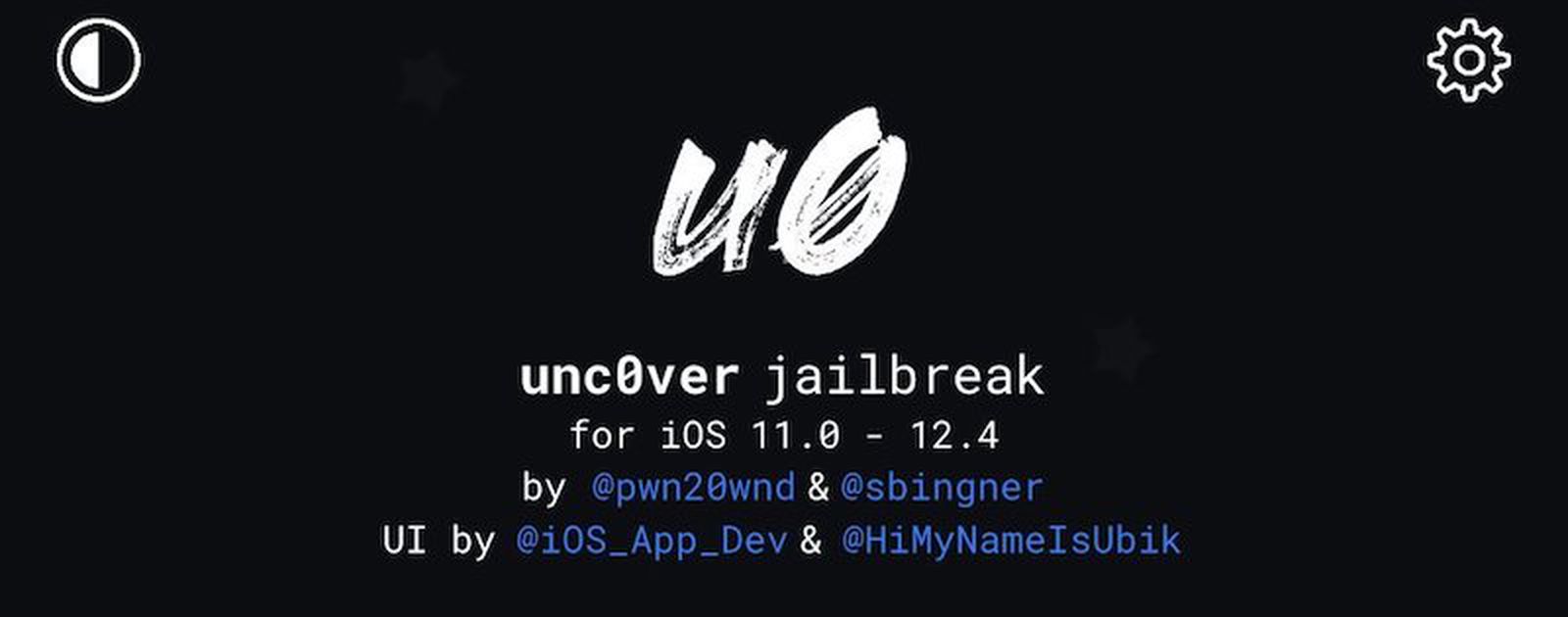
iPhones are jailbreakable again. Whoop-de-doo. What are we supposed to say about it?
Might as well talk about the system design that makes owners of devices getting root on them considered a flaw in the first place.
I don’t think those flashed ROMs give you appreciably more “control” over your iPhone than stock iOS provides, because actual control requires usable control surfaces. More likely, you are replacing the control surfaces provided by an accountable entity (Apple) who has prioritized your security and privacy and provides a constant stream of updates to maintain that, with what exactly?
The entire iOS feature set is designed to protect your personal data, from outside attackers who would seek to compromise it, to insider threats like apps trying to siphon off more than you might expect, to end-users inadvertently giving away their own (or your) data without a care in the world.
The security that a modern iPhone provides to its owner is truly a remarkable and commendable experience overall. I am extremely happy we as consumers have the choice to purchase exactly such a device.
I mostly agree with you, but you don't necessarily need a Mac in order to use your developer account for sideloading—you can also use Cydia Impactor which is available for Windows/Linux.
Sure, for an extra $100 every single year. Apple charging money for a feature does not protect users.
The $99 is not likely to make them money. It is a token fee to protect the app store from the simplest spam and scam apps.
Or you can get a free dev account, but the feature set it more limited and signatures are only good for 7 days.
Apple charges money for features so that they remain in business to keep making more features, and security updates too. So it is, in fact, exactly how they protect users.
That's what your comment boils down to. You really want to go down that road of an argument? On a website that has hacker culture in its very name?
Your AT&T, Vodafone, Verizon & Co, put an enormous amount of pressure on Apple to limit and protect device unlocking.
This is a cat & mouse situation where either party might benefit from tight unlocking controls.
For example, MVNOs benefit from manufacturers with flexible and open unlocking policies that make it easy to unlock devices (without approval from the original operator), whereas long-term commitment contracts with traditional operators want to make it as hard as possible for you to leave with an unlocked device (regardless of whether you are legally entitled to or not - but that's a different story).
The economics of whether Apple would benefit from less strict unlocking policies (ignoring Telco's wishes) are not that clear.
You might think that unlocked devices would have longer lives, and therefore limit Apple's ability to push a new one to you, but you could also say that giving phones 2 or 3 different owners in their lifespans could help with app store purchases, limiting jailbreaking and possibly avoiding going with a newer less expensive android version.
Disclaimer: We unlock phones for MVNOs and individuals who get bullied around by their telcos.
Edit: Spelling
Lock restrictions only come into play if you want the mobile network to subsidize your phone.
Each country has different policies when it comes to unlocking. Locked phones greatly outnumber unlocked ones.
Take Chile, where phones must be legally unlocked by the telco or manufacturer to work WITHIN other operators in the country, but not necessarily abroad.
Buy an "unlocked" phone from a Chilean and you might get stuck with a brick.
The different and complex type of unlocking levels Apple has for its devices (and there are many) are designed to assist the Telco and any countrywide regulatory policies that need to be enforced.
There are many parts to this jigsaw puzzle.
Before the"locked devices, people had the inverse problem:
everything was two open ended and complicated, could cripple the system, stuff was open for exploit (much more so than in this case of unpatched vulnerability, viruses were everyday occurence). Techies didn't have this issue, but the general public did (heck, even techies did suffer somewhat). And that might have been OK for when the PC was an unconnected tool, but not when everybody has one with them, from school to nursing home, and everybody buys and does tons of sensitive stuff from it, while connected 24/7.
Whereas you can give a 2-year old an iPad, and they can start using it just fine...
Back in ‘the old days’ (80s+90s), a child with access to a computer was likely to learn something, even if their primary use of it was playing games.
Every been to the modern web? Or used 90s-00s shareware?
Compared to those, the iPad is advertising and nagging free...
And can be totally free, you don't have to buy (a) adware apps, or (b) games with in-app-purchases.
I only get stuff that's in neither category, which all the best apps are...
What makes you think that if Apple would provide a mechanism in iOS, like SIP (System Integrity Protection) on macOS which can be disabled by technical users if needed, would change anything?
Right now, regular users do not disable SIP on macOS so there's no issue there. They don't even know/care that this possibility exists. So your 2 year old could still use the same iPad just fine.
That's because this new devices aren't "secure" but severely limited and crippled, you can't do much with them and they are far from actually usable like a computer. By that metric, my old Nokia was even more secured than an iPhone.
That's the whole point: for them to not be as open ended and complex as computers, while having the power to run highly feature-full apps.
>By that metric, my old Nokia was even more secured than an iPhone.
It indeed was, and that's the ideal. To make extremely feature full modern smartphones as easy to use and as complexity/trouble-free as appliances...
Maybe on Windows, but on macOS this has never been generally a problem.
Apple does not consider phones devices for general computing and so prioritises stability, power consumption and security over flexibility and the ability to run arbitrary code. I'm happy with that trade-off.
The proposition, in my mind, that Apple is trying to sell with the iPad to the majority of people who use their computers for social media, content consumption, and office tasks like email and Word document authoring is "you don't need general computing flexibility for the vast majority of things that you do".
Could you give your definition of 'general computing'?
As for the "We do not control our own devices, we cannot stop certain processes on them, and we do not know where our personal data is sent.", with stock Android provided by an OEM, you have no control over the opaque and invasive monolith that is Google Play Services and there's no way to control what data exits your device, aside from installing a VPN-based firewall. You can't even control when apps have access to your data, just a binary on/off switch.
> with stock Android provided by an OEM, you have no control over the opaque and invasive monolith that is Google Play Services and there's no way to control what data exits your device, aside from installing a VPN-based firewall.
This is true of all systems (and even worse on iOS, which has the same data collection as Play Services but can't be disabled or avoided) and irrelevant to the discussion about whether a user can completely control their device if they wish.
On the other hand I bought my dad a laptop with Windows and despite having an antivirus he's had all kinds of problems with it, including some heavy duty adware.
Provide the password for elevation and educate to only type that in when they are installing something they know is secure. Likely they will forget the password and have to check with their "IT helper" anyway, and sanity check there actions then.
I have a Windows 7 machine setup like this for my parents and they have never had a problem with malware. The stuff that lives in the user profile gets caught by AV, and I have to install something for them maybe twice a year.
I would rather put in a little extra work setting up a Windows laptop than send metrics for the entire system to Google. Their Android phones take care of that invasion of privacy.
Why isn't there an option in developer mode that gives us a root shell on our Android devices? Why is an escape hatch that gives back control to the user so frightening for these companies?
And unfortunately as we have seen all too often users are willing to blindly do what they are told if they get something out of it e.g. free game, credits etc.
Which is neither here nor there. Parent doesn't mean a smartphone doesn't have the cpu power etc. of being a general purpose computing, he says it is not one.
It's common for the security argument to be used to justify Apple's practices, but Mac users have been perfectly fine installing third party apps such as Transmit, Adobe Photoshop, or even Google Chrome from outside of Apple's walled garden. I've been using macOS since 2007 and I've never had a virus or any security problem, nor anyone else I know using a Mac. From my dev colleagues to my 70 year old mother in law or my 15 year old nephew.
It seems to me the only real arguments for Apple's walled garden are economical.
MacOS used to be a more developer friendly.
Adding this kind of non regression test is costly, but it protects against source code management mistakes.
You mean the answer could be "yes, every single patch must have a regression test"?
Seems a bit overblown when there's a review process in place. I'm sure it's not infallible, but still..
Well, until now I assumed Apple would test for patched vulnerabilities in new iOS releases too.
For iOS 9.3.3 there even was an app in the App Store, that could jailbreak your phone. (PG Client)
Why should a publicly known unpatched vulnerability be a lesser concern than something that you don't know exists?
We know HKers are getting more and more tracking from the mainland government and are switching to applications not typically used for communication and organization. https://www.businessinsider.com/hong-kong-youth-using-tinder...
We also know that Apple has accommodated Chinese government requests to increase their ability to monitor communications: https://boingboing.net/2018/05/21/apple-bends-to-chinese-gov...
And as one of the most valuable companies in the world that ships software, it is surprising to see regressions in their software.
The article said that right now legitimate applications on the App Store could contain jailbreak code.
Of course these things are entirely possible to be unrelated, which is why I mentioned the tongue in cheek “tinfoil hat”.
The timeliness of the response from Apple in patching this reintroduced vulnerability should be swift. If so, I’m happy to step away from this position entirely.
Any number of backdoors can be introduced with any update for any operating system or app. Generally governments around the world want backdoors and information from companies and companies generally comply.
And even if you assume a publicly traded company lying outright, what do you think is more likely: then silently backdooring the phones of people in Hongkong or pretending to have accidentally unpatched a vulnerability, hoping people would update to that OS in order for pretty obvious exploits being able to run?
If I was as evil as you make Apple out to be I would sure as hell do the former.
Here's to hoping that, now that this happened, someone will give this idea another consideration...
(P.S. for those wondering: apparently this is CVE-2019-8605: https://bugs.chromium.org/p/project-zero/issues/detail?id=18...)
But regardless, that's already 3 months people had to design, write, test, and perfect an exploit for it...
If you want to make your point, this is one of the worst examples you can take as it is an old exploit, which has been patched and now works again. The code should be in the public after the patch anyway if a researcher found it.