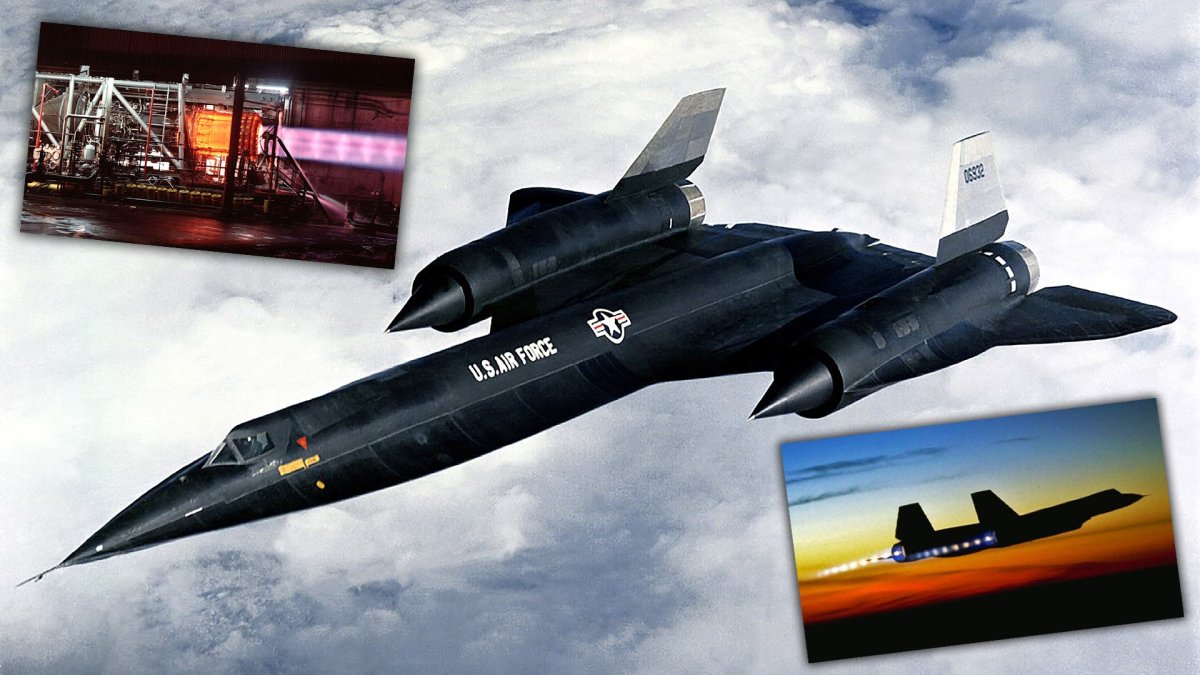
The SR-71 Blackbird's Predecessor Created "Plasma Stealth" By Burning Cesium-Laced Fuel
Skunk Works needed a way to hide the A-12's radar reflecting behind, so they dumped cesium into its fuel to create a radar-absorbing exhaust plume.
TWZ
308 points · by ivanech · 7y ago · 150 comments
Come on, you lazy reporter! Go find a jet engine and some cesium and a radar reflectometer and make a graph of reflectance vs. cesium content.
Presumably, some engineer at Lockheed in the late 50s got exactly that assignment, with a budget. There would be a notebook with a table of numbers and a hand-drawn graph. Those would be amazing to see.
A lot of these otherwise sensible warfare blogs are getting heavily into this. I don't understand it.
But clearly it attracts a big audience and they've always been a niche blog topic so I guess they like the attention.
In the 90s it was stealth aircraft, in the 80s it was Tomahawk missiles, 50s any of a dozen airborne platforms.
I just get a lot of noise and nothing really makes sense, so I just treat it as entertainint Sci-Fi.
Would be cool to see some old notebooks from Bell Labs tho like Ritchie or Thompson. I just found some old AT&T training manuals on Perl, TCP/IP, Bash, C and Unix internals, they are really cool.
It is... from another time. Both the quality of the engineering and the quality of the documentation simply don't happen anymore outside of very narrow niches.
And then you look at the Death Star now, and their core competency is lobbying. Priorities certainly have changed.
[1] https://www.worldcat.org/title/engineering-and-operations-in...
http://w140.com/tekwiki/images/b/bd/Tek_7854_design_team.pdf
"Plasma Diagnostics in Supersonic Flow Containing Cesium and Potassium" [1] Burn Cs in a rocket engine, check for absorption up to 70 GHz (or cps, in those days). Looks like fun work.
[1] https://ieeexplore.ieee.org/document/4323385 (paywalled)
For Reference: https://www.youtube.com/watch?v=m55kgyApYrY
But the ultimate SR-71 book would be Sled Driver: Flying the World's Fastest Jet.
1: https://en.wikipedia.org/wiki/Northrop_YF-23#/media/File:YF-...
Source: Dad was part of the YF-23 program at northrop and lost his gog when the project was shitcanned. yes, still bitter almost 30 years later.
It was never built, let alone flown.
Today they sell for $200-$350 used.
Due losing track of the first copy, buying a second one (when they were available new), then finding the first copy, I have two copies and high hopes of them funding my retirement..
I speculate this worked by the highly reactive cesium ionizing the air. Similar things have been done with doping rocket fuels with metals to stimulate lightning strikes.
Presumably most of the cesium would end up reacted very quickly, I don't know what the products would be but plenty of obvious candidates like cesium carbonate appear to be non-toxic.
Off the top of my head: They are adding Cesium ("screw the environment, I have to escape my pursuer") to the engine in order to leave a plasmonic plume. The plasma, which occurs because the electrons in Cesium are stripped off in the heat of the engine, absorbs microwaves (ie, radar) because of the expected cyclotron physics of a free-electron gas.
However as an electronic countermeasure, I do not see the point. The plasmonic plume will absorb the microwaves where the rest of the plane will continue to reflect it. To my thinking, the is exactly what you do not want to do: You've reduced the microwave signal where the plane is not present, and done nothing to the signal where the plane is present. So you've improved the signal-to-noise for the enemy, which are providing guidance for anti-aircraft missiles.
Considering how many years this program went on for, my thinking must be wrong. Maybe anti-aircraft missiles of the era did not intercept from oblique angles (which takes serious computation and sensors) but could only hit from behind (where the plume would attenuate a signal)?
There's a bit of reading between the lines that needs to be done here though. The aircraft is already shaped to deflect radar waves from a tail or nose on aspect but the part that's very hard to 'stealth' is the insides of the engines, especially from the rear aspect. Turbine blades and all the other geometry inside tends to act like a radar disco-ball and leaves even many modern aircraft vulnerable. By making the exhaust radar absorbent you fix this issue.
is a great alternative HN tagline
Some Google around NYTimes would probably turn up the details.
>Infrared guidance systems in heat-seeking missiles are designed to track strong sources of infrared radiation
>Directional IRCM, or DIRCM, allows for a countermeasures laser to be targeted directly at an incoming IR threat.
JP-7 has a very high ignition temperature (it was actually used as a coolant/heat sink for the rest of the aircraft), so TEB combusting once it hit the air is used to light the engines.
SR-71s only had a limited amount of TEB to use each flight. I believe it was 13 shots per engine. TEB was used each time the engines were lit and also when afterburners were lit. While the SR-71's routes were built around refueling, the number of TEB shots remaining were the true limiting factor of the SR-71's flight time.
I always assumed afterburners just meant opening the throttle up but there must be more to it
People who think like this make want to cry. Those who can see the consequences and choose to overlook them.
A decision I'm sure the Soviet Union would quickly come to regret.
[1] https://www.amazon.com/Area-51-Uncensored-Americas-Military/...
Secrets in the Sky: The Untold Story of Skunk Works: https://www.history.com/specials/secrets-in-the-sky-the-unto...
https://www.otherhand.org/home-page/area-51-and-other-strang...
that whole site is full of awesome accounts of his adventures out west.
https://www.youtube.com/watch?v=MGdxpqqsHl8
Frank Murray's talk is full of great facts, insight, yarns and stuff. Still as sharp as a tack.
There are lots of other interviews with A12 and SR71 and other interesting planes on youtube.
Be warned: an HNer could lose days browsing there ;)
Same line of thinking that results in depleted uranium tank shells.
Yeah, since neither was particularly toxic, and both offered significant performance gains over the alternatives. (Uranium is extremely dense, self-sharpens on impact instead of mushrooming, and catches fire after penetration giving you an incendiary payload for free. Supposedly, nothing else comes close for tank rounds)
https://www.atsdr.cdc.gov/toxprofiles/tp186.pdf
The problem here is that armor piercing rounds need to be made of heavy metals in order to work and heavy metals are generally toxic. Even lead, which old fashioned bullets and shells are made of is toxic.
Equally funny is where someone thought that it would be a wonderful idea to burn mercaptans in a rocket, which wasn't quite as toxic, but caused the test site to become a no-go zone just from the unbearable stench.