377 points · by dsego · 7y ago · 286 comments
Panzerino does year on year comparisons at Disneyland with his family.
https://daringfireball.net/2019/09/the_iphone_11_and_iphones...
https://techcrunch.com/2019/09/17/iphone-11-pro-disney-after...
She got out of our 1996 Saturn SL, walked around a few minutes, snapped a single picture, and got back in the car.
A couple of months later, she gave me slightly blown up print of that picture, developed in black and white, in a simple frame, and asked if I'd like to put it on my desk at work.
The photo was stunning, and so I took it to work.
Over the year, a number of people came by and commented on the striking beauty of that picture. In fact, two different people (at different times) came, looked at the picture very carefully, and said that they were quite surprised that there was an Ansel Adams photo they had not seen before.
At my suggestion, she entered it into various local and state photography competitions, and won all of them.
Alas, it was lost in a fire many years ago.
My wife has no training, formal or otherwise, in photography. But she has a naturally keen eye for graphic design and layout.
Equipment is good and important; location, timing, and an eye for composition is, in my opinion, far more important.
The thing that better equipment gives you is options, and if you know how to use it, the possibility of getting photos you otherwise couldn't get (at least not a decent version of). That's it, really.
Even the most modest equipment can take a great photo - but the conditions have to be just right for that gear.
This is fantastic! The Eastern Sierras are an amazing place to explore through camping and day hikes. In my own experience, my parents had planned backpacking trips in this area several times when I was a teen, where each trip was filled with moments like the one your wife and yourself experienced. New places, or points of perspective — where you see the world around you in a new light — are precious and awe-inspiring.
> Alas, it was lost in a fire many years ago.
This is sad to read. Losing personal photos is hard to come to terms with
> Equipment is good and important; location, timing, and an eye for composition is, in my opinion, far more important.
This makes sense, and seems to be a broad truth across disciplines: artists and creators are not bounded by tools.
My wife and I plan to take our children out to these places. Seeing a sky full of stars and seemingly boundless nature, against the background of quiet sounds and the natural world around you, is something that I wish everyone would experience in their lifetime.
A photographer friend shared with me a long time ago very similar advice to get better shots: location, timing, make the subject wear red, and push the shutter button more.
You can't frame what you didn't take.
The iPhone is certainly a decent point-and-shoot camera.
https://pbs.twimg.com/media/EEH38ZxUYAQDPBT?format=jpg&name=...
There's also a lot of editing skill that goes into this - a photographer won't simply take whatever processing the phone comes up with use it out of the box.
I personally use the lightroom mobile camera to capture RAW photos and play around a bit with curves, exposure, hsl etc. to get the look I want. I assume if they're a pro photographer, they move the RAW photo to the PC / iPad and add some photoshop magic as well.
The output (depends on the photographer ofcourse but for the ones I like) looks very natural and doesn't have the same look as simply applying an instagram filter on top of an iPhone camera shot image.
Obviously the composition etc., that folks are talking about matter a lot as well but IMO, these days camera hardware is so good that you can get all sorts of detail out of what you assumed was a blown out camera RAW. Crops work fairly well too because of how high-res the photos are, so if you're not too pleased with your initial composition, crop + photoshop fixes will get you a long way. As a whole, photography these days is about 70% editing and 30% photo taking technique (lighting, composition, aperture, shutter speed, iso etc.)
For example I would guess this pic has some photoshop to emphasize the light and atleast some simple Lightroom.
To be fair, one of the things highlighted in this review is that the new iPhone has this functionality built in. Everyone (with this phone) has a wide angle view now.
We all have amazing cameras in our pockets, and it's possible to take thousands of shots (ie, practice) for effectively no additional cost. When I was a kid, film and developing was expensive to the point that taking a picture was a somewhat special thing.
Most people don’t even try to frame properly, because they don’t know it’s a thing, and also because they don’t really care.
http://photonlab.com/photography-classes-florida/creativity-...
This is especially true when taking a picture of someone in front of a mountain (or something similar). Don't zoom! Take a picture of the mountains with the people in view, not a close up picture of the people with a sliver of mountain in the background.
It will make your pictures better in angle of view possibilities, better low light, and more correct exposure. That is, in the technical aspects that they've improved on.
It wont make your framing better, or the subject matter more interesting.
The Lens being used is more important than the camera sensor being used
The camera sensor is more important than the camera body being used
Stick to this fundamental reality in that order and the novelty of “a pHoNE dID ThIs” wears off quick.
Now, I can say that the depth cameras and non-destructive software depth processing is getting some amazing effects and enhancements outside of this framework.
Like you said even if you're not a "photographer" it can make a huge difference.
EDIT: Also even if somebody has no clue what they're for, it can help keep the image level at the very least.
That's because making a nice photo is less about the tool used and more about framing, contrast, subject, &c.
I can't find it right now but there was a website showing amazing pictures taken with early digital cameras which were horrendous compared to today's entry smartphones.
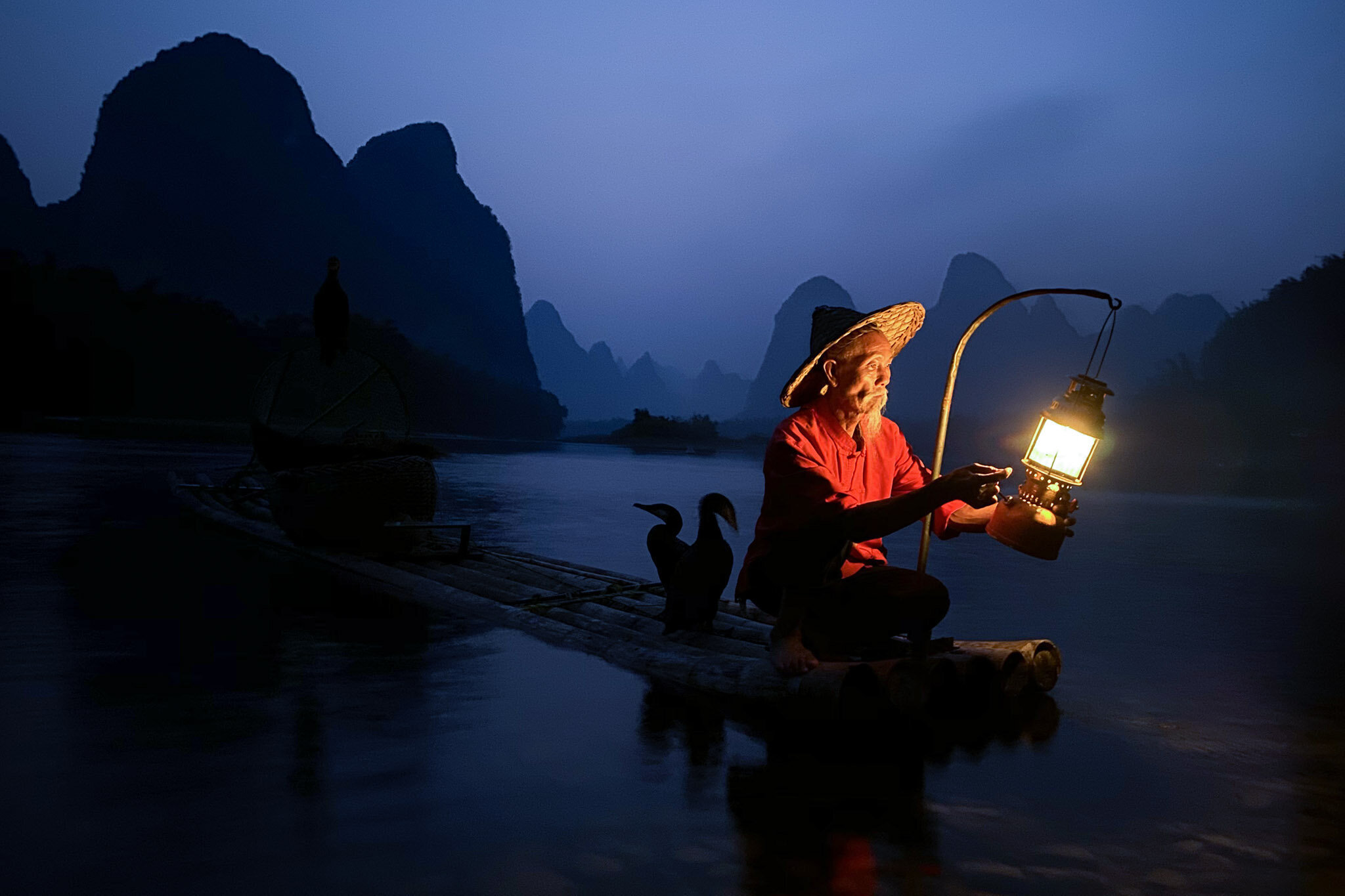
The cormorant fisherman literally pose in costume in front of dramatic landscape features. All you need to do is show up at the right time of day and give them a few yuan to take their picture, and you will get comparable results.
The iPhone 11 gets great social media photos, but I wouldn't want to get any of those printed (at least not larger than 4x6). Of course the best camera is the one you have with you so I am still happy to see the improvements over my Xr and my wife's 8+.
That was with a 6S!
I can get nice pictures (= vibrant and nice colors) with any camera, what I can't get is a sharp image, with sharp edges.
I went to a trip with my Android Phone and DSLR, and my GF has an iPhone 6.
We took pictures with all 3 devices. When I looked at jpg photos from Android phone on my PC, they had all "perfect" (=vibrant and catchy) colors, but when you zoom in, it's all a blurry mess with no detail. The iPhone was nice and sharp (at least much sharper than the android pics). The DSLR was of course the sharpest one.
Now on the android phone, I have a "pro" settings that captures RAW image. And it's incredibly sharp, the colors are bland of course, but the data is there and we can add/process the colors in post. But why is the image so much worse when using JPG.
My idea it that normal jpg has HDR enabled and is being processed too much, thus losing a lot of detail. You don't get that loss when capturing RAW.
What I'm afraid is that the new iPhone dark mode (or even the P30 Pro and other phones with post processing) will also process the images too much and stack them thus losing a lot of detail. When put on instagram or made smaller for Facebook/websites, you won't see the missing details, but the colors will be vibrant and that's "good enough" for most people.
When I take a picture I rather have the real RAW data in the picture instead of processed jpg that I can't control. What do you guys think about the automatic post processing done by your device, that when done incorrectly, you'll lose a perfect picture because the implementation just lost you a lot of detail...
I guess the post processing trend is there because you just can't make a good lens and sensor that small and still have nice results. The phone makers are just trying to fix this with post processing...
No one will ever print those in 20x30in and frame them, hence no one cares about edge to edge sharpness or raw files. The "auto" post processing and night mode are the important parts.
> When I take a picture I rather have the real RAW data in the picture instead of processed jpg that I can't control.
afaik you can do that on most smartphones worth taking pictures with.
People still want to hang pictures on the walls and have family albums. Maybe it's a diminishing use case, but the sad thing is, it's not this that makes camera optimized for quick, ephemeral snapshots. It's the optimization for quick snapshots that's pushing out the more permanent use of photos.
This is what manufacturers optimize for. Getting great pictures for the 95%.
Who cares if the hairs on the dog are blurry when you zoom in so much you can't see the rest of the picture? Well, Pros who might want to crop the photo later. And for them, DSLRs will still exist.
Or, they want to print the photos they made on their phones into a family album, and the result again comes back as blurry mess that looks nowhere near as nice as it did on the phone.
So I'd add: manufacturers optimize for great pictures for the 95% that look great when shot, not when later used.
BTW - one nitpick, stacking images will _improve_ image quality. Specifically - averaging images (after aligning them) taken sequentially is a common way to reduce noise artifacts. Photon noise follows a Poisson distribution and so if you take multiple images and average them you will generally get a cleaner image. The caveat being that you must be on a tripod and your subject must be still for those shots.. (ideally landscape kinda shots)
look at the hairs of the dog: https://daringfireball.net/misc/2019/09/iphones-11-review/mo... They are all blurry
Is it possible to shoot RAW with iPhone?
Yes but with third party apps only.
As someone who owned the LG G3 years ago, and absolutely loved the wide-angle lens on that phone, most of these pictures would look identical. I guess the point I am making is that while it's exciting to have a wide-angle lens on the iPhone 11, it doesn't in any way move the bar compared to what's been out there for a while.
Where the iPhone 11 has improved drastically, is with night mode shots, and that's somewhere it has been lacking substantially compared to the competition. They've done a really good job catching up and maybe even surpassing the competition in some areas. Kudos to them for that.
That being said, you aren't going to get great prints out of night mode images for anything much larger than post-card sized prints with the iPhone 11 (or any other smart phone camera to be honest). I love the image of the person in the boat at dusk, but even at the size displayed, you can see a bunch of artifacts from noise reduction. As much as everyone loves to hate on DSLRs these days, you are going to get much cleaner images in these light starved environments with a large sensor and good lens. I personally think it's absurd to make that comparison, but I just had to say this because every article about the latest smartphone camera ends up having a bunch of comments about how they are superior to DSLRs at this point (which they are on the computational photography side of things, but good luck getting clean, large prints out of a phone camera, especially in low-light situations)
They wouldn't look remotely alike. Many of those simple shots are incredibly complex dynamic range scenes were the results are quite spectacular. With a lesser device the results would have been a blah photo, which is the point of the amazing progress that is happening in computational photography and the hardware that feeds it (focus pixels, secondary depth analysis, and sensors that have much better dynamic range than they did -- even current SLRs have much better dynamic range than a few years ago).
As to print outs, almost no one actually prints out anything. Most photography is for social media, your own camera roll, etc.
"As much as everyone loves to hate on DSLRs these days, you are going to get much cleaner images in these light starved environments with a large sensor and good lens."
This is a strawman. No one is hating on DSLRs, and I can't find a single comment claiming that they're superior to DSLRs, beyond in the computational photography realm. But yes, smartphones are good enough that we often leave our DSLR at home, and when we do bring it there are many situations where the smarts of the smartphone yield usable to excellent photos where the DSLR will stumble. All things being equal a larger sensor is ideal, though things get more debatable on the lens side (larger lenses equal a longer focal length equal a much shallower depth of field, which while beneficial for bokeh, in many situations because a serious hindrance rather than benefit).
Case in point - https://photos.app.goo.gl/RMMcJe9X6XjaEqcw7
> As to print outs, almost no one actually prints out anything. Most photography is for social media, your own camera roll, etc.
Well, you're certainly very defensive for no apparent reason. All I stated was that it would suffer for prints, which is factual and nothing you stated really adds value to that. I didn't say that it was no good because of that...
"Well, you're certainly very defensive for no apparent reason."
You stated that they wouldn't look good printed out which is a claim I didn't even want to argue (despite it being very wrong), instead pointing out that people generally don't print out often anyways, so... That isn't defensive, it's factual, as you say. No need to get defensive about it.
Feel free to get a G3 and an iPhone 11 and take comparable photos and show everyone, including the entire industry that recognizes the advances, how wrong they are -- it will surely see a lot of hits and attention.
It's easy to take an aesthetically pleasing scene and capture it in a way that looks vaguely pleasing when zoomed out.
The moment I zoomed in an extremely moderate amount it looked horrible, especially at the hardest part to capture, the clouds and sun.
"today I’m just as thrilled to be putting an entirely new Ultra Wide lens in my pocket. It gives us another format to tell the story, another perspective to visualize, and a better rounded tool for doing our best creative work."
And of course he gets ‘paid’. If not directly by Apple in dollars, but by Apple in exposure of his name and thus his business. He does this (great) PR piece pre-launch for Apple, we all learn his name, some will want him to be their photographer of choice and thus the cycle closes.
Is this an advertisement? Ads are paid announcements. There was nothing noting it was paid for in any capacity.
There's a difference between an ad and a bias. I find it useful to notice biases because we all have them. Ads are quite different.
Second, this wouldn't be the first time someone did a paid promotion without noting it was paid. I don't know anything about this guy, so I'm not accusing him of anything. I'm just saying it's naive to think that everyone is always highly committed to playing nice with the FTC rules. (See game streamers and their odd tendency to open tons of 'loot boxes' on stream & get significantly better results than expected.)
Finally a lot of the copy reads like it's straight from a press release, with capitalized words and everything.
Whether it's enough to constitute an ad in a regulatory sense, I don't know. But you can be advertised to without the source being a literal ad according to a legal definition.
>I'm just saying it's naive to think that everyone is always highly committed to playing nice with the FTC rules.
Who exactly said that?
Further he never thanked Apple. He thanked a maker of a camera app for iOS. At most it seems to be an ad for a camera app, and they likely provided the device to him.
And he's just beating the strawman with his review.
- Did we need a "review" to learn that the new iPhone can shoot better pictures than previous iPhones?
- Where are all the full-resolution pictures–especially from the night shots? Everything looks nice and sharp if you scale it to 750x560. Even for the single lens camera of my 3 years-old android.
- Would it break Apple's heart to include a comparison of their "pro camera" with a real professional camera? Even a low-end one.
And let's not stick with the payment thing. We have no way to verify whether or not he received or will receive compensation from Apple. If it looks like a duck and quacks like a duck, it's a duck.
Why would they? That's not who they're competing against.
Discussing whether he is just subjectively biased towards Apple or outright paid is already kind of moot point
While the article may well serve as a function of marketing because some pro photographer got a loner from Apple and wrote up a gushing review. I don't believe the word "advertisement" holds water.
I think this comment said it best: https://news.ycombinator.com/item?id=21016402
It's unprofessional at best and dishonest at worst to pretend that this isn't just corporate PR.
And ironically, the image quality really isn't all that amazing. It's +/- other phone cams - better in some conditions, not as good in others. And in absolute terms, these photos are nowhere close to the sharpness, dynamic range, and saturation of professional equipment. Night mode is good, but the daylight shots are okay but not awesome.
You could argue it's unfair to expect anything better from a (relatively) cheap phone cam - but it's a (relatively) cheap phone cam with a "pro" tag being marketed as a "pro" product.
In photographic terms, it simply isn't - except maybe for the fairly forgiving social media photo niche.
You can say the language is "marketingy," sure, but it is extremely unlikely that the author is involved in or paid by Apple's marketing or advertising team.
So I have 0 experience as a stalker - but won't they put that data into Google maps, see it's a police station, and probably assume that isn't your home?
You'd have to be really brave and stupid to loiter and break and enter a station thinking it was somebody's home.
All these things could leak bits of identifying information, which I think is strictly worse than the 1 bit of information leaked by removing EXIF entirely.
Does it get removed or can everyone see my location?
You see it in lots of places, from newspapers to forums and portfolios.
I just can't justify a $1200 camera purchase to replace my Sony A57...and I'm a little sad about it.
Also given how often Sony is churning out new cameras these days, going secondhand will save you serious dough.
A lightly used A-mount (like an A77) is an intriguing thought...if it had a kit lens, then my kids could keep using the a57 til it failed completely.
I have some street photo / rangefinder hobby background where the idea is to not endlessly twiddle some knobs but be able to take technically decent enough photos quickly. No posing or setting up a still life but real events. When I carried a dedicated camera, it wasn't in a bag but in my neck, usually even without a lens cap. Fixed focal length lens, Canon Canonet or Panasonic GF. It's not necessary about automation or "AI" that helps you to be quick, but rather just less features and actual working interfaces.
what do you mean? A long press gives you immediate access to exposure on the iPhone. There are also dedicated photo apps (like Halide, mentioned in the article) that offer more advanced controls.
I also don't want to have the person in the center of the frame, because that would be really boring framing. Photography 101.
On my current phone I can do the framing how I want, then touch the person on the touch screen. The phone instantly readjusts the exposure upwards so that now the person is more properly exposed and the sky is overexposed. This is what I wanted. Then I continue on to take the photo. This doesn't seem to work on many other phones. I never enter any menus or do any wheel adjustments. It takes extremely little time and is a very natural workflow.
On a rangefinder camera one would aim the center of the screen at the person, then hold the shutter halfway so it would pick the exposure from there, then frame (=aim somewhere else) and take the photo. If you have autofocus, it also focuses on the half-press.
In neither case are there any manual adjustments or looking at any buttons. Your eyes are on the viewfinder / photo area all the time.
Apparently I take pictures of different things than the author. Different kinks for different folks I guess.
To me this this aspect feels like basically an Instagram filter. Are we going for accuracy or how pleasing the photos are? They're definitely more pleasing but not an accurate representation.
Lenses are subjective. The question is: what do you want to see, and what lenses see that?
Also, for me personally, the next waypoint for the phones should be the development of compact telephoto lenses -- it seems only Huawei got that right with their P30Pro.
I know if I want a _great_ picture I
- shoot raw. - shoot on manual mode (often still with auto exposure). - put the photo into Lightroom.
With a huge sensor and a fast lens there’s no need for a lot of the computational photography phones are doing:
- “portrait mode” - unneeded when you have a fast lens and can get more real bokeh than you could ever need. - “night mode” - with modern sensors you can get usable images even at 6400/12800 ISO. This lets you get a solid image even at a reasonable, handheld shutter speed.
The real improvement other than sensor dynamic range and pixel count has been in autofocus. I still miss some some shots with my Canon because I didn’t react fast enough to nail my focus.
Panasonic 25mm f/1.7 (50mm f/3.5 equivalent full frame) is under $200 and is an excellent portrait lens.
With initial release of GH5 autofocus was pretty bad, but with the last firmware upgrade apparently it's quite good now.
I however cant yet justify upgrade from GH4, which doesn't have sensor stabilization.
As an amateur photographer I'd never take with me a mammoth gear that is some Canon 5D mk3 w/ 70-200 F/4, yet I'm somehow pretty sure that some good processing would allow a compact like Sony a6000 w/ 18-135 F/5.6 get close to its performance in 90% of cases.
The thing is, I sometimes can do that in Lr/Ps, but it's just much more work than I'd like to do for most of the photos.
Oh I'm sure they've recognized the potential all right. But these smartphone manufacturers have massive software development departments with heaps of funds poured into AI research for multiple reasons other than this specific field, which is now really starting to benefit them. It's a different culture.
And even if we assume a camera manufacturer would have the finances to build this culture on their home turf (a huge assumption to make), they then run into the next problem that their sensors are too big! They can't compete as strongly here because they capture much more information with their larger sensor sizes and even with tiny smartphone sizes, you need laptop level performance on a ~7-10 nm transistor scale and dedicated AI hardware to pull it off without destroying battery life. They're so far behind both in know how and difficulty of the problem that I'm not sure how they'll ever be able to do it in the foreseeable future at least with full frame cameras.
Another point in case is that one could implement more in-camera techniques for collecting raw data for further offline processing, like focus stacking or aperture simulation which today require external hardware and a decent amount of skill.
This totally applies to scenes. Portrait, sports, landscape, etc are all just different permutations of shutter speed, aperture and ISO.
I think the Camera app is one of the pinnacles of Apple's software engineering, but sometimes shooting on my DSLR really makes me value how beneficial things like knobs and buttons.
Obviously this might require using a 3rd party app as well, but I would gladly pay several hundred dollars for such a device.
There are several third party solutions that offer just that, have been for years, e.g.:
https://icdn9.digitaltrends.com/image/digitaltrends/pictar-i...
http://blog.incipio.com/home/incipio-focal-wireless-bluetoot...
and even more mainstream brands...
For now, being able to quickly set one of these values depending on the scene is very important to me - so I keep the camera going for now...
It doesn't seem any more out-of-place for them as the HomePod, the idea of which is to have a bigger device just for listening because there's a physics limit to just using a tiny device for outputting sound. They then combine that with super advanced software for something unique. Doesn't sound different from photography, to me.
Why wouldn't Apple want to create the best camera in the world?
To create "the best camera in the world" you have to be really really good at optics, sensor design and signal processing. Apples core strength using very clever software tricks to make pictures that look really good on a computer screen despite bad bad optics and sensors (in an absolute sense).
Most of the "cool" iphone-pictures in non-optimal lighting are about 50% post-processing and they show (for example the linked pictures are about 1.5MP and while they have nicely matched colors, there's barely any texture left (it's the same for the ads on apple.com). This might be fine for viewing and even a small print but that's nothing a DSLR of yore couldn't do. And believe me, once you print a poster of the nice fisherman and compare image quality form the iPhone and a modern ILC you'll see that there's a lot to catch up for the iPhone.
I'd take a typical ILC for ~300 USD over a iPhone everyday from a technical point of view (and so would most photographers if there wasn't the ad-money)
Well obviously. The whole point here and the impressive part of the technology is that you get these results by simply pointing and shooting in full auto mode, no manual post processing and with tiny optics and sensors.
And actually I'm also not really impressed by image-improvement algorithms anymore, the likes of them have been pretty standard for some time now across vendors (it's not 2010 any more), yet picture quality isn't anywhere above snapshot-level.
I want to focus on getting photos without having to get it right at that moment. Get me ALL the image data, let me indicate what/when I want a picture of, and save details of framing & timing for later.
Live Photos is just the smallest beginning of what we should be able to do with 3 60fps >4K cameras, a half terabyte storage, and an unlimited data plan.
However Pixel comes with unlimited (!!) photo and 4k video storage [2]. Apple cannot beat that.
Yup, this is why we switched to Pixel, back when the first version came out, and we haven't looked back.
If you aren't shooting photos like his with your iPhone X, upgrading to an 11 series is not going to make much of a difference.
1. http://austinmann.com/trek/iphone-6s-camera-review-switzerla...
in 2018, for every picture I took with the D800/850, I took +200 iphone pictures.
I still believe there is room for a high caliber camera but I don't want to own it anymore, I just want to rent whenever I need it.
Smartphones killed the 2/3" sensor market. Now they've killed the 1" sensor market too. Micro 4/3 is stale with no major sensor advancements for years now. What's left, APS-C and up?
It feels like there's no innovation in the camera space outside of Apple and Google.
Some of DSLR manufacturers do offer fragile, awkward GPS accessories that you can plug in externally. And they generally provide some sort of geo-tagging feature in the software included with cameras.
GPS does have some limitations for photography because it takes a while to lock on and doesn't work indoors. Modern smartphones can achieve much better location accuracy due to using multiple means. So the ideal solution would probably be for the camera to obtain location data from the phone via Bluetooth.
Which at least Nikon offers. But you have to have the paired device with you, leave the camera in the right mode, etc, etc.
My Olympus E-M10 (bought in 2014, and still going strong) does this with a companion phone app, and it's incredibly useful.
My Canon offers multiple GPS modes, including periodic sampling even in standby mode, and "always on", for this reason.
I dream of Apple putting an A13 processor in a Nikon mirrorless body running iOS. Or, somehow attaching my Nikon glass to the end of my iPhone.
And yeah, DSLR bodies do have GPS but since they have a kind of "real" GPS it's more expensive and more power hungry, hence it's not really mainstream. (and about your phone's GPS: just enable flight mode and try to use it. Enjoy!)
https://www.sony-asia.com/microsite/assets/cyber-shot/2012h1...
Leica will survive too, but mostly because they are beautiful things.
Those larger sensors have larger pixels and the CPU demands aren't going to be all that great.
If you compare like to like, same sensor tech, same quality glass .. there is absolutely no way a tiny sensor can out-resolve or out-perform a larger sensor when it comes to image quality. There are other metrics where it can - for e.g. power consumption/heat output, ability to stabilize the sensor (smaller = easier), faster readout (generally easier on smaller sensors), etc.
This doesn't follow. Photography can be astoundingly expensive as a hobby or otherwise. Lenses into the five digit reason, many in the thousands. You can buy expensive lenses, bodies, flashes, tripods etc. I don't think most people see photography as a cheap hobby, once you get beyond the bottom tier Point n Shoot, or entry level APS-C DSLR with kit lens.
I hiked a mountain about a year ago with my fiance, and she begged me to lug her Nikon DSLR up so we could get some good photos.
The only one we printed? An 18x60" shot I got on my iPhone 6s in panorama mode. We could have (and would have liked to) go even larger but framing started becoming an issue.
A more recent sensor advancement is dual native ISO in GH5s, which make the system's long downside -- low light performance, a much better proposition. I'm hoping this technology will find its way to cheaper offerings.
There are a few fast new lenses that have come out. I particularly like 25mm f/1.7 that's under $200, there are also a few ones on the higher end.
Another selling point for micro 4/3 that they can use virtually any vintage lens with a simple adapter.
I’ll be getting the Iphone 11 Pro for the camera technology and wide support, along with the dual SIM feature that I’d like to know more about
I expect 3-4k pictures from dslrs and 2k made by our smartphones. I'm really curious how our end result will look like.
I expect 100-300 images but this is our first holiday where we took considerable amounts of pictures/snapshots by phone.
At least on my Samsung s9 and my wives pixel 3a lots of those images look sharp.
iPhone 11 came up with 240 fps
Galaxy Note10+ came up with 960fps
and now Huawei Mate 30 Pro with 7680 fps
Edit: I stand corrected it’s still 720p
Question for professional photographers from someone that has no idea about photography: why would you use a phone when you can use your professional camera?
I really enjoy using my iPhone for photography when not working. It removes the friction of taking photos. I don’t have to carry a large camera while traveling, don’t have to charge extra things, it’s just overall easier. Whatever quality I’m losing is made up by simply capturing more moments than I otherwise would have if I was using my DSLR.
Most don't. Having a great smartphone camera is mostly about convince for pros. It's always there, and sometimes your pro camera isn't.
http://davidbuddphotography.com/galleries/01-places/china/gu...
Knowing the journalist/fixer trade a little, this is some well known place/person, and photographers who go to China are taken by their local helpers (who know the drill) there to shoot "interesting" pictures.
This fisherman guy probably makes (or could make) more money posing for tourists than fishing...
This kind of stuff exists for many popular shots with local photographers you can hire to take you and even have you get up close with locals.
Guilin is amazing photography-wise, but the tourism there has a very manufactured feel to it, as it does in most of the very popular places to visit there.
It also amazes me that everyone's is wooed over these iPhone specs. I've had my OnePlus 7T Pro for a few months now. Most of the top-line specs match or beat the new iPhone. Nightscape on the OnePlus is also amazing - takes great low light photos.
Seems like iPhone has been chasing some of the more advanced Android-phones for a few generations now.
I love my Pixel 2's camera, it shoots gorgeous pictures, but I'm seriously considering downsizing my phone significantly. I'd love to have a nearly-dumb-phone but... can't give up the camera.
If someone sold a standalone camera that is as portable and as good, I would take it and a dumb-phone in a minute.
Brian Chen, whom I respect, from NYTimes reviewed the newest iPhone and compared all his notes, photos, and videos to his iPhone reviews in the past and said there was hardly a difference in quality and performance.
I'm not saying the camera advancements aren't nice, but as a working photographer I have pretty strong opinions about some of the new features like night shot. There are already apps that exist for iOS that do this (take multiple photos and average them out to produce a brighter image with less noise). Also, I believe that if it's really too dark to take a good photo, it's not worth taking a photo at all because even the night shot image won't look that great (and of course they look great when you see them because they are side-by-side comparisons with the darker, more crappy photo, but as standalone photos they look like garbage). I'd rather find or make good light if I want to take a portrait.