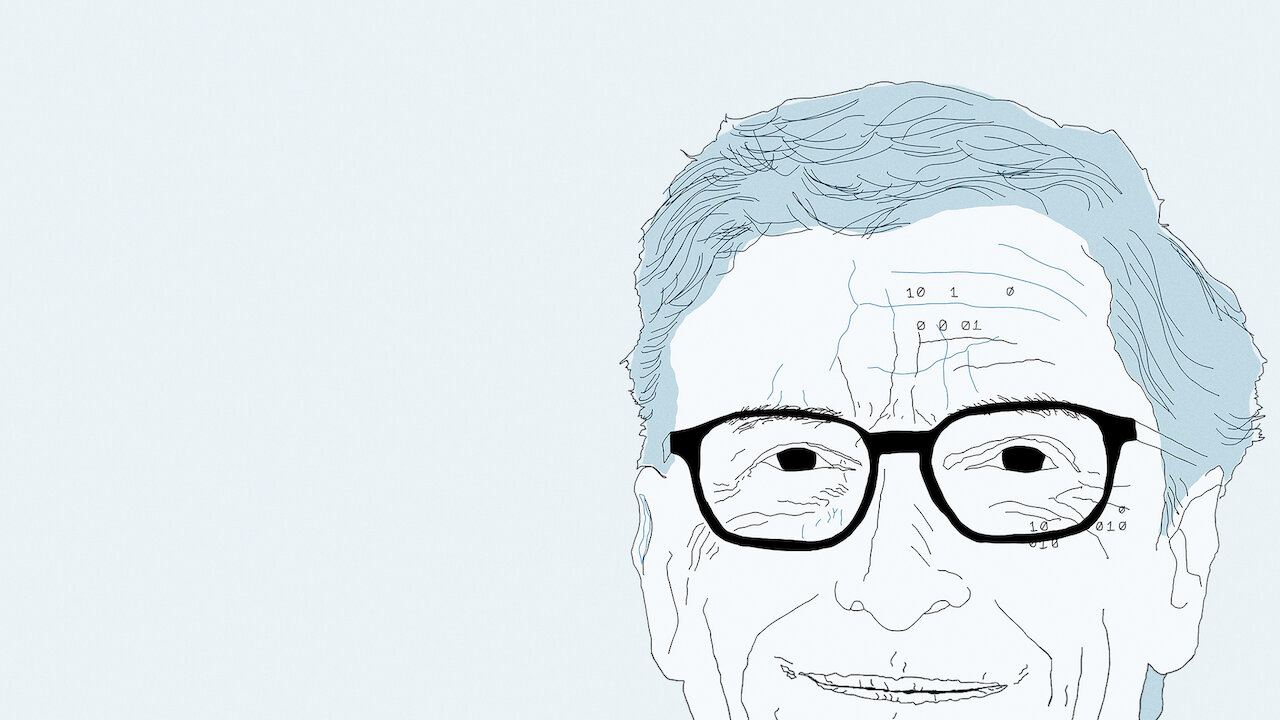
Watch Inside Bill's Brain: Decoding Bill Gates | Netflix Official Site
Take a trip inside the mind of Bill Gates as the billionaire opens up about those who influenced him and the audacious goals he's still pursuing.
netflix.com
110 points · by ceecko · 7y ago · 96 comments
https://www.gatesnotes.com/About-Bill-Gates/From-the-cutting...
It’s unfortunate that they were ready to build the TerraPower pilot nuclear plant in China and the recent trade war prevented it.
https://www.popularmechanics.com/science/energy/a25728221/te...
It’s hard to have a reasonable debate about this issue when the sides are so diametrically opposed due to their dogmatic beliefs.
In the interim, I’m hoping for cheap micro gas turbines.
Burning natural gas just for heat is senseless when I could generate all my electricity with its combustion too seems like such a waste.
Places like hospitals have installed multi-megawatt turbines because it saves them the cost of standby backup generators, instead they can use the grid as backup for their internal generation.
https://www.toromontpowersystems.com/electric-power/products...
Also, heating loads residentially may be bigger than electric loads, but grid-intertie system can resolve that.
There was no mention at all that Microsoft bought it. https://www.windowscentral.com/microsoft-bought-ms-dos-os-ea...
This happens frequently in business and tech. CEOs look like geniuses when they can take credit for the work of others.
It's the same as when people say that Elon Musk is the founder of Tesla, and most people have never heard of Martin Eberhardt (who I think had another partner who's name I can't remember!).
The other interesting story that I thought went missing was when they talked about Bill and Paul working on the class scheduling software for the school after the all-boys school merged with another school to allow girls in. I think they missed the story about how Bill set up his schedule so that he could be in an all-girls class.
Overall, it was a pretty good documentary. I do want to note that it focuses more on Bill's philantrophic efforts, especially in Episode 1, but then Episodes 2 and 3 do a good job of covering his history and Microsoft (though still more focused on his recent philantrophic work.) So this is just a PSA for anyone more interested in his Microsoft story: you may find that more in Episodes 2 and 3.
The Steve Jobs documentaries were more like "Hey, this guy was a douche, but people worship the cult he made from peddling computer stuff, and that is good, right?"
Definitely a difference in approach.
It’s especially interesting since we’re becoming acutely aware of how the rich regularly wash their reputations through charitable work e.g. Epstein and the Sacklers.
Only the wealthy get to influence the public perception of their legacy. I don’t understand what is so admirable about that.
[0]: https://www.nytimes.com/2015/01/25/world/africa/mosquito-net...
[1]: https://nancyebailey.com/2018/07/04/gatess-blunders-destroy-...
[2]: https://www.philanthropydaily.com/gates-philanthropy-failure...
[3]: https://www.learningsuccessblog.com/blog/dyscalculia/common-...
Melinda talked about how they were told by the women in small African villages not to bring condoms, that the women wanted birth control in the form for Depro-Prevara shots. Condoms have the stigma of AIDS prevention and so a wife that wants her mate to use a condom is seen as suggesting that he has been unfaithful and is infected.
Competing fairly is IMHO nice, but I don't believe that's your number one concern when you're trying to get things off the ground and survive. We look at all the successful companies and nitpick on questionable things they did in they early days (or current days for that matter). We overlook that no successful company got where it is without actually aggressively pursuing their goals. Nobody hears about the companies that compete "fairly".
There is no way to 'grab the brass ring' by reading or watching this type of documentary. Understand it for what it is. It's entertainment pure and simple.
To your point 'shitty behavior' absolutely true. The amount of anxiety and aggravation that OS and some of those business practices caused is rarely talked about. In this case making money was tied to having a bad product in part not a good product that people loved. The entire eco system was dependent on convincing users they didn't know enough and needed help to get it to actually continue functioning.
The foundation distributed $4bn through grants in 2018. See https://www.gatesfoundation.org/Who-We-Are/General-Informati...
Some of the things I didn't know about Bill Gates -
1. He loves diet coke! At one time he opens a refrigerator and it's only stacked with diet coke cans.
2. He reads a crazy amount of books. And he reads them, takes notes and is able to retain all that information. I found that remarkable.
3. He works hard. Really hard. And he takes on problems which seem insurmountable. Whether it's polio eradication, clean water, or nuclear reactors. And he approaches the problems from a technical point of view.
Some of the lines which I liked -
Director: I looked into the most prevalent criticisms of you, and this one actually seems the most relevant. "He's a technophile that thinks that technology will solve everything."
Bill: Yeah, I'm basically guilty of that. Any problem... I will look at how technical innovation can help solve that problem. It's the one thing I know and the one thing I'm good at. And so, you know, that's my hammer. And so lots of problems look like nails because I've got a hammer.
Director: Is there a part where you say, "This is way too hard, I took on too much, I quit".
Bill: Sometimes, you really do have to say, "Let's give up". And sometimes, you have to just say, "I need to work harder"
Mary Gates (Bill's mother): "Each one of us has to start out with developing his or her own definition of success. And when we have these specific expectations of ourselves, we're more like to live up to them. Ultimately, it's not what you get or even what you give. It's what you become."
IMHO his cutthroat tactics leading Microsoft are already well documented and have nothing to do with the great work he’s doing now.
https://www.infoplease.com/history-and-government/famous-pre...
The Microsoft years proved that he was good at making money using dominate-a-market monopolist techniques.
That's exactly the wrong personality profile for someone trying to do effective philanthropy, which requires unusual empathy and cultural sensitivity, as well as tactical cleverness.
Gates - arguably - demonstrated the latter, albeit only in a very specific and (IMO) self-serving way. He also made plenty of spectacular strategic errors at Microsoft which harmed MS customers, MS competitors, and computer users in general.
So his record of strategic foresight is patchy at best. And there is no evidence at all that he has any unusual talent for empathy or cultural awareness.
>Anything that touches on microsoft's history should at least mention the anti-competitive practices they used to cripple competition.
Do you want to clarify your statement a bit? Why "the hell" do you think they shouldn't?
DOS was shit and so was Windows. Microsoft has always somehow made money in spite of the poor quality of their products. The only exception I can think of is their mouse.
I only met Bill Gates once, but I was very impressed — I was going on about problems in the windows graphics stack, and despite it not being his expertise, I thought he “got it” faster than his domain experts in the room.
The replies are filled with similar anecdotes.
tweet: https://twitter.com/ID_AA_Carmack/status/1175405258975141893
- having a good family
- having good environment that mostly ignored his stubbornness and let him grow
- how lucky he was to be good in math and engineering
- coming from a well off family
- having a mother to push him to outside of his comfort zone(She was also in various boards so could teach the politics of leading people)
- having friends that helped him get better at understanding the computers.
Being smart is only one parameter in his success, he wouldn't have been so good if they hadn't given him the chance to program at private school he went to for solving the school scheduling problem for example.
IMO Comparing Knuth to Gates is the case of apples and oranges, most important reason being Knuth was born in 1938 and Bill Gates was born in 1955, Gates was in his prime years when the personal computer revolution was beginning.
Gates is turning into a Soros like figure, and there are all sorts of interesting and controversial wrinkles in the story of the man.
Even just looking at the story of Gates's influence at Vox would be interesting, without even trying to make hay of his relationship with Stephen Pinker.
Anyway, Citations Needed did a couple episodes (45 & 46) on Gates that are a good introduction.
https://soundcloud.com/citationsneeded/episode-45-the-not-so...
You say that as if it is a bad thing.
On the other hand, I generally don't expect to find this in documentaries. This is what books are good at. (I'd never expect to see Power Broker content in documentary format.)