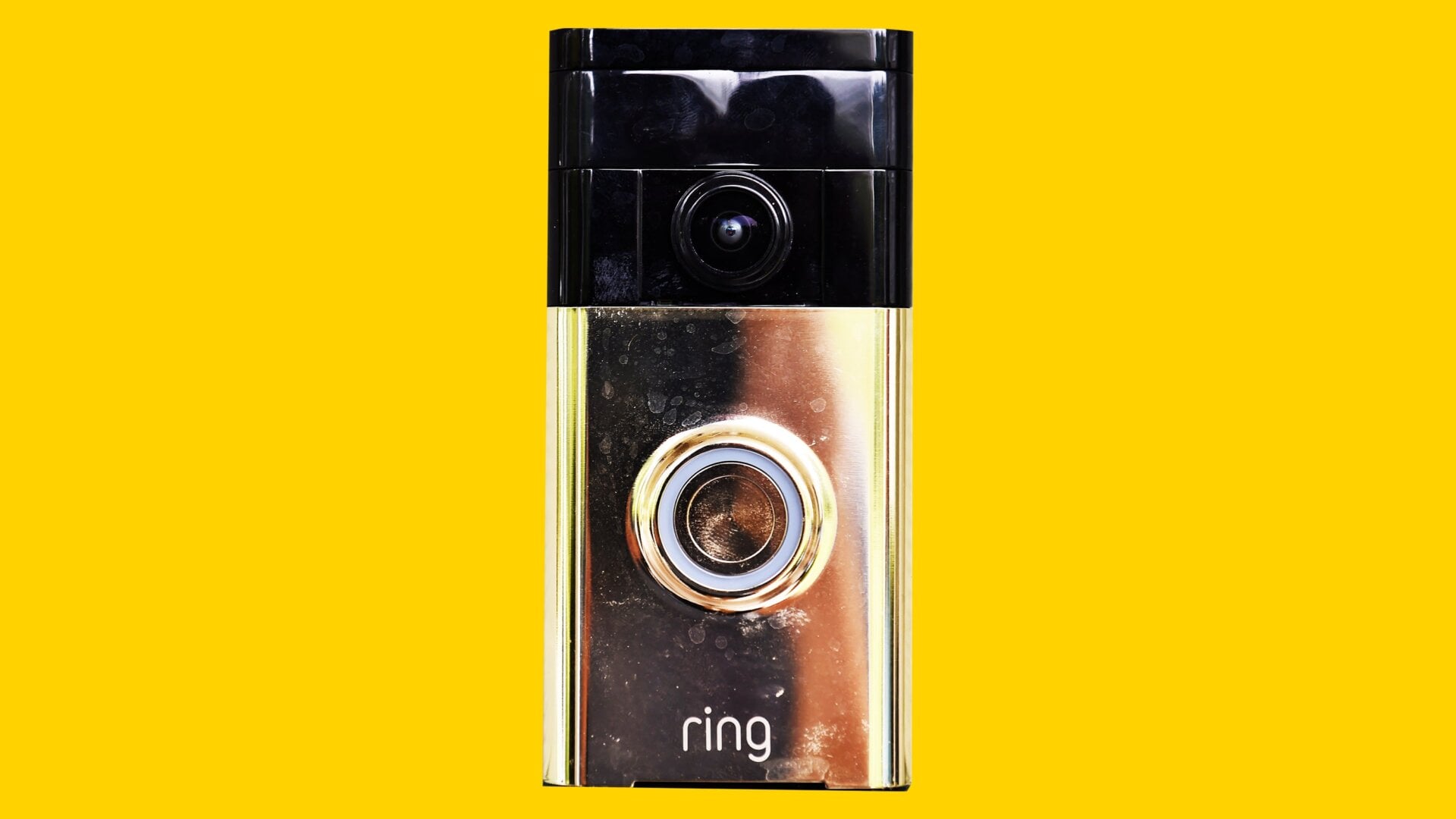
Ring Gave Police Stats About Users Who Said ‘No’ to Law Enforcement Requests
Amazon’s home security company Ring tracked how its users responded to law enforcement requests for surveillance footage captured by Ring devices, and it
Gizmodo
368 points · by eth0up · 7y ago · 276 comments
I wonder how much of this is just because who's going to believe some random email that "law enforcement" wants to see my security camera footage? We live in an age where the "IRS" calls every day to inform me that they're going to come arrest me, and I'm supposed to hand over surveillance footage to some random email?
About a year ago someone was murdered near my office. Our office is in a townhouse in a mostly residential neighborhood. Detectives came by in person to ask if we had any surveillance cameras that might have footage they can look at to see if it might have the killer on it. They didn't just send an email.
The requests should be done in person in a way that naturally limits it to when it would be required rather than just curiosity or convenience.
But the requests themselves, the requesters, the durations, and the judges that signed off on them should be digitally available.
There needs to be high barriers to request this sort of data.
There should be low barriers to auditing the use/misuse of it.
Ring is building a global surveillance network and using dark patterns to get homeowners to pay for it.
It's amazing how hard it is for people to grasp that I don't know who they are.
Would be great if there was a national database of law enforcement officers' name and badge numbers, that typing in both with a match would show any member of the public an official image of the officer's face. I'd love to be able to authenticate whether someone is a cop before letting them into my home: fake badges are cheap.
Similarly, would be cool to have a facial recognition database, so a citizen could take a picture of a cop's face to lookup name and badge number if they are a real cop, or report impersonation of an officer if they are not found.
I suspect not.
Look at the stats provided to LE: there were a grand total of zero refused requests. Instead, all the requests were either approved (small minority), or ignored (all the rest). The requests were sent by email. Perhaps the users simply didn't see the emails. Most likely, they went into the Spam folder. Or the users are so inundated with other junk and other email (that makes it past the Spam filter) that they just didn't notice them. Maybe the users don't even look at their email very often.
Has Ring done any research to see if their emails are getting into their users' Spam folders?
Seriously, email these days isn't the greatest communication tool any more, thanks to the spammers. GMail does a pretty decent job of filtering, but not everyone uses it. Look how many clueless people still use their ISP's crappy email service!
As for the IRS, you're right about that: all the spam/robocall/scam calls have basically ruined voice calling on phones. I almost never answer my phone any more unless it's someone already in my contact list, because it's usually someone I don't want to talk to (and if it's from my own area code, it's almost always a scammer).
Do you have any better alternatives?
> GMail does a pretty decent job of filtering, but not everyone uses it.
Yes, anyone not using Gmail is completely inundated with spam every second of every day, is a troglodyte, and how do they even survive? As the posted article shows, the best thing for everyone is to hand over all of our private information, communication, and GPS coordinates to the big tech oligopolies.
Edit: correct silly wording
> Has Ring done any research to see if their emails are getting into their users' Spam folders?
How would you do that without putting tracking pixels/images/scripts/anything inside of an email?
Inconceivable!
getting a permanently funded government agency as an advocate for your thing is a great startup play: you'll easily crush competitors and roll your way into an enshrined monopoly because "we cannot possibly lose this valuable tool against criminals everywhere"
In my experience it wasn't a horde - just one man - but I needed it all the same.
https://www.azcentral.com/story/money/business/tech/2018/12/...
"“Haselton said that his wife usually keeps the gun locked up in fear that he might shoot somebody,” Jacobs wrote in the report. “Haselton stated that he despises and hates those cars (Waymo) and said how Uber had killed someone.”
Haselton's wife told officers he was diagnosed with dementia, according to a police report."
It's illegal in America for private citizens to own automatic weapons manufactured after [some date - 1984?]. Since gun manufacturers thus can't sell them such weapons, they have no interest in making people want them.
You want motivated consumers screaming for your products, and large segment of keeping the 2A in place is reminding consumers that "if you don't have access to guns, bad people will do bad things that could have been prevented".
The prohibition target the manufacture of such weapon for civilian market past 1984. As such, there is naturally a very high demand for a very low offer, and prices are astronomical, IIRC about $20k for a pre-1984 M-16 receiver. If you have the money to buy a such receiver and your state law do not prohibit you from owning the weapon, go ahead, fill the ATF paperwork, wait 6 months, and enjoy your full-auto M-16. With more paperwork, you can even shot it as a full-auto suppressed SBR. 100% legal.
Too late?[0,1] PGFs (Precision Guided Firearms) will take a picture, and help you aim too. They even have apps for your iPhone. Like how CA has a tech focused start-up culture, TX has something of a gun focused start-up culture [2]. IRL aim-bots have been around for ~6 years now, though those companies tend to snatched up by the DoD pretty quickly, so it's tough/expensive to acquire.
[0] https://www.newscientist.com/article/dn23571-self-aiming-rif...
[1] http://www.tracking-point.com/
[2] Can MA give us an education focused start-up culture? Maybe NC a health care focused one?
Edit: yes I'm totally wrong which is why city police departments constantly fight against gun control. /s
They are typically not sourced well enough for an independent confirmation.
This has been a relatively non inflammatory discussion.
And lastly, perhaps anecdotally, I've never ever seen anything to the effect of that message outside of tongue-in-cheek internet forum shitposting. Firearms manufacturers are highly feature-oriented in their marketing, with some generic patriotic bells and whistles if anything. What you wrote is just a gross caricature of the motivation and practice of self defense.
There are only four people who should be coming into our house without us letting them in and they all have the code to our alarm.
Storing it locally is absurdly more efficient and ... actually compatible with having security unlike blindly sending the footage to a third party.
Why have we normalized this absurd behavior?
If the NAS is outside of your home, where do you put it? Only the 1% own multiple homes and asking your parents or friends to hold it would just be...weird and complicated.
And then you'd need to keep a separate NAS in your home, for the camera pointed at the NAS in your parent's house of course.
Suffice it to say, it kind of makes sense to let Ring store all of the video in one central location since they can just hire armed guards to keep it safe. If you yourself can afford armed guards, you're probably not in their target market.
That aside, I am pretty sure that in ‘typical’ consumer deployments, cutting power and/or cable from a house will disable and debilitate most alarm and security systems.
What the user was actually doing on their home VPN be largely opaque to the ISP. They might be able to make educated guesses like "this much traffic over this period of time looks a lot like somebody streaming a movie off their NAS", but that's pretty crude. I'm not sure they could really monetize that sort of data.
On the other hand home VPNs being common would probably increase the how much uploading the average user did. These sort of residential connections are almost always asymmetric because ISPs are counting on people downloading far more than they upload. By empowering users with home VPNs, the balance of upload/download might be upset in a way that isn't profitable for the ISP.
No, it really isn't difficult without the cloud. All the cloud does is make it a bit more convenient.
It's not the easiest solution but the trade-offs are necessary.
Likewise with the poor state of router security.
2) Keep the associated private key protected to your preference of security and convenience.
3) Decrypt the videos when you want to view them (if you're comfortable storing the private key on your phone, the only difference to the end user should be lag -- unless they lose the private key).
That's what I did for a friend. We hid it in a kitchen cabinet behind canned items and ran a VGA cable to the living room TV on the other side of the kitchen wall. No one would know it was there.
or 7-zip encrypt video chunks and upload using above method.
In both cases, you can control the server and the data. You can hand over data that is applicable to the period of time in question and you still have your local copy.
Or even just if the power or internet was out. The whole point of these things is to be able to see what's going on when something unexpected happens.
If the power is out the camera is out (unless it's on a UPS, in which case the storage can be too...).
If the internet is out your cloud storage is out-- this is a problem that a local solution doesn't have.
Ring isn't a "third party", they're the party from which users (of which I am one) buy the cameras and the services that go with them.
One of the services is being able to see live views from your cameras, or watch stored videos, from anywhere through the app. This is very useful if you're away from home. Storing videos locally wouldn't support that.
Of course it is--don't fall for the okeydoke. Encrypt with a passphrase. Provide the same passphrase in the app. Ring's central server exists only to pull streams on-demand and route them directly to the app. Ring can still even store VOD data if you really want; they don't have the ability to perpetuate the panopticon through it, though.
There, I fixed it.
Are you saying Ring already offers this capability?
Yes, it would be slower, would require video encoding/rescaling near the local storage, but it would actually be secure that way.
How do they do that if the app is halfway across the country? They have to go through a common server.
Sure it does.
The Internet is a global wide area network that connects computer systems across the world.
Perhaps you got confused and thought that the internet only connected you to Amazon? :)
Smarm aside, I really wonder how you ended up thinking this?
You're not the only person I've encountered that seemed to think cameras had to upload 'to the cloud' to be useful. E.g. after posting cute animal footage from my cameras ( https://people.xiph.org/~greg/troups.webm ) I got a number of comment from people along the lines of being surprised that I'd hand footage of my home over to amazon which made no sense until I found out about how ring worked.
This is quite surprising to me, because the bandwidth involved and the requirement for working internet connectivity makes remote storage seem really costly and unattractive to me and I was surprised to learn that's what products like ring were doing.
Please save your patronizing for someone else.
> You're not the only person I've encountered that seemed to think cameras had to upload 'to the cloud' to be useful.
I've explained exactly what I think the issue is, and a number of people have given useful responses. You haven't.
If the camera doesn't have internet connectivity, I can't see what it's seeing when I'm away from home. That's a requirement, as I have already said.
Having all of your cameras constantly uploading stuff to someone else's computer so that you could use your own client device (presumably, a smartphone) to look at a copy of stored videos (or a live feed) from someone else's computer? Wouldn't it be a bit more efficient to skip a step and stream straight from a computer within your home?
It really boggles my mind why anyone tech-savvy would not only agree to this ineffective approach, but also pay a monthly subscription for that service.
Not if I'm away from home and can't talk directly to that computer because it's behind a firewall and my ISP won't let me run Internet-visible servers using my home Internet connection. (And even if the ISP would, while I, as a techie, might be willing to set up my own streaming server and poke a hole in my firewall for it, I'm not sure the average user would be able or willing to do that.)
Yes. Plus ISPs (or at least US ones) won't allow you to run an Internet-visible server using your home Internet connection.
1. https://reason.com/2019/08/09/no-probable-cause-required-for...
Additional points of concern:
https://boingboing.net/2019/08/06/ring-ring-snitchphone-2.ht...
https://www.vice.com/en_us/article/43kga3/amazon-is-coaching...
edit: Read as who agreed not to share.
In that case, hopefully 0% agreed to share.
Police can subpoena this information if they want it. They will if they need it for a prosecution. This whole practice is all about saving Amazon money on discovery requests. If there's a serious event they'll canvass neighborhoods and look for cameras anyway and approach you directly.
There are obvious issues with participating in something like this. The rules can change at any time, and you might find yourself in a pickle if you meet some vague description at a particular time of the day.
Until it isn't.
All it takes is one person holding out in a neighborhood with a child kidnapping for enough hysteria to build for this to become legislated as mandatory.
If someone who lives across the street from a Ring door bell, hasn't given permission to be filmed by Ring/their neighbor/etc, shouldn't they have a "reasonable expectation of privacy" on their own property?
It's subject to change without notice, and your continued use is implied acceptance.
AFAIK The NetGear Arlo system is pretty good and doesn't sell your data to the cops.
It has a shitty app but instead I just pull the HD RTSP stream over the network into my DVR. Also integrated with Home Assistant for notifications and remote viewing.
A good option for the technically-minded who want no sketchy remote access.
https://www.amazon.com/Uniden-U-Bell-Doorbell-faceplates-DB1...
They are resold under many names: https://www.amazon.com/gp/aw/d/B07888LWLM/ref=cm_cr_arp_mb_b...
Their regular cams are only $19.99, and I've been very happy with them so far. If they do a doorbell, that's definitely the way I'll be going.
I think we still lack a common set of definitions and expectations in the public discourse to wrestle down what people really want out of privacy controls vs. what is practical to provide.
This latest round of govt skirting around the 4th has me looking to replace it with a closed circuit system I control.