226 points · by rchaudhary · 7y ago · 114 comments
Humans operating lie detecting machines with personal interviews has yet to rise above the standard of 'Mostly used to bullshit and intimidate suspects', but these clowns think they can use facial recognition to detect lying?
What a huge scam. I don't know what conman dreamt this up, but to convince multiple governments to go along with it he has to be good.
Maybe it's time to resurrect the Canadian Fruit machine project and get some idiot in the EU government to finance it. Except instead of detecting 'gayness' it detects 'Terrorist thoughts'.
https://en.wikipedia.org/wiki/Fruit_machine_(homosexuality_t...
Has this not been done? If not, why? Or am I wrong in believing it's that simple?
No, this has not been done.
> If not, why?
Because it would fail.
> Or am I wrong in believing it's that simple?
Nope... it's that simple.
But let's be honest here: we SHOULD use this approach for ALL of these kinds of assessment, yet we don't. Even in the US, we use things like fingerprint matching, handwriting analysis, drug testing laboratories, DNA analysis, dog sniffs for drugs and so forth in legal cases yet we don't perform independent blinded tests of the accuracy of these tools.
And out of all of those, the only one that actually works is DNA analysis and even that fails from time to time due to how easily samples can be contaminated.
https://www.ncbi.nlm.nih.gov/pmc/articles/PMC3093498/
https://www.nist.gov/news-events/news/2004/07/nist-study-sho...
Having a controlled environment to test this is really hard. You can't just have someone say, "My mother is 35" when their mother is really 53. That's a silly lie, and can be told with the same level of calmness as the truth.
So how do you design an experiment with "real" liars (telling non-trivial lies), while knowing which participants are lying or not?
This has been used in psychological studies, but it's effectiveness is proportional to cost of doing the study, so it is expensive to get large datasets.
>We're going to hook you up to a state-of-the-art polygraph. We know you've heard that polygraphs are snake oil, but we think we've made a breakthrough on this one, which is why we're running this test. Answer truthfully to all questions except the five on this shortlist. For any of listed questions, you may choose to lie. If you tell one undetected lie, you get $5. For each additional undetected lie, your payoff is multiplied by 1.9. If any of your lies is detected, you get no money and you get shocked. The intensity of the shock has a similar exponential relationship with the number of lies you told.
If shocking volunteers doesn't get past the ethics committee, then maybe you start off the volunteers with a baseline payout of $50 or so and allow the payoff to both grow and decrease exponentially. The goal being that on that fifth lie, they're really on the edge, knowing that they could either make a lot of money or get {shocked,nothing}.
http://www.europarl.europa.eu/doceo/document/E-8-2018-005624...
Answer:
http://www.europarl.europa.eu/doceo/document/E-8-2018-005624...
Apparently it has been tested, has been shown to have statistically significant result. As of November 2018 it was not used nor planned to be used on enforcing any border control, but was tested at three borders in real conditions.
Even a good system would have false positives. In itself, that does not invalidate the whole system, even if I think the whole premise of this project is very shaky.
People shouldn't be given or denied opportunity because a magic machine likes them. This machine will be like a human - it will develop a bizarre set of biases and one of them will happen to be correlated with reality. It could be producing about as much evidence as someone guessing that Arabs are Muslim - grossly stupid, statistically significant results.
I'm no libertarian, but I will concede that this is a perfect example of libertarian griping about government spending: it's not getting done because no one has any incentive for it to get done.
Does the manufacturer have any incentive to honestly test the machine? Hell no, then no one would buy it.
Does the government have any incentive to honestly test the machine? No, because airport/customs security is security theater and their goal is convincing voters that "something is being done". (Voters might have an incentive to honestly test the machine, but it's more-or-less impossible for this preference to affect policy, unless huge numbers of people become single-issue voters about security device testing. Which isn't likely.)
Do the operators have any incentive to honestly test the machine? No, because if a terrorist slips through the machine and then blows up a plane, none of the blame comes back to the individual officer who ran the test.
Without any incentive for the machine to work, it's no surprise that it doesn't.
Tens of millions of dollars worth of dowsing rods.
You viddy, it was a very, very horrorshow machine, for it made all those vecks ittying across the border go bezoomny trying to figure out what litso to make to keep the machine like happy.
It was, oh my brothers, on purpose, as to make these vecks to not want to try do that again. The bratchnies at the top must have loved it. [1]
[1]https://en.wiktionary.org/wiki/Appendix:A_Clockwork_Orange
Where most people yell scam or digital phrenology, I have a somewhat contrarian view: These systems do work. It is possible to tell, better than random guessing, if someone is gay or has a violent disposition, with just a single picture. Prisons for violent crimes see way more inmates that are bald, bearded, acned, square-jawed (signs of high testosterone). Replicated studies have shown that the profile pictures of gay men are significantly different from straight men, from subtle effects, such as more attention to grooming, to more physically noticable, like shape of the jaw being more rounded.
I have no reason to disbelief that an automated system could check for tell-tale signs that someone is hiding something: needing a lot of time to answer basic questions, using their lead hand to cover their chin, looking not in the direction commonly associated with recall, but that of imagination, trembling voice, anxious eye twitches, etcetera.
This is what flawed human border guards are already doing. Isreal has the most advanced airport security and trains European and American border guards to detect suspicious behavior. The TSA has over 3000 behavior detection agents. These are people with their own political and religious beliefs, prejudices, and variance -- and they can't be audited rigorously. We just never heard the accuracy, so we can't say if lie detectors can beat this (or can help as a human tool). But I bet they can.
I was dissapointed that the actual video chat with the journalist and the digital border guard was not included in the investigative article. They argue that the system be interpretable, but give no full transparency themselves. I'd trust that she did not tell any lies, but I don't trust that they did not try to game/fool the system, as to have an actual article to write about. Anyway, using just one test subject is majorly flawed, and comes close to not understanding that science can't provide 100% accurate predictions, just probabilities. I feel it is a reasoning flaw to discard any automated system, by honing in on a single mistake.
Sure, one could grant that gay people on average are slightly more feministic, and criminals on average are more testosteronistic (as are athletes and law enforcement officers).
How do you define "work"? How is this information usable, even slighly, in a security context, overcome the completely predictable shitshow that it will create in practice?
You say "telltale", but that's not supported by the evidence.
> Israel has the most advanced airport security
Because they have highly trained officers interrogating people and searching packages, not running AI dowsing rods.
Work, as in serve as a double-check for a human border agent. If someone failed to correctly (as deemed by a reasonably accurate system) answer all 16 questions, I do not want to fly with that person, before a border guard has had a second look. This is how fraud detection often works: An automated system gives a high score, and possible explanations for this score, and then a human analyst can make a more informed decision.
Here are some telltale signs that someone is lying: https://parade.com/57236/viannguyen/former-cia-officers-shar... & https://www.businessinsider.com/how-to-tell-someones-lying-b...
Model-performance based accuracy (both human and artificial neural networks) supports the evidence for efficiency.
> Because they have highly trained officers interrogating people and searching packages, not running AI dowsing rods.
These highly trained officers also sit behind a video camera to observe passengers. Do you think detecting suspicious behavior from video is AGI-complete? BTW: Isreal invests a lot into large scale face detection at its borders, has plenty of intelligent hardware devices aiding its security, uses statistics to skip a pat-down of a 5-year old Isreali boy, they track cars the moment they enter the parking lot and track the time there -- and cross-reference if this car has been near the border or power plants, they may (not sure) do social media analysis, like the US is doing now, the Isreali army unit Intelligence Corps 8200 is actively supporting airport security, the Isreali border patrol focuses all their attention on passengers, and not their luggage (why search their luggage after they've been cleared by a behavior check?), they use TraceGuard to swab clothes for substances, they have a similar Suspect Detection System called VR-1000 which automatically checks for signs of lies, such as profuse body sweat and eye movements, BellSecure ties up all sources of information on the web and in databases to get a better no-fly list, they track their own border agents with automated systems to spot opportunities for learning and malbehavior, WeCU also automatically checks facial clues, they have automated weapon scan systems, Vigilant's surveillance systems are deployed in Israel and the US and act as a digital border guard and motion/gait recognizer.
What may sound like an AI dowsing rod to you, could actually help combat airline terrorism.
> WeCU Technologies (as in "we see you") is a technology company based in Israel that is developing a "mind reading" technology for the purpose of detecting terrorists at airports. The company's products evaluate reactions to specific images for indications that someone is a potential threat.
> The technology involves projecting an image that only a terrorist would be likely to recognize onto a screen. The idea is that people always react when they see a familiar image in an unexpected location. For example, if a person unexpectedly saw an image of their own mother on the screen, their face and body would react. For the terrorist detection, the people passing by the screen would be monitored partly by humans, but mostly by hidden cameras or sensors that are capable of detecting slight increases in body temperature and heart rate. Other detection devices, which are more sensitive and currently under development, could be added later.
Testosterone effects on face structure and violent crime: https://www.sciencedirect.com/science/article/abs/pii/019188... & https://www.healthline.com/health/low-testosterone/effects-o...
On deep nets having better gaydars than average human: https://psycnet.apa.org/doiLanding?doi=10.1037%2Fpspa0000098 & https://www.pnas.org/content/112/4/1036.full
On AVATAR (the US version of the digital border guard: https://www.cnbc.com/2018/05/15/lie-detectors-with-artificia... & https://www.sciencedirect.com/science/article/pii/S074756321...
On Isreal airport security and training EU and American border agents: https://www.aerotime.aero/aerotime.team/19886-detecting-anom... & https://www.huffpost.com/entry/what-israeli-airport-secu_b_4...
On 100% accuracy being impossible: https://science.howstuffworks.com/nature/climate-weather/atm... & https://en.wikipedia.org/wiki/No_free_lunch_theorem
Which direction is that?
> Travelers who are deemed dangerous can be denied entry, though in most cases they would never know if the avatar test had contributed to such a decision.
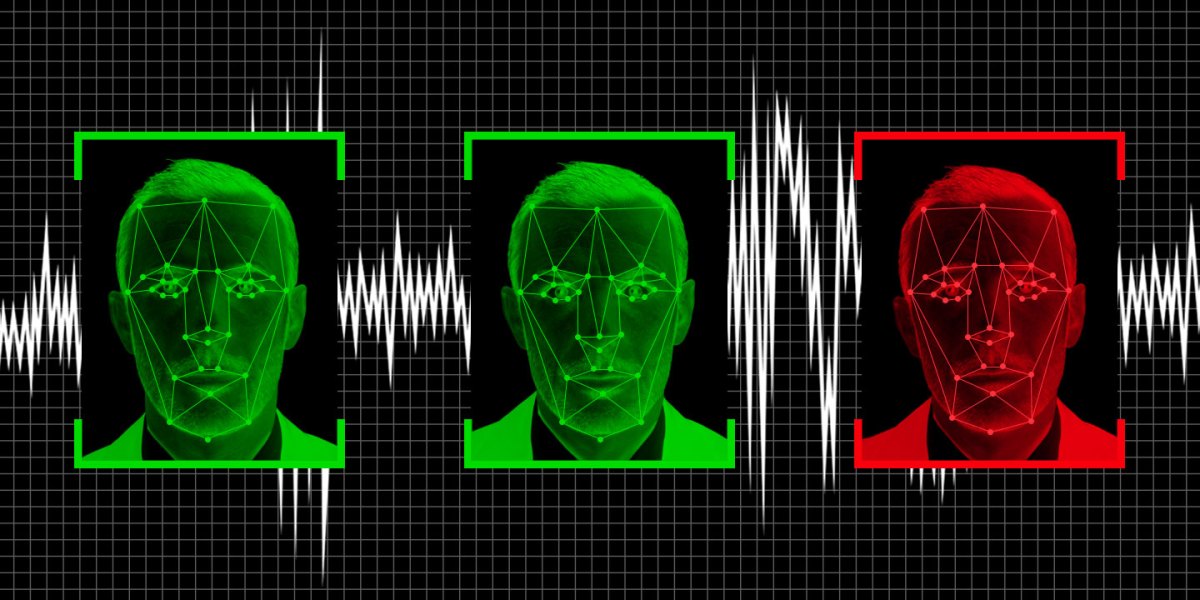
Jesus fuck. Denied entry because the clowns who thought this face[0] is a good idea inadvertently screwed up somewhere else. Slaves to the algorithm. Disgusting. Takes diffusion of responsibility to a whole new level.
> iBorderCtrl Why? Seriously. Clowns confirmed.
> A study produced by the researchers in Manchester tested iBorderCtrl on 32 people [...] 75 percent accuracy [...] unbalanced in terms of ethnicity and gender.
I’d bet a decent lunch that these dummies tested it on themselves. It’s like QA-ing my own stuff. That one path I implemented works fine. What do you mean there are other ways?
I’ll add a dessert to said lunch if the accuracy of a representative sample is better than a dice roll.
> this face [0]
> An EU research program has pumped some 4.5 million euros into the project
Kewl. I can think of many ways this could be spent more productively. Like setting it aflame and frying up some bacon.
[0] https://theintercept.imgix.net/wp-uploads/sites/1/2019/07/gu...
Having worked in such projects the money is sometimes completely wasted. There is a whole cottage industry dedicated in bidding and executing these projects, it survives just out of the research funding and they are expert in meeting the commission requirements instead of being expert in the subject matter. Sometimes I have the feeling part of this money is a way for EU to keep some engineers busy in the poor parts of the continent, some times I feel it’s just soft corruption (reviews are often also reviewees), but for sure some project are scientifically horrible: this one looks to be one of those.
That being said some projects are also nice, for instance Firefox is going to merge a web page translator which was produced by another h2020 project. The program as a whole is most probably a positive contribution to society as a whole. It’s like VC money for public research, many projects are a disaster but some are very good and make the endeavor worth.
However the goal of this project, with ethical concerns, is worrying
Just imagine the power that such a technology a totalitarian government could wield using this.
Jethro's phone beeped incessantly to remind him that he had not completed his patriot assessment in the last 24 hours. He groaned internally, and even though he was running late for work he decided that he had better take the 5 minutes to complete the test. He couldn't afford to lose any more social credit points this month.
Opening the app, he could see his face in the top corner of the screen to help him know the camera was centered on his face, not that he really needed this after doing the assessment almost daily since his 10th birthday.
The first question flashed onto the screen, "Have you committed any crimes in the last 24 hours"
Just imagine the power of the people in a crowd pointing them at a politician making a speech.
Politicians are also masters of speech where they are technically correct, they sound like they are saying one thing, but remain evasive/non-committal.
As a Brit, I can confirm that this is most certainly not a well respected institution; the UK has some of the best universities in the world, but this is not one of them.
MMU has a bunch of expertise in subjects like textile making and some practical engineering disciplines, where as I wouldn't necessarily regard some of the UK's more famous universities as good on those subjects.
Textile making isn't an academic discipline, and historically would not have been taught at a university at all. If you want high quality academic research and rigour, you're far more likely to find it somewhere other than MMU.
This is an unfortunate truth, but a truth nonetheless.
Who the hell opts in to that?
> A spokesperson for iBorderCtrl declined to answer questions for this story.
Oh, they don't have anything to hide, do they?
Before scrolling down I knew the UK would be involved somehow. They must do anything except admit that their continous meddling (to put it mildly) in the middle east incites retaliation.
I can imagine someone being manipulated into opting in. The old “if you cooperate we can quickly get you on your way” type of thing.
> IBorderCtrl’s lie detection system was developed in England by researchers at Manchester Metropolitan University
I.e. the system which is the subject of the article?
[1]http://theconversation.com/if-a-brain-can-be-caught-lying-sh...
If you’re going to put people through this kind of system, you should have some solid science to back it up and as far as I can see, this is just some bargain basement ML agent.
- Inaccurate (surely, since real lie detectors are) - Does more harm than help - Humiliating - Will not stop any real threat - Looks like something of a dystopian film
We shouldn't automate human interactions. We shouldn't automate social stuff. You automate mechanical things which are clear, not the delicate inaccurate job of a human to tell if another human is suspicious or not.
Aren't "micro-expressions" pseudoscience? Furthermore, AI based micro-expression "detector" sounds even more like snake oil.
As an European, I don't even know how that project obtained funds from EU. Even if it "worked", it's the opposite of the future I would like to build.
I suspect this project will never be implemented full-scale, and is only for research on human emotions understanding.
This project should be reviewd by more journalists, because very few Europeans know their taxes are used for that kind of anti-humanitarian projects and they should be informed about it
Sounds like the confidence interval would be very poor. This is exactly like all those other studies that found an effect in a small sample but didn't use basic statistics to realise what kind of sample size they would need to actually prove an effect.
Nor (if I can tell) was there any acknowledgement about the fact that asking normal people to lie and trying to observe a hardened criminal / fundamentalist is not the same. I worked on something with an ex-chief of the flying squad who said that there is a huge difference.
Why stop at the lie detector? Why not have a block of kryptonite at every airport to protect them from attacks by Zod? Why not give every cop a batarang? It's insane that we still allow our governments to spend our tax dollars on this.
If I go up to it.. what's stopping me from having it take a picture of my junk or telling that it can sod off?
After all, the problem with oppressive governments isn’t usually “accuracy.”
What an aptonym!
> Our reporter — the first journalist to test the system before crossing the Serbian-Hungarian border earlier this year — provided honest responses to all questions but was deemed to be a liar by the machine, with four false answers out of 16 and a score of 48.
He might have answered them truthfully, but if he tried (or even unintentionally acted) to influence the perception of the answers is not known.