309 points · by lxm · 7y ago · 301 comments
EDIT: They're comparing it to concrete roof tiles, which a quick search say that they last for ~50 years, twice as long as the warranty for the Tesla solar roof.
Leaving aside how unproven the tech is inside their new solar tile, they’re still trying to figure how how to hang them. That’s pretty bleeding edge.
"Must have 5 years of experience with <framework that came out 2 years ago>"
Not a short seller, but that sounds a lot like: “We don’t yet know how to do this well, but in the meantime we are going to optimize for speed.” This may look good to investors, but homeowners might cringe. Did Musk learn nothing from the pre-Titan installs? Somebody get him a copy of _The Mythical Man-Month_. This quote alone took me from possible early-adopter to wanting to wait 3 to 5 years until they decide to optimize installation for correctness and lowered risk of ignition.
Good, fast, cheap - between good and fast, I want good first. Cheap remains to be seen.
I say luckily because it's a good thing that most people do not jump too quick on all bandwago... oh wait. Well, it's great when they don't, not too fast. Society isn't a startup.
It's better to ship and start iterating than to sit around and refine without sufficient real world feedback.
I mean yeah he finally got a profit out of Tesla last quarter. But there’s really no tolerance for hiccups in a roof install.
I thought replacing ICE engines and developing more in renewable energy would be accepted.
$42k does not sound like the solar roof is cheaper than a traditional roof. What kind of roof are they comparing it to? A mini-mansion with terra-cotta shingles or asphalt shingles?
A quick google search and home advisor suggests it’s about half the price.
“2,000 ft² roof with 10kW solar - Concrete tile roof with add-on solar panels“ https://www.tesla.com/solarroof/design
The title of the article misled me but the Tesla link clears it up. Thanks.
A Model 3 is way more expensive than the average ICE sedan; people buy it anyway.
They estimate fuel savings and include tax incentives etc.
In both cases they're making a case that the upfront cost is less than it appears if the running costs are lower.
I find that really hard to believe. A new roof runs between 5-10k, and a 3kw solar system can be had for ~5k + labor. Even if they are including a power wall in that price it's still pretty steep.
Edit: It looks like they are actually quoting a 10kw system with 3 power walls (~40kwH storage) included, which at that point sounds about right at $40k. Still far beyond the reach of anyone but the wealthy, but not necessarily a bad deal if you're in the market.
That is incredibly cheap if so. That would be a roof on a small barn around here.
Amortized over 30 years, it's barely over $110 per month and for most homes would bring the electric bill to near zero.
$7000 + $15,000
Then you apply the federal credit after that.
This is for a grid-tie system, I don't think Tesla is pricing theirs with a powerwall here.
Edit: apparently they're pricing it with 2 powerwalls, still cheaper by a sizeable margin however.
Their price comparison doesn’t include the powerwalls from what I can tell...
Headline is about as misleading as could be.
Coupling that with the fact that off-peak pricing isn't the norm in a lot of markets, I have to wonder if trying to implement smaller build outs is really worth the effort or expense... though I'll be the first to say that I've not researched it thoroughly.
So, of course they are hostile to it. Personal, distributed solar cuts their profits and increases their costs. But, because their profit is based on charging customers for building new electric infrastructure, it lowers the costs for all of their customers when a group of people preempt that by installing solar on their homes.
It is good for everyone when rich people buy solar; the air gets cleaner, and electricity becomes cheaper. So some states, like California, compel them to facilitate solar via tax credits and other regulations.
Right. Because solar does not play well with existing infrastructure but solar needs the grid to be even close to viable. It needs it because it is a diffuse intermittent power source, where the peak power generation does not actually match peak power use. Solar overproduction cannot be saved for later either, meaning that you have another infrastructure challenge of dealing with overproduction when you don't need it.
In general, solar only really works if it is paired with a a traditional power generator that can ramp up quickly (when there is no solar output) and ramp down quickly (when solar output is high). The only power generators that can do that are ones that burn fossil fuels. That's why natural gas companies are a BIG lobby group for solar. That's why Germany is signing massive, multi-decade deals to ship Russian gas, as they expand their wind and solar infrastructure.
If you care about getting rid of carbon emissions, solar is a disaster. Not to mention energy use in building panels and the number of rare earth materials each one needs, the problems with recycling them, and their land-use requirements and the environmental impact of that.
>It is good for everyone when rich people buy solar
No. Just no.
This was true 20 years ago and will be laughable 20 years from now.
> The only power generators that can do that are ones that burn fossil fuels.
Fossil fuel generators do NOT ramp up and down quickly. BTM and FTM battery storage solutions ramp up and down faster and are rapidly becoming cheaper and more environmentally friendly alternatives.
> energy use in building panels and the number of rare earth materials each one needs, the problems with recycling them, and their land-use requirements and the environmental impact of that.
Every one of these supposed drawbacks of solar also apply to generating power with fossil fuel.
Fracking causes earthquakes in Oklahoma and wastelands in southeast New Mexico. Mountaintop removal for coal has probably permanently destroyed parts of PA, WV, VA, and KY. I won't argue that the issues you bring up aren't bad, they just lack context. In my view, human addiction to electricity is bad in all forms, but fossil fuels are clearly worse.
https://www.npr.org/2019/06/02/728761703/to-some-solar-users...
I have solar myself, but we have to be honest that residential installs really destroy the economics of traditional power generation. And net metering regulation makes that even more the case, which is why net metering can’t last and/or storage will be required along with residential solar.
I had a roof put on my 1600sq ft ranch and it was only $8,000
It's misleading to look at the price of the panels alone. You also need (micro) inverters, you need to have it hooked up to the the grid, you need several inspections (construction + electrical). Getting all those panels installed on your roof and wired up is quite labor intensive as well. The installation cost is significant.
There is something absolutely astonishing about the fact that in America the way we have go about being eco-friendly is to give huge tax breaks to rich people to buy solar panels and electric vehicles. To think with all that money we could build better infrastructure and denser housing. Really boggles the mind.
Look at 4K TV sets, for example.
Just about any luxury of the rich that can be produced more efficiently over time makes its way to the average consumer.
People who are installing $40,000+ roofs on 2000+ sqft homes are not rich by your standards? Or do you truly believe these panels will "print money"?
Production of early versions is always more expensive because of the research & development, creation/configuration of the machines, etc, etc but the marginal cost goes down drastically. The numbers work out even better as you can amortize those early costs over a larger and larger production run. This means v2 and later editions are cheaper.
It's text book "economies of scale"
For example, look at prices of flights. Before there was no "first class" everything was first class, now there are cabin options.
While that example is a service, more proliferation of service == wider adaption == increased scale of economies == eventually prices come down for everyone.
Ah yes, trickle down never fails.
Is this based off an SV mindset? There are plenty of homeowners that aren't rich around the country.
Plus less pollution in the air helps the masses too, with fewer health issues and less extreme weather on a long term basis.
64% of Americans own the home they live in.
https://en.m.wikipedia.org/wiki/Home-ownership_in_the_United...
When computers were new, only rich organizations like governments, banks, and large corporations could afford them. Now you can buy a raspberry pi for close to nothing.
Denser housing isn't built because our local land use policymaking paradigms give the power to block it to the people who don't want it, not because of a lack of federal subsidies.
If anything, the infrastructure built with that money would be road infrastructure to support further sprawl.
It makes no sense to pay somebody $7500 to buy a new car to drive to work, but not to switch to cycling or telecommuting.
In this case, it's not necessarily clear that this is a product that needs to happen. Grid scale solar is significantly cheaper due to the economies of scale.
Were there a carbon tax, there'd be the same encouragement of environmental solutions while leaving the market some flexibility in achieving that goal.
With that said - I'll take the politically feasible solution rather than nothing.
Utility scale solar has met the same ardent opposition in land use decisionmaking fora as denser housing, including from 'environmental' organizations.
Some examples from around here:
https://fredericksburg.com/news/local/culpeper/culpeper-coun...
http://lakegastongazette-observer.com/news/article_8f621d6e-...
https://richmond.com/news/local/central-virginia/powhatan/po...
https://starexponent.com/news/county-committee-backs--acre-c...
https://www.pecva.org/library/documents/Our-Mission/Energy/E...
I, too, believe that taxing actual atmospheric carbon impact would be great, but how would you measure such a thing fairly?
You can't say that!!!
That may be sort of true for traditional solar panels. There is scant data on whether a solar roof will ever be cost-effective. They are an unproven technology at this point.
There are several differences between solar panels and solar roofs:
1) Solar roof is more expensive and less efficient. You're trading efficiency for something that looks nice. Is that something a government should subsidize? Rich people getting subsidies for aesthetic reasons?
2) Solar roof panels are not as durable as solar panels, are not as scalable, and the market for them is tiny - limited to people who want to get solar panels and a new roof. V1 and V2 versions of Tesla roof was a disaster.
3) Installation is much much harder and requires specialized professionals. Installing solar panels is already fraught with challenges (safety and otherwise), and all those need to do is collect sunshine. A solar roof also needs to take into account protection from the elements and therefore needs increased durability.
Good writeup: https://www.greentechmedia.com/articles/read/5-reasons-to-no...
FWIW: newly built dense housing is actually cheaper than the more typical sprawl. In fact it's much cheaper if you factor in (heh) infrastructure savings due to the reduced road and utility lengths.
Local non-monetary regulations mandate low-rises or single-family houses, huge parking lots, etc. If money could solve that, it may be by spending it on political campaigning, public education, or may be even bribing, to get the regulations out of the way.
There's lots of other tax write offs.
In California you can get solar installed for free if you are low income.
I'm pretty sure that even the people benefitting for the wealth cities produce would prefer not to live there, and I think the development of rich people's houses along the CT coast attest to that, they try to balance the wealth of the city and low density housing.
If it was that pointless, this sort of deal could never add up, for either party.
Installing solar panels can pay off in the long run, but the big draw is to reduce your carbon footprint. Even if you are a rich asshole it's not a bad thing for you to be less polluting.
Also not sure about a Model 3 being safer than a Camry, they weigh a similar amount and are both IIHS TSP+. (And a hybrid Camry weighs close to 1000 lb more than a Model 3.)
Weight of Model 3 is 3627 minimum up to 4,072 (extended range, extra batteries, which are heavy.) [1]
Model 3 has the lowest probability of injury in a crash of any car tested by NHTSA since 2011.[0]
[0] https://cleantechnica.com/2019/03/14/tesla-model-3-vs-toyota...
[1] Google Camry weight; Model 3 weight
The amount of incentives spent by the US government for electric cars in the last 8 years is maybe $6bn.
So that might buy a new span of the Bay Bridge.
How will an 8K subsidy per home help increase housing supply? Will that subsidy also automatically take care of global warming? 64% if Americans own a roof, FYI.
What is truly detrimental to society is not the promotion of carbon neutrality, but this kind of crab mentality where some people benefiting more hurts more than the fact that this is a positive step for the planet as a whole.
* https://ttlc.intuit.com/community/tax-credits-deductions/dis...
It does seem like money that could be spent making dwellings more energy efficient.
If you have a spare 40K does 8K really matter? They would probably buy it anyway.
Ha! This one made me laugh. In America nobody will let you build either of those things anymore. At least not where they are needed.
OP is not saying rich people should pay more; He’s saying get rid of the tax incentives. Yes, they end up paying more, but then poor people are paying the same as the rich.
"Rich" (which is a relative term anyway) people are, by and large, the same. Get rid of the incentive and you'll get rid of the progress that comes with it. Saying "oh take away the incentive because not everyone pays the same amount" is a great way to get people to stop investing in it at all. It's not like poor people are going to say "oh wow, the rich people won't get a tax break for investing in this, now I'll definitely invest!" right? So poor people still won't be able to invest and now rich people will have less of a reason to overcome their ambivalence. Shockingly enough, taking away incentives will deincentivize people. Who knew?
Initiatives that make carbon emissions more expensive are really unpopular. Direct government investment is "picking winners" or "socialism" (?).
In the UK a 50+ year old roof is very common - most people expect a house to outlast them without anything but minor repairs. If I were building a house I would want something where it's primary power source can be repaired without larger than necessary costs.
[1] https://energyinformative.org/lifespan-solar-panels/
[2] https://www.engineering.com/DesignerEdge/DesignerEdgeArticle...
UK homes are made of brick. US homes are made of fiberboard and inexpensive woods. There's a reason why UK homes have lasted over one hundred years, and most US homes won't last 50. It is a consumer culture applied to homes. They're designed to be replaced completely.
That's wild a claim. I live in a 115 year old US house made of "inexpensive" wood and it's doing just fine, like the rest of the neighborhood.
Then Sweden is also known for ridiculously high building standards, even compared to other European countries.
I've lived in 11 properties in the UK (owning 4 of them) and most of them were made of stone and were 150+ years old - only the first one (a 1950s council house) was brick.
Also, people mention again and again that people replace houses in Japan even more, and yet it doesn't seem to get the jingoistic juices flowing like criticizing the US.
Where roofs are replaced, aside from storm damage, it's most common for that to be down to having got rot in the woodwork than fault with the tile. I suspect a fair few are down to iffy sales tactics from dodgy builders. (i.e. get someone out to fix the chimney flashing "oh, major problem you need a whole new roof...")
Each existing home (even ones built in newly minted neighborhoods) would still be connected in parallel. It's the nearby 70-150kV subtransmission relay station historically feeding that parallel bank of homes that would become inactive - ironically bypassing the Nikola Tesla prompted long distance HV amperage flow from remote generation sources. AC implies spinning dynamos (loud flywheel momentum), and PV-to-battery is solid state, with high frequency silicon carbide switching (quiet). Classical home 13kV transformer bypassed or replaced with a small DC boost to launch amperage across the hundreds of feet of a neighborhood's acreage. Typical loads could be balanced even if a few people want to weld or smelt metals during a bright sunny day (especially summer solstice).
As a comment above pointed out, the solar capacity would decay over time, but since there is a local grid reservoir buffer - the reduced capacity PV over time can mean the high quality glass protection can be kept even when cells under them are down below 50%. Such a roof would be contributing less to the reservoir than neighbors feeding the same grid with newer solar roof replacement. The user can be paid for their generation if they use less than they produce, incentivizing low noise, subtle generation sources (charging your powerwall with an exercise bike like Jaimie Mantzel, adding your electric vehicle(s) charge reservoir to the neighborhood grid if next day commute will mean you're parked near other solar roofs that will top you off until ready to return home - transporting and trading energy).
I wish y'all had some more thatch roofs but I suppose given the history in London, driving to the Cottswolds to see a thatched roof is probably fine ;)
In my local area we did, but at one point there was a push to demolish them all as they were "unsafe". I have a few stories about this for another time...
The problems with thatch is it's relatively hands on, you have to swap it out occasionally as the stuff rots.
https://www.gaf.com/en-us/document-library/documents/product...
They lose efficiency, yes everyone knows this and can plan ahead. They can fail like anything else.
But they can be re-used and replaced. If you need to replace your roof, you just remove them and re-install on the new roof.
There's no magic to installing them, it's quite simple if you have any handyness. If not, just hire someone like anything else.
If you are living off grid, that might be an issue although it could be fixed by just getting some more solar panels later or oversupplying at first. However, for people still connected to the grid, they can just use a little more later on from the grid so I don't see what the big deal is.
> so I don't see what the big deal is.
If you had panels overlaid you could easily replace them - or even upgrade them as technology gets better.
First, that basically everyone was pulled off working on Energy to deal with Model 3 issues because they were do or die for the company. Now with Model 3 under control those resources were put back into Energy - solar, roof, and storage.
Second, there was not a fundamental manufacturing issue with the solar glass roof, but rather it was a product which fundamentally was not worth scaling until the economics made sense.
The economic driver Tesla is targeting is that anyone getting a new premium roof with solar would pay less for the solar glass roof than to get the new premium roof and then add panels separately. For someone with an existing premium roof with significant life remaining, the solar glass roof may still be something you choose, but it’s not literally going to be cheaper.
The major issue with v2 was what they call “edge conditions”. It is funny that this sounds like software guys talking about roofs, not probably the way that roofing guys would talk about it. But they are talking about anywhere that two planes meet on a roof where tiles need to create a waterproof barrier. Flashing, ice & water shield, etc. With their v2 product this required essentially custom fabrication in the field - what Elon called an artisanal roof, like building the airplane out on the runway. This required several days (even weeks) of work on-site to fabricate and install the product, and so they were never going to try to scale that.
Version 3 is supposed to address the fundamental issues with edge conditions. I didn't catch a lot of detail on the call of exactly what they did to address this, but the end result is that they do not expect to have to do any custom fabrication on-site, and they are targeting a process where a largish crew can compete an average roof install in 8 hours, ultimately they want the tiles to go down as fast as asphalt (which is quite fast if you’ve ever watched it).
Lastly, they talked about reducing the number of sub-assemblies in the tiles by 50%, and the expected difficulty in ramping up production. Elon tried to be very clear that predicting the exactly volume output on the steep part of the S-curve is basically impossible, but they want to be producing enough for 1,000 roofs per week, and manufacturing is already under way for V3.
They will be running install-athon competitions internally in Tesla on test roofs that they have to test different methods, and they also want to invite 3rd party contractors to compete as well. Their intent is to have both Tesla internal as well as 3rd party certified installers installing the glass roof. They will leverage their existing presence in 25 states where they do Solar today, and ultimately want the product available across 50 states.
If I was able to ask a question on the call I would have asked about winterization. I want to know that they’ve tested their solution against ice & snow, and particularly that it won’t ice dam during a New England winter.
Financially, I wonder how the margins compare to Model 3. ASP is in the same ballpark, so ramping up to 1,000 installs a week would be total revenue just barely on the same order of magnitude as Model 3 revenue, which was a serious reality check for me. Elon said on the Q3 call that they think Energy will be as big or bigger than EVs overall and that he thinks people are significantly undervaluing their generation and storage LOBs.
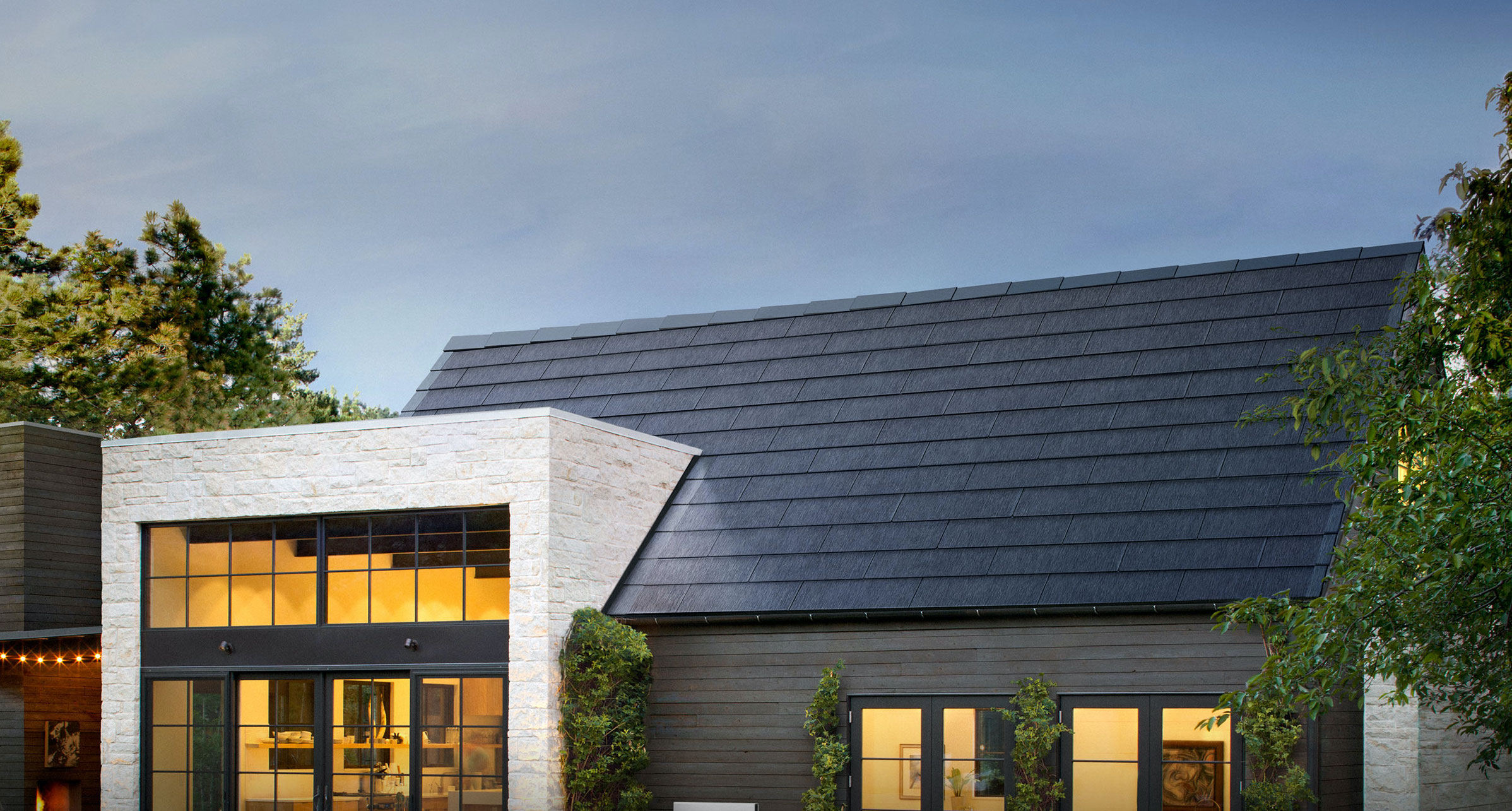
This is the magic question that I hope gets answered.
Well that, and because SolarCity was hemorrhaging money
They do this because it fools Silicon Valley into believing this is a tech-company.
Having to cut tiles for odd contours or structures on a roof are not "corner cases" to people who actually install roofs.
I do wonder about a comparison to what I've seen recently, which is standard roofs with solar built in almost like skylights. Just big panels at the same level as the tiles, not placed on top in a retrofit.
Seems like it's a good compromise (as long as you can get panels that blend with the tiles, and that generate enough that you don't need the whole roof covered).
Do you like it more than when they released it 3 years ago, but never installed any? Can someone point me to the V1 and V2 installations?
Roofs that generate make a lot of sense and many jurisdictions will mandate some kind of net zero build for new houses. I think there's a lot of room at the top of the market for this kind of product and it will just be standard at some point in the future.
How much of that market Tesla gets and keeps is a harder question, but combining roofing with solar is too obviously sensible to fail I think.
I get up on my roof several times a year (inspections, etc.) and know how to move around on a traditional asphalt shingle roof. Will I slide off or damage the roof while putting up Christmas lights?
I haven’t seen any mention that this product brings anything new to the table and I’m sure they would have trumpeted it if so. Basically 2012’s BIPV roof solution AFAICT.
Hard to say. Just liked the eye candy.
I recommend using project sunroof to see if doing so would make you money. They analyze your roof size and tilt, trees around your property, etc. For free.
38 states, DC, and Puerto Rico allow this. https://www.seia.org/initiatives/net-metering
With Tesla I would add: $20,000 for panels and powerwall.
They are still around?
- 100ft.2 of solar panels (Qty: 5, off the shelf, ~3’ x ~5’ panels) = ~1kW of AC electricity (post-inverter, in low-sun Seattle)
- At the roof, this represents 10 wires and ~8 roof penetrations (racking lags through flashing into rafters)
AKA: simple setup, proven implementation
Questions:
- How many wires (points of failure) are in 100ft.2 of solar shingles?
- How many roof penetrations?
- How many roofer-electricians do you know?
- Why can we not just embrace existing panel technology and put them everywhere, yesterday?
Rant:
- We don’t need boutique renewable energy, we need ubiquitous RE.
- Elon, get your priorities straight. In the three years you’ve been trying to figure out the perfect solar status symbol, you could have installed megawatts of photovoltaics.
They already do regular solar installs and so do a ton of other competitors. This is a boutique product for people who care about aesthetics and are willing to pay a premium for it.