187 points · by yarapavan · 6y ago · 25 comments
Although to me it's still quite difficult to apply the theoretical knowledge to day-to-day applications. Any references or ideas?
Still helpful to those not familiar with it.
*edit: To those downvoting, is there anything especially insightful that I missed?
Personally, I think there's a world of difference between the aphorism of "correlation does not equal causation" and actually understanding how causation works. I understand the former quite well, but haven't much a clue about the latter. (And I'm not alone!)
I left my comment for the benefit of those who have learned regression. I read the article expecting something new, seeing how highly upvoted the post was on HN, but realized it was basic information.
If they removed the symbols from the article, I bet the article would be accessible to way more people.
Regarding causation, I think the essential points are:
- there is never any true causation (e.g. Even though it is always dark when I close my eyelids, I can never be sure that closing my eyelids causes the darkness. How can I know that the next time I close my eyelids, it won't be something other than dark?)
- you can see if a correlation may have a causal relationship by applying common sense to the chronology of events (if darkness correlates highly with closed eyelids, and if I notice that, chronologically, darkness has always followed closing my eyelids, I can be more confident that the relationship may be causal. Stats help formalize this process.)
Essentially that's reading an introduction, saying you knew everything in the introduction and then claiming the article has no content.
It's easy to forget that things that are basic to some are extremely advanced to others. As HN grows, it draws in more diverse backgrounds; many of which don't have much statistics exposure.
I know data scientists who work at FAANGs, for whom this would be almost entirely new information (the causality stuff).
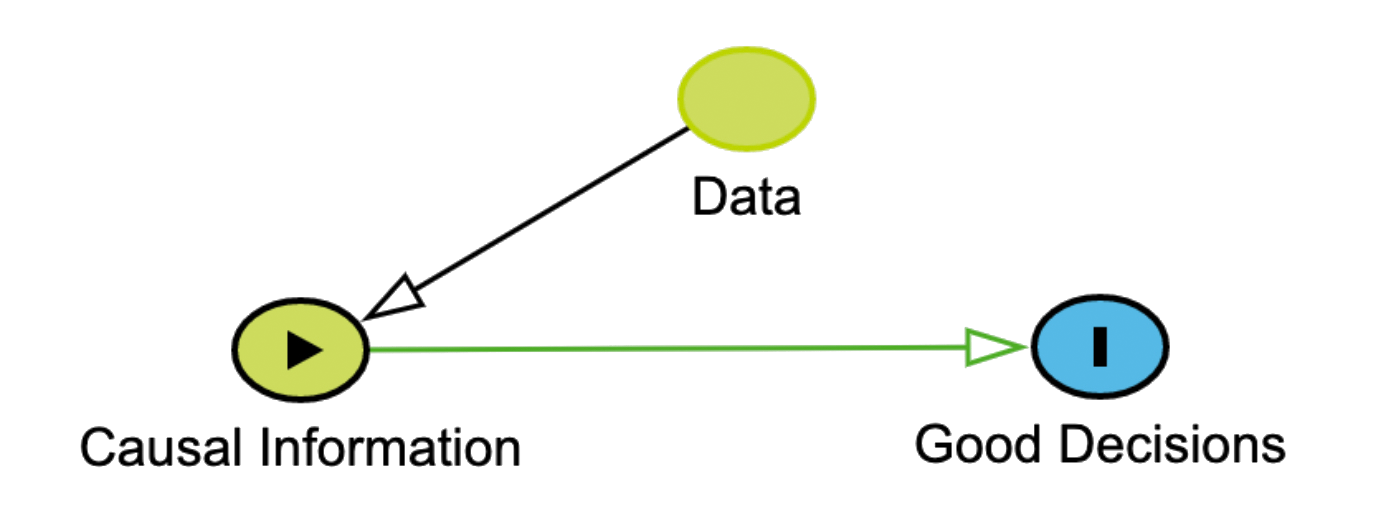
Thank you for taking the time to add more essential points. Do you think it's possible to make better decisions with partial causation, versus a more correlational approach? That is, do we really need true causation to improve our decision making? Or can we make better, albeit imperfect, decisions with imperfect causality? Is that better than what most statisticians do with correlation?