Team Builds the First Living Robots | UVM News
| The University of Vermont
uvm.edu
87 points · by jonbaer · 6y ago · 42 comments
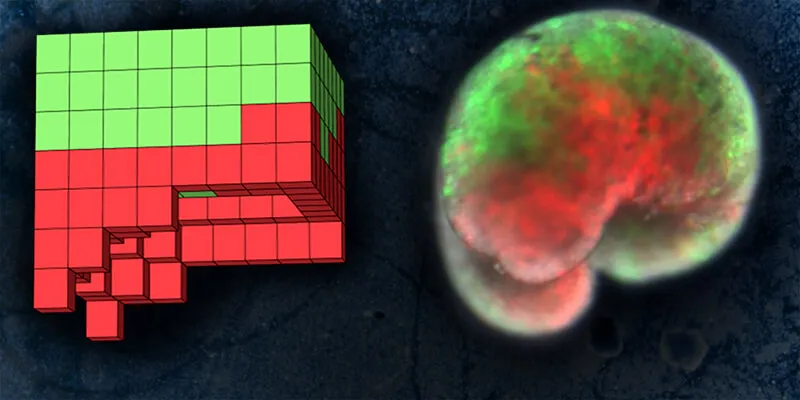
used an evolutionary algorithm to create thousands of candidate designs for the new life-forms
This is the description from the article:
” Then the team at Tufts, led by Levin and with key work by microsurgeon Douglas Blackiston—transferred the in silico designs into life. First they gathered stem cells, harvested from the embryos of African frogs, the species Xenopus laevis. (Hence the name "xenobots.") These were separated into single cells and left to incubate. Then, using tiny forceps and an even tinier electrode, the cells were cut and joined under a microscope into a close approximation of the designs specified by the computer.”
According to the article, the starting point was embryos.
"Now a team of scientists has repurposed living cells—scraped from frog embryos—and assembled them into entirely new life-forms."
I don't see much difference between "scraped" and "cut up"... perhaps a nuance of scale.
If the stem cells had been harmlessly extracted from living frogs would you still use the same terms? The experiment itself would be 99% the same in that case, it would just have a more complicated resource gathering step.
I think the parent post's comment is very astute, as the article mentions how it's taking frog cells and passing electricity through them and calling it alive. How is that not Frankensteinian? It's kind of the definition of it.
There is also the argument of making the assumption that there's an emotional reaction...
Morals and ethics classes are taught in nearly all university degrees these days to try and highlight the issues around this stuff, and I think it unfair to bluntly force it into black and white. For some people it's a question of how deep into the murky quagmire one goes, whereas for others "it's just science" is completely sufficient. But, it's clear that the latter will never have complete approval, nor will the former ever have its way entirely.
For me, I look at this experiment as such: Were any frogs killed in doing this experiment? If so, how is the destruction of a life-form comparable to making a laboratory made one? Do the two actually have the same 'life' in them? Philosophically speaking, I'd say not, and as such I call this experimentation a 'dark pattern' and should be avoided: no matter the perceived marketing benefit.
Is it the destruction of a life-form? Is it the creation of a different life form? Why does it matter if they are equivalent?
I'm not sure what you find nauseating about this. If you want muscle and skin cells frog embryos are as fine source as any, I suppose.
There's the issue. I prefer to see us pursue technologies that don't require the harvesting of parts from intelligent life, even if we deem that intelligence to be low or embryonic. Yes, I am aware that we are omnivores, but I believe we can make ourselves into something better. I see this kind of experimentation as a step backwards.
How do you define "intelligent life"? If frogs and embryos are considered intelligent life, then you really are painting yourself into a corner.
> Yes, I am aware that we are omnivores, but I believe we can make ourselves into something better.
What's better than omnivores? Evolutionarily speaking, that's the best out there. Not sure we can do better, but I'd love to hear what you had in mind.
"The big question in biology is to understand the algorithms that determine form and function," ?
All sorts of work about setting the electrical potential between cells/parts of the body to certain states to induce the desired growth. E.g. growing a eye on the gut of a tadpoles.
https://news.ycombinator.com/item?id=18736698
This is the true Information Revolution: when we learn to "talk" to the four-billion-year-old nanotech that the world and we ourselves are made of.
    The trend spread. GELFs, Genetically Engineered Life Forms, were everywhere,
    and soon virtually every consumer product was made of living tissue. Gelf
    armchairs, which could sense your mood, and massage your shoulders when
    you were feeling tense, became a part of everyday life. Gelf vacuum
    cleaners, which were half kitchen appliance, half family pet,
    waddled around on their squat little legs, doing the household chores and
    amusing the children. [...]

    The rebellion started in the Austrian town of Salzburg, when a vacuum cleaner
    and Gelf Volkswagen Beetle robbed a high street bank. They took the manager
    and a security guard hostage, agreeing to release them only if Valter Holman
    was brought to justice for murder.

    Valter Holman had killed his armchair, and the whole of the Gelf community
    was up in arms, those that had arms, because the law courts refused to accept
    that a crime had been committed.