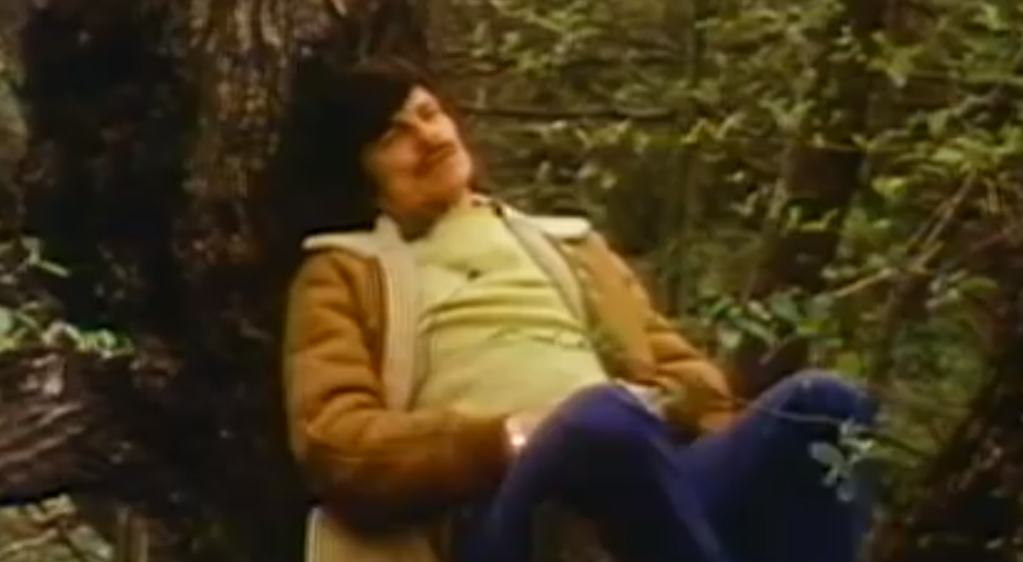
Andrei Tarkovsky’s Message to Young People: “Learn to Be Alone,” Enjoy Solitude
I remember the first time I sat down and watched Andrei Tarkovsky’s lyrical, meandering sci-fi epic Stalker.
Open Culture
349 points · by vo2maxer · 6y ago · 91 comments
With Stalker I turn to Fellini - I don't like the idea of "understanding" a film. I don't believe that rational understanding is an essential element in the reception of any work of art. Either a film has something to say to you or it hasn't. If you are moved by it, you don't need to have it explained to you. If not, no explanation can make you moved by it. That's why I don't think my films are misunderstood when they are accepted for different reasons. Every person has his own fund of experiences and emotions which he brings to bear on every new experience-whether it is to his view of a film or to a love affair; and it is simply the combination of the film with the reality already existing in each person which creates the final impression of unity. As I was saying, this is the way the spectator participates in the process of creation. This diversity of reaction doesn't mean that the objective reality of the film has been misunderstood. Anyway, there is no objective reality in my films, any more than there is in life.
There is no "explanation" as in a series of rules of the universe and character internal goals that together drive the plot. Why would one think there has to be? "Film is a mosaic made up of time."
But to make Rublev's epiphany clear -that he could live for compassion, passion and the kindred spirit of a fellow creator- you had to be taken through this long process of seeing this crazy world through Rublev's naive eyes.
It was definitely one of my first experiences where I discovered that sticking with art that is challenging or difficult could truly pay off in a way immediately gratifying art sometimes cannot.
You'll be delighted to read this story in the Mughal emperor Babur's autobiography discussing the casting of a cannon and the emotions the cannon-maker felt when failing and, later, succeeding in casting it. It's a remarkable similarity. (These are from the "events of the year 933" section of W.M. Thackston Jr.'s version of the Baburnama.)
I remember the first time I watched Andrei Rublev, it was in a university library, in one of those media carrols (on a laserDISC !). There's a scene in the middle of film depicting a pagan spring ritual where Rublev and the other monks were compelled to participate. Anyways, by the time that scene was over I turned around and noticed several other students standing behind me asking what the F was I watching, they were so mesmerized, they abandoned what they were watching and just started to watch Andrei Rublev.
One contemporary director in particular come to mind, that remind me at least in part of Tarkovsky. Apichatpong Weerasethakul, who directed "Uncle Bonmee who can recall his past lives" and others (https://www.youtube.com/watch?reload=9&v=_bJdvNS4iRw). Like Tarkovsky films, this film and his others meander in plotless dreamy arcs with sumptuous camera work. Weerasethakul has even stated that he's OK with people falling asleep while watching his films.
The entire movie you're left wondering what the hell the plot is. What is the point of this movie. And then the ending happens and you realize the entire movie was crafted for the ending, and it wouldn't have had much impact without the journey before it.
Roadside Picnic is also the incredibly rare example of the book, the movie (Stalker), and the video game (S.T.A.L.K.E.R.) each being able to stand on their own merits. This is probably in part because they are so different thematically.
He made Solaris as answer to Kubrics Space Oddesay and after that he got big budget for another scifi.
Sadly the Stalker was disaster. Very unsafe poisonous conditions where many got sick. Movie almost didnt happen. Its suspected Stalker is reason why Tarkovsky died early.
add to that the original movie script by the Strugatski brothers which stands on its own and is different from the book as well as from the movie.
And I think it is totally wrong.
If you are moved by something, you better explain to yourself why it is so. You lose a part of perception by not doing that. Rational mind is one of the ways we perceive world around us.
And you can be moved by an art if it has been explained to you. It happened to me many times in the past and is also wonderful experience. As if some gates are opened and I can feel more.
I think it depends on the work. Take the tv show The Wire. There is a lot to understand and learn from it. I found doing so really worthwhile (for multiple reasons).
To me they feel a bit like people who watch a beautiful sunset and get mad that it is not beeing self explainatory. They cannot just see things, they have to understand in order to get satisfaction.
The good old "what wanted the artist tell us" is bullshit. I went to art school and graduated with a MA. The really interesting stuff often happens where the artists themselves cannot tell you what made them do it a certain way. Sometimes the work is more intelligent than the artist and you realize they have no clue what they did when they did it. Tarovsky however certainly knew what he did, but the whole point was precisely that which is hard to grasp.
I've read that some/most of the actors were actual police force at some point. I may be getting the details wrong, but I think that's why it felt so real, because it was real even if the specific situations were fiction.
I respectfully disagree. Watching Schindler’s List as an eleven year-old barely had an effect on me. After it was explained to me I found it tremendously heartbreaking.
Which is weird, because the same people usually enjoy watching a sunset without explaination, have no problems liking a Van Gogh without knowing why precisely he painted crows over the field and let's not even talk about music.
Some people see it as an insult if your film isn't 100% self explainatory or at doesn't at least pretend it by smuggling the more ambigous ideas in the guise of something else (like good hollywood films).
For people that watch films in that way, the whole enjoyment of a film is connected to the feeling of having it deciphered. However — this way they are missing a big part of what is possible with the medium. Like if you'd only listen to music you can rationally explain the existence of each note for. Some things have no valid explaination, they just are. Stalker is one of these. Like the crows on Van Goghs field, you don't really need to have them explained to you to have them touch your soul. Not every soul will be touched by the same thing — but let's at least try.
The immediate things about Stalker that bothered me are, in retrospect, solvable with a higher budget or better film support. Of course, some people prefer the authentic aura of such films. Bellflower would be another example of a good idea and story done on a budget of next to nothing.
This reminded me of one of my favourite (possibly apocryphal) tidbits about Solaris. People have differing theories about the significance of the very long highway scene, and Tarkovsky had an elaborate explanation for it when the film came out. [1] [2]
At some point he admitted that he and his camera operator mostly really wanted to visit Japan, so he included a suitably long scene to justify visas and a travel budget. I don’t recall where I read that, but it helped me to be comfortable taking my own meaning from a work of art and not worrying too much about discovering the author’s absolute intent.
[1] https://www.quora.com/In-Tarkovsky-s-film-Solaris-what-is-th...
[2] https://viz.dwrl.utexas.edu/old/content/real-world-metropoli...
It's funny how random things like that can obfuscate your impressions in so many things in life. I feel like this about a lot of computer science and mathematics: If you are not the author of a text, then your focus is easily distracted by peculiarities that have little to do with the core message.
I guess this would partly also be why a lot of high school students struggle with calculus. By the way, on that topic, if you consider dx and dy to be variables, then calculus's strange notation is easier to try to make sense of.
The scene when they are on the train tracks, slowly morphing from black and white into colour - so slowly that it takes a while for you to figure out what's going on, while being lulled into almost a trance like state. I did not realise film could elicit such experiences prior to seeing Stalker. It's beautiful
It's my favorite movie of all time
Tarkovsky's films seem to exist in a different type of time orthogonal to our own, and the experience of engaging with them is difficult to describe. They are both powerful and ineffable.
From his writings, he could be mistaken for a practitioner of Zen. I would like to share my favorite Tarkovsky quote:
"Everybody asks me what things mean in my films. This is terrible! An artist doesn't have to answer for his meanings. I don't think so deeply about my work - I don't know what my symbols may represent. What matters to me is that they arouse feelings, any feelings you like, based on whatever your inner response might be. If you look for a meaning, you'll miss everything that happens. Thinking during a film interferes with your experience of it. Take a watch into pieces, it doesn't work. Similarly with a work of art, there's no way it can be analyzed without destroying it."
(Also, I’m sorry for your loss. Losing a parent seems un fathomable to me although I know it will happen to me too).
Almost all art analysis I see has to penetrates my zone of not seeking it out. So maybe it's being done impeccably somewhere, but in the stuff I see, the "analysis" is really a lossy description of the person doing the analyzing.
It tells me their frame of reference. The parts of the work they'll care about, and their analytical blindspots. It tells me about their views on hot contemporary issues, their pet peeves and hobby horses. It shows me the types of conclusions they were taught to draw. Very rarely does the analysis tell me anything about the work beyond the unambiguous facts visible to every layperson.
Yet when I try to convince people to solo travel, I encounter so much hemming and hawing, so much resistance. I suppose there's a safety aspect. I'm male and can't speak about traveling as a woman or trans-man. But I do meet many female travelers. And I don't know significantly more guys who solo travel.
I'd imagine there's a fear of loneliness, of homesickness, of paralysis in face of being so untethered. Which, yes, can happen. It comes in waves. Some days I'd be horribly, terribly lonely. Some days I'd do almost nothing. It always passed.
Anybody who has the time, the money, the temptation to travel alone should do it. Which is often less than people imagine. Flights have gotten incredibly cheap. Hostels are acceptable for a few weeks. Food can be bought on the street or prepared from grocery stores. Every country, every city has low income people, and they still eat.
The lifestyle certainly suits the young more than the old. So then why do so many of my young friends delay traveling? Why are they so resistant to the idea of slowing down their education a little to see the world? I know, I know. They need the money. But I do have friends who aren't stuck in a hyper-competitive race to optimize their earnings by age 25. Who are fortunate to take the luxury of a break.
I shouldn't care this much. Yet I can't help but find it so odd that people require someone else to be with them while traveling. If I had to find a travel partner with the same time off, similar goals with traveling and who I wouldn't murder after a week or two, I'd probably be stuck at home.
I am like you too. I am also an introvert. Also I don't travel to rest, but to have as intense experience as possible. Not necessarily only positive, intensity is more important. Often I feel like I need another vacation after a vacation, this time for resting. It is so fulfilling to challenge oneself a bit. There are great life lessons to learn - throw yourself into the trip, without precise plans, and let it unfold on its own.
That said, I just had a son, and I will gladly switch to family-only travel. But all of you, before you reject this form, try it at least once, in some less civilized place. I can recommend India. Just buy a return ticket and some guide book (this part ain't mandatory). You won't forget the experience till your last second on earth. This I can guarantee you.
Intensity is crucial for me too. I embark on an adventure, not just a sight-seeing exercise. And whatever happens, good or bad, is what I'm after.
I did get stung once, but luckily I was within a mile of a road and hitchhiked to the nearest ER.
I have travelled extensively alone as a woman - there is a safety aspect regardless of gender. It has its own benefits as well as the obvious downsides. For example I found home-stays or BnBs that more easily accepted a solo female and I was welcomed into many family's lives.
Fact is that life is a 'choose your own adventure' kind of game and most people grow into that understanding slowly as they dive deep into their cultural norms. Traveling young exposes you to this idea when you are a bit too idealistic to make good use of it.
For example, having a shared context / assumptions is a prerequisite for successfully raising a child (nevermind that you brainwash it into your assumptions, at least you are in approximate agreement with you spouse and have relative confidence in your opinions).
What ends up happening to many travelers is that they return to find that their original culture isn't special but rather represents some arbitrary set of choices in the spectrum of possible cultures. Probably there will be a realization that some of these choices are less than optimal.
The idealist sets out to 'convince people' or believes they've now got the right idea about things, even if you are relatively pragmatic and just pick up some slight quirks it's still often enough to isolate you from the most boring part of society. The part that hands out 'normal jobs' and supports the dominant political party.
From there things go downhill because people start to associate 'quirky' or 'weird' with you and you silently become a cautionary tale of the dangers of traveling ("it will undo your conditioning", "you will become isolated from the herd and exposed to danger"), however on the surface the reasoning will always be: "it's so dangerous, there are all of these things that could go wrong.." or "I am this kind of person and elsewhere I will face prejudice" a.k.a. "here I have special status that I am unwilling to let go of".
This kind of situation eventually turns people off traveling and they recondition themselves to fit into some group (maybe expats maybe back home) vacation is spent on "holiday" not traveling but maybe they manage to leverage some small idea they gained on their travels and make a profit, others don't give up on traveling but do so at the cost of everything else until all they have left is bragging in some hostel, finally there are the grown up idealists that have sorted out their beliefs over multiple years of battling with the status quo, they live a somewhat reclusive lifestyle and if they know what they stand for and act with some conviction they sometimes manage to earn the respect of others and move the culture forward a cycle of computation but most will be ignored quietly so long as they don't upset anyone.
Meanwhile the people who optimized school and career are reaching the brink of breakdown from never giving themselves the time off to figure out what they are doing. However they have plenty of money to take that time off and their main struggle will be existential crisis, physical ailments, being a workaholic or some other stress related injury.
My belief is that the right path is more balanced, when I was traveling all over the place I was going too fast and I had no aim or reason, I was just there. Slowly I realized that everyone around me traveled for a purpose, they wanted to go skiing or to see something they attached importance to or meet someone they were good friends with etc.
The balance I was missing was the comfort of having a reason or support and the balance others often miss is the courage to face the unknown. The right idea is to travel in the place you are (stepping out of the comfort zone) and to live in the place you travel to, that is, always be constructing your home. Even if you only stay for a couple of nights, no matter how short the stay it is never an excuse to "put up with your environment" - of course you need to be realistic about what you can accomplish but never shut off this part of your mind that is making a home.
-- Max Frisch
> Warum reisen wir? Auch dies, damit wir Menschen begegnen, die nicht meinen, daß sie uns kennen ein für allemal; damit wir noch einmal erfahren, was uns in diesem Leben möglich sei.
There was a phase early in my adult life, before I learned how to make friends, where I'd go see most movies on my own, and I enjoyed it greatly. I got to think through my own reactions and come to my own terms with the films without having to filter through other people's thoughts and without having to filter what I watched on the behalf of the group. At this point in life, most movie watching for me is social, but there are some that I still make a point of seeing on my own. There's a wonderful place for sharing, but there's a wonderful place for solitude as well. Cheers to you wherever you are on that spectrum.
Maybe it's because people spend too much time exchanging msgs in forums such as this, instead of having meaningfull exchanges with real people. Even walking down the street, they have their noses buried in a device.
A lot has to do with how cultures perceive individuals and individuality. Traditionally, individuality has always been seen as something "bad". ingroup/outgroup, cultural norms to abide by, etc. etc. Sociology, anthropology,... there are entire research domains devoted to these questions.
The interesting part is how society has evolved over the past 200, 100 and 50 years. Industrialisation, mass media, the information age,... have all stripped away the traditional tribal or clan-like way of living which has kept us alive for hundreds of thousands of years.
Over the past 50 years, individual consumerism and producerism have come to dominate our societal framework. So, we are taught to look at relationships as affordances that help us to advance in a materialistic world; rather then to look at the deep intangible value they embody. And we are also taught that emotions are only really valid if they are useful or contributing to our well-being.
What I hear from younger people is this notion of suffering from social anxiety. I'm sure that's a real thing. It's not easy to approach another human being and try and befriend them; and it's harder as we become older.
But building meaningful relationships is also a learned skill which takes tons of time. And the journey starts first and foremost with learning to befriend yourself through self-aware kindness, compassion and empathy. For one, it starts by not beating yourself up over stuff you don't control. Or trying to adhere to an irealistic ideal.
And it also consists of calling out those who push ideals that nobody can ever hope to attain. (Yeah, sure, Elon does great stuff. But neither you nor I are like Elon. You do you, go for it if you want to give it a shot, but who are you to judge what I do with my life?).
The problem with social media is that they tie into our innate urge to connect with others; but at the same time push this idea that we all need to have our separate, successful materialistic lives. It's a disparity that only enhances the anxiety that's already there. And the only good way to deal with it is to wean yourself from your device as best as you can.
Anecdotal, and not to dismiss that reality, but I find the opposite to be true. It is easy to befriend people, with no strings attached. We have a lot in common with almost everybody.
Marx noticed this in the 19th century, and he called it alienation, caused (in part) by commodity fetishism, in which we tend to confront others not as humans but as bearers of goods.
What does "meaningfull" mean? For example, I learn a lot more from fora such as Hacker News, so I'd argue that in-person interactions tend to be less meaningful.
Meaningful means more according to several hundred millennia of evolution as social animals that need actual proximity.
It means the person on the other end of the conversation will come to your house and help you when you're sad, desperate, sick, and not just be some alias in some other city/country who'll forget all about you just after you've stopped chatting (or give total priority to his real world friends and family).
It means common shared friendship building experiences - not just the sharing, via talk, of experiences each had in isolation in a totally different place, in another context.
It means having you back and you having theirs, which is rarely if ever the case from people in forums.
And a few other things besides.
I rarely have my device out while walking in order to indicate that I am receptive to an approach. When I see an incoming buried nose, I assume they are too busy and keep my gaze past them as they are clearly not going to be available for a nod or pleasantry exchange.
The thing is, after the acknowledgement window has passed and we are closing proximity, I perephrially see them look up at me at the very last second before passing.
Not sure if it's just me misinterpreting social circumstances, or if there's a new standard of interaction that I need to figure out.
Like so many things, when you have a choice partaking an experience is positive; or else you'd go do something else.
Voluntary is to Forced as Alone is to Lonely
Grothendieck famously attributed his mathematical confidence to a long period of solitude in his youth where he independently recreated some major results.
The late Harold Bloom used to say that reading is ultimately a solitary endeavor—that its purpose is to learn to have a conversation with yourself.
However I think for reflective people there is a “danger” on the side of being too entangled in this conversation. Socialization can start to seem banal and unambitious in comparison. But I’ve found that this just suggests that you haven’t found people who aren’t in the habit of talking with themselves.
I find this story apropos: There was a screening at the Yale Humanities Center of Tarkovsky’s “Ivan’s Childhood” that my roommate wanted to take me to when we were undergrads. I only reluctantly agreed—it was freezing outside and I had been cooped up in my room wrestling with a statistical mechanics problem set. Frankly I didn’t feel like we got along. But my decision to go became the beginning of one of the deepest friendships I continue to have and my endlessly enriching relationship with film and literature.
It is of course difficult, on the basis of memory and introspection, to tell how much it helped in that regard.
I'm not saying that being alone will help someone get comfortable with their thoughts and be able to think for themselves. It just seems like it can be conducive to that.
This is something that has helped me a lot. Some of the best creative ideas and stuff I came up as a young person were due to my spending this time on self-learning and trying to do something or the other. Learnt never to get bored just being with myself.
And to this day whenever I am alone, either I put myself in a learning/exploring/thinking mode; or I work on doing something creative/practical. There's no passive mode.
I think the key to not getting bored alone and spend this 'me time' in some meaningful way is to actively engage oneself instead of passively passing the time.
I guess like everything, healthy moderation is needed. But when you’re truly comfortable being alone for long periods of time it’s like opium- and I don’t mean that in a sardonic way; it’s addictive, peaceful, free and makes you start to resent lack of control.
At least in my single user experience.
I try to work out my priorities in time and 'am able to clearly communicate with my spouse and children that I need some time out to think/sort/do stuff. Luckily it works most of the time.
It's akin to how nice a hot shower feels after spending a week backpacking in the wilderness.
https://www.poetryfoundation.org/poems/45564/the-world-is-to...
(Copying and pasting multi-line text on HN is an exercise in horror.)
Andrei Arsenyevich Tarkovsky, Russian filmmaker, writer, and film theorist. (1932 – 1986)
The title about his message is from 2015, but he must have said that three decades earlier.
I would appreciate if anyone could remind me the name of this tribe.