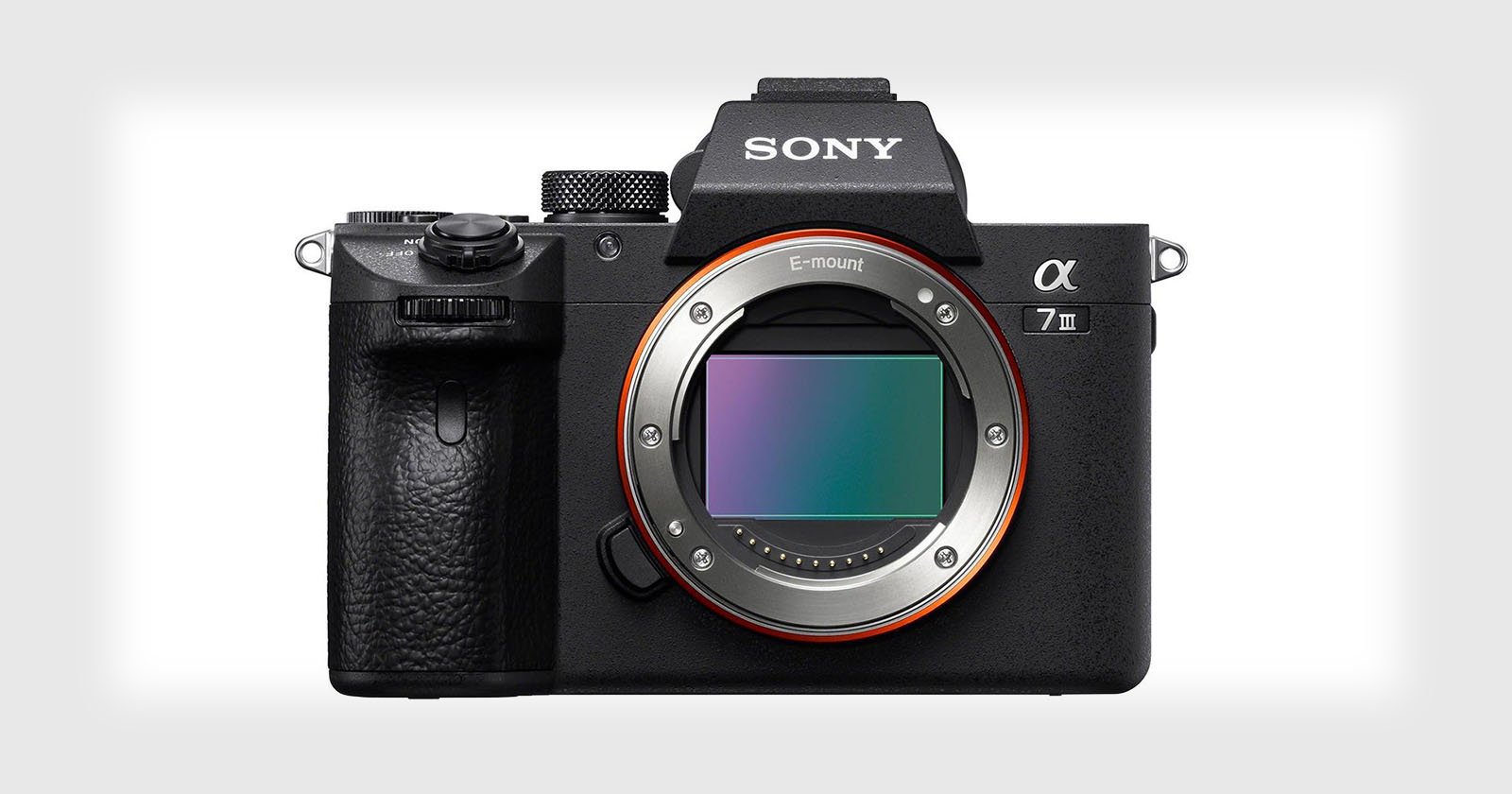
Sony Spins Off Camera Business Into Separate Company
Early this morning, Sony announced that it would be spinning off its entire "Electronics Products & Solutions" (EP&S) segment—including its imaging and
PetaPixel
229 points · by notlukesky · 6y ago · 169 comments
I, as a photographer, find my P30 Pro good enough for family, friends and vacation shots and all other casual snapshots.
I use my DSLRs only when I can't afford to lose a shot, when I need top IQ and when I have special lighting needs.
To take a memory of your kid playing, of grandma in the garden, of your cat chasing the dog or some cityscape, the mobile phone is good enough for many people.
P30 Pro has a Sony camera chip, like almost all other "superphones"
Sony was making more money on smartphone chips than on the regular camera sensors.
Now, Eliot Management probably made them to shoot themselves in the foot:
1. The consumer product unit will now not be able to finance the RnD to push the tech forward. Imagine Sony cameras with Chinese CCDs.
2. On the opposite, without strong incentive to do loss making RnD, the IC unit will become just another commodity component maker
3. Asian companies tend to not to survive "financial engineering" style manoeuvres you see in America
[1]https://www.samsung.com/semiconductor/image-sensor/mobile-im...
Is the ISOCELL any good?
It very much seems to be mostly numbers but it really can't back up the claims in actual visual image quality. The noise and required light to get anything near good shots is very high, the DOF on such a large sensor is downright tight, which is nice for making pretty looking shots..but really bad for just someone trying to capture a photo. Even on the S20 Ultra taking a photo of a person from 5 feet away results in the nose and eyes being in completely different focus.
The fact of the matter is that in normal use, a medium format mobile sensor with a moderate pixel count is preferrable. (I.E. iPhone 11 Pro, Pixel 4) as for 95% of shots you want a wide DOF to put all of the content in focus and great per-pixel aperture to reduce exposure time and ISO so you can reduce camera shake and Noise. Even in the shots you want DOF (Portrait), faking it tends to lead to a more adjustable shot where you can correct after the fact instead of being actually stuck in a inch-wide focus gap where any movement of the camera or subject results in out of focus capture.
Plus most photos are posted online in the 1-2MP size. Now cropping is a great extra 5% item, but for those who want really great photos they would have a lot to gain from a much larger sensor with a larger lens and lower MP count to get way less noise and better exposure times (I.e. The Sony A7R IV) Whereas dedicated full-frame equipment just trashes mobile results.
It's strongly suspected, but not outright confirmed last I checked, that they supply some canon compact cameras too.
As anyone that isn't living under a rock might know, the point and shoot markets are basically annihilated from existence. The professionals/pro-amateurs who care about image quality etc didn't like the Nikon 1 and EOS M.
Out of nowhere, Sony released the E mount Alpha lineup, which reached the #1 position in mirrorless cameras. They also released the Alpha 7, which was AFAIK the first full frame mirrorless (that means the imaging sensor is the same size as 35mm film. Most DSLRs used APS-C sized sensors, which are 1.5 times smaller than 35mm film). This was unprecedented because everyone thought mirrorless was basically a toy.
Both Nikon and Canon have realized their mistakes and recognized mirrorless is serious business and is the future. Nikon has scrapped the Nikon 1 line and started making Nikon Z, which is a super pro/prosumer oriented mirrorless lineup with a full frame sensor. Canon hasn't scrapped the old mirroless line but is pushing the RF mount lineup which is also full frame.
Sony was able to seize the market by being first to market by a long shot, not to mention the vertical integration from their imaging sensor division to deliver quality products. But now that Nikon and Canon entered the game with guns blazing, we'll see what happens to Sony.
One thing of note is that Sony has opened up the E mount spec and allowed 3rd parties to create lenses. As a result there's a fuck ton of 3rd party lenses (most of them of dubious quality, but some are excellent) with autofocus support, and not just from Tamron and Sigma.
It's a really interesting time to be in this hobby/profession IMO.
I hope you realize that live-view shooting was essentially turning a dslr into a mirrorless one (caveat obvious OVF/EVF differences). Canon's dual pixel AF tech is still miles ahead of Sony's PDAF when it comes to low light focusing, and video AF. Each pixel on a canon sensor can be used for AF as well as imaging. Sony uses masked pixels which limits them because they canno't mask too many pixels for fear of IQ degradation, and having fewer AF pixels limits them in low-light focusing.
>Both Nikon and Canon have realized their mistakes and recognized mirrorless is serious business and is the future. Nikon has scrapped the Nikon 1 line and started making Nikon Z, which is a super pro/prosumer oriented mirrorless lineup with a full frame sensor. Canon hasn't scrapped the old mirroless line but is pushing the RF mount lineup which is also full frame.
Or rather, like mature businesses, they realized that they could keep making money with DSLRs and slowly milk them dry and then ramp up mirrorless and make money there too.
>One thing of note is that Sony has opened up the E mount spec and allowed 3rd parties to create lenses.
That's because Sony had no expertise in making high quality professional grade lenses and teamed up with Zeiss and others to help them get up to speed initially.
Now, this is starting to change somehow but many, me included will wait a few more years because the cost of replacing many pro grade lenses is still very high.
Services, yeah, Canon are miles ahead but one step at a time.
I'm a Nikon shooter, mainly wildlife. If I was starting over today I don't know which system I'd buy into.
I think just about everything else about the Fuji cameras is markedly better than Sony's mirrorless offerings. I occasionally wish I had a full-frame sensor, I suppose, but those are very overrated by prosumers.
Sorry, what is this and why is it revolutionary? (Why did Nikon and Canon miss it?)
Those were introduced in 1930s and 1950s respectively. Since the launch of Nikon F in 1959 until some time in 2010s the viewfinder technology didn't change. Means shutter became metal and electronic, autofocus invented, man went to the Moon and back, digital CCD/CMOS photography came around, Sun goes down but mirror and prism SLR technology of 1950s just kept on.
One of the reasons why mirrorless didn't appear sooner is because LCDs or OLEDs viewfinder suck(ed). They used to be in SVGA or XGA resolutions, refresh at 30-60Hz or less, few hundreds ms late, dim, power hungry and whatnot. Wasn't so advantageous in terms of weight or cost as well. Optical quality of SLR viewfinder never disappointed its users on the other hand. It is and always had been a joy to be able to just look into it and see through the lens, especially when films take hours to develop.
Sony, however, knew that no one uses viewfinder in a point and shoot digital cameras, or no one has any problems without SLR viewfinder in video cameras, dad on holidays and professional broadcasters alike. So after they merged camera division from Konica Minolta in 2006, they just walked out and spoke out the obvious. Camera nerds were shocked, I was shocked, so were Nikon and Canon. Leica may have been laughing, Zeiss was happy collecting licensing fees. I was skeptical, and I could verify it feels very disappointing looking into EVF. But Sony knew it ain't a problem and it wasn't.
Nikon and Canon probably thought the quality of EVF never satisfies professional photographers, from their narrow expertise.
My reaction is the opposite. I always felt disappointed by how primitive the optical view finder on modern cameras is versus electronic ones. It doesn't get the light levels right and it can barely show you any relevant information; there needs to be a separate 7-segment display on the body showing pertinent information. How primitive!
EVFs, on the contrast, show you everything you need to know right in the viewfinder (including advanced features like histograms, zebra stripes, etc., that an optical viewfinder could never possibly do).
The big advantage of EVFs is that it can do so much more than an optical viewfinder. You can enlarge it, display focus peaking, but most of all, you get a preview of the image you would take - especially previewing the exposure is very helpful. And of course, if you want to do video, the viewfinder of a SLR wouldn't be usable at all.
As far as I know Nikon started off making Contax clones, not Leica clones. Canon did Leica clones, though. Keep in mind that Leicas up until the M3 didn't have a combined viewfinder/rangefinder. That was an innovation from Zeiss first used in the Contax II.
And there's been quite a few SLRs before the Nikon F, it was just Nikon that made it so solid and efficient that made professional photographers switch from using a rangefinder to SLR.
Mirrorless allows the camera to use the image sensor itself to do all the work. That means autofocus can be much better, using every pixel on the sensor for autofocus. It means you can run computer vision software in real time to do fancy things, like finding out if there are eyes in the image - most likely, you want the eyes to be in focus. You can focus in near darkness, when it's too dark for you to see. And other stuff.
The biggest downsides are 1) the electronic viewfinder, these are not as nice for most people, but with the big caveat that they do allow you to frame an image in near total darkness where an SLR wouldn't allow you to do that and 2) the big one is battery life, it is 5-10X worse with mirrorless than with SLR.
The biggest things holding back mirrorless technology previously was battery life and autofocus technology. I am not sure why Nikon and Canon didn't invest more into mirrorless technology sooner, and I'm no photography expert, but I think they were just too entrenched in the DSLR technologies they pioneered.
For many years, basically Nikon and Canon split up the "professional" market between each other. They already had this position with analog SLRs, and continued after the transition to digital. The reason is a mix of having very good cameras, a large lens setup, especially considering the more exotic/expensive lenses mostly used by professionals and most importantly, with the service organizations. At each olympics, they would have large service centers on-site, for repair and exchange. And also outside of these events, they have services networks which enable a professional to get the equipment serviced/exchanged with loaners in minimal time, which is a very obvious benefit. Which basically prevented other brands to make a huge inroads in the professional markets.
So their profits were driven by the established systems. They were milking this cash cow and consequently were late to the mirrorless game. Their recent offerings are nice, especially Canon has some very interesting lenses for their new mirrorless system, but even for those companies it takes a whole lot of time to have a remotely complete lens offering.
It might also be worth while to look beyond the 35mm format. In 2013 Olympus brought the OMD E-M1 to the market, which was possibly the first mirrorless camera, not only matching but in a few aspecs exceeding the performance of comparable DSLRs. This shows, how much Canon and Nikon are lagging behind.
You nailed it on the head for the most part.
Nikon had a mirrorless camera in the J1 series, which had some very nifty features but was just an absurdly expensive system for what you got (especially since it is basically a dead end, proprietary platform.)
Canon did a bit better with their first MILCs, but they weren't amazing. At the time they were introduced Canon suffered from a lack of on-sensor Phase Detection AF, and Contrast detection systems weren't as fast as they are now.
I mean, a big issue is glass; While there are exceptions to this, you can't just re-use an existing lens design on a mirrorless without making the thing longer than it needs to be (Which looks off on a Mirrorless.) Which means that Nikon/Canon can't just release the 18-55 EFAF Mark 10 lens.
Designing proper lenses takes time and money. I mean, the first few years I had an E-mount, the pickings were slim for lenses, while the a6000 was a good start it wasn't till the A7II and A7RII with their ability to do usable PDAF with adapted lenses that the platform felt safe to pick up.
Nikon and Canon have long used Sony sensors.
Man, this reads like someone got it from a corporate text generator.
> ソニーエレクトロニクス株式会社の設立により、EP&S傘下の事業間の一体運営をさらに推進し、組織・人材の最適化、既存事業の競争力強化、そして新規事業の創出と成長を図ります。
I mean it's still boilerplate business reasons but it doesn't feel as much of a word salad
> Restructuring like this happens all the time, often with little to no effect on consumers.
Seems barely newsworthy, just an internal reorg. Not really sure why this is so upvoted. It's not like they're rebranding or bringing in outside investors or doing it to an underperforming division in obvious preparation for selling it.
The division has been doing a very good job for a long time, it feels like a pretty promising news overall.
[1] https://www.techradar.com/news/chances-are-these-sony-sensor... (and many other references for this)
https://www.imaging-resource.com/news/2018/07/17/pixels-for-...
And it seems well supported that, historically, many Nikon cameras have Sony model numbers on their sensors.[3][4]
Based on all this, the easiest explanation (and fairly consistent what both of us have shared) might be that Nikon does the design and or specification, and then Sony fabricates. The bar to fabrication is much higher than the bar to design, from what I understand, though I do not work in semiconductors.
[1] http://astrocn.org/thread-3189-1-1.html
[2] https://nikonrumors.com/2018/06/15/new-reports-indicate-that...
[3] https://nikonrumors.com/2015/12/16/list-of-all-nikon-dslr-ca...
You could definitely make the claims about lack of innovation in the latest A6XXX series and the A9II though, both of those were small iterative upgrades that ignored some very real issues with those cameras.
Increasing mega pixel count, and adding eye tracking is not that innovative. Computers could do eye tracking for a long time.
Also for video, really fast auto focus is not always desirable. Sometimes you want a slower smoother ramp. You also don't want everything to be in focus, often you want things to be blurred out in the background, to bring attention to your subject. The small choice of lenses, really limits how you can do that on a sony camera.
The lack of stabilization, horrible rolling shutter, and plastic look to their image, with awful skin tones, is what Sony should innovate on.
Here's a video comparison of skin tones. This girl switched from a $500 Canon g7x mark ii to a $1000 Sony RX one generation ahead. Canon has 1080p, Sony 4k. You would thing it would be an easy win for the Sony. But sony somehow Sony manages to bring out every blemish and adds a green tone to her face.
http://www.youtubemultiplier.com/5db87f9d399d0-sony-rx-vs-ca...
This guy does funny camera reviews. Perfectly summarizes what some of the problems with Sony are. https://youtu.be/Xf6Y1QPXRb0?t=238
How does computers doing eye tracking have anything to do with whether is is impressive that a handheld camera can do it? It is the implementation in a compact, low power device that is innovative.
Re-framing the discussion to be about video here doesn't help your argument at all. Having fast autofocus means that you can choose how smooth transitions are, better autofocus just allows you to better control how your camera reacts to a situation. Sony doesn't have a small choice of lenses, they have the largest native selection of lenses of any mirrorless system and really have very few holes at this point.
I don't know why you are comparing two compact 1" class prosumer point and shoot cameras when this discussion was about mirrorless cameras. Similar to RAW for stills, when it comes to video, if you really care about skin tones you will probably be shooting in log and doing your own colour grading or at the very least creating your own picture profiles with your preferred adjustments.
Same for my Fuji X-T3. It’s a great camera but there a few annoyances that get mentioned on a lot of forums (meaning I am not the only one) but they aren’t being addressed although it would be a simple change.
edit: also, just something that ticks me off: Razer does not make 1 inch gaming laptops. Their whole schtick is that they have "gaming ultrabooks".
What's the difference between a gaming laptop and a gaming ultrabook? AFAIK "ultrabook" is just a branding term by Intel.
Do NOT use it on your lap.
Do we know which division the PlayStation now falls under? This is a big year, with the next generation consoles just around the corner. So far, Sony has been keeping a low profile relative to Microsoft, and I think it's been harming their image a bit. I'd hate to see this sort of a corporate restructuring (perhaps forcing a change of company name?) pull the attention away from their new tech, new games, and plans for the next decade.
It happens with their NFC division for instance, that they spun out in a joint venture with Docomo and take over the mobile world by storm.
If tomorrow Nintendo wanted to work with EP&S, they wouldn’t have to go through all the legalese that would be implied if it was with Sony proper.
If I understand correctly from the official announcement the three sub-companies are going to be "Imaging Products & Solutions", "Home Entertainment & Sound" and "Mobile Communications" - the sensor business would fall pretty neatly into the first one.
I got a Nikon Z50 a few months ago and love it.
Personally I love it. It's small and light but has a great feel in the hand and although the photos I take are bad I am sure it's me and not the camera.
If you have older F mount glass you can get the adapter and use the lenses no problem, but check the compatibility for AF.
I'd recommend it easily to anyone looking into mirrorless.
It is just not that monetary... You have a lot of prosumer shooters and models.
And of course you have hobbyists with street and landscape.
Also videographers.
And pros.
And do not forget thay good glass lifespan measures in decades and good bodies last quite a lot.
There is a lot of shooting going on. Just not a lot of hardware sales.
But if you want to measure the market - don't look at nikon, look at godox/neerwer
Good to see David Loeb shake up these fossilised managements and deliver value to shareholders.