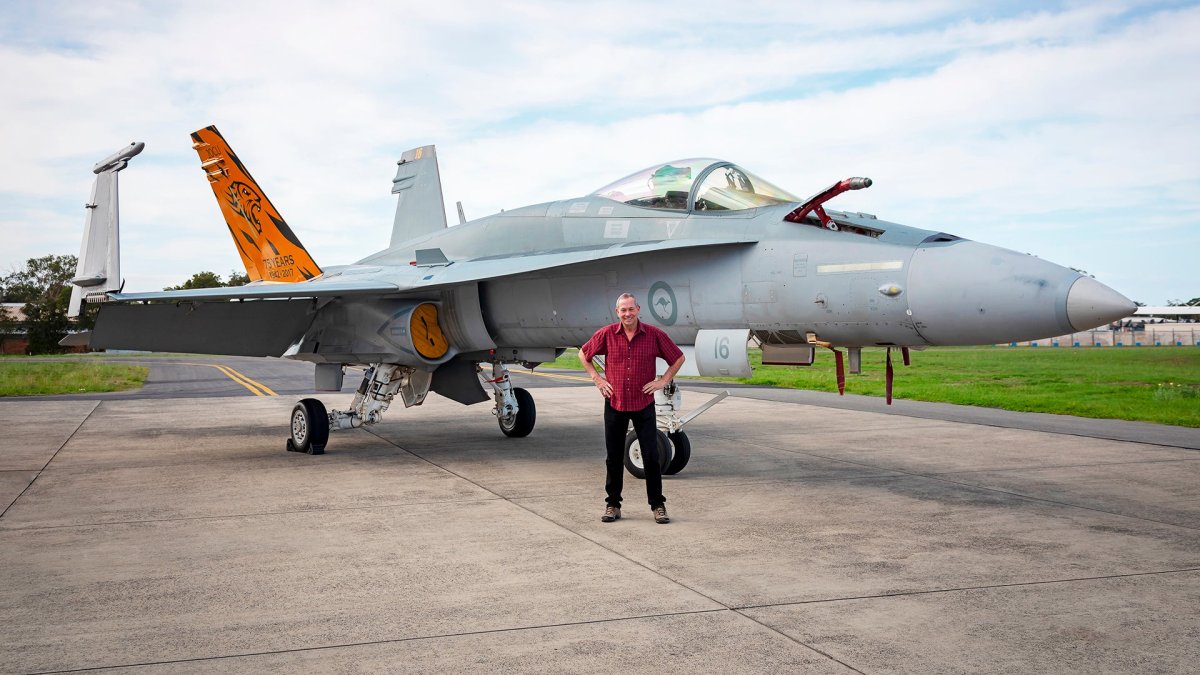
This Man Owns The World's Most Advanced Private Air Force After Buying 46 F/A-18 Hornets
We talked to the owner of Air USA about probably the most incredible private aircraft purchase of all time and the future of his adversary business.
TWZ
652 points · by antman · 6y ago · 332 comments
"He was also one of the early pioneers of the then-fledgling, if not wholly experimental, adversary air support market. In the early 2000s, he joined forces with the Airborne Tactical Advantage Company (ATAC), which was blazing a trail with their contracts with the Navy to supply fast jet targets and electronic warfare pod toting adversaries that mimic everything from enemy cruise missiles to fighters for Navy and Marine fighter aircraft and Navy surface combatants to train against. "
From further reading it sounds like the idea here is to get a diverse and different field of aircraft. I guess the NATO forces can practice against each other, but it’s not realistic in the sense that any opposition they would face in a real war would theoretically be using very different equipment. So guys like Air USA are paid to conjure up a fleet of all kinds of aircraft, and pilots to fly them, which will act as more legitimate test.
Though I suspect that maintenance and other process can be more streamlined in the private sector and that certainly will be an area in which the cost/payoff may balance out well for both for the needs required. Why have a combat ready serviced aircraft with around the clock support and maintenance when the usage can be dedicated to just 9-5 support for the task at hand. Hence outsourcing in this situation would see a huge saving in that area from that aspect alone. Certainly be a large factor and this is a business, so clearly some profit to be made that can enable the purchase of those many non-cheap aircraft. So for this to pay off as a business over being done inhouse, does make you wonder and try to work out why that is.
"inhouse" is probably still a no-bid buddy contract with a large defense corporation, so his rate probably doesn't even need to be very low at all
The thing that I don't get is why would the US hire him to provide adversary aircraft that it already operates? I could totally understand them hiring someone who operated a bunch of ex-Russian aircraft, but if they wanted F-18s why not just call the Navy?
A contractor can maintain their jets however they want as long as it's safe and they can meet their contract requirements. The contract maintainers can stay at their job as long as they want. The USN and USAF maintainers move every few years and have pretty good retirement benefits (which used to be better but are still better than what most private companies give), and have to get lots of additional training and all that needs to be paid for. A contractor is still supposed to follow all the safety regulations, but contractors seem to be able to generate sorties at rates that military units couldn't manage even with double the manpower.
Contractor pilots are paid strictly to fly. Naval aviators and USAF pilots are both subject to "up or out" policies, where officers that aren't promoted are told to leave. This means military pilots have to serve as staff officers to keep themselves promotable. During a staff tour they either quit flying or they fly less, which kind of wastes the money spent on training them. There are good reasons for requiring this (and some good arguments against it), but the bottom line is that contractors don't have to worry about it and can operate cheaper because they aren't wasting 20% of their personnel budget with a fighter pilot working behind a desk.
https://upload.wikimedia.org/wikipedia/commons/6/6a/F-15E-80...
Ask the RAF how outsourcing flight training is working for them.
(Hint: not well at all)
"This guy figured it would be fun to own fighter jets and so figured out a business he could be in that would allow him to do so with the government's blessing."
I don't know if that is what he did of course, just guessing. It is a strategy I've seen employed successfully before. My daughter used this strategy by getting a research project approved for school on "studying organizing goal directed group behavior in online groups" where it was required she join several different raiding guilds in World of Warcraft to evaluate their strategies for co-operative goal seeking behavior. I thought it was pretty creative.
2) These planes (superhornets) are is a wildly inefficient way to arm a paramilitary. These things cost tens of thousands of dollars an hour to fly, are built to fight nation-states, and you can't exactly maintain them on an airstrip in the middle of nowhere. If you want to gun down rebels in the jungle, you'd buy Super Tucanos, for a tenth or less of the cost-per-hour fly time (plus, easier to arm and provision)
Edit: my bad, just regular hornets, not superhornets. read too quickly
2) well, the company seems to offer the whole package (see the final sections about him storing 80000 HE-rounds for his two dozen hawks). And once the US hegemony over who runs military conflicts on this world goes the way of the dodo, well... I guess you might easily fend of someone like Kenia intervening in your nice cobalt business in congo with a dozen of NATO-grade fighters... And there is definitely a private sector available to secure your bases in a "friendly" third country.
My understanding is a F/A-18 would probably cost Mr Kirlin $10k/hr to operate. A Super Hornet actually costs about the same in variable costs per flight hour, as they require less maintenance and are younger in age, than a legacy Hornet. Of course, depreciation on a $70m jet is not cheap, which can only be flown for 8k hours, without a major rebuild.
The private part is still important. It's a legitimate fleet of military aircraft that would rival the air forces of many small countries that is directed by a man who really isn't accountable to us outside our borders.
This isn't new territory, it's just that you have to go back a few hundred years to see small groups of private individuals accumulate this much physical force. Just think about some of the disagreements that have occurred over scare resources for responding to the pandemic. Imagine how that picture can change.
Notably, Erik Prince of Blackwater/Academi notoriety played fast and loose with weapons import/export/ownership rules, and came very close to being criminally prosecuted for it. Retired Admiral William 'Fox' Fallon resigned in disgust when he realized how far outside the rules Erik Prince was operating.
When Erik Prince suggested letting his private firm handle security in Afghanistan as an outsourced contractor, then SecDef (General) Jim Mattis was dead against it, and blocked it all the way.
This just doesn't make much sense as a concern.
This was one of the big concerns if the US/NATO ever went toe to toe with the Soviet Union. With the way modern weapons systems work if they both went all at it, it would not be long before one side or the other had enough of an edge up - just through attrition - that there would only be two options left to the losing side - surrender or go nuclear. You can't have two fully capable super powers fighting one another all out for years any more. You'll run out of stuff that works too fast.
That would seem pretty unfeasible / unlikely for a private owner, even a wealthy one to fly it much at all.
Not many people can use an FA18... the accessibility of anysort of utility drops pretty fast when it is "can fly an f-18"
> Kirlin says that he looked at all the aircraft his competitors have bought, especially the Mirage F-1s from Spain and France and Atlas Cheetahs from South Africa that his competitors ATAC and Draken USA have snapped up, and passed on them. He actually showed me the approved ATF forms for importing these jets dated years ago as proof of his claim. Three primary reasons were behind his decisions. The first was concern that they simply weren't the right plane for the job—he wanted something more advanced. Second, that working with certain foreign original equipment manufacturers (OEMs) would be a major hassle.
> Finally, he is a firm believer in buying flyers, not aircraft that have been mothballed for years, if at all possible.
Edit: By the way, the Pilatus PC-9 airplanes shown in one of the images is the same plane that the South African acrobatics Silver Falcons use.
New headline: A man owns the most advanced private air force and uses it to antagonize the US Navy for profit
> Private security company takes over as leader in air capability after recent asset purchase
Their focus doesn’t seem to be providing adversaries against pilots, but adversaries against weapons systems.
He’s essentially selling organic data to train JTACs against.
The goal here isn’t as much great avionics, but great combinations of sensors and sensor jamming.
The military focuses on having a combat ready fleet, while he focuses on a fleet that can provide lowest cost options to provide appropriate training data.
A lot of that fleet is made up of trainers fit with electronics packages and Cessnas similarly Frankensteined. Then the military and manufacturers rent it out vs maintaining their own limited-use fleet.
The hornets are great, not just because they’re sweet jets, but because of the electronics packages and maintainability.
...and then he has a paramilitary nut/Bond villain vibe that keeps the story less dry and probably appeals to the intended audience.
The US already has ludicrously expansive personal rights to weapons ownership for any reason. We have a guy buying up a private air force. We have several guys building space vehicles. If Elon Musk or Jeff Bezos wanted a nuclear-armed ICBM could we actually stop them? Or, maybe more likely, some QAnon nutjob getting his hands on an armored vehicle and driving it through a shopping mall in Atlanta?
F/A-18s without guided weaponry aren't really that much of a change. (they've got cannons, but afact no JDAMs, JSOWs, AMRAAMs or even dumb bombs)
> Or, maybe more likely, some QAnon nutjob getting his hands on an armored vehicle and driving it through a shopping mall in Atlanta?
Well, you can literally buy WW2 era tanks. And it doesn't take all that much to make them street-legal. This isn't new. And yet, we DON'T see nutjobs abusing it.
And I think just saying it hasn't happened yet is like saying we haven't had a giant pandemic yet in 2019. I'd rather not wait for a catastrophe to decide we should do something about it.
I wonder if civilians will ever get to fly an F-15C...
We've had cases of nutjobs getting their hands on tanks, or building their own armored bulldozers, and going on rampages. It's a pain, but it's not a complete disaster. These vehicles aren't invincible. They generally get stuck somewhere, and then the police break open the hatch and shoot the nutjob. Tanks really can't do much by themselves besides drive around and run into some things (or over them, but again, you have to be careful or it can get stuck, break a tread, etc.). Tanks armed with 120mm cannon rounds, of course, can do some serious damage, but private individuals aren't allowed to own that kind of weaponry at all.
It's the same with an older fighter jet. What are you going to do with it? Fly it into a building? Sure, that'll be worse than flying a Cessna into a building, but still, it's not like a WMD. Even if you could fully load the 20mm cannon, you're not going to do that much damage; they don't hold that much ammo anyway (only enough for something like 5-10 seconds of sustained fire I think). Yeah, being able to drop a bunch of 500lb bombs would be a disaster, but again, you can't get that stuff.
Yes, if Elon or Jeff wanted a nuclear-armed ICBM, the government would certainly stop them. Building a rocket is one thing, building a nuclear warhead is something else entirely, and is not something trivial that just anyone can do. Iran (an actual nation-state) has been trying for some time and still hasn't succeeded as far as we know. It takes a lot of facilities and special materials to build something like that.
For those that don't get this reference, this actually happened:
https://en.wikipedia.org/wiki/Marvin_Heemeyer
RIP Killdozer
Though I don't know why a nutjob couldn't do just as bad with something heavier.
Frankly your concerns are completely unjustified.
It doesn't make sense to be so alarmed by it. People who own heavy weapons overwhelmingly use them for lawful purposes. This is true of people who own guns, as well. We can't treat every potentially dangerous thing as if it is a clear, present danger: that is like treating all drivers as "potential drunk drivers". You can't write policy around that.
Basically you need to have something tough to go against the JSF or it is a cakewalk and no training is achieved. These Hornets are an excellent 4th gen platform because they have had excellent maintenance and relatively gentle operation. They have all had the HUG 2.2 upgrade and are incredibly capable -- more so than many aircraft operated by the Air National Guard -- but they are too long in the tooth to be going up against modern competitors and be survivable.
JTAC training doesn't need high fast flyers, so just like the article says, using them is pointlessly expensive. Hawks and propeller aircraft are more useful. Fast jet flyers often have type certifcation on them from initial training, perfectly adequate for practicing 9 line briefs.
• Reduced flight hours and maintenance on fleet aircraft.
• Instructors do not need to be pulled from schedules.
• Fleet aircraft do not need to be hard scheduled.
• Cost per flight hour is much lower for common aggressor platforms (A-4, L-39, F1M, and now these legacy F-18s) than the aircraft the Air Force is training in.
• Private companies can more easily maintain and source parts for aircraft the military cannot (Migs, for instance).
This particular sale was the remainder of the RAAF's retired F-18 fleet, which Canada started buying in early 2019. These are _not_ Super Hornets.
Some of these companies have been around for decades. Some competitors:
• ATAC
• Top Air
• Draken
https://federalnewsnetwork.com/dod-personnel-notebook/2019/0...
https://www.businessinsider.com/us-air-force-considering-sto...
https://www.stripes.com/news/air-force/air-force-is-still-sh...
https://www.rand.org/content/dam/rand/pubs/rgs_dissertations...
And that doesn't even touch the shitshow which is drone crew morale.
The other day I was reading about some Saudi prince's half a billion (!!!) dollar yacht.
Sometimes I wonder if I live in the same planet as these people. It is hard for me to imagine such wealth and power
No, they don't. And neither does the US.
The F18 is now nearly 40 years old. Typically the advanced and sophisticated aspects of airframes are not allowed for sale, to private entities, or even non-us government ones.
The advanced avionics, weapons systems, etc, are all tightly controlled.
So, nothing rivaling next generation hardware but also nothing to sneeze at either.
The trick is buying ammunition for them and also undoing some decomm work that requires expertise and equipment.
https://www.businessinsider.com/how-pepsi-briefly-became-the...
https://en.wikipedia.org/wiki/Sovereign_Military_Order_of_Ma...
Fighter jets are heavily dependent on spares and expertise, but Iranian F-14 Tomcats managed to score something like 50 or 60 kills during the Iran-Iraq war, which happened after the US stopped playing nice with them. They're still flying a few of them today.
If this makes you wonder how they're doing this if everyone is playing by the export rules involving selling arms to Iran, you wouldn't be the first. They have some native production capacity, but...
Turns out the US has this problem as well... my brother is a Harrier pilot, and it seems to me like the US has mostly run out of spare parts for them. They bought a number of RAF Harriers for parts, but even so, it's a question of whether the F-35 will actually be ready in time to replace those squadrons.
Is this another example of the DoD contracting out something that would cost half as much for them to do themselves?
> These Israeli-designed pods are pretty much the world standard in modular self-protection jamming systems and are used on the Pentagon's own aggressor fleet...
I’m happy to answer questions people may have.
The Kirlin’s occupy a very particular role in the city.
once operating the largest franchise of Hallmark stores for nearly 60 years before quickly going out of business a few years ago. Other Kirlin defunct businesses include “The Fly”, a Blue jeans only store in the 80’s, KSNI (Kirlin Super Net Inc) a dial-up ISP in the 90’s.
The mentioned Kirlin of the story used to run “The World Freefall Convention” the largest skydiving convention in the world. For about a week and a half the small Airport would be beset by 10,000 skydivers and cessnas. One quirk of Quincys airport is a super long runway that can support a DB Cooper style 737 jet landing, so one would be chartered to allow 100s of skydivers to do high altitude jumps.
Unfortunately the convention ended because of the Bible-thumping city leaders didn’t care for the weeks of debauchery that were part of the festival attendees.
I've met several members of the Kirlin family and Don's a sharp, cordial guy. I find it interesting that he's made so good a go at such an unconventional business when other members of the family have had such problems in speciality retail. I wonder where the Hallmark store business would be if Don had been in charge.
I'll not comment on the ISP because I used to work for a competitor with a fierce rivalry.
Even if for some reason it is cheaper for the US military to have this in a private company instead of maintaining aggressor squadrons with Migs, how is this secure?
The other counter is there are 26 operators of the F-16. Frankly it would be easier both in practice and legality to get cooperation from some dude in Pakistan or Venezuela than a US citizen who can at least sorta be watched over.
Most of the tactics are not terribly advanced in the sense of some mysterious secret martial arts kick that defeats all. Most of the time battles are won logistically long before the fighting starts. Everyone in the business kinda knows what F16s do, not any more of a secret than knowing what Mig29s do, the struggle is always having enough resources in the right places at the right times to do anything about it.
Something that often surprises civilians is most US military manuals are freeware and have always been that way. If you want to learn how an Army Brigade Combat Team operates, you don't join the KGB and steal documents, you just download FM 3-96 and read it. This is why actual veterans get annoyed about fictional hollywood military stuff; if you don't understand the role of a BCT's information operations officer sufficient to portray one in a movie, its just sheer lazyness to make something up instead of simply reading the FM.
Its all part of the interesting strategy to handling massive public communications networks; half a century ago you could have an edge if it depended on having a secret sauce. Now that anyone with a web browser can download the official F-16 flight manual your strategy for having an edge relies on other forms of secret sauces.
A good analogy for the problem is that excellent world class scientific documentation exists for weight loss and athletic performance, yet most people will not train in those areas. Olympic athletes are not high performers because the textbooks for weight lifting are kept secret and only for their reading.
(Attributed to an unnamed Soviet Staff Officer)
I always assumed (without any evidence) there is secret firmware or settings for these systems that will only be used in time of war and not used during training.
I guess Israeli Air Force knows countries like Iran have the Russian hardware and personnel/training for dealing with the Elta gear that Israel exports, but I also guess the Israeli Air Force has secret sauce, maybe using the same hardware, that they don't export and use only for striking strategic targets, knowing each strike teaches the opponent something.
I believe the military takes training realism incredibly seriously, and wouldn't dream of "testing in production" with a weapons system.
The company has to follow US industrial security rules. Written by US DoD.
The employees are vetted and hold clearances.
Why do you think the USAF (or US Navy) hadn't thought about this?
EDIT: Actually it looks like they do have machine guns with rounds, but nothing such as guided missiles.
Looks like some sort of elaborate public money scam to me.
If you had an Air Force squadron of older planes, they need their own dedicated mechanics who are certified. Government certified vendors, who've gone through the vetting/price bidding process (likely the vendors selling you the latest F35 or whatever will want in on it too...). Dedicate pilots certified to fly these planes and likely only these planes... etc. Instead you shift the logistics to a smaller and more agile group who can optimize for their very specific and small use case.
The private contractor can also go out and train people from other military forces (like Canadians, eh?). That allows them to make money from multiple sources, where as the US Government would not. Sure maybe join training exercises, but that's not the same thing.
There are a lot of cases in business where outsourcing something specialized to another party makes a lot of sense - unless there is a huge scale for it. Just look at The Cloud. For a lot of companies, it doesn't make sense to pay the overhead of datacenters, datacenter techs, etc etc. For a few companies, that do it at scale, it makes a ton of sense (Ex FAANG).
Second, the USAF has a pilot numbers problem. The more experienced pilots are getting out as fast as they are able; there are many reasons for this, and COVID-19 will slow it down, but it will continue. To compensate they are trying to ram more in at the front of the funnel. This will cause other problems, not the least of which is a massive shortage of training personnel, causing overwork, causing more FCIs to leave, and so on.
The ex-USAF (and ex-RAAF) pilots flying these jets are enjoying not being sent overseas to shitty bases on long tours, or having to move their family interstate regularly, or dealing with braindead administrative detail and mandatory fun exercises some Colonel dreamed up. They are some of the best pilots around, and normally they would be lost to the airlines.
I'm very curious what these licenses say about how he is allowed to use these machines.
What kind of work is he allowed to take? Who is he allowed to shoot at?
No this is not a license to kill.
Certain firearms like short-barrel rifles (SBR), suppressors, calibers > 50, and machine guns require an ATF license. That said - these aren't hard to come by. Many people file multiple ATF form 4's (with a $200 tax) to acquire suppressors, machine guns, and SBR's. 8 is nothing special, you'll see people on r/guns with more.
The tl;dr is if you have the mone and time and clear background, its not hard.
Frankly I'm kind of glad someone took them off our hands before they became even more of a liability. We've got enough on our plate dealing with the F-35's corrosion issues (most of the fleet will be kept in moist salt air at Williamtown and be plugged into big dehumidifiers when not flying) and other things like its limited range.[2]
Which, now I put it that way, makes me wonder if maybe we should have kept a few Hornets.
[1] "43. The F/A-18A/B Hornet was designed for a safe life of 6000 airframe hours. At the current fleet flying rate of 13 000 hours per year, reducing to 12 000 from 2013–14, there is capacity on that basis for the Hornet fleet to continue flying until the end of 2020." https://www.anao.gov.au/work/performance-audit/management-au...
[2]https://www.aspistrategist.org.au/projecting-power-with-the-...
edit: it looks like you've still got two squadrons of Super Hornets until 2025, so you've got that going for you
As an Australian, this is a concern.
F35s are undeniably costly, but criticisms on the capability front usually come from the uninformed lunatic fringe (like APA), who are really the equivalent of climate change deniers, and groups with an axe to grind (Boeing would prefer to make more Super Hornet sales).
If it were me, I'd want half F-35s and half of the most advanced variant of the F-15 Strike Eagle I could afford, keeping in mind the F-15s would cost as much as the F-35. But you know, even keeping those two squadrons of Super Hornets they've got up to date would count for a lot.
What a boss.
https://fullcolorbirds.wordpress.com/2010/01/26/grumman-f-14...
Sounds like these beasts will be expensive money pits to operate nowadays.
And to further improve his odds, he could always attack outside office hours: https://www.theguardian.com/world/shortcuts/2014/feb/19/swis...
We have some MiG-29s which were essentially gifted by none other than the German Luftwaffe and a few F-16s bought in the mid 00's.
Overall not bad, but this one guy has more than half the number of our aircraft.
There's a remote-fly-by-wire package they install that apparently has been around for quite a while. I guess this means they're also developing a remotely controlled or AI based fighter platform but they wouldn't confirm, just that these new "drones" get shot down by other "drones".
Source: I was given a tour of the facility and told what they were doing with the old F-18's. Pretty wild.
It's reminiscent of the way you can buy spectacular used luxury cars for a song once they've got a certain amount of wear and miles on the odometer. Maintaining them and accounting for the future cost of repairs makes their value drop precipitously.
I don't know about using them for drone target practice though, Loyal Wingman (ugh, what a name) only got to WoW the other day. More likely advanced tactics development for manned aircraft.
Though it's surely very expensive to operate these things, it's also probably cheaper than if the USAF had to do it.
Risky business though.
I guess the title is saying that it's specifically a male adult?
It’s the same reason a company might hire an outside firm to do penetration testing, rather than ask its head of cyber security, “Hey why don’t you conduct a test to see if you are doing an awesome job, as we need to figure out whether to fire you or give you more money”.
outsourced contractors will tell you what you pay them to tell you
of course all that depends on the contractor, who’s doing the hiring, and the industry etc
but the point is, just because it’s outsourced doesn’t mean the incentive structure will “work” any better than internally
I assume this is like one department of a company using Azure and the other using AWS because nobody wants to share their turf. Writing a check is easier than talking to your coworkers.
Looks like the joke is on me, now: People now actually have an option of building their own Air Force. Greaaaaaat,
Government is a diverse collection of entities. It's a mistake to assume that resisting the government means overthrowing the entire federal system.
If you're interested in hearing more on this subject I recommend reading "This Nonviolent Stuff'll Get You Killed: How Guns Made the Civil Rights Movement Possible" by Charles Cobb.
Large swaths of American history of American history are likely being ignored with assertion like "gun ownership could prevent a lynching". Take pre-Civil War laws making gun ownership of African Americas (free and enslaved) illegal, the continuation of those laws under "Black Codes" in both the North and South post Civil War, and the extension of similar acts post Civil Rights Act with laws like California's 1967 Mulford Act.
This extends beyond such obvious examples as the Mulford Act (California's foray into gun control, banning open carry in response to armed protest by Black Panthers). Gun control often focuses on removing access to arms by any poor and disenfranchised groups. So called "Saturday night special" legislation seeks to ban cheap guns, with disproportionate impact in disadvantaged communities.
Access to arms has historically been a key element of people maintaining their freedom from government abuse. Your examples of gun control indeed do undermine this freedom.
The history of gun control in the US is deeply tainted by racist motivations.
I think a better question would be asking how arming either police or civilians changes the policing dynamic. These types of questions also need to be set against the larger cultural context of how a society keeps control of its policing activity.
If there was a credible war between the American government and the citizenry I don't think it would be as one sided as you think it would be.
I believe The Clash puts it best:
    When they kick at your front door
    How you gonna come?
    With your hands on your head
    Or on the trigger of your gun

    When the law break in
    How you gonna go?
    Shot down on the pavement
    Or waiting in death row

    You can crush us
    You can bruise us
    But you'll have to answer to
    Oh, guns of Brixton
A non-insignificant number of people would consider criminalizing drugs criminalizing wrongthink.
"We knew we couldn’t make it illegal to be either against the war or black, but by getting the public to associate the hippies with marijuana and blacks with heroin, and then criminalizing both heavily, we could disrupt those communities. We could arrest their leaders, raid their homes, break up their meetings, and vilify them night after night on the evening news. Did we know we were lying about the drugs? Of course we did."
- John Ehrlichman, Nixon's Aide during time of the war on drugs.
https://harpers.org/archive/2016/04/legalize-it-all/
Aside:
Liberty - the state of being free within society from oppressive restrictions imposed by authority on one's way of life, behavior, or political views.
What the hell ever happened to "give me liberty or give me death"?
P.S. Wrongthink has always been criminalized
The people, in a Democracy, are the arbiters of power and the government serves the people. If the government does not serve the people, the people have an a priori right to reform that government.
Why is the right to bear arms necessary for a free state if not to give the citizenry the ability to overthrow the government? It's not as if indian raids or an invasion from Spain or Britain are causes for concern, nor does the second amendment make up for the lack of a standing army anymore. Overthrowing the government is the only thing left that it's good for, as far as a free state is concerned.
>If the government does not serve the people, the people have an a priori right to reform that government.
What other means of "reform" does the second amendment offer the people, than revolution by force of arms?
The reason why the right to bear arms is important to a free state is because both sides of a negotiation must possess power. Kent State was a tragedy, but it's aftermath happened in a court room with lawyers and journalists. Tienanmen square on the other hand saw a government run over it's people with tanks and then pretend it never happened.
When one side of a power dynamic has no power, the opposite side can do whatever it wants - install a president for life, promote the president to a position without any checks, directly compromise basic human rights for short term political wins, and so on.
A "revolution by force of arms" isn't very likely, but a large well armed group of protestors is a great way to convince a government to show up in court and use words and lawyers instead of tanks.
Also, as a counterpoint, Vietnam did get bombed to oblivion and persevered through it.
But you're still not wrong - I have the same opinion. In any case 2nd amendment arguments on fighting the USA are moot - the 2nd amendment doesn't legalize fighting the USA. Guns or not, if the USA decides you're the enemy, you're automatically a terrorist regardless. And terrorists have not had any issues getting guns.
Automated drone strikes makes it easier for a totalitarian regime to wage war against its own people.
If you were vastly outnumbered and tried to wage war against your population they can just strike. And just like that all your advanced weapons won't be able to be maintained.
If you want to force people to work on your factories, bombs won't be very useful, but guns will be.
Many more of those links would be physically inside the US than were inside Afghanistan.
Anyway, you'll probably see the same thing play out here in the coming years.
If Americans want to be well armed, they need to start visiting the library instead of the gun shop.
poorly trained is true, but Americans own almost 90 times more firearms than the US military. there are 1.2 guns for every person in the US.
Also, to talk about how it’s hopeless to have a gun versus a drone — there aren’t enough drones, and Vietnam is a great counter-example for “tech always wins.”
Maybe, maybe not. The Nazis weren't just "bad guys backed by the government who were armed," they were a political party, which included much of the German populace, who supported its anti-Semitic ideals. It's possible more guns would have ended the Holocaust sooner, but it's also possible they would have just made it more efficient.
Citizens being armed would both change the calculus of a genocide, making it harder to execute and possibly preventing it.
If attempted anyway, it would be much messier for the Nazis.
> He was also one of the early pioneers of the then-fledgling, if not wholly experimental, adversary air support market. In the early 2000s, he joined forces with the Airborne Tactical Advantage Company (ATAC), which was blazing a trail with their contracts with the Navy to supply fast jet targets and electronic warfare pod toting adversaries that mimic everything from enemy cruise missiles to fighters for Navy and Marine fighter aircraft and Navy surface combatants to train against.
In other words, they provide targets for training for Navy aircraft.
There's talk that these types of aggressor squadrons might be a last-ditch aircraft reserve for the US or allies, but they're not exactly primed/ready for war without armament or modern radars.
(No, the fact that some of their aircraft have functional cannons and cannon rounds doesn't count).
Dude is totally not an intelligence asset of any kind. Just an enthusiast.
If you're looking for conspiracy theories, looking past the ownership of large numbers of military jets, to the handful of rich-enthusiast-grade small arms, seems like a weird flex.